
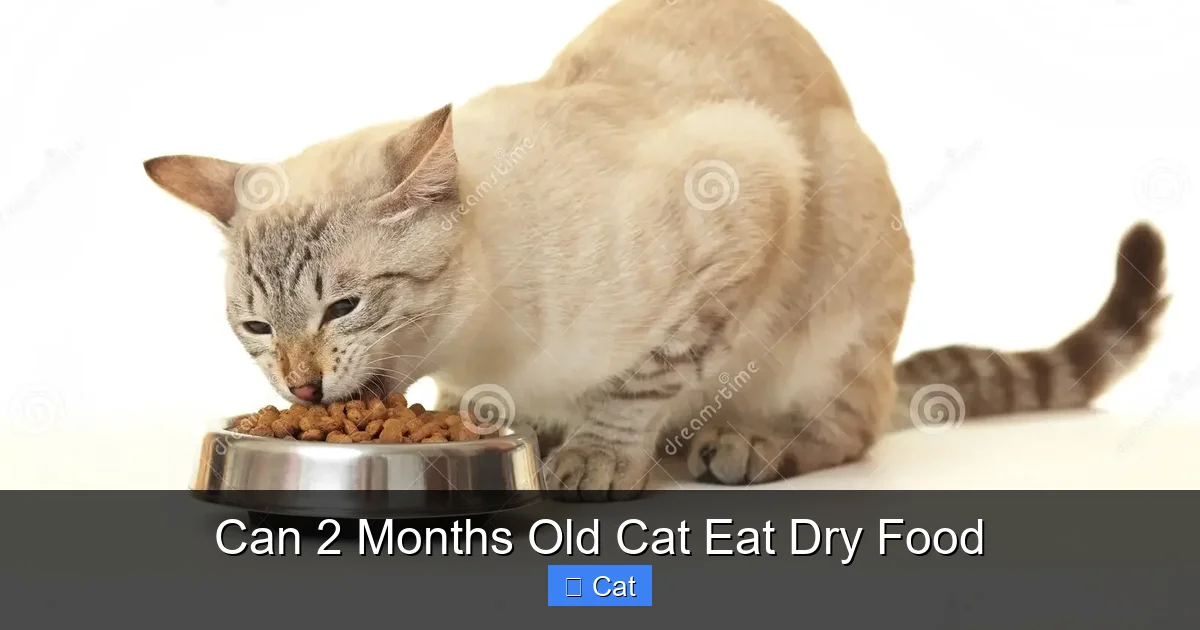
Yes, a 2-month-old cat can eat dry food, but only if it’s specifically formulated for kittens and softened with water or formula. At this age, kittens are still developing and need nutrient-rich meals to support rapid growth. Always consult your vet before making dietary changes.
Key Takeaways
- Kittens can start eating dry food at 8 weeks: By 2 months, most kittens are ready to begin weaning and can handle softened kibble.
- Choose high-quality kitten-specific dry food: Look for brands that meet AAFCO standards and list meat as the first ingredient.
- Soften dry food initially: Mix kibble with kitten milk replacer or warm water to make it easier to chew and digest.
- Feed small, frequent meals: Kittens have tiny stomachs and need 4–6 small meals per day for proper nutrition.
- Monitor hydration and digestion: Ensure your kitten drinks enough water and watch for signs of digestive upset like diarrhea.
- Gradual transition is key: Slowly increase the ratio of dry food to wet or formula over 7–10 days to avoid stomach issues.
- Consult your veterinarian: Every kitten is different—your vet can guide you based on your pet’s health and development.
📑 Table of Contents
- Can 2 Months Old Cat Eat Dry Food? A Complete Guide for New Cat Parents
- Understanding a 2-Month-Old Kitten’s Nutritional Needs
- When Can Kittens Start Eating Dry Food?
- Choosing the Right Dry Food for a 2-Month-Old Kitten
- How to Introduce Dry Food to a 2-Month-Old Kitten
- Potential Risks and How to Avoid Them
- Tips for Feeding Success
- Conclusion: Yes, But Do It Right
Can 2 Months Old Cat Eat Dry Food? A Complete Guide for New Cat Parents
Bringing a 2-month-old kitten into your home is an exciting and joyful experience. These tiny, playful bundles of fur are full of energy, curiosity, and charm. But with that joy comes responsibility—especially when it comes to feeding. One of the most common questions new cat owners ask is: Can a 2 months old cat eat dry food? The short answer is yes, but with important caveats. At eight weeks old, kittens are typically in the weaning stage, transitioning from their mother’s milk (or kitten formula) to solid foods. While dry food can be introduced, it must be done carefully and with the right type of food.
Kittens grow at an astonishing rate during their first few months of life. In fact, they can double their birth weight in just one week and continue growing rapidly through their first year. This explosive growth demands a diet rich in protein, fat, vitamins, and minerals. Mother’s milk provides the perfect balance, but as kittens begin to explore solid foods, dry kibble can become a valuable part of their diet—if introduced properly. The key is to choose a high-quality, kitten-specific dry food and to soften it initially so it’s easy for your little one to eat and digest.
In this guide, we’ll walk you through everything you need to know about feeding dry food to a 2-month-old kitten. From understanding nutritional needs to practical feeding tips, we’ll help you make informed decisions that support your kitten’s health and development. Whether you’re a first-time cat owner or adding a new furry friend to your family, this information will set you and your kitten up for success.
Understanding a 2-Month-Old Kitten’s Nutritional Needs

Visual guide about Can 2 Months Old Cat Eat Dry Food
Image source: c8.alamy.com
At two months old, your kitten is in a critical stage of development. This is when they’re building strong bones, developing their immune system, and laying the foundation for a healthy adult life. Because of this, their nutritional needs are very different from those of adult cats. Kittens require more calories, protein, and certain nutrients like taurine, calcium, and DHA (an omega-3 fatty acid) than grown cats.
Why Protein Is Crucial
Protein is the building block of life, and for kittens, it’s especially important. It supports muscle development, organ function, and overall growth. Look for dry foods that list a high-quality animal protein—such as chicken, turkey, or fish—as the first ingredient. Avoid foods that rely heavily on fillers like corn, soy, or wheat, as these offer little nutritional value and can be hard for kittens to digest.
The Role of Fat and Calories
Kittens are bundles of energy, and they burn calories fast. That’s why their food needs to be calorie-dense. Fat provides a concentrated source of energy and helps absorb fat-soluble vitamins like A, D, E, and K. However, not all fats are created equal. Choose foods with healthy fats from animal sources, such as chicken fat or fish oil, which also provide essential fatty acids like DHA for brain and vision development.
Essential Vitamins and Minerals
Calcium and phosphorus are vital for strong bones and teeth. But balance is key—too much calcium can lead to skeletal problems, especially in large-breed kittens. Taurine, an amino acid found only in animal tissue, is essential for heart health, vision, and immune function. A deficiency can lead to serious health issues, so always choose a food that includes taurine. Other important nutrients include vitamin E for skin and coat health, and B vitamins for energy metabolism.
Hydration Matters
Even when introducing dry food, hydration remains a top priority. Kittens can become dehydrated quickly, especially if they’re not drinking enough water. While dry food contains some moisture, it’s far less than wet food or mother’s milk. Always provide fresh, clean water in a shallow bowl. Some kittens prefer running water, so a pet water fountain might encourage them to drink more.
When Can Kittens Start Eating Dry Food?
The weaning process typically begins around 4 weeks of age and is usually complete by 8 weeks. During this time, kittens gradually shift from mother’s milk to solid foods. By the time they’re 2 months old, most kittens are ready to start eating dry food—but not right out of the bag.
The Weaning Process
Weaning is a gradual process. It starts with offering small amounts of wet food or softened kibble mixed with kitten milk replacer (KMR). At first, the mixture should be very soupy, almost like a gruel. As the kitten gets used to the texture and taste, you can slowly thicken it and reduce the amount of liquid. By 6–8 weeks, many kittens are eating mostly solid food, though they may still nurse occasionally.
Signs Your Kitten Is Ready for Dry Food
How do you know if your 2-month-old kitten is ready for dry food? Look for these signs:
- They show interest in your food or other pets’ food.
- They’re chewing on toys or other objects—this indicates they’re ready to chew solid food.
- They’re drinking water on their own.
- They’re gaining weight steadily and seem active and alert.
If your kitten is still very small, weak, or not interested in food, they may not be ready. In such cases, consult your veterinarian before making any changes.
Why Timing Matters
Introducing dry food too early can lead to digestive upset, malnutrition, or refusal to eat. On the other hand, delaying solid food too long can slow growth and development. The sweet spot is usually around 6–8 weeks, when the kitten’s digestive system is mature enough to handle solid food but still needs the rich nutrition of kitten-specific formulas.
Choosing the Right Dry Food for a 2-Month-Old Kitten
Not all dry cat food is created equal—especially when it comes to kittens. Choosing the right food is one of the most important decisions you’ll make for your pet’s health.
Look for Kitten-Specific Formulas
Always choose a dry food labeled for “kittens” or “growth.” These formulas are specially designed to meet the higher nutritional needs of growing cats. They contain more protein, fat, and essential nutrients than adult cat food. Avoid “all life stages” foods unless your vet recommends them, as they may not provide the optimal balance for rapid growth.
Check the Ingredient List
The first ingredient should be a named animal protein, such as “chicken” or “salmon”—not “meat by-products” or “poultry meal.” Whole meats are preferable, but high-quality meals (like chicken meal) are also acceptable and highly digestible. Avoid foods with artificial colors, flavors, or preservatives like BHA, BHT, or ethoxyquin.
AAFCO Statement
Look for a statement on the packaging that says the food meets the nutritional standards established by the Association of American Feed Control Officials (AAFCO). This ensures the food has been tested and proven to provide complete and balanced nutrition for kittens.
Top Brands to Consider
Some reputable kitten dry food brands include:
- Royal Canin Kitten Dry Cat Food: Formulated for kittens up to 12 months, with DHA for brain development and easy-to-digest ingredients.
- Hill’s Science Diet Kitten Dry Food: Made with real chicken, supports healthy growth and immune system development.
- Purina Pro Plan Kitten Dry Food: High in protein and includes live probiotics for digestive health.
- Blue Buffalo Wilderness Kitten Dry Food: Grain-free option with real chicken and DHA for vision and brain health.
These brands are widely available and trusted by veterinarians and pet owners alike.
Grain-Free vs. Grain-Inclusive
There’s ongoing debate about whether grain-free diets are better for cats. While some kittens thrive on grain-free foods, others do just fine with grains like rice or oats. Unless your kitten has a diagnosed grain allergy, there’s no strong evidence that grain-free is superior. Focus more on the quality of protein and overall nutrient balance.
How to Introduce Dry Food to a 2-Month-Old Kitten
Introducing dry food should be a gradual and gentle process. Rushing it can lead to digestive issues or food aversion.
Start with Softened Kibble
At first, your kitten may not be able to chew hard kibble. Soak the dry food in warm water or kitten milk replacer for 5–10 minutes until it’s soft and mushy. This makes it easier to eat and digest. You can also use a blender to create a smooth paste if needed.
Mix with Wet Food or Formula
If your kitten is already eating wet food, mix a small amount of softened dry kibble into it. This helps them get used to the new texture and taste. If they’re still on formula, mix the kibble with warmed KMR to create a gruel-like consistency.
Gradual Transition Over 7–10 Days
Start with 75% wet food or formula and 25% dry kibble. Over the next week, slowly increase the proportion of dry food while decreasing the liquid. By day 7–10, your kitten should be eating mostly dry food, though you can still offer wet food as a supplement for hydration.
Offer Small, Frequent Meals
Kittens have tiny stomachs and high energy needs. Feed them 4–6 small meals per day, spaced evenly throughout the day. Use a shallow bowl so they can easily reach the food. Avoid free-feeding (leaving food out all day) unless your vet recommends it, as it can lead to overeating or spoiled food.
Monitor Eating Habits
Watch your kitten during meals. Are they eating eagerly? Are they chewing or just swallowing whole? If they’re struggling, go back to a softer consistency. Also, check their stool—loose stools may indicate the transition is happening too fast.
Potential Risks and How to Avoid Them
While dry food can be part of a healthy kitten diet, there are some risks to be aware of.
Digestive Upset
Sudden changes in diet can cause diarrhea, vomiting, or constipation. To avoid this, transition slowly and choose highly digestible foods. If your kitten develops persistent digestive issues, consult your vet.
Dehydration
Dry food contains only about 10% moisture, compared to 70–80% in wet food. Kittens who eat only dry food may not drink enough water, leading to dehydration or urinary tract issues. Always provide fresh water and consider offering wet food as a supplement.
Choking or Difficulty Chewing
Hard kibble can be difficult for young kittens to chew, especially if they’re still developing their teeth. Soften the food initially and choose smaller kibble sizes designed for kittens.
Overfeeding or Underfeeding
Kittens need more calories per pound than adult cats, but overfeeding can lead to obesity. Follow the feeding guidelines on the food package, but adjust based on your kitten’s growth and activity level. Weigh your kitten weekly to track progress.
Food Allergies or Sensitivities
Some kittens may react to certain ingredients, such as chicken, fish, or grains. Signs include itching, ear infections, or digestive issues. If you suspect an allergy, work with your vet to identify the culprit and switch to a hypoallergenic or limited-ingredient diet.
Tips for Feeding Success
Here are some practical tips to make feeding time smooth and stress-free for both you and your kitten.
Use the Right Bowls
Choose shallow, wide bowls that are easy for your kitten to access. Stainless steel or ceramic bowls are best—they’re easy to clean and don’t harbor bacteria like plastic.
Keep Food Fresh
Dry food can lose its nutritional value and become rancid if left out too long. Store kibble in an airtight container and use it within 6 weeks of opening. Don’t leave food out for more than 24 hours.
Create a Calm Feeding Environment
Feed your kitten in a quiet, safe space away from loud noises or other pets. This helps them focus on eating and reduces stress.
Encourage Water Intake
Place multiple water bowls around the house. Some kittens prefer running water, so a pet fountain can be a great investment. Add a little water to their food to increase moisture intake.
Track Growth and Health
Weigh your kitten weekly and keep a growth chart. Sudden weight loss, lethargy, or changes in appetite could signal a health issue. Schedule regular vet checkups to monitor development.
Be Patient and Flexible
Every kitten is different. Some take to dry food right away; others need more time. Don’t force it—let your kitten set the pace. If they’re not interested, try a different brand or flavor.
Conclusion: Yes, But Do It Right
So, can a 2 months old cat eat dry food? Absolutely—but it’s not as simple as pouring kibble into a bowl. At this age, kittens are still developing and need a carefully balanced diet to support their rapid growth. Dry food can be a healthy and convenient part of their meals, but it must be high-quality, kitten-specific, and introduced gradually.
Start by choosing a reputable brand that meets AAFCO standards and lists real meat as the first ingredient. Soften the kibble with water or kitten formula to make it easy to eat, and transition slowly over 7–10 days. Feed small, frequent meals and always provide fresh water. Monitor your kitten’s eating habits, digestion, and overall health, and don’t hesitate to consult your veterinarian if you have concerns.
Remember, your kitten’s early nutrition lays the foundation for a long, healthy life. By taking the time to feed them properly now, you’re giving them the best possible start. With a little patience and care, your 2-month-old kitten will thrive on dry food—and grow into a happy, healthy adult cat.
Frequently Asked Questions
Can I feed my 2-month-old kitten adult dry food?
No, adult dry food doesn’t meet the high nutritional needs of growing kittens. It lacks sufficient protein, fat, and essential nutrients like taurine and DHA. Always choose a kitten-specific formula.
How much dry food should a 2-month-old kitten eat per day?
Most 2-month-old kittens need about 1/3 to 1/2 cup of dry food per day, divided into 4–6 small meals. Follow the feeding guidelines on the package and adjust based on your kitten’s weight and activity level.
Should I mix dry and wet food for my kitten?
Yes, mixing dry and wet food is a great idea. Wet food provides extra hydration and can make the transition to solids easier. It also adds variety and can help prevent urinary tract issues.
What if my kitten refuses to eat dry food?
Some kittens are picky eaters. Try different brands, flavors, or textures. Soften the kibble more, or mix it with wet food or formula. Be patient—it can take time for them to accept new foods.
Can I soak dry food in regular cow’s milk?
No, never feed cow’s milk to kittens. Most are lactose intolerant, and cow’s milk can cause diarrhea and dehydration. Use kitten milk replacer (KMR) or water to soften dry food.
When can my kitten eat dry food without soaking?
Most kittens can handle dry kibble without soaking by 10–12 weeks of age, once their teeth are fully developed and they’re comfortable chewing. Always ensure they have access to water.