

Switching your cat from dry to wet food can improve hydration, digestion, and overall health. This guide walks you through a safe, gradual transition to help your cat adapt without stress or digestive upset.
Key Takeaways
- Gradual transition is essential: Mix increasing amounts of wet food with dry food over 7–14 days to avoid digestive issues.
- Choose high-quality wet food: Look for complete and balanced formulas with real meat as the first ingredient and minimal fillers.
- Monitor your cat’s response: Watch for changes in appetite, stool quality, and energy levels during the switch.
- Maintain feeding consistency: Feed at the same times daily and store wet food properly to keep it fresh.
- Be patient with picky eaters: Some cats need extra encouragement—try warming the food or adding broth to enhance appeal.
- Consult your vet if needed: If your cat refuses food for more than 24–48 hours or shows signs of illness, seek professional advice.
- Hydration benefits are real: Wet food provides essential moisture, supporting kidney and urinary tract health.
Why Switch Your Cat to Wet Food?
Cats are naturally carnivorous animals with a low thirst drive. In the wild, they get most of their moisture from prey. Domestic cats eating only dry food often don’t drink enough water, which can lead to dehydration, urinary tract issues, and kidney problems over time. Wet food helps solve this by providing up to 70–80% water content—closer to what cats need biologically.
Beyond hydration, wet food tends to be higher in protein and lower in carbohydrates than many dry kibbles. This aligns better with a cat’s natural diet. Many pet owners notice improvements in coat quality, digestion, and even weight management after making the switch.
But here’s the catch: cats are creatures of habit. Sudden changes in diet can cause stomach upset, refusal to eat, or even stress-related health issues. That’s why knowing how to adjust cat to wet food gradually and thoughtfully is so important.
In this guide, you’ll learn a proven, step-by-step method to transition your cat from dry to wet food—safely, comfortably, and successfully. Whether your cat is a kitten, adult, or senior, these tips apply. We’ll cover everything from choosing the right food to troubleshooting common problems.
Step 1: Choose the Right Wet Food
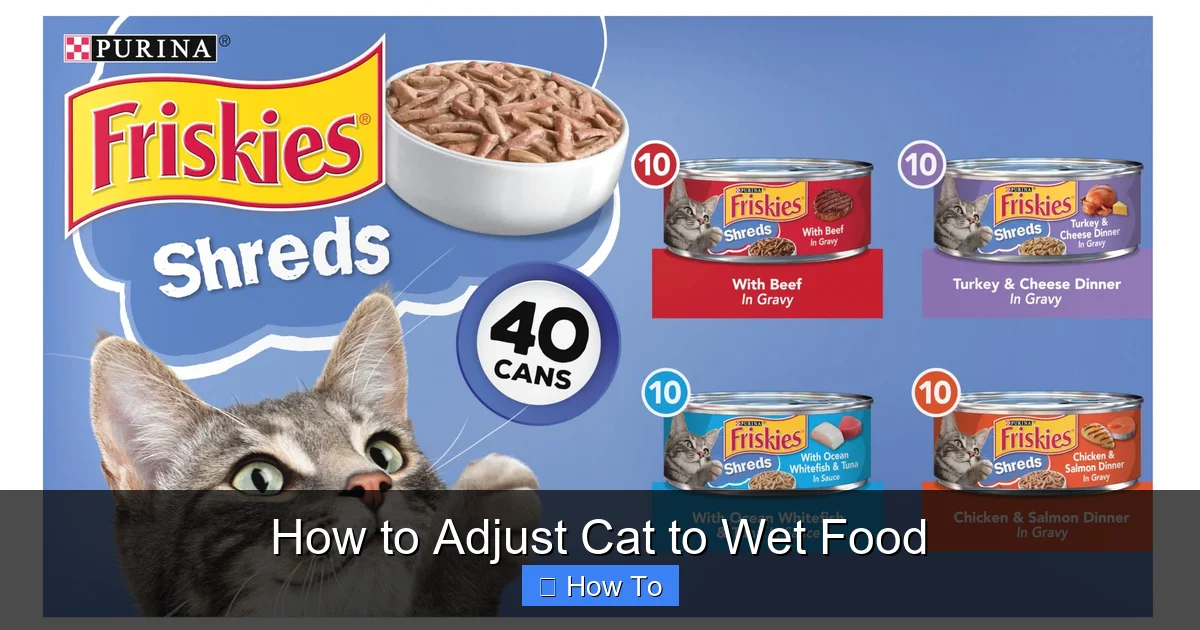
Visual guide about How to Adjust Cat to Wet Food
Image source: m.media-amazon.com
Before you begin the transition, you need to pick a high-quality wet food that meets your cat’s nutritional needs. Not all wet foods are created equal, and some may do more harm than good.
Look for Complete and Balanced Formulas
The first thing to check is whether the food is labeled “complete and balanced” by the Association of American Feed Control Officials (AAFCO). This means it contains all the essential nutrients your cat needs in the right proportions. Avoid foods that say “for intermittent or supplemental feeding only” unless recommended by your vet.
Prioritize Protein Content
Cats thrive on animal-based protein. Look for wet foods where real meat, poultry, or fish is listed as the first ingredient. Avoid products that lead with grains, by-products, or vague terms like “meat meal” without specifying the source.
For example, “chicken” is better than “poultry by-product meal.” Aim for at least 30–40% protein on a dry matter basis. You can calculate this by dividing the protein percentage by (100 – moisture percentage) and multiplying by 100.
Minimize Fillers and Additives
Avoid wet foods with excessive carbohydrates (like corn, wheat, or soy), artificial colors, flavors, or preservatives. These offer little nutritional value and may contribute to weight gain or allergies.
Consider Your Cat’s Age and Health
Kittens, adults, and senior cats have different nutritional needs. Choose a formula appropriate for your cat’s life stage. If your cat has health issues—like kidney disease, diabetes, or food sensitivities—consult your veterinarian before selecting a food.
Texture Matters
Cats can be picky about texture. Some prefer pâté, others like chunks in gravy or shredded meat. If you’re unsure, buy small cans or sample packs to test different textures before committing to a full case.
Step 2: Prepare for the Transition
Once you’ve chosen the right wet food, it’s time to prepare for the switch. A smooth transition starts with planning and observation.
Gather Your Supplies
You’ll need:
– The new wet food
– Your cat’s current dry food
– A small bowl for mixing
– A timer or calendar to track progress
– Optional: a food scale for precise portions
Check Feeding Guidelines
Read the feeding instructions on the wet food can or pouch. These usually recommend daily amounts based on your cat’s weight. For example, a 10-pound cat might need about 5.5 to 6.5 ounces (156–184 grams) of wet food per day, divided into 2–3 meals.
Keep in mind that wet food is more calorie-dense than dry food, so you’ll likely feed less by volume. Adjust portions gradually to avoid overfeeding or underfeeding.
Plan the Transition Timeline
A gradual transition over 7–14 days is ideal. This gives your cat’s digestive system time to adapt. Here’s a sample schedule:
- Days 1–3: 75% dry food + 25% wet food
- Days 4–6: 50% dry food + 50% wet food
- Days 7–9: 25% dry food + 75% wet food
- Days 10–14: 100% wet food
If your cat is sensitive or resistant, extend the timeline to 3–4 weeks. Patience is key.
Step 3: Start the Gradual Mix
Now it’s time to begin the transition. The goal is to slowly increase the proportion of wet food while decreasing dry food.
Mix the Foods Together
Start by mixing a small amount of wet food into your cat’s regular dry kibble. Use a 3:1 ratio (3 parts dry, 1 part wet) for the first few days. Stir well so the kibble absorbs some of the moisture and flavor.
For example, if your cat normally eats ½ cup of dry food per meal, mix in about 2 tablespoons of wet food.
Serve at Room Temperature
Cold food straight from the fridge can be unappealing. Let the wet food sit at room temperature for 10–15 minutes before serving. This enhances the aroma, which is a big factor in whether your cat will eat it.
Use the Same Feeding Schedule
Keep your cat’s routine consistent. Feed at the same times each day. Cats thrive on predictability, and a stable schedule reduces stress during dietary changes.
Observe Your Cat’s Reaction
Watch for signs of acceptance or resistance. A happy cat will eat eagerly, purr, or show interest in the bowl. A reluctant cat may sniff, walk away, or only eat the dry bits.
Don’t force it. If your cat refuses the mix, try again in a few hours with a slightly higher ratio of wet food.
Step 4: Increase the Wet Food Ratio
As your cat becomes comfortable with the mixture, gradually increase the amount of wet food.
Adjust the Ratio Every 2–3 Days
Move to a 1:1 ratio (equal parts dry and wet) around days 4–6. Then shift to 1:3 (1 part dry, 3 parts wet) by days 7–9.
Continue monitoring your cat’s appetite and digestion. Some cats adapt quickly; others take longer.
Separate Meals if Needed
If your cat refuses mixed food, try offering wet and dry food in separate bowls at the same meal. Let your cat choose. Over time, they may start favoring the wet food.
Alternatively, offer wet food first as a “treat” or appetizer, then follow with dry food. This can help build positive associations.
Be Mindful of Portion Sizes
As you increase wet food, reduce dry food accordingly to avoid overfeeding. Use a food scale for accuracy, especially if you’re feeding multiple small meals.
For instance, if your cat needs 6 ounces of wet food per day, and you’re feeding three meals, each meal should be about 2 ounces.
Step 5: Go Fully Wet (When Ready)
Once your cat is eating mostly wet food without issues, it’s time to make the full switch.
Eliminate Dry Food Completely
By days 10–14, aim to feed 100% wet food. Remove dry kibble from the bowl unless your vet recommends otherwise.
Some owners choose to keep a small amount of dry food available for dental health or convenience, but this is optional. Wet food alone can meet all nutritional needs.
Stick to a Feeding Schedule
Wet food spoils quickly, so avoid free-feeding. Offer meals at set times and remove uneaten food after 20–30 minutes. This prevents bacterial growth and encourages healthy eating habits.
Store Wet Food Properly
Unopened cans or pouches can be stored in a cool, dry place. Once opened, refrigerate leftovers in an airtight container for up to 3–5 days. Reheat slightly before serving.
Never leave wet food out at room temperature for more than 2 hours, especially in warm weather.
Tips for Picky Eaters
Not all cats will embrace wet food right away. If your cat is hesitant, try these strategies.
Warm the Food Slightly
Gently warming wet food to body temperature (around 98–100°F) can enhance its smell and appeal. Use a microwave for 5–10 seconds or place the can in warm water. Always stir and test the temperature before serving.
Add Flavor Enhancers
Sprinkle a small amount of tuna juice, low-sodium chicken broth (make sure it’s onion- and garlic-free), or a dab of plain yogurt on top. These can make the food more enticing.
Avoid using human food regularly, as it can lead to picky eating or nutritional imbalances.
Try Different Brands and Textures
If one brand doesn’t work, try another. Some cats prefer fish flavors, others chicken or beef. Experiment with pâté, shreds, or gravy styles until you find a favorite.
Use Positive Reinforcement
Praise your cat when they eat the wet food. Offer gentle pets or a favorite toy afterward. Avoid scolding or forcing—this can create negative associations.
Be Patient and Persistent
Some cats take weeks to adjust. Keep offering wet food consistently. Hunger will eventually win out, especially if dry food is no longer available.
Troubleshooting Common Issues
Even with the best plan, problems can arise. Here’s how to handle them.
Refusal to Eat
If your cat refuses to eat for more than 24 hours, contact your vet. Prolonged fasting can lead to hepatic lipidosis (fatty liver disease), a serious condition in cats.
In the meantime, try offering their old dry food temporarily while you troubleshoot the transition.
Digestive Upset
Diarrhea, vomiting, or soft stools can occur during dietary changes. This is usually temporary and resolves within a few days.
If symptoms persist beyond 48 hours, or if your cat seems lethargic or in pain, see your veterinarian. They may recommend a slower transition or a different food.
Weight Changes
Monitor your cat’s weight weekly during the transition. Wet food can lead to weight loss in overweight cats and weight gain in underweight ones.
Adjust portions as needed, and consult your vet if changes are significant.
Food Spoilage
If your cat leaves food uneaten, it may spoil quickly. Use smaller portions or switch to single-serve pouches. Consider an automatic feeder with cooling features for busy households.
Multiple Cats
In multi-cat homes, some cats may steal food or become territorial. Feed cats in separate rooms or use microchip-activated feeders to ensure each cat gets their portion.
Long-Term Benefits of Wet Food
Once your cat is fully adjusted, you’ll likely notice several positive changes.
Improved Hydration
Wet food significantly increases water intake, reducing the risk of urinary crystals, bladder infections, and kidney disease.
Better Digestion
High moisture and protein content support healthy digestion and firmer stools.
Healthier Weight
Wet food is less calorie-dense than dry food, making it easier to manage weight. Many cats lose excess pounds when switched to wet food.
Shinier Coat and More Energy
Quality protein and healthy fats contribute to a glossy coat and increased vitality.
Reduced Risk of Diabetes
Lower carbohydrate content helps regulate blood sugar, especially important for overweight or senior cats.
When to Consult Your Veterinarian
While most cats adapt well to wet food, some situations require professional guidance.
Underlying Health Conditions
Cats with kidney disease, diabetes, or inflammatory bowel disease may need a prescription diet. Your vet can recommend the best wet food for their condition.
Allergies or Sensitivities
If your cat develops itching, ear infections, or chronic diarrhea, they may have a food allergy. Your vet can help identify triggers and suggest hypoallergenic options.
Senior Cats
Older cats may have dental issues or reduced appetite. Soft wet food is often easier to eat and digest.
Kittens
Growing kittens need nutrient-dense food. Choose a wet kitten formula with higher protein and fat levels.
Always consult your vet before making major dietary changes, especially for cats with health concerns.
Conclusion
Learning how to adjust cat to wet food doesn’t have to be stressful. With patience, planning, and the right approach, most cats can make a smooth transition. Start with high-quality food, mix it gradually with their current diet, and monitor their response closely.
Remember, every cat is different. Some will love wet food from day one; others need time and encouragement. Stay consistent, be observant, and don’t hesitate to seek help if needed.
The benefits—better hydration, improved digestion, and long-term health—are well worth the effort. Your cat will thank you with a purr, a shiny coat, and years of happy, healthy living.