
Administering Capstar in food for cats can be a simple and stress-free process when done correctly. This guide walks you through safe dosing, mixing techniques, and tips to ensure your cat takes the medication without fuss.
Key Takeaways
- Capstar is a fast-acting flea treatment that starts killing adult fleas within 30 minutes of administration.
- It can be safely mixed into wet or dry food, but timing and portion control are key to success.
- Always follow your vet’s dosage instructions—Capstar is weight-based and should never be overdosed.
- Use fresh, appealing food to increase the chances your cat will eat the medicated meal.
- Monitor your cat after administration to ensure they eat the full dose and show no adverse reactions.
- Capstar does not prevent future infestations—combine with a long-term flea prevention plan.
- Store Capstar tablets properly in a cool, dry place away from children and pets.
How to Administer Capstar in Food for Cats: A Complete Guide
If your cat has fleas, you’re not alone. Flea infestations are one of the most common issues pet owners face, especially during warmer months. Fortunately, there are effective treatments available—and one of the fastest and easiest is Capstar.
Capstar (active ingredient: nitenpyram) is an oral flea medication that begins killing adult fleas within 30 minutes. Unlike topical treatments that require precise application to the skin, Capstar can be given by mouth—making it a great option for cats who resist handling or grooming.
One of the most convenient ways to give Capstar is by mixing it into your cat’s food. This method reduces stress for both you and your feline friend, especially if your cat is picky or anxious around pills.
In this guide, you’ll learn exactly how to administer Capstar in food for cats—safely, effectively, and with minimal hassle. We’ll cover everything from understanding how Capstar works, to step-by-step mixing instructions, troubleshooting tips, and what to do if your cat refuses the medicated meal.
By the end, you’ll feel confident treating your cat’s flea problem quickly and compassionately.
What Is Capstar and How Does It Work?
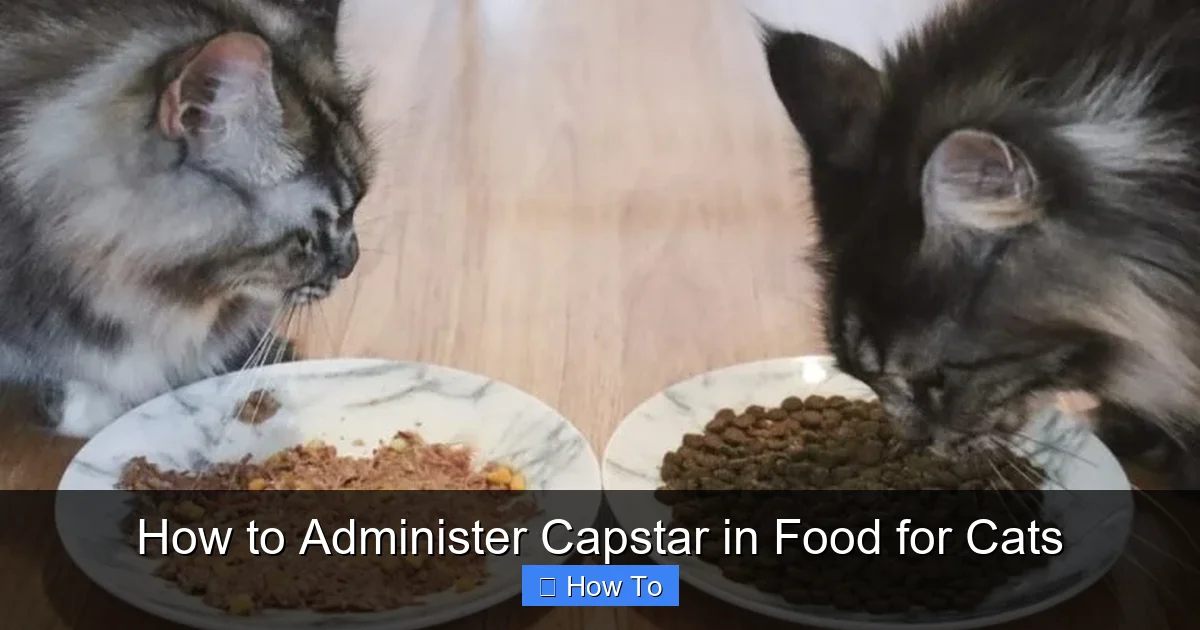
Visual guide about How to Administer Capstar in Food for Cats
Image source: cats.com
Before diving into the how-to, it’s important to understand what Capstar is and how it works.
Capstar is a prescription-strength oral tablet designed to kill adult fleas on cats and dogs. It contains nitenpyram, a neurotoxin that affects the nervous system of fleas, causing paralysis and death within minutes.
Unlike flea preventatives that stop fleas from reproducing or developing, Capstar is a fast-acting treatment. It doesn’t repel fleas or prevent future bites—it simply eliminates the ones already on your pet.
Here’s how it works:
– Once ingested, Capstar is absorbed into your cat’s bloodstream.
– Fleas that bite your cat ingest the medication.
– Within 30 minutes, the fleas begin to die.
– The effect lasts for about 24 to 48 hours.
Because Capstar only targets adult fleas, it’s often used as a quick solution to reduce flea burden before starting a long-term prevention plan like topical treatments or oral preventatives (e.g., Bravecto, Revolution, or Advantage).
It’s also commonly used in multi-pet households where one pet has fleas, as it helps break the infestation cycle quickly.
Why Administer Capstar in Food?
Giving pills to cats can be a challenge. Many cats are experts at detecting medication and will refuse to eat it, hide, or even become aggressive when forced.
Administering Capstar in food offers several advantages:
- Reduced stress: Your cat eats normally, unaware they’re taking medicine.
- No pill pockets or force-feeding: No need for tricky techniques or special tools.
- Faster acceptance: Cats are more likely to eat food they enjoy, especially if it’s their favorite wet food or treat.
- Convenience: You can prepare the dose in advance and offer it during mealtime.
That said, success depends on proper preparation and timing. If your cat detects the tablet or doesn’t eat the full portion, the treatment may be ineffective.
Step-by-Step Guide: How to Administer Capstar in Food
Follow these steps to safely and effectively give Capstar to your cat using food.
Step 1: Consult Your Veterinarian
Before giving any medication—even over-the-counter ones—always consult your veterinarian.
Capstar is generally safe for cats over 4 weeks old and weighing at least 2 pounds. However, your vet will confirm the correct dosage based on your cat’s weight and health status.
Never guess the dose. Overdosing can cause side effects like drooling, vomiting, or hyperactivity. Underdosing may not eliminate all fleas.
Your vet may also recommend combining Capstar with a long-term flea preventative for complete protection.
Step 2: Gather Your Supplies
Before you begin, make sure you have everything you need:
- Capstar tablet (correct dosage for your cat’s weight)
- Your cat’s favorite wet food, canned food, or high-value treat (e.g., tuna, chicken, or pâté)
- A small bowl or dish
- A pill crusher or mortar and pestle (optional, for breaking the tablet)
- A small spoon or spatula
- Tissues or a damp cloth (for cleanup)
Tip: Choose a food your cat loves and eats eagerly. Avoid foods they’re indifferent about—this increases the chance they’ll eat the entire portion.
Step 3: Prepare the Medicated Food
There are two main ways to mix Capstar into food: whole tablet or crushed.
Option A: Mix Whole Tablet into Wet Food
This method works best with soft, pâté-style wet food.
1. Open a small can or pouch of your cat’s favorite wet food.
2. Place the Capstar tablet directly into the food.
3. Use a spoon to gently press the tablet into the food, making it less visible.
4. Mix thoroughly so the tablet is hidden and evenly distributed.
5. Serve immediately.
Tip: If your cat is very observant, you can mash the food with a fork to break up the tablet further.
Option B: Crush the Tablet and Mix into Food
Crushing the tablet ensures it’s fully hidden and reduces the chance your cat will detect it.
1. Place the Capstar tablet in a pill crusher or between two spoons.
2. Crush it into a fine powder.
3. Sprinkle the powder over a small amount of wet food or mix it into a treat paste.
4. Stir well to ensure even distribution.
5. Serve right away.
Note: Capstar has a slightly bitter taste. Crushing and mixing thoroughly helps mask the flavor.
Step 4: Offer the Food to Your Cat
Timing is everything.
Offer the medicated food when your cat is most likely to eat—usually at their regular mealtime or when they’re hungry.
Here’s how to increase success:
- Serve in a quiet, familiar location: Reduce distractions so your cat focuses on eating.
- Use a clean bowl: Some cats are sensitive to smells or residues.
- Warm the food slightly: Gently warming wet food (to body temperature) enhances aroma and appeal.
- Offer a small portion first: If your cat eats a small amount eagerly, they’re more likely to finish the rest.
Example: If your cat usually eats at 7 a.m., prepare the medicated food at that time. Don’t offer it as a snack later—hunger increases compliance.
Step 5: Monitor Your Cat While Eating
Stay nearby while your cat eats. Watch to ensure they consume the entire portion.
If your cat stops eating or leaves food behind, gently encourage them:
- Pet them softly and speak in a calm voice.
- Offer a small treat afterward as a reward.
- If they refuse, try mixing the medication into a different food (see troubleshooting below).
Important: If your cat spits out the tablet or only eats part of the food, the dose may be incomplete. Do not give another full tablet. Contact your vet for advice.
Step 6: Confirm the Dose Was Taken
After your cat finishes eating, check the bowl to make sure no food—or tablet pieces—remain.
If you’re unsure whether they swallowed the medication, watch for signs that Capstar is working:
- Fleas may become more active before dying (this is normal).
- You may see dead fleas on your cat within 30–60 minutes.
- Your cat may scratch less as fleas die off.
Note: Capstar does not make fleas fall off immediately. Some may remain visible for a few hours.
Tips for Success: Making Capstar in Food Work Every Time
Even with the best preparation, some cats are tricky. Here are proven tips to improve your success rate.
Use High-Value Foods
Not all cat foods are created equal when it comes to medication delivery.
Choose foods your cat finds irresistible:
- High-protein wet food (e.g., chicken, salmon, or turkey pâté)
- Baby food (meat-only, no onion or garlic)
- Commercial treat pastes (e.g., Greenies Pill Pockets, Delectables SqueezeUps)
- Small pieces of cooked chicken or tuna (in moderation)
Avoid dry kibble for mixing—Capstar won’t adhere well, and your cat may pick around it.
Warm the Food Slightly
Cats have a strong sense of smell. Warming food to body temperature (around 98–100°F) releases more aroma, making it more appealing.
To warm safely:
– Place the food in a small dish.
– Microwave for 5–10 seconds (do not overheat).
– Stir and test the temperature on your wrist—it should feel lukewarm, not hot.
Never use hot food—it can burn your cat’s mouth.
Mix Thoroughly and Hide Well
The goal is to make the medication invisible and tasteless.
If using a whole tablet, press it deep into the food and mash it with a fork.
If crushing, ensure the powder is fine and evenly distributed. A coarse texture may be detectable.
For extra stealth, mix the crushed tablet into a small amount of treat paste and roll it into a tiny ball—like a homemade pill pocket.
Time It Right
Give Capstar when your cat is most likely to eat:
- First thing in the morning (when hungry)
- After playtime (when tired and ready to eat)
- Before bedtime (if they’re a nighttime eater)
Avoid giving it as a snack between meals—your cat may not be hungry enough to finish it.
Stay Calm and Confident
Cats are sensitive to your emotions. If you’re anxious or rushed, they may sense it and become wary.
Move slowly, speak softly, and act like it’s a normal mealtime.
Praise your cat after they eat—positive reinforcement helps build trust.
Troubleshooting Common Problems
Even with the best plan, things don’t always go smoothly. Here’s how to handle common issues.
Problem: My Cat Won’t Eat the Medicated Food
Possible reasons and solutions:
- The food isn’t appealing enough: Try a different flavor or brand. Some cats prefer fish over poultry, or vice versa.
- The tablet is detectable: Crush it finer or mix into a stronger-smelling food like tuna.
- Your cat is stressed: Offer the food in a quiet room away from other pets or noise.
- They’re not hungry: Wait until their usual mealtime or skip a meal to increase appetite.
Alternative: If food mixing fails, ask your vet about using a pill gun or giving the tablet directly.
Problem: My Cat Spits Out the Tablet
This is common with whole tablets.
Solutions:
- Switch to the crushed method.
- Mix the powder into a small amount of liquid (e.g., tuna water or chicken broth) and use a syringe (without the needle) to administer.
- Use a pill pocket designed for cats.
Never chase your cat around the house. This increases stress and reduces future compliance.
Problem: My Cat Vomits After Eating
Occasional vomiting can happen, especially if the food was eaten too quickly.
But if vomiting occurs shortly after taking Capstar, it could be a side effect.
Contact your vet immediately if:
- Vomiting persists
- Your cat seems lethargic or unwell
- They show signs of drooling, tremors, or hyperactivity
Most cats tolerate Capstar well, but individual reactions vary.
Problem: Fleas Are Still Present After Treatment
Capstar kills adult fleas quickly, but it doesn’t affect eggs, larvae, or pupae in the environment.
If fleas return within a few days, the infestation may not be fully resolved.
Solutions:
- Repeat Capstar in 1–2 days if recommended by your vet.
- Wash bedding, vacuum carpets, and treat your home with flea spray or fogger.
- Use a long-term flea preventative to stop reinfestation.
Capstar is a quick fix, not a long-term solution.
Safety and Storage Tips
Capstar is safe when used correctly, but proper handling and storage are essential.
Dosage Safety
– Always use the correct dose based on your cat’s weight.
– Do not give more than one tablet per day unless directed by your vet.
– Capstar can be given as frequently as once daily for up to 6 days in a row, but only under veterinary guidance.
Side Effects to Watch For
Most cats experience no side effects. Rarely, you may see:
- Excessive drooling
- Vomiting
- Hyperactivity or restlessness
- Lethargy
- Loss of appetite
These usually resolve within a few hours. If symptoms persist or worsen, contact your vet.
Storage Instructions
Store Capstar tablets in their original container, in a cool, dry place.
Avoid:
– Heat (e.g., near a window or heater)
– Moisture (e.g., bathroom or kitchen sink)
– Direct sunlight
Keep out of reach of children and pets.
Do not use expired tablets—check the expiration date before each use.
When to Use Capstar vs. Other Flea Treatments
Capstar is ideal for:
- Immediate flea relief
- Cats who resist topical treatments
- Multi-pet households with active infestations
- Preventing flea allergy dermatitis flare-ups
However, it’s not a standalone solution.
For ongoing protection, combine Capstar with:
- Topical treatments (e.g., Frontline, Advantage)
- Oral preventatives (e.g., Comfortis, Simparica)
- Environmental control (vacuuming, washing bedding, yard treatment)
Ask your vet to create a comprehensive flea control plan tailored to your cat and home.
Conclusion
Administering Capstar in food for cats is a smart, stress-free way to tackle flea infestations quickly. With the right preparation, timing, and food choice, most cats will eat the medicated meal without suspicion.
Remember:
– Always consult your vet first.
– Use fresh, appealing food and mix thoroughly.
– Monitor your cat to ensure full consumption.
– Combine Capstar with long-term prevention for lasting results.
By following this guide, you’re not just treating fleas—you’re giving your cat comfort, relief, and peace of mind. And that’s what being a great pet parent is all about.