
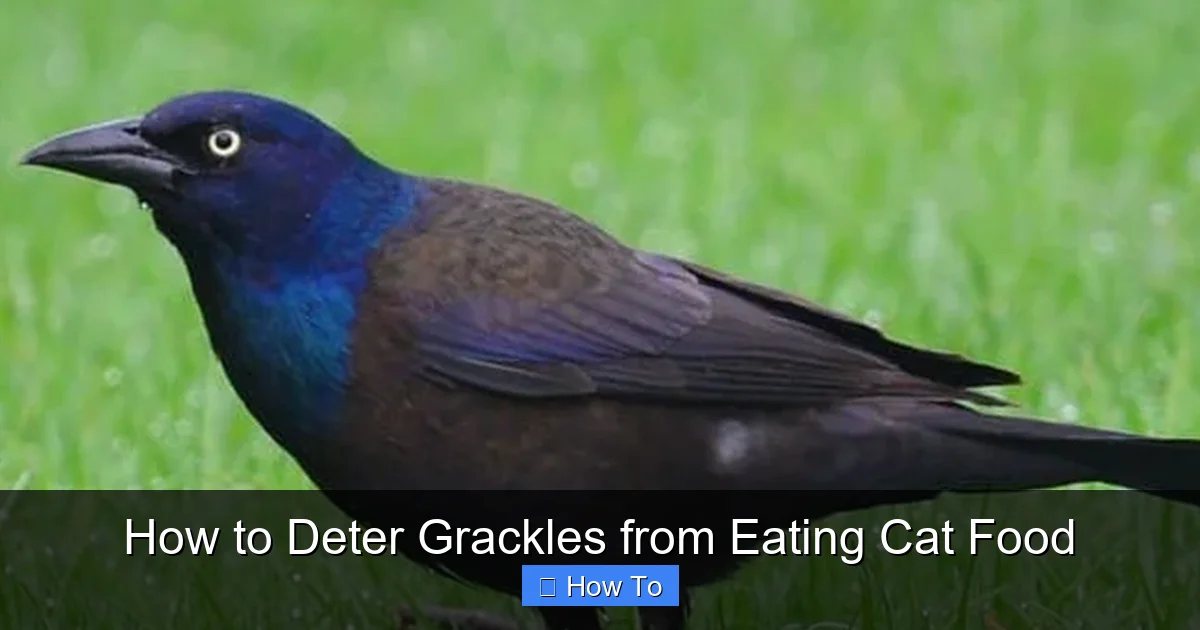
If grackles are stealing your cat’s food, you’re not alone. This guide offers practical, humane solutions to keep these bold birds at bay while ensuring your feline friend eats in peace. From smart feeding schedules to deterrent devices, we’ve got you covered.
Key Takeaways
- Feed your cat indoors whenever possible: This is the most effective way to prevent grackles and other wildlife from accessing cat food.
- Use timed feeders to control access: Automatic feeders can release food at specific times, reducing the window grackles have to steal meals.
- Choose elevated or enclosed feeding stations: Raised platforms or covered bowls make it harder for grackles to land and feed.
- Install visual and auditory deterrents: Reflective tape, motion-activated sprinklers, and ultrasonic devices can scare grackles away without harm.
- Maintain a clean feeding area: Remove spilled food and debris to avoid attracting grackles and other pests.
- Use bird-specific repellents safely: Non-toxic sprays or gels can discourage grackles without endangering pets or the environment.
- Be consistent and patient: It may take a few weeks for grackles to learn that your yard is no longer a reliable food source.
How to Deter Grackles from Eating Cat Food
If you’ve ever stepped outside to find a flock of grackles pecking at your cat’s food bowl, you know how frustrating it can be. These sleek, iridescent birds—common in urban and suburban areas across North America—are intelligent, opportunistic feeders. While they play a role in the ecosystem, their boldness can turn them into unwelcome guests at your pet’s dinner table.
In 2026, as more people adopt outdoor feeding routines for their cats—whether for convenience, multi-pet households, or feral cat care—the problem of grackles stealing cat food has become increasingly common. The good news? There are effective, humane ways to keep these birds at bay without harming them or disrupting your cat’s routine.
This comprehensive guide will walk you through proven strategies to deter grackles from eating cat food. You’ll learn how to adjust your feeding habits, modify your outdoor space, and use safe deterrents to protect your pet’s meals. Whether you’re dealing with a single grackle or a whole flock, these tips will help you reclaim your cat’s dining area.
Let’s dive in.
Why Grackles Are Attracted to Cat Food

Visual guide about How to Deter Grackles from Eating Cat Food
Image source: goodfreephotos.com
Before we explore solutions, it’s important to understand why grackles are so drawn to cat food in the first place. Grackles are omnivorous birds with a strong preference for protein-rich foods. Commercial cat food—especially dry kibble and wet food—is packed with meat-based proteins, fats, and oils, making it highly appealing to these birds.
Additionally, grackles are highly adaptable and thrive in human-altered environments. They’re often seen in parks, parking lots, and suburban backyards, where food sources like garbage, insects, and pet food are readily available. Once they discover a reliable food source—like your cat’s outdoor bowl—they’ll return repeatedly and may even bring others.
Grackles are also social birds. They travel in flocks and communicate effectively, so if one bird finds your cat food, it won’t be long before the whole group shows up. Their sharp eyesight and keen memory allow them to remember feeding locations for weeks or even months.
Understanding these behaviors is the first step in deterring them. By removing the appeal and accessibility of cat food, you can break the cycle and encourage grackles to look elsewhere for meals.
Step 1: Feed Your Cat Indoors (When Possible)
The most effective way to prevent grackles from eating cat food is simple: don’t leave it outside.
Indoor feeding eliminates the problem entirely. If your cat is comfortable eating inside, this should be your first line of defense. Not only does it protect the food from birds, but it also shields your pet from other outdoor hazards like traffic, predators, and extreme weather.
Tips for Transitioning to Indoor Feeding
- Choose a quiet, low-traffic area: Cats prefer to eat in peaceful environments. A corner of the kitchen or a dedicated feeding nook works well.
- Use a consistent feeding schedule: Cats thrive on routine. Feed at the same times each day to reduce anxiety.
- Provide fresh water nearby: Always pair food with clean, fresh water to encourage hydration.
- Monitor your cat’s behavior: Some cats may resist indoor feeding at first. Be patient and offer praise or treats to reinforce positive associations.
If your cat is used to eating outside, gradually move the food bowl closer to the house over several days. Eventually, bring it indoors. Most cats adapt quickly, especially if they associate indoor feeding with safety and comfort.
Step 2: Use a Timed or Automatic Feeder
If indoor feeding isn’t an option—perhaps you’re caring for a feral cat or have a multi-cat household with outdoor access—consider using a timed or automatic feeder.
These devices release food at preset times, minimizing the amount of time the food is exposed. Since grackles are most active during daylight hours, scheduling feedings for early morning or late evening can reduce encounters.
How to Choose the Right Automatic Feeder
- Look for weather-resistant models: If used outdoors, the feeder should be durable and able to withstand rain, sun, and temperature changes.
- Opt for portion control: Choose a feeder that dispenses the right amount of food to avoid leftovers that attract birds.
- Consider battery or solar power: Ensure the feeder has a reliable power source, especially if used in remote areas.
- Test the timing mechanism: Make sure the feeder opens and closes reliably to prevent food from being exposed too long.
Popular brands in 2026, such as PetSafe, SureFeed, and Cat Mate, offer outdoor-compatible automatic feeders with programmable timers. Some even include microchip recognition, so only your cat can access the food—though this won’t stop grackles from trying to sneak in.
For best results, pair the automatic feeder with a covered or elevated feeding station (see Step 4) to further reduce bird access.
Step 3: Adjust Your Feeding Schedule
Grackles are diurnal, meaning they’re active during the day and rest at night. By aligning your cat’s feeding times with your pet’s natural habits—and avoiding peak grackle activity—you can significantly reduce bird interference.
Best Times to Feed Outdoor Cats
- Early morning (5:00–7:00 AM): Many cats are naturally more active at dawn. Feeding then allows your cat to eat before grackles become active.
- Late evening (after sunset): Grackles roost at night, so feeding after dark gives your cat a quiet meal.
- Avoid midday feeding: This is when grackles are most active and likely to visit your yard.
If you’re caring for a feral cat colony, coordinate feeding times with other caregivers to ensure consistency. Use a group chat or shared calendar to stay on schedule.
Example Feeding Schedule
- 6:00 AM: Dispense dry food via automatic feeder.
- 7:30 PM: Place wet food in a covered station; remove after 30 minutes.
This routine gives your cat access to fresh food while limiting exposure to birds. Over time, grackles will learn that food isn’t available during daylight hours and may stop visiting altogether.
Step 4: Use Elevated or Enclosed Feeding Stations
Grackles are ground-foraging birds, but they can also land on low surfaces. To make it harder for them to access cat food, use elevated or enclosed feeding stations.
Elevated Feeding Platforms
Raise the food bowl off the ground using a sturdy platform, table, or cat feeding tower. Aim for a height of at least 2–3 feet. Grackles prefer flat, open surfaces, so a raised platform with a small landing area can deter them.
Enclosed or Covered Feeders
These stations have a roof or partial walls that block birds while allowing cats to enter. Look for designs with:
- Cat-sized entry holes: Too small for grackles, but large enough for your cat.
- Weight-activated lids: Some models only open when a cat steps on a platform.
- Transparent sides: Allow your cat to see inside, reducing anxiety.
In 2026, smart feeding stations with motion sensors and camera monitoring are also available. These high-tech options can alert you when a bird (or other animal) approaches, allowing you to intervene remotely.
DIY Enclosed Feeder Idea
You can create a simple enclosed feeder using a large plastic storage bin:
- Cut a cat-sized hole on one side.
- Place the food bowl inside.
- Elevate the bin on bricks or a stand.
- Add a roof or lid to prevent rain and bird access.
This low-cost solution is effective and easy to customize.
Step 5: Install Visual and Auditory Deterrents
Grackles are wary of unfamiliar sights and sounds. By using visual and auditory deterrents, you can create an environment that feels unsafe or unpredictable, encouraging birds to stay away.
Visual Deterrents
- Reflective tape or CDs: Hang shiny, moving objects near the feeding area. The flashing light confuses and startles grackles.
- Predator decoys: Place plastic owls, hawks, or snakes near the food bowl. Move them every few days to maintain effectiveness.
- Motion-activated lights: Install solar-powered lights that turn on when movement is detected. Grackles avoid well-lit areas at night.
Auditory Deterrents
- Ultrasonic repellents: These devices emit high-frequency sounds that birds can hear but humans cannot. Place them near the feeding station.
- Wind chimes or bells: The random noise can unsettle grackles without disturbing your cat.
- Motion-activated sprinklers: Brands like Orbit or Contech offer sprinklers that activate when motion is detected. The sudden spray startles birds and keeps them away.
Tips for Using Deterrents Effectively
- Rotate deterrents regularly: Grackles are smart and may get used to static objects. Change positions or types every week.
- Combine multiple methods: Use both visual and auditory deterrents for greater impact.
- Place deterrents strategically: Position them within 10–15 feet of the feeding area for maximum effect.
Avoid using loud noises or bright lights during your cat’s feeding times, as this could stress your pet.
Step 6: Keep the Feeding Area Clean
Spilled food, crumbs, and leftover kibble are like a dinner bell for grackles. Even small amounts can attract birds from blocks away.
Maintaining a clean feeding area is essential for deterring grackles and other pests like raccoons, squirrels, and insects.
Daily Cleaning Routine
- Remove uneaten food after 30–60 minutes: Don’t leave wet food out for long, as it spoils quickly and attracts birds.
- Sweep up crumbs and kibble: Use a small brush or handheld vacuum to clean the area around the bowl.
- Wash the food and water bowls daily: Use hot, soapy water to remove grease and odors that attract wildlife.
- Check for hidden food: Look under bushes, decks, or patio furniture where food may have rolled.
Weekly Maintenance
- Disinfect the feeding station: Use a pet-safe cleaner to sanitize surfaces and prevent bacterial growth.
- Inspect for damage: Repair cracks or holes in enclosures that could allow birds to enter.
- Trim nearby vegetation: Overhanging branches or dense shrubs give grackles cover to approach unnoticed.
A clean, well-maintained feeding area not only deters grackles but also promotes your cat’s health and hygiene.
Step 7: Use Safe Bird Repellents
If grackles persist, you may consider using non-toxic bird repellents. These products are designed to discourage birds without causing harm.
Types of Safe Repellents
- Taste-based sprays: Apply to surfaces around the feeding area. Grackles find the taste unpleasant but it’s harmless to pets and humans.
- Gel repellents: Stick to ledges or feeding platforms. The sticky texture deters birds from landing.
- Natural deterrents: Essential oils like peppermint or citrus can be diluted and sprayed around the area. Reapply after rain.
Important Safety Tips
- Never apply repellents directly to cat food or bowls: This could harm your pet.
- Choose pet-safe products: Look for labels that say “non-toxic” and “safe for animals.”
- Test on a small area first: Ensure the repellent doesn’t damage surfaces or plants.
- Follow manufacturer instructions: Overuse can reduce effectiveness or create residue.
In 2026, eco-friendly repellents made from plant-based ingredients are widely available and highly effective. Brands like Bird-X and EcoBird offer solutions specifically designed for outdoor use.
Troubleshooting Common Issues
Even with the best strategies, you may still encounter challenges. Here’s how to address common problems:
Grackles Keep Returning
- Solution: Be consistent. It can take 2–4 weeks for grackles to abandon a food source. Combine multiple deterrents and avoid leaving food out during the day.
Your Cat Is Stressed by Deterrents
- Solution: Introduce new devices gradually. Let your cat explore the feeding station without food first. Use positive reinforcement like treats and praise.
Other Animals Are Also Attracted
- Solution: Raccoons, squirrels, and stray cats may also be drawn to the food. Use enclosed feeders and remove food promptly. Consider microchip-activated feeders for multi-pet households.
Weather Damages Feeding Equipment
- Solution: Choose weather-resistant materials and store feeders indoors during storms. Use tarps or covers for added protection.
Neighbors Are Feeding Birds
- Solution: Talk to neighbors about the issue. Suggest bird feeders placed away from your property or use species-specific feeders that exclude grackles.
Conclusion
Grackles may be clever and persistent, but with the right approach, you can successfully deter them from eating your cat’s food. The key is to make the food source less accessible, less appealing, and less predictable.
Start by feeding your cat indoors whenever possible. If outdoor feeding is necessary, use timed feeders, elevated stations, and clean routines to minimize exposure. Add visual and auditory deterrents to create an environment that grackles want to avoid. And always prioritize safety—both for your cat and the birds.
Remember, consistency is crucial. It may take a few weeks of effort, but over time, grackles will learn that your yard is no longer a reliable food stop. Your cat will enjoy peaceful meals, and you’ll have one less thing to worry about.
By following the steps in this guide, you’re not just solving a nuisance—you’re creating a safer, healthier space for your pet and supporting a balanced local ecosystem. In 2026 and beyond, humane, effective solutions like these are the way forward.
Now go enjoy that quiet morning with your cat—grackle-free.