

Leaving your cat alone doesn’t mean sacrificing their favorite wet food meals. This guide covers modern solutions like smart feeders, portioned freezing, and trusted pet sitters to keep your feline happy, healthy, and well-fed while you’re away.
Key Takeaways
- Use smart automatic feeders with cooling features: New 2026 models include built-in ice packs or refrigeration to keep wet food fresh for hours.
- Pre-portion and freeze meals in advance: Freeze individual servings in silicone molds so they thaw safely by feeding time.
- Hire a reliable pet sitter or use a trusted neighbor: A quick daily visit ensures fresh food, water, and companionship.
- Choose high-quality, preservative-free wet food: Look for brands with natural ingredients that stay safer longer at room temperature.
- Test your setup before leaving: Run a trial weekend to ensure your method works and your cat eats as expected.
- Monitor remotely with pet cameras: Many 2026 feeders include HD video, two-way audio, and feeding alerts sent to your phone.
- Never leave wet food out for more than 4 hours: Bacteria grow quickly—discard uneaten portions to protect your cat’s health.
How to Feed Cat Wet Food While Away Cat
Leaving your cat behind—whether for a weekend getaway, a business trip, or a week-long vacation—can be stressful. You want your furry friend to feel loved, safe, and well-fed. But here’s the catch: wet food spoils quickly. Unlike dry kibble, which can sit out for hours, wet food becomes a breeding ground for bacteria if left unrefrigerated for too long. So how do you give your cat the nutritious, moisture-rich meals they love while you’re away?
The good news? In 2026, we have more tools and techniques than ever to make this possible. From high-tech smart feeders to simple DIY freezing hacks, there are safe, effective ways to feed your cat wet food even when you’re not home. This guide will walk you through every step—choosing the right method, preparing meals in advance, and ensuring your cat stays happy and healthy in your absence.
Whether you’re gone for one night or seven, you’ll learn practical, vet-approved strategies that work. We’ll cover everything from automatic feeders with cooling systems to hiring a pet sitter, plus tips on food safety, portion control, and remote monitoring. By the end, you’ll feel confident leaving your cat with a feeding plan that’s both convenient and compassionate.
Let’s dive in.
Why Wet Food Matters—And Why It’s Tricky When You’re Away
Wet food isn’t just a treat—it’s a vital part of many cats’ diets. It provides essential hydration, supports kidney health, and is often more palatable for picky eaters. Cats are naturally prone to urinary tract issues, and the extra moisture in wet food helps prevent problems like crystals or blockages.
But wet food comes with a challenge: it doesn’t last long outside the fridge. Once opened, it should be refrigerated and used within 4–6 hours if left at room temperature. After that, bacteria like Salmonella or E. coli can grow, putting your cat at risk of foodborne illness.
That’s why simply leaving a bowl of wet food out while you’re gone isn’t safe—even for a few hours. And while some cats might nibble over time, most prefer fresh, room-temperature food. Stale or warm wet food? They’ll turn their nose up.
So the goal isn’t just to feed your cat—it’s to feed them *safely* and *effectively* while you’re away. The solutions in this guide are designed to do exactly that.
Method 1: Use a Smart Automatic Feeder with Cooling
In 2026, smart pet feeders have evolved far beyond basic timers. Many now include built-in cooling systems, portion control, and real-time monitoring—making them ideal for wet food.
How Cooling Feeders Work
These feeders use one of two cooling methods:
– Ice pack compartments: A removable gel pack sits beneath or around the food tray, keeping it chilled for up to 8 hours.
– Mini refrigeration units: High-end models (like the PetSafe SmartServe 2026 or the Furbo Wet Food Dispenser) have small cooling elements that maintain a safe temperature, similar to a mini-fridge.
Both options prevent spoilage and keep food fresh until your cat eats it.
Step-by-Step Setup
- Choose the right feeder: Look for models specifically designed for wet food. Check reviews for reliability, ease of cleaning, and cooling duration.
- Pre-portion meals: Use the feeder’s portion trays or silicone molds to divide daily meals. Most feeders hold 3–6 meals.
- Load the feeder: Place each portion in a tray, seal if needed, and insert the cooling pack or activate the refrigeration mode.
- Program feeding times: Set the feeder to dispense meals at your cat’s usual schedule—morning, evening, or both.
- Test before you leave: Run a 24-hour trial to ensure the food stays fresh and your cat eats it.
Top 2026 Models to Consider
- PetSafe SmartServe 2026: Holds 6 meals, includes a rechargeable cooling pack, and connects to an app with feeding alerts.
- Furbo Wet Food Dispenser: Features a mini-fridge, HD camera, two-way audio, and automatic spoilage detection.
- Wopet SmartFeeder Pro: Affordable option with ice tray compatibility and portion control for up to 4 meals.
Pro Tips
– Clean the feeder thoroughly after each use to prevent mold or bacteria buildup.
– Use airtight trays or covers to reduce odor and keep food moist.
– Keep the feeder in a cool, shaded area to extend cooling time.
Method 2: Freeze Meals in Advance
If you prefer a low-tech, budget-friendly approach, freezing wet food is a reliable method. It’s simple, safe, and doesn’t require any gadgets.
How Freezing Works
When you freeze wet food, you stop bacterial growth. As it thaws at room temperature, it reaches a safe eating temperature within 2–4 hours—just in time for your cat’s meal.
Step-by-Step Freezing Process
- Choose the right containers: Use silicone ice cube trays, small reusable containers, or portioned pouches. Silicone trays are ideal because they’re easy to pop out and stack.
- Portion the food: Scoop the recommended daily amount (usually 3–5 oz per meal for an average adult cat) into each compartment.
- Label and freeze: Write the date and meal type on each container. Freeze for at least 12 hours.
- Thaw safely: Remove the frozen portion the night before you leave. Let it thaw in the fridge, then bring to room temperature before serving.
- Serve and monitor: Place the thawed food in your cat’s bowl. If they don’t eat it within 4 hours, discard it.
Example: Weekend Trip Plan
Let’s say you’re leaving Friday evening and returning Sunday night. Here’s how to prepare:
– Thursday night: Portion Friday dinner, Saturday breakfast and dinner, and Sunday breakfast into silicone trays.
– Friday morning: Move Friday dinner from freezer to fridge to thaw.
– Friday evening: Before leaving, place the thawed Friday dinner in your cat’s bowl. Set out fresh water.
– Saturday: A pet sitter or neighbor feeds the Saturday meals (more on that below).
– Sunday: Same process for Sunday meals.
Pro Tips
– Don’t refreeze thawed food—it increases the risk of spoilage.
– Use BPA-free, food-safe containers.
– Add a splash of warm water to frozen portions to help them thaw faster and enhance aroma (cats love smell!).
Method 3: Hire a Pet Sitter or Ask a Trusted Neighbor
Sometimes, the best solution is human help. A pet sitter or neighbor can provide fresh food, clean water, and much-needed social interaction.
Why a Pet Sitter Is Ideal
Cats are creatures of routine. A familiar face coming in daily reduces stress and anxiety. Plus, a sitter can:
– Serve fresh wet food at the right time.
– Monitor your cat’s appetite and behavior.
– Clean the litter box and refresh water.
– Send you photos or updates.
How to Find a Reliable Sitter
- Use trusted platforms: Apps like Rover, Care.com, or PetBacker (popular in 2026) let you read reviews, check background checks, and message sitters directly.
- Ask for references: A good sitter will have experience with cats and can provide contact info for past clients.
- Do a meet-and-greet: Introduce your cat to the sitter before you leave. Observe how they interact.
- Provide clear instructions: Leave a detailed note with feeding times, portion sizes, food location, and emergency contacts.
Sample Feeding Instructions for a Sitter
“Hi! Thanks for helping with Luna. She eats 1/2 can of [Brand] wet food twice a day—8 AM and 6 PM. Please warm it slightly (10 seconds in the microwave) and serve in her blue bowl. Discard any uneaten food after 4 hours. Her water fountain needs fresh water daily. Emergency vet: [Name], [Phone]. Thanks again!”
Pro Tips
– Offer a small tip for extra care or last-minute requests.
– Leave extra food and supplies in case of delays.
– Use a pet camera to check in and see how your cat is doing.
Method 4: Combine Methods for Maximum Safety
The best approach often combines two or more methods. For example:
– Use a smart feeder for one meal and a pet sitter for the other.
– Freeze meals and have a neighbor check in daily.
– Use a feeder with a camera so you can monitor and intervene if needed.
Example: Week-Long Trip Plan
You’re leaving for 7 days. Here’s a hybrid plan:
– Days 1–3: Use a smart feeder with cooling for morning meals. Hire a sitter for evening meals.
– Days 4–7: Sitter handles all meals, using pre-portioned frozen food thawed that morning.
– Backup: Leave extra food and a backup feeder with a friend in case of power outages.
This way, you reduce reliance on technology alone and ensure your cat gets fresh food every day.
Food Safety Tips You Can’t Ignore
No matter which method you choose, food safety is non-negotiable.
Never Leave Wet Food Out Over 4 Hours
Bacteria multiply rapidly between 40°F and 140°F (the “danger zone”). Even in cool homes, room temperature is often within this range. After 4 hours, discard any uneaten wet food.
Store Opened Cans Properly
If using canned food, transfer leftovers to an airtight container and refrigerate. Use within 5–7 days. Don’t leave opened cans in the feeder—transfer portions to clean trays.
Wash Bowls and Feeders Daily
Use hot, soapy water or a pet-safe dishwasher cycle. Residue can grow bacteria even if food is fresh.
Watch for Signs of Spoilage
If food smells sour, looks slimy, or has changed color, don’t serve it. When in doubt, throw it out.
Troubleshooting Common Problems
Even with the best plans, issues can arise. Here’s how to handle them.
Problem: Cat Won’t Eat from the Feeder
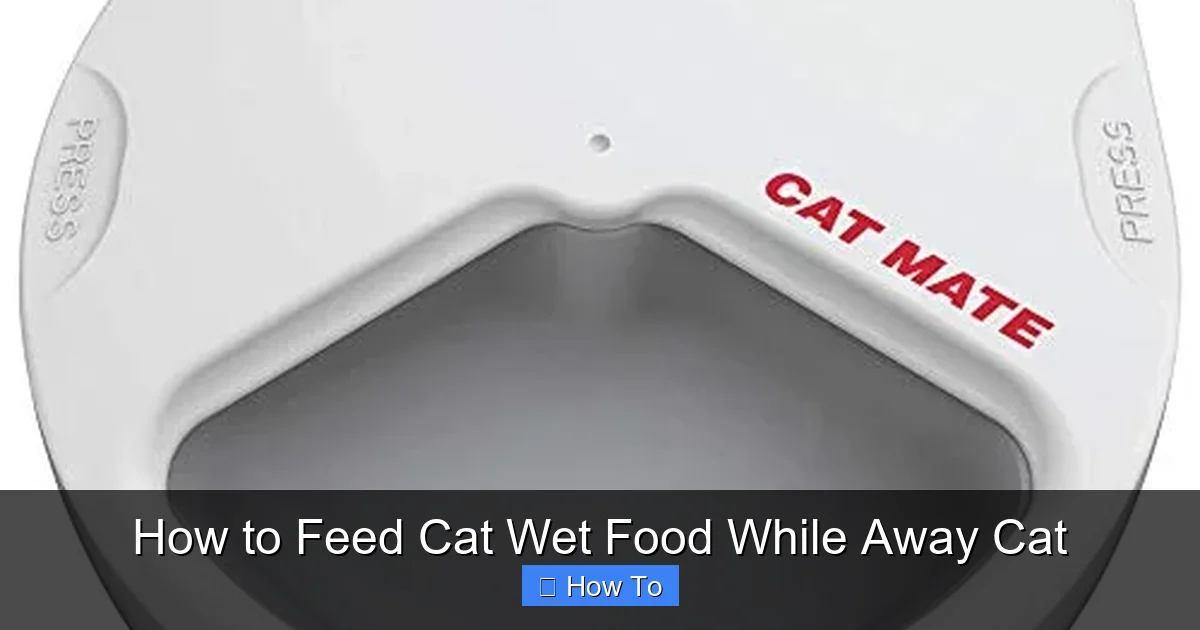
Some cats are wary of new devices. Solution: Introduce the feeder weeks before you leave. Let your cat sniff it, place treats inside, and gradually add wet food. Reward with praise or play.
Visual guide about How to Feed Cat Wet Food While Away Cat
Image source: m.media-amazon.com
Problem: Feeder Jams or Malfunctions
Mechanical issues happen. Solution: Choose a feeder with a manual release option. Test it multiple times. Keep a backup plan (like a neighbor on standby).
Problem: Power Outage
Cooling feeders may stop working. Solution: Use battery-powered models or have a sitter check in. Keep a cooler with ice packs as a backup.
Problem: Cat Stops Eating
Stress or illness can reduce appetite. Solution: Ask your sitter to monitor closely. If your cat skips two meals, contact your vet. Leave written instructions for emergency care.
Choosing the Right Wet Food for Travel Feeding
Not all wet foods are created equal—especially when it comes to shelf stability and palatability.
Look for These Features
- No artificial preservatives: Natural preservatives like vitamin E (tocopherols) are safer and extend freshness.
- High moisture content: Aim for 70–80% water to support hydration.
- Single-serve packaging: Pouches or small cans reduce waste and make portioning easier.
- Grain-free and high-protein: Mimics a cat’s natural diet and supports energy.
Top 2026 Brands for Away Feeding
- Wellness CORE Grain-Free: Rich in protein, available in convenient 3-oz cans.
- Purina Pro Plan True Nature: Natural ingredients, no artificial colors or flavors.
- Tiki Cat Luau: High moisture, human-grade ingredients, loved by picky eaters.
- Open Farm Wet Food: Ethically sourced, recyclable packaging, great for sensitive stomachs.
Remote Monitoring: Stay Connected in 2026
Thanks to advances in pet tech, you can keep an eye on your cat—and their meals—from anywhere.
Features to Look For
- HD live video: See your cat in real time, day or night (with night vision).
- Two-way audio: Talk to your cat or soothe them with your voice.
- Feeding alerts: Get a notification when a meal is dispensed or if the feeder jams.
- Cloud storage: Review past footage to check eating habits.
Recommended 2026 Cameras
- Furbo 360° Pet Camera: Rotates 360 degrees, includes treat tossing and barking alerts (works for cats too).
- Petcube Bento: Built-in feeder, camera, and treat dispenser in one.
- Whistle GO Explore: GPS tracker with health monitoring—great for outdoor cats.
Final Tips for a Stress-Free Departure
Before you leave, take these steps to ensure everything goes smoothly:
– Visit the vet: Get a clean bill of health and ask about travel stress.
– Pack a care kit: Include food, bowls, litter, toys, and medical records.
– Leave familiar scents: A worn t-shirt or blanket can comfort your cat.
– Don’t make a big goodbye: Cats pick up on anxiety. Stay calm and casual.
Conclusion
Feeding your cat wet food while you’re away is not only possible—it’s easier than ever in 2026. With smart feeders, freezing techniques, trusted sitters, and remote monitoring, you can give your cat the nutrition and care they deserve, no matter where you are.
The key is planning ahead, testing your method, and prioritizing food safety. Whether you go high-tech or keep it simple, your cat will thank you with purrs, head bumps, and a clean food bowl.
Remember: a happy cat is a well-fed cat. And with the right strategy, you can enjoy your time away—knowing your furry friend is in good hands.