
Planning a vacation doesn’t mean your cat has to skip their favorite wet food meals. With the right tools and preparation, you can ensure your feline friend enjoys fresh, safe meals even when you’re not home. This guide covers automatic feeders, pet sitters, and smart storage solutions for 2026.
Key Takeaways
- Use automatic wet food feeders: Modern 2026 models offer portion control, refrigeration, and app-based monitoring to keep food fresh and safe.
- Hire a trusted pet sitter: A reliable person can feed your cat fresh wet food daily and provide companionship, reducing stress.
- Pre-portion meals in advance: Freeze individual servings in airtight containers to maintain freshness and simplify feeding schedules.
- Choose the right storage containers: Vacuum-sealed or insulated containers help preserve wet food quality during short absences.
- Test your setup before leaving: Run a trial for a few days to ensure your cat accepts the new feeding method and the equipment works properly.
- Monitor remotely with smart tech: Use Wi-Fi cameras and feeding apps to check on your cat and adjust portions in real time.
- Have a backup plan: Always prepare for power outages or feeder malfunctions with extra food and emergency contacts.
How to Feed Cat Wet Food While on Vacation
Planning a vacation is exciting—but leaving your cat behind can be stressful, especially if they’re used to eating wet food every day. Unlike dry kibble, wet food spoils quickly once opened and can’t sit out for long. So how do you keep your cat happy, healthy, and well-fed while you’re sipping cocktails on a beach miles away?
The good news? In 2026, we have more tools and strategies than ever to feed cat wet food while on vacation. From high-tech automatic feeders to trusted pet sitters and smart meal prep, you’ve got options. This guide will walk you through every step—so your cat enjoys fresh, delicious meals, and you enjoy peace of mind.
Whether you’re gone for three days or two weeks, this comprehensive how-to will help you choose the best method for your cat’s needs, your budget, and your travel plans. Let’s dive in.
Why Wet Food Matters for Cats

Visual guide about How to Feed Cat Wet Food While on Vacation
Image source: diyseattle.com
Before we get into the “how,” let’s talk about the “why.” Wet food isn’t just a treat—it’s often a key part of a cat’s diet. Cats are obligate carnivores, meaning they need animal-based protein to thrive. Wet food typically has higher moisture content (around 70–80%), which helps support kidney and urinary health. Many cats don’t drink enough water on their own, so wet food helps keep them hydrated.
Plus, wet food is often more palatable. If your cat is picky or has dental issues, they may prefer the soft texture and strong aroma of wet food over dry kibble. Skipping it while you’re away could lead to stress, reduced appetite, or even health problems.
So, keeping your cat on their regular wet food routine isn’t just about convenience—it’s about their well-being.
Assess Your Vacation Length and Cat’s Needs
Not all vacations are the same, and neither are all cats. The first step is to evaluate how long you’ll be gone and what your cat needs.
Short Trips (1–3 Days)
For short getaways, you might not need a full automatic feeder. A trusted neighbor or pet sitter who can stop by once or twice a day may be enough. Just make sure they know how much to feed, when, and how to store leftovers.
Medium Trips (4–7 Days)
This is where things get trickier. Wet food can’t sit out for more than a few hours, and you can’t rely on someone visiting every single day unless you’ve arranged it. An automatic feeder with refrigeration or a pet sitter who comes daily is ideal.
Long Trips (1–2+ Weeks)
For extended vacations, you’ll need a reliable, long-term solution. This usually means hiring a professional pet sitter or using a high-end automatic feeder with remote monitoring. You’ll also need to plan for food storage, power backups, and emergency contacts.
Also consider your cat’s personality. Is your cat social and comfortable with strangers? A pet sitter might be perfect. Is your cat shy or anxious? A quiet, automated system might be less stressful.
Option 1: Use an Automatic Wet Food Feeder
Automatic feeders are a game-changer for feeding cat wet food while on vacation. In 2026, these devices are smarter, safer, and more reliable than ever.
How Automatic Wet Food Feeders Work
Modern feeders use timed dispensing, portion control, and sometimes refrigeration to deliver fresh wet food at set times. Some models have rotating trays, while others use vacuum-sealed compartments. Many connect to Wi-Fi and come with apps that let you monitor feeding times, adjust portions, and even check on your cat via a built-in camera.
Top Features to Look For in 2026
- Refrigeration or cooling system: Keeps food fresh for up to 24 hours after opening. Essential for multi-day trips.
- Portion control: Lets you set exact serving sizes to prevent overfeeding.
- App connectivity: Allows remote monitoring and alerts if a meal is missed.
- Backup power: Battery or solar-powered options in case of a power outage.
- Easy cleaning: Dishwasher-safe parts or removable trays for hygiene.
- Quiet operation: Won’t scare nervous cats with loud noises.
Popular Models in 2026
- PetSafe SmartFeed 2026: Features a built-in cooler, app control, and a 7-day capacity. Great for medium trips.
- Furbo Pro Feeder: Includes a camera, two-way audio, and a rotating tray with 10 sealed compartments.
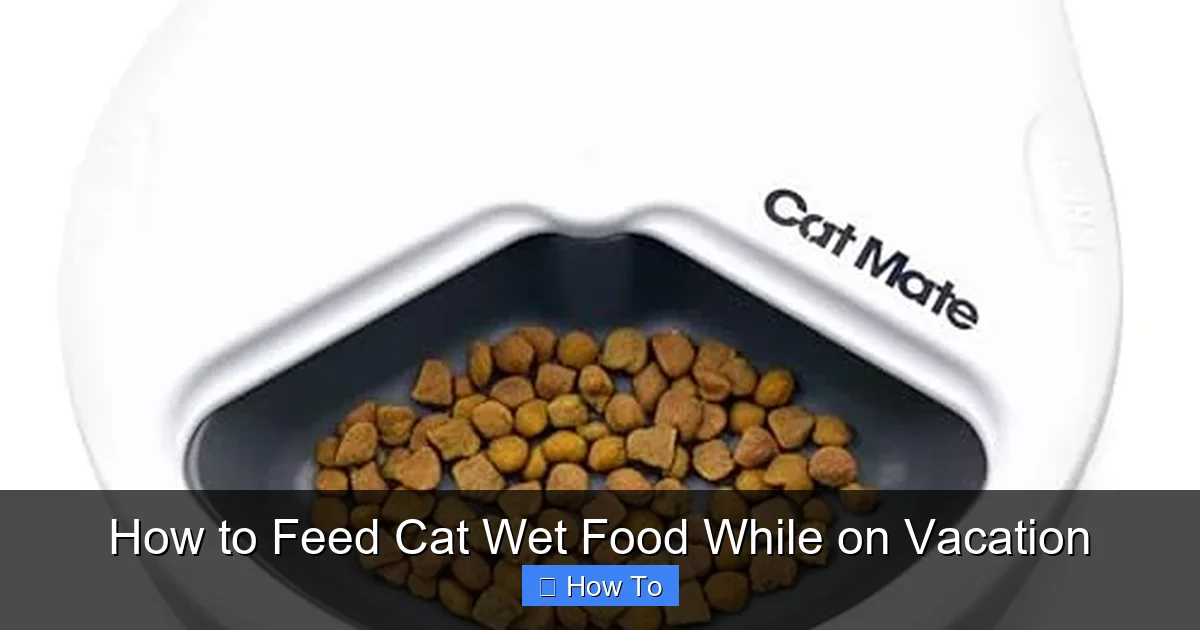
- CatMate C500: A budget-friendly option with ice packs and programmable timers. Best for 3–5 days.
- Whisker Feedster: High-end model with AI that learns your cat’s eating habits and adjusts portions.
How to Set Up an Automatic Feeder
- Choose the right feeder: Match it to your trip length and your cat’s daily food needs.
- Pre-portion the food: Use small containers or silicone molds to freeze individual meals. Label them with the day and time.
- Load the feeder: Place frozen portions in the compartments. Most feeders thaw food safely before dispensing.
- Test it at home: Run the feeder for a few days while you’re home. Watch your cat’s reaction and check for malfunctions.
- Set the schedule: Program feeding times in the app or on the device. Stick to your cat’s usual routine.
- Monitor remotely: Use the app to check feeding logs and camera feed. Adjust if needed.
Tips for Success
- Introduce the feeder gradually. Let your cat sniff and explore it before you leave.
- Use familiar food. Don’t switch brands or flavors right before your trip.
- Keep the feeder in a quiet, accessible spot. Avoid high-traffic areas or near litter boxes.
- Have a backup plan. Even the best feeders can fail. Keep extra food and a manual feeding option ready.
Option 2: Hire a Pet Sitter
Sometimes, nothing beats human care. A pet sitter can feed your cat fresh wet food, clean the bowl, and give your feline friend some much-needed attention.
Benefits of a Pet Sitter
- Fresh meals daily: No risk of spoiled food or malfunctioning machines.
- Companionship: Reduces stress and loneliness, especially for social cats.
- Health monitoring: A sitter can notice changes in appetite, behavior, or litter box habits.
- Extra services: Many sitters offer playtime, grooming, or plant watering.
How to Find a Reliable Pet Sitter in 2026
- Use trusted platforms: Apps like Rover, PetBacker, or local pet-sitting co-ops let you read reviews, check background checks, and message sitters directly.
- Ask for references: A good sitter will have happy clients willing to vouch for them.
- Meet in person: Do a trial visit before your trip. See how your cat reacts.
- Check certifications: Look for sitters with pet first aid training or membership in professional organizations.
What to Provide Your Pet Sitter
- Detailed feeding instructions: Include brand, flavor, portion size, and feeding times.
- Food and supplies: Leave enough wet food for the entire trip, plus bowls, spoons, and a can opener.
- Emergency contacts: Provide your vet’s number, a nearby friend or family member, and your travel info.
- House keys and access: Make sure they can get in safely. Consider a smart lock for remote access.
- Payment and schedule: Agree on rates and how often they’ll visit (once or twice daily is best for wet food).
Sample Feeding Instructions for a Sitter
“Hi Sarah! Thanks for watching Whiskers. He gets 1/2 can of Fancy Feast Salmon at 7 AM and 6 PM. Please open a new can each time—don’t leave leftovers out. His bowl is in the kitchen. If he doesn’t eat, don’t worry, but text me. His vet is Dr. Lee at 555-1234. Emergency contact: my sister, Jen, at 555-5678. Enjoy your stay!”
Option 3: Pre-Portion and Freeze Meals
If you’re using an automatic feeder or a sitter, pre-portioning meals can save time and reduce waste.
How to Freeze Wet Food Safely
- Choose the right containers: Use BPA-free silicone molds, ice cube trays, or small glass jars with lids.
- Portion daily servings: Fill each container with one meal’s worth of food.
- Label clearly: Write the date, flavor, and feeding time on each container.
- Freeze immediately: Place in the freezer right after opening to preserve freshness.
- Thaw safely: Move portions to the fridge 4–6 hours before feeding, or use a feeder with a thawing function.
Tips for Freezing Wet Food
- Don’t refreeze thawed food. Only thaw what you’ll use that day.
- Use within 6 months for best quality.
- Some cats prefer room-temperature food. Let it sit for 10–15 minutes before serving.
- Mix flavors in one container if your cat likes variety—just label it clearly.
Option 4: Use a Hybrid Approach
Why choose just one method? Many cat owners in 2026 combine automatic feeders with occasional pet sitter visits for the best of both worlds.
For example:
– Use an automatic feeder for daily meals.
– Hire a sitter to stop by every 2–3 days to check on your cat, clean the feeder, and give affection.
– Use a smart camera to monitor both the feeder and your cat’s behavior.
This hybrid approach reduces the risk of total failure and gives your cat human interaction, which is great for mental health.
Troubleshooting Common Problems
Even with the best plans, things can go wrong. Here’s how to handle common issues.
Feeder Malfunctions
- Problem: Feeder doesn’t dispense food.
- Solution: Check power source, app connection, and food blockages. Have a manual backup plan.
- Problem: Food spoils before dispensing.
- Solution: Use a feeder with refrigeration. Don’t load more than 24–48 hours of food at once.
Cat Refuses to Eat
- Problem: Your cat won’t eat from the new feeder.
- Solution: Introduce the feeder slowly. Place it near their regular bowl and let them explore. Use familiar food and positive reinforcement.
Power Outages
- Problem: Feeder stops working during a blackout.
- Solution: Choose a model with battery backup. Keep a cooler with ice packs and extra food nearby.
Pet Sitter No-Show
- Problem: Your sitter cancels last minute.
- Solution: Have a backup sitter on standby. Use a smart lock so a friend can step in. Keep emergency food accessible.
Smart Tech Tips for 2026
Technology is making pet care easier than ever. Here are some 2026 innovations to consider:
- AI-powered feeders: Learn your cat’s eating patterns and adjust portions automatically.
- Smart cameras with treat dispensers: Interact with your cat and reward them remotely.
- Health monitoring bowls: Track food intake and detect changes that could signal illness.
- GPS pet tags: Ensure your cat stays safe if they go outdoors.
- Voice-activated assistants: Set feeding reminders or ask your smart home to notify the sitter.
Final Preparations Before You Leave
A few days before your trip, do a final check:
- Test everything: Run the feeder, check the camera, and confirm the sitter’s schedule.
- Stock up on supplies: Extra food, bowls, cleaning supplies, and litter.
- Leave clear instructions: For sitters, neighbors, or family members.
- Update your vet: Let them know you’ll be away and who has access to your cat.
- Pack your own bag: Don’t forget your phone charger—remote monitoring is key!
Conclusion
Feeding cat wet food while on vacation doesn’t have to be a headache. With the right tools and planning, you can keep your feline friend happy, healthy, and well-fed—no matter how far you travel. In 2026, options like smart automatic feeders, trusted pet sitters, and pre-portioned frozen meals make it easier than ever to maintain your cat’s routine.
Remember: the best solution depends on your cat’s personality, your trip length, and your comfort level with technology. Test your setup, have a backup plan, and don’t forget to enjoy your vacation. Your cat will thank you with purrs and head bumps when you return.
Safe travels—and happy feeding!