
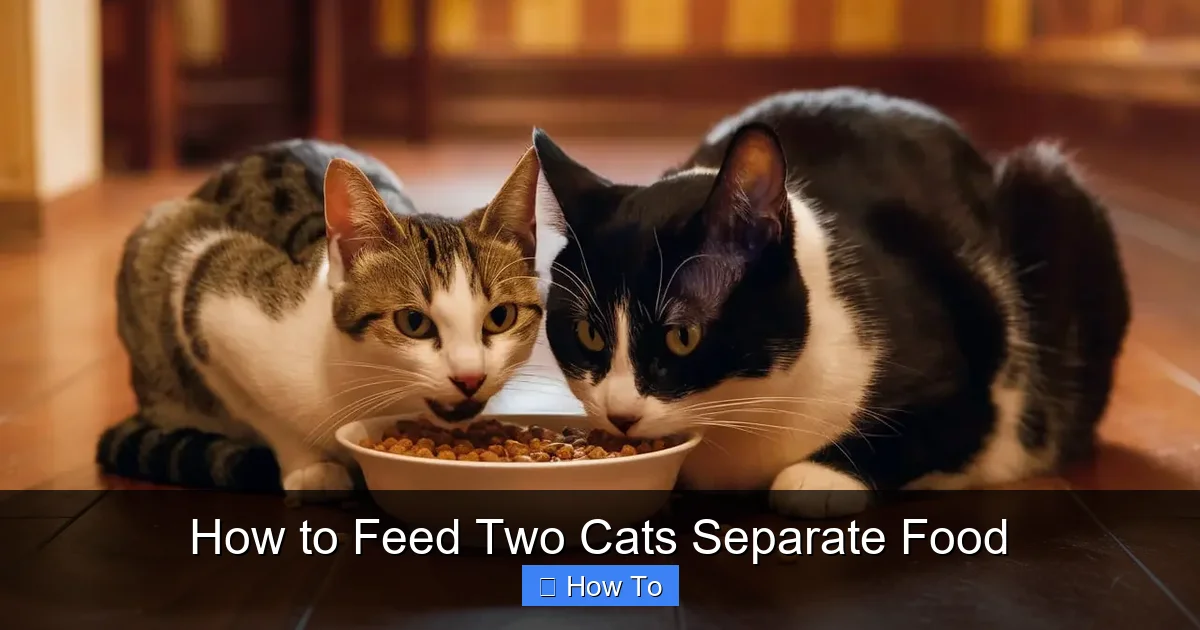
Feeding two cats separate food can prevent food guarding, ensure proper nutrition, and reduce stress. This guide covers smart feeding methods, tech solutions, and behavioral tips to make mealtime peaceful and effective for both cats.
Key Takeaways
- Use separate feeding zones: Create distinct areas to reduce competition and anxiety during meals.
- Invest in smart feeders: Automatic feeders with timers and portion control help manage feeding times and amounts.
- Consider microchip-activated bowls: These allow only one cat to access food, ideal for multi-cat households.
- Monitor food intake and health: Track eating habits to catch dietary issues early and adjust portions as needed.
- Train with positive reinforcement: Reward calm behavior during meals to build healthy routines.
- Adjust for special diets: If one cat needs a medical diet, separation is essential to protect their health.
- Be consistent and patient: Establishing a routine takes time, but consistency leads to long-term success.
How to Feed Two Cats Separate Food
If you’re a proud cat parent to two feline friends, you know that mealtime can sometimes turn into a mini showdown. One cat might be a slow eater, while the other finishes in seconds and starts eyeing their sibling’s bowl. Or worse—one cat is on a special diet due to health issues, and the other keeps sneaking bites. In 2026, with advances in pet technology and a deeper understanding of feline behavior, feeding two cats separate food is easier and more effective than ever.
This guide will walk you through practical, proven strategies to ensure both your cats get the right food, in the right amount, at the right time—without stress or conflict. Whether you’re dealing with food aggression, dietary restrictions, or just want to promote healthier eating habits, these steps will help you create a peaceful and organized feeding routine.
We’ll cover everything from simple spatial separation to high-tech solutions like smart feeders and microchip-activated bowls. You’ll also learn how to train your cats, monitor their health, and troubleshoot common problems. By the end, you’ll have a clear plan to feed your two cats separately—and happily.
Why Feed Two Cats Separate Food?
Visual guide about How to Feed Two Cats Separate Food
Image source: i1.wp.com
Before diving into the how-to, it’s important to understand why separating your cats during meals matters. While cats are often seen as independent creatures, they can still develop competition, anxiety, or health issues when sharing food.
One of the biggest reasons to feed cats separately is food guarding. Some cats become possessive of their food and may hiss, swat, or block access to the bowl. This not only causes stress but can also lead to one cat eating too much while the other doesn’t get enough.
Another key reason is dietary needs. In multi-cat households, it’s common for one cat to have allergies, weight issues, or medical conditions requiring a special diet. If both cats eat from the same bowl, the cat on the restricted diet may accidentally consume food that’s harmful to them.
Additionally, overeating is a growing concern. Cats are natural grazers, but in a shared feeding setup, one cat might eat both portions, leading to obesity and related health problems like diabetes or joint pain.
Finally, stress reduction plays a big role. Even if your cats get along well, mealtime can trigger territorial instincts. Separating their food helps create a calm, predictable environment where both cats can eat in peace.
In short, feeding two cats separate food promotes better health, reduces conflict, and supports individual dietary needs. It’s a simple change that can make a big difference in your cats’ well-being.
Step 1: Assess Your Cats’ Needs
Before setting up a separate feeding system, take time to understand each cat’s unique needs. This step is crucial for creating a plan that works for both of them.
Start by evaluating their health and dietary requirements. Is one cat overweight? Does the other have a sensitive stomach or food allergies? If so, they may need different types of food or portion sizes. Consult your veterinarian to confirm their nutritional needs and get recommendations.
Next, observe their eating behaviors. Which cat eats faster? Does one try to steal food? Are they anxious around each other during meals? Note these patterns so you can tailor your feeding strategy.
Also consider their personalities. A shy cat may feel intimidated by a more dominant one, even if there’s no overt aggression. Separating their food can help the quieter cat eat without stress.
Finally, think about your daily routine. Are you home during feeding times? Do you work long hours? Your availability will influence whether you can supervise meals or need automated solutions.
By understanding these factors, you can choose the best feeding method—whether it’s simple spatial separation, timed feeders, or high-tech bowls.
Step 2: Choose the Right Feeding Method
There are several ways to feed two cats separate food, and the best choice depends on your cats’ needs and your lifestyle. Here are the most effective methods used in 2026:
Option 1: Separate Rooms or Zones
The simplest and most cost-effective method is feeding your cats in different rooms or designated zones. This prevents direct competition and allows each cat to eat in peace.
Choose two quiet, comfortable areas—like a spare room, bathroom, or corner of the living room. Place each cat’s food and water bowls in their own space. Close the door or use a baby gate to keep them separated during meals.
This method works well if you’re home to supervise. It’s especially helpful for cats with food aggression or anxiety. Just make sure each area is safe, clean, and free from distractions.
Tip: Use the same bowls and food each time to create consistency. Rotate the rooms occasionally to prevent territorial behavior.
Option 2: Staggered Feeding Times
If your cats have similar diets and no medical restrictions, you can feed them at slightly different times. For example, feed Cat A at 7:00 AM and Cat B at 7:15 AM.
This reduces the chance of one cat finishing first and going after the other’s food. It also gives you a chance to monitor each cat’s eating habits individually.
Staggered feeding works best when combined with supervision. You can stay nearby to ensure both cats eat their portions and don’t interfere with each other.
Option 3: Use Smart Feeders
In 2026, smart feeders have become a game-changer for multi-cat households. These devices allow you to control portion sizes, feeding times, and even which cat gets access to food.
Many smart feeders come with built-in timers, so you can schedule meals even when you’re not home. Some models dispense food at specific intervals, perfect for cats who graze throughout the day.
Look for feeders with portion control features to prevent overeating. You can set exact amounts for each meal, ensuring both cats get the right nutrition.
Some advanced models even connect to your smartphone via an app. You can monitor feeding times, receive alerts, and adjust settings remotely. This is ideal for busy pet parents or those with irregular schedules.
Option 4: Microchip-Activated Bowls
For the ultimate in personalized feeding, consider microchip-activated bowls. These high-tech devices recognize your cat’s microchip or RFID collar tag and only open when the right cat approaches.
This is perfect if one cat needs a special diet or if you want to prevent food stealing. The bowl stays locked until the authorized cat arrives, then opens to dispense food.
In 2026, these bowls are more affordable and reliable than ever. Brands like SureFeed and PetSafe offer models that work with most microchips and are easy to set up.
Tip: Introduce the bowl gradually. Let your cat sniff and explore it before activating the microchip feature. Reward them with treats to build positive associations.
Option 5: Puzzle Feeders and Slow Feeders
If one cat eats too quickly, puzzle feeders can help slow them down and make mealtime more engaging. These interactive bowls require cats to work for their food, reducing the urge to rush.
You can use puzzle feeders in combination with other methods. For example, place one cat in a separate room with a puzzle feeder while the other eats in a different area.
Slow feeders, with ridges or mazes inside, are another great option. They prevent choking and promote better digestion.
Step 3: Set Up a Consistent Routine
Cats thrive on routine, and mealtime is no exception. A consistent feeding schedule helps reduce anxiety and makes it easier to manage separate feeding.
Choose specific times for meals—such as 7:00 AM and 6:00 PM—and stick to them every day. Avoid free-feeding (leaving food out all day), as it increases the risk of overeating and food competition.
If you’re using smart feeders, program them to dispense food at the same times. This ensures both cats get fed even if you’re not home.
Keep the feeding areas clean and quiet. Wash bowls daily to prevent bacteria buildup. Avoid placing food near litter boxes or noisy appliances.
Tip: Use a feeding chart or app to track meals, especially if you have a busy schedule. This helps you stay consistent and notice any changes in eating habits.
Step 4: Train Your Cats for Success
Even with the best setup, your cats may need time to adjust. Training helps them understand the new routine and reduces stress.
Start by introducing the feeding areas or devices gradually. Let your cats explore the new bowls or rooms without food at first. Reward them with treats and praise when they approach calmly.
If using microchip-activated bowls, allow each cat to trigger the mechanism several times before meals. This builds confidence and prevents frustration.
Use positive reinforcement throughout the process. Whenever a cat eats peacefully in their designated area, give them a treat or gentle petting. Avoid scolding or punishment, as it can increase anxiety.
If one cat is hesitant, try placing a small amount of their favorite food near the bowl to encourage them. Over time, they’ll associate the area with positive experiences.
Be patient. Some cats adapt quickly, while others may take weeks. Consistency and encouragement are key.
Step 5: Monitor and Adjust
Once your feeding routine is in place, keep an eye on how it’s working. Regular monitoring helps you catch issues early and make necessary adjustments.
Check each cat’s weight and body condition monthly. Use a pet scale or visit your vet for accurate measurements. If one cat is gaining or losing weight unexpectedly, adjust their portion size or consult your vet.
Observe their eating habits. Is one cat still trying to steal food? Are they eating too fast or too slow? Make changes as needed—such as switching to a slow feeder or adjusting feeding times.
Also watch for signs of stress, like hiding, excessive grooming, or changes in litter box habits. These could indicate that the feeding setup isn’t working.
If you’re using smart feeders, review the app data regularly. Look for missed meals, unusual feeding times, or technical issues.
Tip: Keep a journal or digital log of meals, behaviors, and health notes. This makes it easier to spot patterns and share information with your vet.
Troubleshooting Common Problems
Even with the best plan, challenges can arise. Here’s how to handle some common issues:
One Cat Still Tries to Steal Food
If your cats are still competing despite separation, try increasing the distance between feeding areas. Use solid barriers like closed doors or tall baby gates.
You can also feed the more dominant cat first, then quickly move them to a different room before feeding the other. This reduces the chance of interference.
Cat Won’t Use the New Feeder
Some cats are wary of new devices. Introduce the feeder slowly—place it near their old bowl at first, then gradually move it to the feeding area.
Add a familiar scent, like a bit of their old food or a cloth they’ve slept on, to make it more inviting.
Smart Feeder Malfunctions
If your smart feeder stops working, check the batteries, Wi-Fi connection, and app settings. Most models have troubleshooting guides online.
Keep a backup plan, like manual feeding or a spare bowl, in case of technical issues.
One Cat Eats Too Fast
Use a slow feeder or puzzle toy to slow down eating. You can also divide their meal into smaller portions and feed them at intervals.
Stress or Anxiety During Meals
Ensure feeding areas are quiet and private. Avoid loud noises or sudden movements during meals. Consider using calming sprays or pheromone diffusers in the feeding zones.
Conclusion
Feeding two cats separate food doesn’t have to be complicated. With the right strategy, tools, and a little patience, you can create a peaceful mealtime routine that supports both of your cats’ health and happiness.
Start by assessing their individual needs, then choose a feeding method that fits your lifestyle—whether it’s simple room separation, smart feeders, or microchip-activated bowls. Set a consistent schedule, train your cats with positive reinforcement, and monitor their progress.
Remember, every cat is different. What works for one household may need tweaking for another. The key is to stay flexible, observant, and committed to your cats’ well-being.
In 2026, with innovative pet tech and a growing understanding of feline behavior, feeding two cats separately is more achievable than ever. By following this guide, you’ll not only reduce mealtime stress but also ensure both cats get the nutrition they need to thrive.
Your cats deserve to eat in peace—and now, you know exactly how to make that happen.