
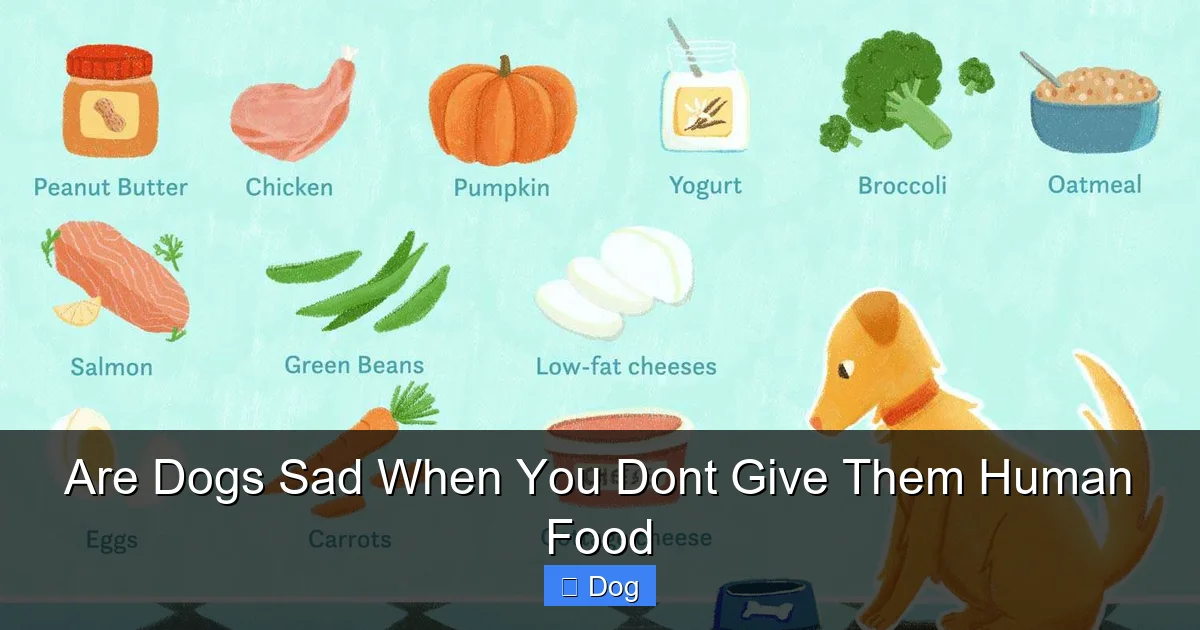
Many dog owners wonder if their pets feel sad when denied human food. While dogs may show disappointment, they don’t experience emotions the same way humans do. Understanding their behavior and nutritional needs helps ensure a happy, healthy pup.
Key Takeaways
- Dogs can show disappointment, but not sadness like humans: They react to tone, body language, and routine changes, not complex emotions.
- Human food isn’t necessary for a dog’s happiness: A balanced dog food diet meets all their nutritional needs.
- Some human foods are dangerous for dogs: Chocolate, grapes, onions, and xylitol can cause serious health issues.
- Training and consistency reduce begging behavior: Dogs learn quickly when boundaries are clear and rewards are consistent.
- Safe human food treats exist: Small amounts of cooked chicken, carrots, or plain rice can be healthy occasional treats.
- Emotional well-being comes from attention and routine: Play, walks, and affection matter more than food rewards.
- Consult your vet before changing your dog’s diet: Always check if a new food is safe for your dog’s breed, age, and health.
📑 Table of Contents
- Do Dogs Really Get Sad When You Say No to Human Food?
- How Dogs React to Being Denied Food
- The Truth About Human Food and Dogs
- How to Handle Begging Without Feeling Guilty
- Emotional Well-Being: What Dogs Really Need
- When to Consult a Veterinarian
- Conclusion: Love Your Dog, But Don’t Feed Them Your Dinner
Do Dogs Really Get Sad When You Say No to Human Food?
Have you ever looked into your dog’s big, soulful eyes while eating a slice of pizza, only to feel a pang of guilt when you say, “No, buddy, that’s not for you”? It’s a common scene in homes with dogs. Their hopeful stares, the slight whine, the slow retreat with a droopy tail—it all feels like sadness. But is your dog actually sad when you don’t share your food?
The short answer? Not exactly. Dogs don’t experience emotions the way humans do. They don’t feel guilt, shame, or deep sadness over being denied a treat. What they do feel is disappointment—a reaction to not getting something they wanted. This disappointment is based on anticipation and learned behavior, not emotional complexity. When your dog sees you eating and expects food, and doesn’t get it, they react to the broken expectation. It’s more about instinct and conditioning than true sadness.
Understanding this difference is key to being a responsible and loving pet owner. Dogs are incredibly perceptive. They pick up on your tone of voice, facial expressions, and body language. If you feel guilty and give in, they learn that begging works. Over time, this can lead to persistent begging, weight gain, or even behavioral issues. So while your dog might look “sad,” they’re really just responding to cues and habits.
How Dogs React to Being Denied Food
Visual guide about Are Dogs Sad When You Dont Give Them Human Food
Image source: emilysquotes.com
Dogs communicate primarily through body language, and their reactions to being denied food are no exception. When you refuse to share your meal, your dog might exhibit a range of behaviors that look like sadness but are actually signs of frustration, confusion, or learned begging tactics.
One common reaction is the “puppy dog eyes” stare. This isn’t just cute—it’s a powerful tool. Studies have shown that dogs have evolved muscles around their eyes that allow them to make expressions that trigger caregiving instincts in humans. When they lift their inner eyebrows, it makes their eyes look larger and more infant-like, which can make you feel guilty or sympathetic.
Other behaviors include whining, pacing, sitting near you, or even lying down with a dramatic sigh. Some dogs will walk away slowly, tail between their legs, as if defeated. These actions are often misinterpreted as sadness, but they’re more about testing boundaries and seeking attention.
It’s also important to note that dogs thrive on routine. If they’re used to getting table scraps during dinner, suddenly stopping can cause confusion. They might not understand why the rules have changed, leading to increased begging or anxiety. This isn’t sadness—it’s a reaction to inconsistency.
Why Dogs Beg for Human Food
Begging is a learned behavior. Dogs don’t naturally beg; they learn it works. If you’ve ever given in to those pleading eyes just once, you’ve taught your dog that persistence pays off. Over time, this becomes a habit.
Dogs are opportunistic eaters. In the wild, their ancestors would scavenge for food, so they’re naturally inclined to seek out anything that looks or smells edible. When they see you eating, their instincts kick in. They don’t know that your food might be unhealthy for them—they just know it smells good and you’re enjoying it.
Additionally, dogs associate food with positive experiences. Mealtime is often a time of bonding, attention, and reward. So when they see you eating, they want to be part of the action. It’s not just about the food—it’s about connection.
Signs Your Dog Is “Disappointed” (Not Sad)
So how can you tell if your dog is truly sad or just reacting to not getting what they want? Look for these signs:
– Ears back, tail down: This can indicate submission or mild frustration, not deep sadness.
– Whining or sighing: These are attention-seeking behaviors, not signs of emotional distress.
– Avoiding eye contact: Your dog might look away if they feel they’ve done something wrong, but this is more about reading your reaction than feeling guilty.
– Walking away slowly: This is a dramatic gesture, often used to guilt-trip you into giving in.
True sadness in dogs—such as when they’re ill, grieving, or experiencing separation anxiety—looks different. It includes prolonged lethargy, loss of appetite, withdrawal, and changes in sleep patterns. If your dog is only reacting to food denial, these deeper signs won’t be present.
The Truth About Human Food and Dogs
Many dog owners believe that sharing food strengthens the bond between them and their pet. And while it’s true that treats can be part of training and affection, not all human food is safe—or necessary—for dogs.
Dogs have different digestive systems and nutritional needs than humans. What’s a delicious snack for you could be toxic or harmful to your dog. For example, chocolate contains theobromine, which dogs can’t metabolize effectively and can lead to vomiting, seizures, or even death. Grapes and raisins can cause kidney failure, and onions and garlic can damage red blood cells.
Even foods that seem harmless, like bread or cheese, can lead to weight gain, digestive upset, or allergies if given in excess. Dogs don’t need human food to be happy or healthy. A high-quality commercial dog food, formulated for their age, size, and activity level, provides all the nutrients they need.
Foods That Are Safe (in Moderation)
That said, there are some human foods that are safe for dogs in small amounts. These can be used as occasional treats or training rewards:
– Cooked, plain chicken or turkey: Remove bones, skin, and seasoning. Great for protein.
– Carrots: Low in calories and high in fiber. Many dogs enjoy the crunch.
– Green beans: Fresh or frozen, plain and unseasoned. Good for weight management.
– Apples (no seeds): A sweet, healthy snack. Remove the core and seeds.
– Plain cooked rice or pasta: Easy on the stomach, especially during digestive upset.
– Pumpkin (plain, not pie filling): Helps with digestion and is rich in fiber.
Always introduce new foods slowly and in small amounts to avoid stomach upset. And remember: treats should make up no more than 10% of your dog’s daily caloric intake.
Foods That Are Dangerous
Avoid these common human foods at all costs:
– Chocolate: Contains theobromine and caffeine, both toxic to dogs.
– Grapes and raisins: Can cause acute kidney failure.
– Onions and garlic: Damage red blood cells, leading to anemia.
– Xylitol: A sugar substitute found in gum, candy, and some peanut butter. Causes rapid insulin release and liver failure.
– Alcohol: Even small amounts can be dangerous.
– Avocado: Contains persin, which can be toxic to dogs.
– Bones (especially cooked): Can splinter and cause choking or internal injuries.
If you suspect your dog has eaten something toxic, contact your vet or an emergency animal poison control center immediately.
How to Handle Begging Without Feeling Guilty
It’s hard to resist those big, pleading eyes. But giving in to begging can lead to long-term problems, including obesity, digestive issues, and behavioral challenges. The good news? You can train your dog to stop begging without making them feel sad or neglected.
Set Clear Boundaries
Consistency is key. Decide as a household whether or not you’ll share food at the table. If the rule is “no food from the table,” everyone must follow it. Mixed signals confuse dogs and make training harder.
Start by feeding your dog their regular meal before you eat. A full dog is less likely to beg. Then, during your meal, ignore begging behavior completely. No eye contact, no talking, no touching. If your dog whines or paws at you, turn away or leave the room briefly.
Redirect Their Attention
Give your dog something else to do during mealtime. A stuffed Kong toy, a chew bone, or a puzzle feeder can keep them occupied and mentally stimulated. This redirects their focus from your food to a fun activity.
You can also train your dog to go to a specific spot—like their bed or mat—during meals. Reward them with a treat when they stay there calmly. Over time, they’ll learn that staying in their spot is more rewarding than begging.
Use Positive Reinforcement
Reward good behavior, not bad behavior. When your dog sits quietly during dinner, praise them and give them a small, healthy treat—just not from your plate. This teaches them that calm behavior gets rewards, while begging does not.
Avoid scolding or punishing your dog for begging. This can increase anxiety and damage your bond. Instead, focus on reinforcing the behaviors you want to see.
Teach the “Leave It” Command
The “leave it” command is one of the most useful tools for managing food-related behavior. Start by holding a treat in your closed hand. When your dog sniffs or tries to get it, say “leave it.” When they back away, reward them with a different treat. Practice this with low-value items first, then gradually increase the difficulty.
Once your dog understands “leave it,” you can use it during meals to redirect their attention away from your food.
Emotional Well-Being: What Dogs Really Need
While food is important, it’s not the foundation of a dog’s happiness. Dogs thrive on routine, attention, and physical and mental stimulation. A dog that’s well-exercised, mentally engaged, and loved will be far happier than one that’s constantly seeking food.
Exercise and Play
Daily walks, playtime, and interactive games are essential for a dog’s physical and emotional health. Exercise helps burn off excess energy, reduces anxiety, and strengthens your bond. A tired dog is a happy dog—and less likely to beg for food out of boredom.
Try activities like fetch, tug-of-war, or agility training. Even a simple game of hide-and-seek with treats can provide mental stimulation.
Mental Stimulation
Dogs are intelligent animals that need mental challenges. Puzzle toys, scent games, and training sessions keep their minds sharp and prevent boredom. A mentally stimulated dog is less likely to develop destructive or attention-seeking behaviors.
Rotate toys regularly to keep things interesting. Introduce new commands or tricks to keep training fun and engaging.
Affection and Attention
Dogs are social creatures that crave companionship. Spend quality time with your dog every day—petting, talking, and simply being present. This strengthens your bond and fulfills their emotional needs far more than food ever could.
Remember, your dog doesn’t need human food to feel loved. They need you.
When to Consult a Veterinarian
While occasional food denial is normal, sudden changes in appetite, behavior, or energy levels could signal an underlying health issue. If your dog seems unusually lethargic, refuses their regular food, or shows signs of distress, it’s time to see the vet.
Also, consult your veterinarian before introducing any new food into your dog’s diet—even if it’s considered “safe.” Some dogs have allergies, sensitivities, or medical conditions that require special dietary considerations.
Your vet can also help you determine the right portion sizes and treat limits based on your dog’s age, weight, and activity level.
Conclusion: Love Your Dog, But Don’t Feed Them Your Dinner
So, are dogs sad when you don’t give them human food? Not in the way we think of sadness. They may look disappointed, but they’re not experiencing deep emotional pain. What they are experiencing is a reaction to unmet expectations—and that’s something we can manage with consistency, training, and love.
The truth is, your dog doesn’t need your leftovers to be happy. They need a balanced diet, regular exercise, mental stimulation, and your attention. By setting clear boundaries and focusing on their overall well-being, you can keep your dog healthy, happy, and well-behaved—without feeling guilty every time you eat a sandwich.
Remember, saying “no” to human food isn’t a rejection. It’s an act of care. You’re protecting your dog from potential harm and teaching them healthy habits. And when you reward them with a safe treat, a game of fetch, or a good belly rub, you’re showing them that love doesn’t have to come from a dinner plate.
So the next time your dog gives you that sad-eyed look, take a deep breath. You’re doing the right thing. And your pup? They’ll be just fine.
Frequently Asked Questions
Can dogs feel sad when denied food?
Dogs don’t experience sadness the way humans do. They may show disappointment or frustration when denied food, but this is a reaction to unmet expectations, not deep emotional sadness.
Is it okay to give dogs small amounts of human food?
Some human foods are safe in moderation, like cooked chicken or carrots. However, always avoid toxic foods like chocolate, grapes, and onions, and keep treats under 10% of their daily calories.
Why does my dog look so sad when I eat?
Your dog’s “sad” look is often a learned behavior to get your attention and food. They’re using body language to communicate desire, not expressing true sadness.
How can I stop my dog from begging at the table?
Ignore begging, feed your dog before meals, and redirect their attention with toys or a designated spot. Consistency and positive reinforcement are key.
What should I do if my dog eats something toxic?
Contact your veterinarian or an animal poison control center immediately. Symptoms like vomiting, lethargy, or seizures require urgent care.
Do dogs need human food to be happy?
No. Dogs thrive on a balanced diet, exercise, mental stimulation, and affection. Human food is not necessary for their happiness or health.