

At one month old, kittens are just beginning to wean and may start tasting softened cat food, but they still rely heavily on mother’s milk or formula. While high-quality kitten-specific wet food can be introduced in small amounts, it should never replace milk entirely at this stage.
Key Takeaways
- 1-month-old kittens are in the early weaning phase: They begin exploring solid foods but still need milk as their primary nutrition source.
- Only use kitten-specific wet food: Adult cat food lacks the essential nutrients growing kittens require for development.
- Food must be softened with water or formula: Dry kibble is too hard and can cause choking or digestive issues.
- Feed small, frequent meals: Kittens have tiny stomachs and need to eat every 4–6 hours.
- Monitor for digestive upset: Diarrhea or vomiting may indicate the food is too rich or introduced too quickly.
- Consult a veterinarian before making changes: Professional guidance ensures your kitten’s diet supports healthy growth.
- Never feed cow’s milk or human food: These can cause severe digestive problems and nutritional deficiencies.
📑 Table of Contents
- Can 1 Month Old Kittens Eat Cat Food? A Complete Guide
- Understanding the Weaning Process in Kittens
- What Type of Cat Food Is Safe for 1-Month-Old Kittens?
- How Often Should You Feed a 1-Month-Old Kitten?
- Foods to Avoid for 1-Month-Old Kittens
- When to Consult a Veterinarian
- Conclusion: Nurturing Your Kitten Through Weaning
Can 1 Month Old Kittens Eat Cat Food? A Complete Guide
So, you’ve welcomed a tiny, wide-eyed kitten into your home—maybe even a litter of them—and you’re wondering: *Can 1 month old kittens eat cat food?* It’s a common question among new pet parents, especially when those little furballs start showing interest in what the grown-up cats are eating. The short answer? Yes, but with important caveats. At one month old, kittens are just beginning the weaning process, which means they’re starting to transition from mother’s milk to solid food. However, this doesn’t mean they’re ready to chow down on regular adult cat food or even dry kibble. Their tiny bodies are still developing, and their nutritional needs are very specific.
Understanding what and how to feed a 1-month-old kitten is crucial for their health, growth, and long-term well-being. Feeding the wrong type of food—or feeding it too early or too much—can lead to digestive upset, malnutrition, or even life-threatening conditions. That’s why it’s essential to know the difference between “can they eat it?” and “should they eat it?” While curiosity drives kittens to nibble on anything in sight, their diet at this stage must be carefully managed. In this guide, we’ll walk you through everything you need to know about feeding 1-month-old kittens, from the types of food that are safe to how to prepare them, and when to seek veterinary advice.
Understanding the Weaning Process in Kittens
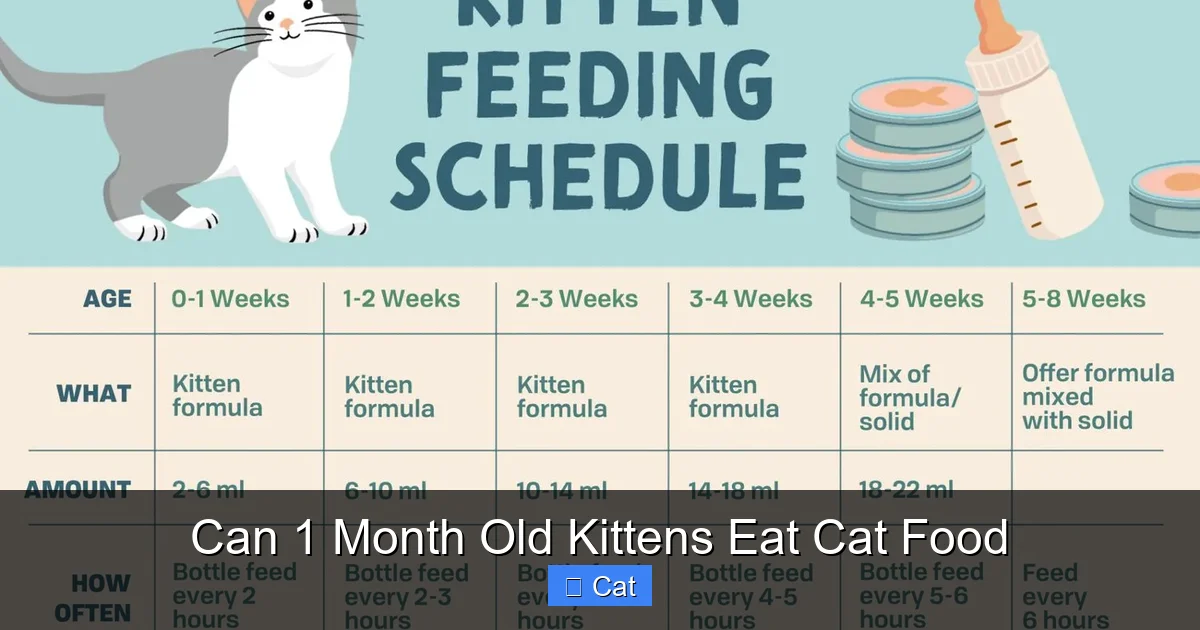
Visual guide about Can 1 Month Old Kittens Eat Cat Food
Image source: dailypaws.com
Weaning is the natural process by which kittens gradually transition from relying solely on their mother’s milk to eating solid food. This typically begins around 3 to 4 weeks of age and continues until about 8 weeks. At 1 month old (4 weeks), kittens are right at the start of this journey. Their digestive systems are still maturing, and their teeth are just beginning to emerge—usually the tiny incisors first. This means they’re not yet equipped to handle hard kibble or large chunks of food.
During the weaning period, kittens begin to show interest in their mother’s food. You might see them sniffing around her food bowl or even attempting to lap up wet food. This is completely normal and a sign that they’re ready to start exploring solids. However, mother’s milk (or a high-quality kitten milk replacer if the mother isn’t available) should still make up the majority of their diet. Think of solid food at this stage as a supplement—not a replacement.
The weaning process is gradual. It’s not something that happens overnight. In fact, most veterinarians recommend that kittens continue to nurse or receive formula until they’re at least 6 to 8 weeks old. This ensures they receive the antibodies and nutrients needed to build a strong immune system. Rushing the weaning process can lead to health problems, including poor growth, weakened immunity, and digestive issues.
Signs Your Kitten Is Ready for Solid Food
How do you know if your 1-month-old kitten is ready to try cat food? Look for these behavioral and physical cues:
- Interest in adult food: If your kitten is sniffing, pawing, or trying to eat from the adult cat’s bowl, it’s a sign they’re curious about solids.
- Teething: The emergence of baby teeth (usually around 3–4 weeks) means they can start chewing soft food.
- Increased activity: Kittens become more mobile and playful around this age, which increases their energy needs.
- Weight gain: A healthy kitten should be gaining weight steadily. If they’re growing well, they may be ready for supplemental food.
Keep in mind that every kitten develops at their own pace. Some may be eager to try food at 4 weeks, while others may wait until 5 or 6 weeks. Never force a kitten to eat solid food if they show no interest. Patience is key.
The Role of Mother’s Milk or Formula
Even as kittens begin eating solid food, mother’s milk remains vital. It provides essential antibodies, fats, proteins, and calories that support brain development, immune function, and overall growth. If the mother cat is present and nursing, allow the kittens to continue feeding from her as much as they want during the weaning period.
In cases where the mother is unavailable—due to abandonment, illness, or death—kitten milk replacer (KMR) becomes essential. Never substitute cow’s milk, goat’s milk, or plant-based alternatives. These can cause severe diarrhea, dehydration, and even death in kittens due to their inability to digest lactose properly. KMR is specially formulated to mimic the nutritional profile of cat milk and should be fed via bottle or syringe until the kitten is fully weaned.
What Type of Cat Food Is Safe for 1-Month-Old Kittens?
Now that we’ve established that 1-month-old kittens can start tasting solid food, the next question is: *What kind of cat food is safe?* The answer is clear: only high-quality, kitten-specific wet food should be offered at this age. Adult cat food, even if it’s wet, is not suitable. It lacks the higher levels of protein, fat, calories, and essential nutrients that growing kittens need.
Kitten food is specially formulated to support rapid growth, brain development, and immune system strength. Look for brands that meet AAFCO (Association of American Feed Control Officials) standards for kitten growth. These foods contain higher levels of:
- Protein: Essential for muscle and tissue development.
- Fat: Provides concentrated energy for active kittens.
- Calcium and phosphorus: Crucial for strong bones and teeth.
- Taurine: An amino acid vital for heart and eye health.
- DHA: Supports brain and vision development.
Wet Food vs. Dry Food: What’s Best?
At 1 month old, wet food is the only safe option. Dry kibble is too hard for kittens to chew and swallow, and it can pose a choking hazard. Even if you soak it, the texture may still be difficult for their immature digestive systems to handle.
Wet kitten food, on the other hand, is soft, moist, and easy to lap up. It also helps keep kittens hydrated, which is especially important since they may not drink water consistently at this age. Choose pâté-style wet food, as it’s easier for kittens to eat than chunky or shredded varieties.
How to Prepare Cat Food for 1-Month-Old Kittens
Before offering wet food to your kitten, it’s important to prepare it properly. Here’s a simple step-by-step guide:
- Choose a high-quality kitten wet food: Look for brands like Royal Canin Kitten, Hill’s Science Diet Kitten, or Purina Pro Plan Kitten.
- Warm the food slightly: Cold food can be unappealing. Warm it to room temperature or slightly warmer (not hot) by placing the opened can in a bowl of warm water for a few minutes.
- Mix with kitten milk replacer or water: To make the food easier to eat, mix a small amount of wet food with KMR or warm water to create a soupy consistency. This mimics the texture of milk and helps kittens transition smoothly.
- Use a shallow dish: A small, flat plate or shallow bowl works best. Kittens have short legs and may struggle to reach food in a deep bowl.
- Offer small amounts: Start with just a teaspoon or two per feeding. You can increase the amount gradually as they eat more.
Feeding Tips for Success
- Feed in a quiet, safe space: Kittens can be easily distracted or startled. Choose a calm area away from loud noises or other pets.
- Use your fingers or a spoon: Some kittens may not know how to lap food from a bowl. Gently place a tiny bit on their lips or use a small spoon to guide them.
- Be patient: It may take several attempts before a kitten figures out how to eat solid food. Don’t give up if they don’t eat right away.
- Clean up after meals: Wipe their face gently with a warm, damp cloth to remove food residue and prevent skin irritation.
How Often Should You Feed a 1-Month-Old Kitten?
Feeding frequency is just as important as the type of food you offer. At 1 month old, kittens have very small stomachs—about the size of a marble—so they can’t eat large meals. Instead, they need to eat small amounts frequently throughout the day and night.
Most veterinarians recommend feeding 1-month-old kittens every 4 to 6 hours. This means you may need to wake up during the night to feed them, especially if they’re orphaned and relying on bottle feeding. As they grow and consume more solid food, the number of feedings can gradually decrease.
Here’s a sample feeding schedule for a 4-week-old kitten:
- 6:00 AM – Bottle or formula + small amount of softened wet food
- 10:00 AM – Bottle or formula + wet food
- 2:00 PM – Bottle or formula + wet food
- 6:00 PM – Bottle or formula + wet food
- 10:00 PM – Bottle or formula + wet food
- 2:00 AM – Bottle or formula (optional, depending on the kitten’s needs)
As the kitten begins to eat more solid food and less milk, you can slowly reduce the number of bottle feedings. By 6 to 8 weeks, most kittens are fully weaned and eating only solid food, 4 to 5 times a day.
Monitoring Your Kitten’s Progress
Keep an eye on your kitten’s weight, behavior, and stool consistency. A healthy kitten should:
- Gain weight steadily (about 100 grams per week)
- Be active, playful, and curious
- Have firm, well-formed stools (not diarrhea or overly hard)
- Show interest in food and eat without difficulty
If your kitten is losing weight, seems lethargic, or has persistent diarrhea or vomiting, contact your veterinarian immediately. These could be signs of illness, parasites, or dietary intolerance.
Foods to Avoid for 1-Month-Old Kittens
While it’s exciting to introduce your kitten to new foods, it’s equally important to know what *not* to feed them. Many human foods and even some pet products can be dangerous for young kittens.
Never Feed Cow’s Milk
This is one of the most common mistakes new kitten owners make. Cow’s milk contains lactose, which kittens cannot digest properly. This leads to diarrhea, dehydration, and discomfort. Stick to kitten milk replacer (KMR) for all milk-based needs.
Avoid Adult Cat Food
Adult cat food doesn’t provide the extra calories, protein, and nutrients that growing kittens need. Feeding it too early can result in stunted growth and developmental issues.
No Human Food
Foods like chocolate, onions, garlic, grapes, and caffeine are toxic to cats. Even “safe” human foods like bread or cheese can cause digestive upset in kittens. Stick to species-appropriate kitten food.
Avoid Raw or Undercooked Meat
While some adult cats thrive on raw diets, kittens have immature immune systems and are more susceptible to bacteria like Salmonella and E. coli. Cooked, plain meat (like boiled chicken) can be offered in tiny amounts later in weaning, but not at 1 month.
When to Consult a Veterinarian
Even with the best care, kittens can face health challenges. It’s important to have a veterinarian involved from the start, especially if you’re caring for orphaned kittens.
Schedule a vet visit within the first week of bringing your kitten home. The vet can:
- Check for congenital issues or infections
- Weigh the kitten and assess growth
- Recommend a feeding plan tailored to your kitten’s needs
- Provide deworming and vaccination schedules
- Offer guidance on weaning and nutrition
If you notice any of the following signs, seek veterinary care immediately:
- Refusal to eat or drink for more than 12 hours
- Persistent vomiting or diarrhea
- Lethargy or weakness
- Difficulty breathing
- Swollen or painful abdomen
- Fever (rectal temperature over 102.5°F)
Conclusion: Nurturing Your Kitten Through Weaning
So, can 1 month old kittens eat cat food? Yes—but only in the right form, at the right time, and in the right amounts. At this age, kittens are just beginning their journey from milk to solid food, and their diet should reflect that transition. High-quality kitten-specific wet food, softened with water or formula, can be introduced in small amounts to support their growing needs. However, mother’s milk or kitten milk replacer should remain the primary source of nutrition until they’re at least 6 to 8 weeks old.
Feeding a 1-month-old kitten requires patience, attention, and a commitment to their unique nutritional needs. By choosing the right food, preparing it properly, and feeding on a consistent schedule, you’re setting the foundation for a healthy, happy life. Remember, every kitten is different—some may take to food quickly, while others need more time. Trust your instincts, observe their behavior, and don’t hesitate to reach out to your veterinarian for support.
With love, care, and the right nutrition, your tiny kitten will grow into a strong, playful, and affectionate companion. And knowing you played a key role in their early development? That’s one of the greatest rewards of being a pet parent.
Frequently Asked Questions
Can 1-month-old kittens eat dry cat food?
No, 1-month-old kittens should not eat dry cat food. Their teeth are too small and their jaws too weak to chew kibble. Dry food can also pose a choking hazard and is difficult for their immature digestive systems to process.
How much wet food should I feed a 1-month-old kitten?
Start with just 1–2 teaspoons of softened wet food per feeding, 4–6 times a day. Gradually increase the amount as they eat more and rely less on milk. Always monitor their weight and adjust portions accordingly.
Can I mix wet food with water instead of formula?
Yes, you can mix wet food with warm water to soften it, but kitten milk replacer (KMR) is preferred because it provides additional nutrition. Water alone doesn’t offer the calories and nutrients growing kittens need.
What if my kitten won’t eat solid food at 1 month?
It’s normal for some kittens to be hesitant. Continue offering small amounts of softened food alongside milk feedings. Be patient and try different brands or textures. If they show no interest by 5–6 weeks, consult your vet.
Is it safe to feed homemade food to a 1-month-old kitten?
Homemade diets are not recommended for kittens under 8 weeks old. They require precise nutrient balances that are difficult to achieve without veterinary guidance. Stick to commercial kitten food until they’re older.
When can kittens stop drinking milk?
Most kittens are fully weaned by 6 to 8 weeks of age. Until then, they should continue receiving mother’s milk or kitten milk replacer, even as they eat more solid food.