
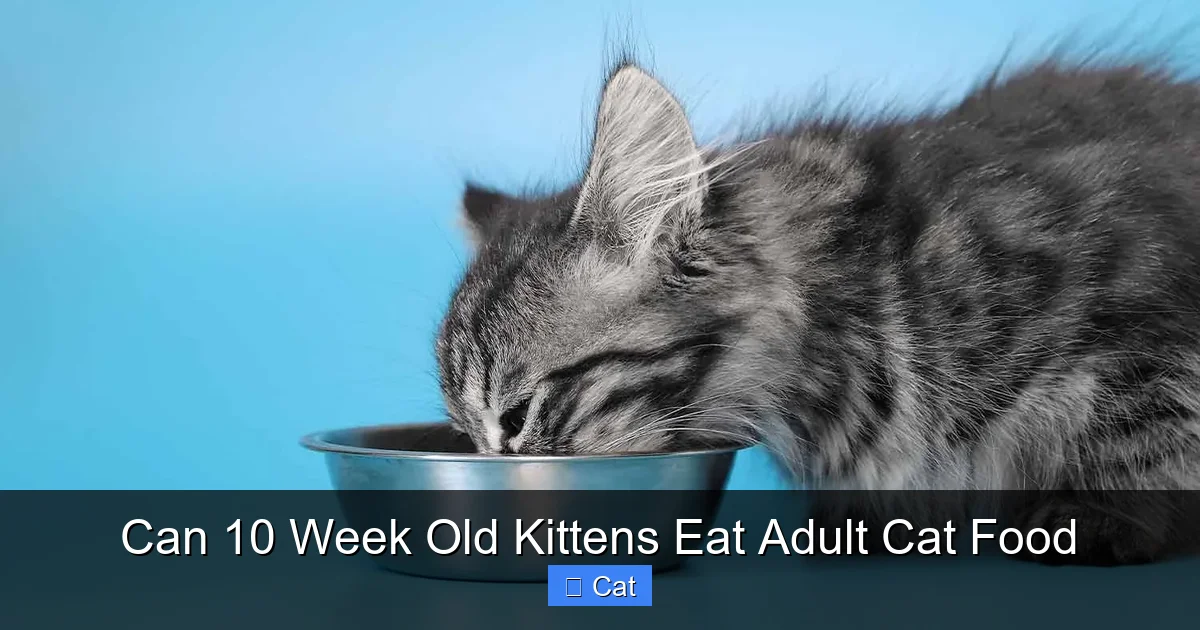
No, 10 week old kittens should not eat adult cat food. Their tiny bodies need extra calories, protein, and key nutrients like DHA and taurine to grow strong and healthy. Adult food lacks the right balance for kitten development.
Key Takeaways
- Kittens need more calories: At 10 weeks, kittens require up to 3 times more calories per pound than adult cats to support rapid growth.
- Higher protein and fat are essential: Kitten food contains 30-40% protein and 20% fat, compared to lower levels in adult food, fueling muscle and brain development.
- Critical nutrients are missing in adult food: Taurine, DHA, calcium, and arachidonic acid are vital for vision, brain, and bone health—often insufficient in adult formulas.
- Digestive systems are still developing: Kittens have sensitive stomachs; adult food may cause upset or poor nutrient absorption.
- Feeding adult food can lead to health issues: Long-term use may result in stunted growth, weak bones, or vision problems due to nutritional gaps.
- Choose AAFCO-approved kitten food: Look for labels stating the food meets kitten growth standards to ensure balanced nutrition.
- Transition gradually to adult food: Start switching around 12 months of age, not before, to avoid disrupting development.
📑 Table of Contents
- Can 10 Week Old Kittens Eat Adult Cat Food? The Truth Every Pet Parent Should Know
- Why 10-Week-Old Kittens Have Unique Nutritional Needs
- The Risks of Feeding Adult Cat Food to Kittens
- What Should You Feed a 10-Week-Old Kitten Instead?
- When Can Kittens Start Eating Adult Cat Food?
- Common Myths About Kitten Nutrition
- Conclusion: Prioritize Kitten Nutrition for a Lifetime of Health
Can 10 Week Old Kittens Eat Adult Cat Food? The Truth Every Pet Parent Should Know
Bringing a 10-week-old kitten into your home is an exciting adventure. Their tiny paws, playful antics, and curious eyes make them impossible not to love. But with that joy comes responsibility—especially when it comes to feeding. One of the most common questions new kitten parents ask is: Can 10 week old kittens eat adult cat food? It’s a fair question. After all, adult cat food is readily available, often cheaper, and your older cat might already be eating it. But the short answer is: no, 10-week-old kittens should not eat adult cat food.
At this tender age, kittens are in a critical stage of development. Their bodies are growing at an astonishing rate—doubling or even tripling in size within just a few weeks. Their brains, bones, muscles, and immune systems are all forming rapidly. This means they have very specific nutritional needs that adult cat food simply can’t meet. While adult food keeps a grown cat healthy, it lacks the high energy, protein, and essential nutrients that growing kittens require. Feeding adult food to a 10-week-old kitten is like giving a toddler a senior citizen’s diet—it might keep them alive, but it won’t help them thrive.
In this guide, we’ll dive deep into why kitten-specific nutrition matters, what makes adult food unsuitable, and how to choose the best food for your little furball. Whether you’re a first-time kitten owner or just looking to brush up on best practices, this article will give you everything you need to make smart, informed feeding decisions.
Why 10-Week-Old Kittens Have Unique Nutritional Needs

Visual guide about Can 10 Week Old Kittens Eat Adult Cat Food
Image source: catkingpin.com
Kittens aren’t just small cats—they’re growing machines. At 10 weeks old, they’re still in what experts call the “neonatal growth phase,” a period of explosive development that lasts until about 6 months of age. During this time, their bodies demand a lot more fuel and building blocks than adult cats. Let’s break down exactly why their nutritional needs are so different.
Rapid Growth Requires Extra Calories
One of the biggest differences between kittens and adult cats is energy demand. A 10-week-old kitten needs about 2 to 3 times more calories per pound of body weight than an adult cat. This isn’t just because they’re active—though they certainly are! It’s because every cell in their body is multiplying rapidly. Their bones are lengthening, muscles are forming, and organs are maturing. All of this takes energy.
For example, a 2-pound kitten might need around 200–250 calories per day, while a 10-pound adult cat may only need 200–250 calories total. That means the tiny kitten needs the same number of calories as the much larger adult—just packed into a much smaller body. Adult cat food simply doesn’t provide enough calories to meet this demand. Feeding it could leave your kitten undernourished, lethargic, and unable to grow at a healthy rate.
High Protein for Muscle and Tissue Development
Protein is the foundation of growth. Kittens need high-quality animal-based protein to build muscles, repair tissues, and support organ function. The Association of American Feed Control Officials (AAFCO) recommends that kitten food contain at least 30% protein, and many premium kitten formulas go even higher—up to 40% or more.
Adult cat food, by contrast, typically contains 26–30% protein. While that might be fine for a full-grown cat, it’s not enough for a growing kitten. Protein isn’t just about muscle—it’s also essential for enzyme production, immune function, and hormone regulation. Without enough protein, a kitten may experience delayed development, weakened immunity, and poor coat quality.
Healthy Fats for Brain and Vision Development
Fats are another critical component of a kitten’s diet. They provide concentrated energy and help absorb fat-soluble vitamins like A, D, E, and K. But not all fats are created equal. Kittens need specific types of fats, especially omega-3 and omega-6 fatty acids, for brain and eye development.
One omega-3 fatty acid in particular—docosahexaenoic acid (DHA)—is vital for cognitive function and vision. Studies show that kittens fed diets rich in DHA perform better in learning tasks and have sharper eyesight. Adult cat food often contains lower levels of DHA, if any at all. This deficiency can impact a kitten’s ability to learn, adapt, and see clearly—especially in low-light conditions, which cats naturally prefer.
Essential Vitamins and Minerals
Kittens also need higher levels of certain vitamins and minerals. For example:
– Calcium and phosphorus are crucial for strong bones and teeth. Kittens need a precise balance—too much or too little can lead to skeletal deformities.
– Taurine is an amino acid that supports heart function, vision, and reproduction. Cats can’t synthesize enough taurine on their own, so it must come from their diet. Deficiency can cause blindness and heart disease.
– Arachidonic acid, another fatty acid found in animal tissues, supports skin health, kidney function, and inflammation regulation.
Adult cat food is formulated to maintain health, not support rapid growth. As a result, it often falls short in these key areas. Feeding it to a 10-week-old kitten is like trying to build a house with half the bricks—it might stand, but it won’t be strong or complete.
The Risks of Feeding Adult Cat Food to Kittens
You might be thinking, “Well, my kitten seems fine eating a little bit of adult food.” And maybe they are—for now. But the risks of feeding adult cat food to a 10-week-old kitten go beyond temporary fullness. Over time, nutritional gaps can lead to serious health problems.
Stunted Growth and Development
The most immediate risk is impaired growth. Kittens fed adult food may not gain weight as quickly as they should. They might appear smaller, weaker, or less energetic than their peers. In severe cases, this can lead to failure to thrive, a condition where the kitten fails to grow or develop normally.
Growth isn’t just about size—it’s about maturity. A kitten that doesn’t get enough calories, protein, or key nutrients may have delayed motor skills, weaker bones, or underdeveloped organs. This can affect their quality of life well into adulthood.
Bone and Joint Problems
Calcium and phosphorus are essential for bone development, but they must be balanced. Adult cat food often has a lower calcium-to-phosphorus ratio than kitten food. If a kitten consumes too much phosphorus relative to calcium, it can lead to rickets or other skeletal abnormalities.
Additionally, rapid growth requires strong joints. Without proper nutrition, kittens may develop joint issues like hip dysplasia or arthritis later in life. While genetics play a role, diet is a major contributing factor—especially during the first few months.
Vision and Cognitive Impairment
As mentioned earlier, DHA is critical for brain and eye development. Kittens fed diets low in DHA may have poorer night vision and reduced cognitive function. They might be slower to learn, less responsive to stimuli, or more prone to accidents.
Taurine deficiency is another serious concern. Even a short-term lack of taurine can lead to retinal degeneration, which may result in partial or complete blindness. This is irreversible, making prevention through proper nutrition essential.
Digestive Upset and Poor Nutrient Absorption
Kittens have sensitive digestive systems. Their stomachs produce different enzymes and acids than adult cats, and their intestines are still maturing. Adult cat food is often harder to digest and may contain ingredients that irritate a kitten’s gut.
Symptoms of digestive upset include:
– Diarrhea or soft stools
– Vomiting
– Gas or bloating
– Loss of appetite
Even if the food is technically “safe,” poor digestion means the kitten isn’t absorbing the nutrients they need. This creates a double problem: they’re eating, but not benefiting.
Long-Term Health Consequences
The effects of poor nutrition in kittenhood can last a lifetime. Studies show that kittens who don’t receive proper nutrition are more likely to develop:
– Obesity (due to metabolic imbalances)
– Diabetes (from poor insulin regulation)
– Heart disease (linked to taurine deficiency)
– Weakened immune systems (from lack of key vitamins)
In short, feeding adult food to a 10-week-old kitten isn’t just suboptimal—it’s potentially harmful. The short-term convenience isn’t worth the long-term risk.
What Should You Feed a 10-Week-Old Kitten Instead?
Now that we’ve covered why adult food isn’t suitable, let’s talk about what is the right choice. The best food for a 10-week-old kitten is a high-quality, AAFCO-approved kitten formula. Here’s what to look for and how to feed it.
Choose Kitten-Specific Food
Always select food labeled for “kittens” or “growth.” These formulas are designed to meet the unique needs of young cats. Look for the AAFCO statement on the packaging, which should say something like:
> “This product is formulated to meet the nutritional levels established by the AAFCO Cat Food Nutrient Profiles for growth.”
This ensures the food contains the right balance of protein, fat, vitamins, and minerals.
Wet vs. Dry Food: Which Is Better?
Both wet and dry kitten food can be part of a healthy diet. However, many experts recommend wet food for young kittens because:
– It’s easier to chew and digest
– It provides extra hydration (important for kidney health)
– It often has higher protein and lower carbohydrates
That said, dry food can be convenient for free-feeding and helps with dental health. A mix of both is ideal. Just make sure any dry food is specifically made for kittens.
Feeding Schedule and Portion Sizes
At 10 weeks old, kittens should be fed 3 to 4 small meals per day. Their stomachs are tiny, so they can’t eat large amounts at once. Overfeeding can cause vomiting or diarrhea.
A general guideline is:
– 1/4 to 1/3 cup of dry food per day (divided into meals)
– 2 to 3 ounces of wet food per day (about one 3-ounce can)
Always follow the feeding guidelines on the package, but adjust based on your kitten’s weight, activity level, and growth. Your vet can help you determine the right amount.
Introduce Food Gradually
If your kitten is transitioning from mother’s milk or another brand, do it slowly. Mix a small amount of new food with the old, increasing the ratio over 7–10 days. This helps prevent digestive upset.
For orphaned kittens, you may need to use a kitten milk replacer (like KMR) until they’re ready for solid food. Never feed cow’s milk—it can cause severe diarrhea.
Provide Fresh Water
Even if you’re feeding wet food, always provide a clean bowl of fresh water. Kittens can become dehydrated quickly, especially if they’re active or in a warm environment.
When Can Kittens Start Eating Adult Cat Food?
So, when is it safe to switch? Most veterinarians recommend waiting until your kitten is at least 12 months old before transitioning to adult food. Here’s why.
Growth Continues Beyond 6 Months
While growth slows after 6 months, kittens are still developing until about 12–18 months of age. Large breeds like Maine Coons may take even longer. Feeding adult food too early can deprive them of the nutrients they need to finish growing.
Gradual Transition Is Key
When the time comes, don’t switch abruptly. Start by mixing 25% adult food with 75% kitten food. Over 7–10 days, gradually increase the adult food ratio until your cat is eating 100% adult food.
Watch for signs of digestive upset during the transition. If your cat has diarrhea, vomiting, or refuses to eat, slow down the process or consult your vet.
Choose the Right Adult Food
Not all adult cat foods are equal. Look for one that’s high in animal protein, low in fillers, and free from artificial additives. Again, check for the AAFCO statement to ensure it meets maintenance (adult) standards.
Common Myths About Kitten Nutrition
There are a lot of misconceptions out there. Let’s clear up a few.
Myth: “Kittens can eat whatever adult cats eat.”
False. As we’ve seen, kittens have very different nutritional needs. Adult food lacks the calories, protein, and key nutrients required for growth.
Myth: “Dry food is bad for kittens.”
Not necessarily. High-quality dry kitten food is perfectly fine, especially when supplemented with wet food. The key is choosing a formula made for kittens.
Myth: “More food = faster growth.”
Overfeeding can lead to obesity, joint stress, and other health issues. Growth should be steady and healthy, not rushed.
Myth: “Homemade diets are always better.”
Homemade diets can work, but they’re hard to balance correctly. Without careful planning, they can lead to deficiencies. If you choose this route, work with a veterinary nutritionist.
Conclusion: Prioritize Kitten Nutrition for a Lifetime of Health
So, can 10 week old kittens eat adult cat food? The answer is clear: no. While it might seem harmless in the short term, adult food doesn’t provide the calories, protein, fats, and essential nutrients that growing kittens need. Feeding it can lead to stunted growth, vision problems, bone issues, and long-term health risks.
Instead, choose a high-quality kitten formula that meets AAFCO standards. Feed small, frequent meals, and provide plenty of fresh water. Avoid the temptation to switch to adult food too early—wait until your kitten is at least 12 months old.
Remember, the first year of your kitten’s life sets the foundation for their entire future. By feeding them the right food at the right time, you’re giving them the best possible start. And that’s something every pet parent can feel good about.
Frequently Asked Questions
Can I mix adult cat food with kitten food?
It’s not recommended to regularly mix adult and kitten food for a 10-week-old kitten. While a small amount occasionally won’t cause harm, adult food lacks the nutrients kittens need. Stick to kitten-specific formulas for consistent nutrition.
What if my kitten accidentally eats adult food?
If your kitten eats a small amount of adult food once, don’t panic. One meal won’t cause damage. Just return to feeding kitten food immediately and monitor for any digestive upset like diarrhea or vomiting.
Can I feed my kitten homemade food instead of commercial kitten food?
Homemade diets can work but require careful balancing of nutrients. Most homemade recipes lack essential vitamins and minerals like taurine and calcium. Consult a veterinary nutritionist to ensure your recipe meets kitten growth standards.
How often should I feed my 10-week-old kitten?
Feed your 10-week-old kitten 3 to 4 small meals per day. Their stomachs are tiny, so frequent, portion-controlled meals help prevent overeating and support steady growth.
Is wet food better than dry food for kittens?
Wet food is often preferred for young kittens because it’s easier to digest and provides hydration. However, high-quality dry kitten food is also acceptable. A combination of both is ideal for balanced nutrition and dental health.
When should I switch my kitten to adult food?
Wait until your kitten is at least 12 months old before switching to adult food. Large breeds may need to stay on kitten food until 18 months. Transition gradually over 7–10 days to avoid digestive issues.