
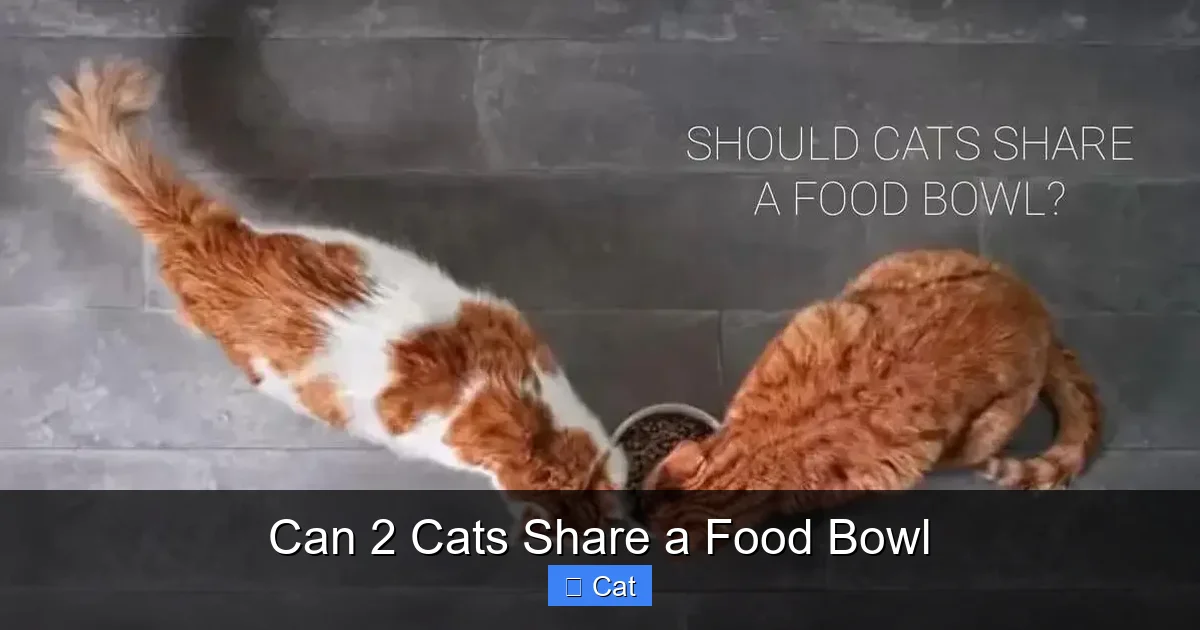
Yes, two cats can share a food bowl—but it’s not always ideal. While some feline pairs get along fine, others may experience stress, food guarding, or health issues. Understanding your cats’ personalities, feeding routines, and nutritional needs is key to deciding what works best.
Key Takeaways
- Compatibility matters: Cats with calm temperaments and established bonds are more likely to share a bowl peacefully.
- Food aggression is real: Dominant or anxious cats may guard the bowl, leading to stress or malnutrition in the other cat.
- Health risks increase with sharing: Shared bowls can spread bacteria, especially if one cat has dental issues or illness.
- Portion control becomes difficult: It’s hard to monitor individual intake, which can lead to overeating or under-eating.
- Multiple bowls reduce competition: Providing separate feeding stations minimizes mealtime tension and supports healthier eating habits.
- Environmental enrichment helps: Puzzle feeders and elevated bowls can make shared feeding more engaging and less stressful.
- Observe and adapt: Every cat pair is different—watch their behavior and adjust your feeding strategy accordingly.
📑 Table of Contents
- Can 2 Cats Share a Food Bowl? The Truth Behind Mealtime Harmony
- The Science Behind Feline Feeding Behavior
- When Sharing a Bowl Might Work
- The Risks of Sharing a Food Bowl
- How to Tell If Your Cats Can Share a Bowl
- Tips for Peaceful Multi-Cat Mealtime
- When to Avoid Sharing a Bowl Altogether
- Conclusion: What’s Best for Your Cats?
Can 2 Cats Share a Food Bowl? The Truth Behind Mealtime Harmony
If you’re a proud parent of two furry felines, you’ve probably wondered: *Can 2 cats share a food bowl?* It’s a common question among multi-cat households, and the answer isn’t as simple as “yes” or “no.” While it’s physically possible for two cats to eat from the same dish, whether they *should* depends on a mix of personality, health, environment, and feeding habits.
Cats are naturally solitary eaters in the wild. In the wild, they hunt alone and consume small meals throughout the day. This instinct doesn’t disappear just because they live with humans. Even in a cozy home with a full food bowl, your cats may still feel the urge to eat alone—especially if they sense competition. So, while sharing a bowl might seem convenient or even economical, it can unintentionally create tension, stress, or health problems.
That said, not all cats will react the same way. Some pairs, especially those raised together from kittenhood, may eat side by side without a second thought. Others might hiss, swat, or refuse to eat unless the other cat is far away. The key is understanding your cats as individuals and recognizing the signs that mealtime isn’t going smoothly.
In this guide, we’ll explore the pros and cons of sharing a food bowl, how to tell if your cats are compatible at mealtime, and practical tips to ensure both felines stay happy, healthy, and well-fed—whether they share a bowl or not.
The Science Behind Feline Feeding Behavior

Visual guide about Can 2 Cats Share a Food Bowl
Image source: c8.alamy.com
To understand whether two cats can share a food bowl, it helps to know a little about how cats naturally eat. Unlike dogs, who often eat quickly and in groups, cats are grazers. In the wild, they hunt small prey—mice, birds, insects—and consume several tiny meals a day. This means they’re built for frequent, low-volume eating, not one or two large meals.
This grazing instinct plays a big role in how they behave around food. Even in a home with a full bowl of kibble, your cat may still prefer to eat in short bursts, often returning to the bowl multiple times a day. When another cat is present, this natural rhythm can be disrupted. One cat might eat quickly and dominate the bowl, while the other waits—or worse, skips meals altogether.
Territorial Instincts and Food Guarding
Cats are territorial animals. While they can form strong social bonds with other cats (and even dogs or humans), they still value their personal space—especially around resources like food, water, and litter boxes. When two cats share a food bowl, the more dominant one may claim it as their own, using body language, vocalizations, or even physical blocking to keep the other away.
This behavior, known as food guarding, is more common in cats who feel insecure or have had to compete for resources in the past. For example, a cat adopted from a shelter or a multi-cat household with limited food may be more protective of their meals. Even if your cats seem friendly most of the time, mealtime can bring out hidden tensions.
Stress and Its Impact on Health
Stress is a silent but serious issue in multi-cat homes. When a cat feels anxious about eating—whether due to competition, noise, or lack of privacy—it can lead to a range of health problems. Chronic stress weakens the immune system, increases the risk of urinary tract issues (like FLUTD), and can even cause behavioral changes such as over-grooming or aggression.
A study published in the *Journal of Feline Medicine and Surgery* found that cats in multi-cat households with shared resources (like food bowls) were more likely to exhibit signs of stress, including reduced appetite and increased hiding behavior. This doesn’t mean sharing a bowl will automatically make your cat sick—but it does suggest that forcing two cats to eat together may not be in their best interest.
When Sharing a Bowl Might Work
Despite the potential downsides, there are situations where two cats can share a food bowl without issues. The key is compatibility—both in personality and routine.
Kittens Raised Together
Cats who grow up together from a young age often develop strong bonds and are more likely to share resources peacefully. If your two cats were littermates or adopted as kittens and raised in the same home, they may already be used to eating near each other. In these cases, sharing a bowl might feel natural and stress-free.
For example, my friend Sarah has two tabbies, Luna and Milo, who were adopted as kittens from the same litter. They sleep curled up together, groom each other, and often eat side by side from the same bowl. Sarah says they even seem to take turns—Luna eats a few bites, then Milo steps in. There’s no hissing, no pushing, just quiet companionship.
Calm, Low-Energy Cats
Not all cats are high-strung. Some are naturally laid-back, preferring to nap in sunbeams rather than chase toys. These calm cats are less likely to feel threatened by a roommate at mealtime. If both of your cats are relaxed and confident, they may not see the food bowl as a source of competition.
On the other hand, if one cat is shy or anxious, even a gentle companion can feel overwhelming. A nervous cat might wait until the other is done eating—or avoid the bowl altogether. In these cases, sharing a bowl can lead to unintentional malnutrition, especially if the shy cat isn’t getting enough to eat.
Free-Feeding with Plenty of Space
Another scenario where sharing might work is free-feeding—leaving dry kibble out all day so cats can eat whenever they want. If you have a large home with multiple rooms and the food bowl is placed in a quiet, low-traffic area, both cats may feel comfortable approaching it at different times.
However, free-feeding comes with its own challenges. It’s harder to monitor how much each cat is eating, which can be a problem if one gains weight or the other loses appetite. It also increases the risk of overeating, especially in less active cats.
The Risks of Sharing a Food Bowl
While sharing a bowl might seem harmless—or even convenient—there are several risks to consider, especially if your cats aren’t a perfect match.
Food Aggression and Bullying
Even the sweetest cat can turn possessive when food is involved. Food aggression isn’t always obvious—it might start with a low growl, a stiff posture, or simply standing over the bowl to block access. Over time, this can escalate to swatting, hissing, or even biting.
One of my clients, Mark, had two cats: a confident orange tabby named Oliver and a timid gray cat named Bella. At first, they seemed to get along fine. But Mark noticed Bella was losing weight. After some observation, he realized Oliver was guarding the food bowl, eating quickly and then standing guard while Bella waited—sometimes for hours—before daring to approach.
Once Mark started feeding them in separate rooms, Bella’s appetite returned, and her weight stabilized. This is a common story: what looks like peaceful coexistence on the surface can hide real struggles beneath.
Uneven Food Intake
When two cats share a bowl, it’s nearly impossible to know how much each one is eating. One might be a slow, picky eater, while the other gobbles down kibble like it’s going out of style. This imbalance can lead to health issues.
For instance, if one cat is overweight and the other is underweight, sharing a bowl makes it hard to manage their diets. You can’t portion control effectively, and you might accidentally overfeed the heavier cat or underfeed the thinner one. This is especially risky for cats with medical conditions like diabetes, kidney disease, or food allergies, who need precise meal plans.
Hygiene and Disease Transmission
Shared food bowls can become breeding grounds for bacteria, especially if one cat has dental disease, oral infections, or is shedding viruses like feline herpesvirus. Saliva can transfer pathogens from one cat to another, increasing the risk of illness.
Even if both cats appear healthy, regular cleaning is essential. A shared bowl should be washed daily with hot, soapy water—preferably in a dishwasher if it’s dishwasher-safe. Avoid using harsh chemicals that could leave residue, and never let food sit out for more than a few hours, especially in warm weather.
Stress-Related Health Problems
As mentioned earlier, stress from mealtime competition can have serious health consequences. Cats are masters at hiding discomfort, so you might not notice the signs until they’re severe. Common stress-related issues include:
– Urinary tract infections (UTIs) or feline idiopathic cystitis (FIC)
– Hair loss from over-grooming
– Digestive problems like vomiting or diarrhea
– Reduced immune function
If your cat starts avoiding the food bowl, hiding more than usual, or showing changes in litter box habits, it could be a sign that mealtime stress is taking a toll.
How to Tell If Your Cats Can Share a Bowl
The best way to determine if two cats can share a food bowl is through careful observation. Here’s how to assess your cats’ compatibility at mealtime.
Watch Their Body Language
Pay attention to how your cats behave around the food bowl. Do they eat side by side calmly, or does one wait while the other eats? Look for signs of tension, such as:
– Stiff posture or flattened ears
– Tail flicking or low growling
– One cat circling the bowl while the other eats
– Hissing or swatting
If you see any of these behaviors, it’s a red flag that sharing isn’t working.
Monitor Eating Habits
Keep track of how much each cat eats over a few days. You can do this by weighing the food before and after meals, or by using a timed feeder that dispenses portions. If one cat is consistently eating more—or less—than the other, it’s a sign that the current setup isn’t balanced.
Also, note the timing. Do both cats eat at the same time, or does one wait? A cat that waits until the other is done may be feeling pressured or insecure.
Try a Trial Period
If you’re unsure, try a short trial of shared feeding. Place one bowl in a quiet area and observe for a week. If both cats eat comfortably and show no signs of stress, you might be able to continue. But if problems arise, switch to separate bowls right away.
Remember: it’s better to be cautious. A little extra effort now can prevent long-term stress or health issues.
Tips for Peaceful Multi-Cat Mealtime
Whether your cats share a bowl or not, there are ways to make mealtime more peaceful and enjoyable for everyone.
Use Multiple Feeding Stations
Even if your cats get along, providing separate food bowls reduces competition and gives each cat a sense of security. Place the bowls in different rooms or at opposite ends of a large room. This way, each cat can eat in peace without feeling watched or challenged.
For example, one bowl could be in the kitchen, and the other in a quiet corner of the living room. If possible, elevate one bowl on a cat tree or shelf—some cats prefer to eat from a higher vantage point.
Feed at the Same Time, in Separate Spaces
If your cats have different eating styles, consider feeding them at the same time but in separate areas. Close the door to the bathroom or bedroom and place a bowl inside for one cat, while the other eats in the kitchen. This mimics the natural grazing behavior of cats and reduces the chance of conflict.
You can also use baby gates or pet barriers to create separate feeding zones in open spaces.
Use Puzzle Feeders and Slow Feeders
Puzzle feeders and slow-feed bowls make eating more engaging and can help reduce food aggression. These devices require cats to work for their food—pushing kibble through holes, rolling toys, or licking from grooves. Not only does this slow down fast eaters, but it also provides mental stimulation.
For shy cats, puzzle feeders can be a confidence booster. They allow the cat to eat at their own pace, away from the main bowl, which can reduce anxiety.
Maintain a Consistent Routine
Cats thrive on routine. Feed your cats at the same times every day, and try to keep their environment calm during mealtime. Avoid loud noises, sudden movements, or inviting guests over during feeding hours.
A predictable routine helps reduce stress and makes mealtime feel safe and secure.
Clean Bowls Daily
Regardless of how many bowls you use, clean them thoroughly every day. Bacteria can grow quickly, especially in wet food or humid environments. Use hot water and pet-safe dish soap, and rinse well. If you use stainless steel or ceramic bowls, consider running them through the dishwasher weekly for extra sanitation.
Consider Individual Dietary Needs
If one cat has special dietary requirements—such as a prescription diet, weight management food, or allergies—separate feeding is essential. You can’t control what each cat eats if they share a bowl, which could compromise their health.
In these cases, always feed the cats separately and supervise to ensure they only eat their own food.
When to Avoid Sharing a Bowl Altogether
There are certain situations where sharing a food bowl is not recommended—even if your cats seem friendly.
New Introductions
When introducing a new cat to your home, avoid shared feeding until they’ve had time to adjust. Start with separate rooms and gradually increase their time together. Once they’re comfortable, you can try supervised shared meals—but be ready to separate them if tensions rise.
Health Issues
If one cat is sick, recovering from surgery, or on a special diet, they should eat alone. This prevents the healthy cat from eating the medicated food and ensures the sick cat gets the nutrition they need.
History of Aggression
If your cats have a history of fighting—especially over food—it’s best to keep their meals separate. Forcing them to share can reignite old conflicts and make the situation worse.
Different Activity Levels
A high-energy cat might eat quickly and then bother the other cat, while a sedentary cat may prefer to eat slowly and in peace. These mismatched rhythms can lead to frustration on both sides.
Conclusion: What’s Best for Your Cats?
So, can 2 cats share a food bowl? The short answer is: *sometimes.* It depends on your cats’ personalities, health, and environment. While some pairs can eat together without issue, many benefit from separate feeding stations that reduce stress and promote healthy eating habits.
The most important thing is to observe your cats and respond to their needs. If they eat peacefully side by side, great! But if you notice signs of tension, competition, or health changes, it’s time to rethink the setup.
Remember, mealtime isn’t just about food—it’s about safety, comfort, and routine. By giving your cats the space and resources they need, you’re not just feeding their bodies; you’re supporting their emotional well-being too.
Whether you choose to share a bowl or go separate ways, the goal is the same: happy, healthy cats who feel secure at every meal.
Frequently Asked Questions
Can two cats share a food bowl if they’re siblings?
Yes, sibling cats raised together often share a food bowl without issues. Their strong bond and shared history can make mealtime peaceful. However, always monitor their behavior to ensure neither feels pressured or stressed.
Is it safe for cats to share a wet food bowl?
It’s not recommended. Wet food spoils quickly and can harbor bacteria. Sharing also makes it hard to control portions. Feed wet food separately and remove uneaten portions after 30–60 minutes.
How can I stop my cat from guarding the food bowl?
Feed the cats in separate rooms or use barriers to create distance. Provide multiple bowls and consider puzzle feeders to distract the dominant cat. Gradual desensitization and positive reinforcement can also help.
Should I use the same type of bowl for both cats?
Not necessarily. Some cats prefer shallow bowls, while others like deep ones. Try different styles to see what each cat prefers. Stainless steel or ceramic bowls are easiest to clean and less likely to retain odors.
Can sharing a bowl cause weight gain in one cat?
Yes, if one cat eats more than the other, it can lead to weight gain. Shared bowls make portion control difficult. Use separate bowls and measure food to manage each cat’s intake.
What if my cats refuse to eat unless the other is gone?
This is a sign of mealtime anxiety. Feed them in separate, quiet areas and gradually increase their proximity over time. Patience and consistency will help them feel more comfortable.