
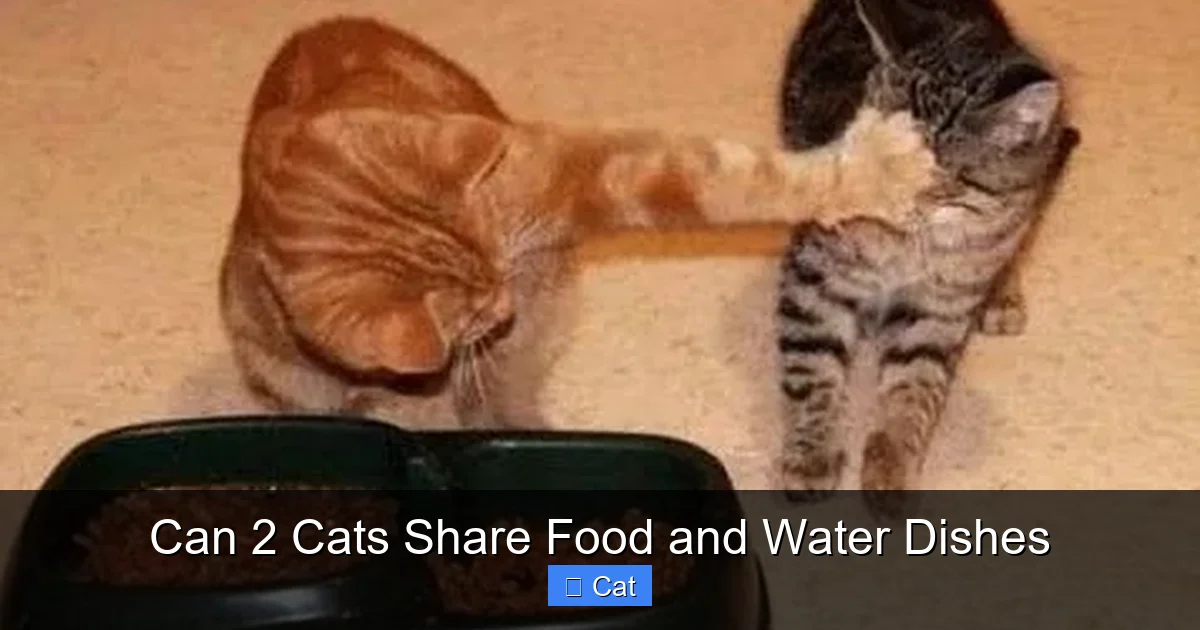
Yes, two cats can share food and water dishes—but it’s not always ideal. While some cats get along fine, sharing bowls can lead to stress, health risks, and behavioral issues. This guide helps you decide what’s best for your pets.
Key Takeaways
- Sharing dishes may work for bonded cats: Cats with a strong, peaceful relationship may comfortably share bowls without issues.
- Health risks increase with shared bowls: Bacteria and viruses like feline calicivirus can spread through saliva on shared dishes.
- Dominant cats may hoard resources: One cat might guard the food or water, preventing the other from eating or drinking enough.
- Stress and anxiety can develop: Competition over resources can lead to territorial behavior and chronic stress in sensitive cats.
- Separate dishes promote better hygiene: Individual bowls reduce contamination and make it easier to monitor each cat’s intake.
- Use multiple feeding stations: Placing food and water in different areas reduces competition and supports a peaceful environment.
- Observe your cats closely: Watch for signs of tension, such as hissing, blocking, or eating too quickly.
📑 Table of Contents
- Can 2 Cats Share Food and Water Dishes? A Complete Guide
- Understanding Feline Behavior and Resource Sharing
- Health Risks of Sharing Food and Water Dishes
- Behavioral and Emotional Impacts of Shared Dishes
- When Sharing Dishes Might Work
- Practical Tips for Multi-Cat Feeding
- How to Transition to Separate Dishes
- Conclusion
Can 2 Cats Share Food and Water Dishes? A Complete Guide
Bringing a second cat into your home is an exciting step—more purrs, more play, and double the love. But with that joy comes new questions about how to care for two feline friends. One of the most common concerns? Whether your cats can share food and water dishes. It seems simple enough: one bowl for food, one for water, and both cats eat together. But the reality is a bit more complicated.
Cats are naturally territorial animals. In the wild, they often live solitary lives, only coming together to mate. This instinct doesn’t disappear just because they’re domesticated. Even the friendliest house cats can feel stressed when resources like food, water, and litter boxes are limited or shared. While some cats may happily eat from the same bowl without a second thought, others may see it as a threat. The key is understanding your cats’ personalities, their relationship with each other, and the potential risks involved.
So, can two cats share food and water dishes? The short answer is yes—sometimes. But whether they should is a different story. In this guide, we’ll explore the pros and cons of shared dishes, the health and behavioral implications, and practical tips to keep both your cats healthy and happy. Whether you’re a new multi-cat household or just curious about best practices, this article will help you make the right choice for your furry family.
Understanding Feline Behavior and Resource Sharing

Visual guide about Can 2 Cats Share Food and Water Dishes
Image source: petshun.com
To decide whether your cats should share dishes, it helps to understand how cats think about resources. Unlike dogs, who are pack animals and often thrive in group settings, cats are more independent. They don’t naturally form hierarchies in the same way, and their social structures are more fluid. This means that while some cats become best friends and groom each other, others may coexist peacefully but keep their distance.
When it comes to food and water, cats view these as essential resources. In multi-cat homes, competition can arise even among cats who seem friendly. A dominant cat might position itself near the food bowl, blocking access or eating quickly to claim the most. The more submissive cat may wait, eat less, or avoid the area altogether. Over time, this can lead to stress, weight loss, or even behavioral problems like aggression or anxiety.
Even if your cats appear to get along, subtle signs of tension can go unnoticed. For example, one cat might eat only when the other is distracted or asleep. Or they might hiss or swat when passing near the food bowl. These behaviors suggest that sharing isn’t as peaceful as it seems.
It’s also important to consider individual personalities. Some cats are naturally more laid-back and don’t mind sharing. Others are highly territorial and prefer their own space. Age, health, and past experiences also play a role. A senior cat with arthritis might struggle to reach a shared bowl if it’s placed in a high-traffic area, while a kitten might be too timid to approach if a larger cat is nearby.
Understanding these dynamics helps you create a feeding environment that supports both cats’ physical and emotional well-being. The goal isn’t just to feed them—it’s to make sure they feel safe, secure, and stress-free during mealtime.
Health Risks of Sharing Food and Water Dishes
One of the most compelling reasons to avoid sharing dishes is the increased risk of disease transmission. Cats are meticulous groomers, and their saliva can carry bacteria, viruses, and parasites. When two cats drink from the same water bowl or eat from the same food dish, they’re essentially exchanging bodily fluids—something that can have serious health consequences.
For example, feline calicivirus and feline herpesvirus are common upper respiratory infections in cats. These viruses can survive in saliva and be easily passed through shared bowls. Even if one cat shows no symptoms, it can still be a carrier and infect the other. Similarly, bacteria like Salmonella or E. coli can contaminate food and water, especially if the dishes aren’t cleaned regularly.
Dental health is another concern. Cats with gum disease or tooth decay may have bacteria in their mouths that can spread to another cat through shared dishes. Over time, this can contribute to oral infections or worsen existing dental issues.
Parasites are also a risk. If one cat has intestinal worms or giardia, traces of feces can end up in the food or water—especially if the cat grooms near the bowl. While this is less common, it’s still a possibility, particularly in homes with outdoor cats or kittens.
Even something as simple as food particles left in a shared bowl can become a breeding ground for bacteria. Wet food, in particular, spoils quickly and can grow harmful microbes if not cleaned promptly. Dry food is less risky, but crumbs and saliva can still accumulate, especially if the bowl isn’t washed daily.
The bottom line? Sharing dishes increases the chances of cross-contamination. While it might not always lead to illness, it’s an unnecessary risk—especially when individual bowls are easy to provide and maintain.
Behavioral and Emotional Impacts of Shared Dishes
Beyond health, the emotional well-being of your cats is just as important. Mealtime should be a calm, positive experience—not a source of stress or conflict. When two cats share food and water dishes, it can disrupt this balance in several ways.
One of the most common issues is resource guarding. This happens when one cat becomes possessive of the food or water bowl, blocking the other from accessing it. The dominant cat might sit near the dish, growl, or even swat if the other approaches. This behavior can escalate over time, leading to fights or chronic anxiety in the more submissive cat.
Even if there’s no overt aggression, subtle tension can build. A cat that feels it has to “wait its turn” may become hyper-vigilant, constantly watching the other cat or eating too quickly when it finally gets a chance. This rapid eating can cause digestive issues like vomiting or bloating.
Stress from competition can also affect other areas of life. A cat that feels insecure about food may become more withdrawn, less playful, or start exhibiting litter box problems. Some cats may even develop food aversions or stop eating altogether if they associate mealtime with conflict.
On the flip side, some cats do just fine sharing. Bonded pairs—especially littermates or cats who’ve lived together since kittenhood—may actually prefer to eat side by side. In these cases, sharing dishes can strengthen their bond and create a sense of companionship. But even then, it’s wise to monitor their behavior and be ready to separate the bowls if issues arise.
The key is observation. Watch how your cats interact during meals. Do they eat at the same time? Does one wait while the other finishes? Are there signs of tension, like stiff body language or staring? If you notice any red flags, it’s time to consider separate dishes.
When Sharing Dishes Might Work
Despite the risks, there are situations where sharing food and water dishes can work—especially if your cats have a strong, positive relationship. Some cats are naturally more social and don’t mind sharing resources. In fact, for these cats, eating together can be a bonding experience.
Bonded pairs are the best candidates for shared dishes. These are cats who groom each other, sleep together, and show clear signs of affection. If your cats are inseparable and seem to enjoy each other’s company, they may not see the food bowl as a competition but as a shared space.
Another factor is age and health. Kittens, for example, are often more flexible and less territorial than adult cats. If you’re raising two kittens together, they may adapt well to sharing bowls—especially if introduced early. Similarly, senior cats with limited mobility may not have the energy to guard resources aggressively.
Environment also plays a role. In a spacious home with multiple feeding stations, the pressure to share is reduced. If food and water are available in different rooms, cats can eat and drink without feeling crowded or threatened. This setup mimics the natural behavior of cats in the wild, who would spread out to find food and water sources.
That said, even in ideal situations, it’s important to stay vigilant. Cats’ relationships can change over time. A once-friendly pair might start to compete as they age or if one develops a health issue. Regular monitoring ensures that sharing remains safe and stress-free.
If you do choose to let your cats share dishes, make sure the bowls are large enough for both to eat comfortably without bumping into each other. Elevated or wide-based dishes can help reduce tension by giving each cat space. And always keep the area clean—wash the bowls daily to prevent bacterial buildup.
Practical Tips for Multi-Cat Feeding
Whether you decide to share dishes or go separate, creating a peaceful feeding environment is essential. Here are some practical tips to help your cats eat and drink without stress.
First, provide multiple feeding stations. Even if you use shared bowls, placing food and water in different areas of the house reduces competition. For example, put one bowl in the kitchen and another in a quiet corner of the living room. This gives each cat options and prevents one from monopolizing the resource.
Use individual bowls whenever possible. This is the safest and most hygienic option. Choose bowls that are easy to clean—stainless steel or ceramic are best, as they don’t harbor bacteria like plastic. Avoid deep or narrow bowls, which can cause whisker fatigue and make eating uncomfortable.
Feed at the same time every day. Cats thrive on routine, and consistent meal times help reduce anxiety. If you feed wet food, serve it fresh and remove any leftovers after 30 minutes to prevent spoilage.
Consider puzzle feeders or slow-feed bowls. These can help reduce competition by making mealtime more engaging. They also prevent fast eating, which is common in multi-cat homes where cats feel they need to eat quickly before the other gets there.
Monitor food intake. With separate bowls, it’s easier to track how much each cat is eating. This is especially important for cats on special diets or those with health conditions. Sudden changes in appetite can be an early sign of illness.
Keep water fresh and accessible. Cats are prone to urinary tract issues, so clean, fresh water is crucial. Use a cat water fountain to encourage drinking, and place multiple water stations around the house.
Finally, watch for changes in behavior. If one cat starts avoiding the food bowl, eating less, or showing signs of stress, it may be time to adjust your feeding setup. Your cats’ needs can change, and flexibility is key to keeping them happy and healthy.
How to Transition to Separate Dishes
If you’ve been sharing dishes and want to switch to separate ones, the transition should be gradual. Sudden changes can confuse or stress your cats, especially if they’re used to eating together.
Start by placing the new bowls in different locations. Choose quiet, low-traffic areas where each cat can eat without feeling watched or threatened. You might put one bowl in the kitchen and another in a spare room or bathroom.
Introduce the new bowls during a regular mealtime. Place a small amount of food in each bowl and encourage your cats to explore. You can use treats or their favorite food to make the experience positive.
Observe how they react. Some cats will adapt quickly, while others may be hesitant. If one cat refuses to eat from the new bowl, try moving it closer to the old location or using a familiar scent, like a bit of food from the shared dish.
Over the next few days, gradually move the bowls to their permanent locations. Continue to monitor their behavior and adjust as needed. If one cat consistently avoids its bowl, consider switching to a different type—some cats prefer shallow dishes, while others like deeper ones.
Be patient. It may take a week or two for your cats to fully adjust. During this time, keep the old shared bowl available as a backup, but reduce the amount of food in it to encourage use of the new dishes.
Once both cats are eating comfortably from their own bowls, remove the shared dish entirely. This helps reinforce the new routine and prevents backsliding.
Remember, the goal is to create a peaceful, stress-free environment. With a little patience and observation, your cats can enjoy their meals—separately and safely.
Conclusion
So, can two cats share food and water dishes? The answer is yes—but with important caveats. While some cats may do just fine sharing, it’s not the best practice for most multi-cat households. The risks of disease transmission, resource guarding, and stress often outweigh the convenience of using one bowl.
The health and emotional well-being of your cats should always come first. Providing separate dishes reduces the chance of illness, allows you to monitor each cat’s intake, and minimizes competition. Even bonded pairs can benefit from individual bowls, especially as they age or if their relationship changes.
Creating a peaceful feeding environment doesn’t have to be complicated. With a few simple changes—like using multiple stations, choosing the right bowls, and maintaining a consistent routine—you can ensure that both your cats feel safe and satisfied at mealtime.
Ultimately, every cat is different. What works for one household may not work for another. The key is to observe your cats, understand their needs, and be willing to adapt. By doing so, you’ll create a home where both your feline friends can thrive—together, but on their own terms.
Frequently Asked Questions
Is it safe for two cats to share a water bowl?
While it’s possible, it’s not the safest option. Shared water bowls can spread bacteria and viruses through saliva. Using separate bowls reduces the risk of illness and ensures each cat has access to clean water.
Can sharing food bowls cause fights between cats?
Yes, especially if one cat is more dominant. Resource guarding can lead to tension, hissing, or even physical fights. Separate bowls help prevent competition and keep mealtime peaceful.
How often should I clean my cats’ food and water dishes?
Wash food and water bowls daily with hot, soapy water. This prevents bacteria buildup and keeps the dishes hygienic, especially if you’re feeding wet food or if your cats share bowls.
What if one cat won’t eat from a separate bowl?
Some cats are hesitant at first. Try placing the new bowl near the old one, using familiar food, or offering treats to encourage exploration. Be patient—most cats adapt within a few days.
Do bonded cats need separate dishes?
Not necessarily, but it’s still recommended. Even bonded cats can develop health issues or behavioral changes over time. Separate dishes give you more control and reduce potential risks.
Can I use the same type of bowl for both cats?
Yes, but make sure each cat has its own. Choose bowls that are easy to clean and comfortable for your cats—shallow, wide dishes are often best to prevent whisker fatigue.