
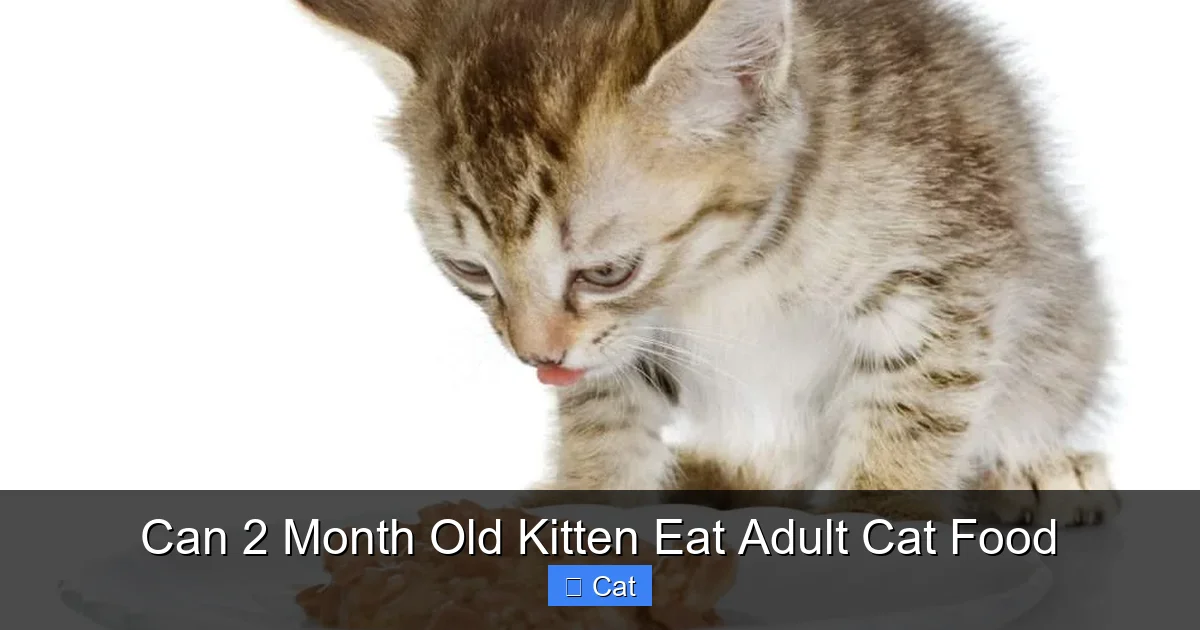
No, a 2 month old kitten should not eat adult cat food. Kitten food is specially formulated with higher protein, fat, calories, and essential nutrients like DHA and taurine to support rapid growth, brain development, and immune function. Feeding adult food too early can lead to nutritional deficiencies and long-term health issues.
Bringing a 2 month old kitten into your home is an exciting and joyful experience. Their tiny paws, playful antics, and curious eyes make them impossible not to love. But with that joy comes responsibility—especially when it comes to their diet. One of the most common questions new kitten owners ask is: *Can a 2 month old kitten eat adult cat food?* It’s a fair question. After all, adult cat food is readily available, often cheaper, and seems like a convenient option. But the truth is, feeding adult cat food to a 2 month old kitten is not recommended—and for good reason.
At just 8 weeks old, a kitten is in one of the most critical stages of life. This is when their body is growing at an astonishing rate. Their bones are lengthening, their muscles are developing, and their brain is forming new connections every day. To support this rapid development, kittens need a diet that’s rich in energy and packed with essential nutrients. Adult cat food simply isn’t designed for this level of demand. It’s formulated for fully grown cats who are no longer growing and need fewer calories and different nutrient ratios. Feeding adult food to a kitten is like giving a toddler a senior citizen’s meal—it might fill their stomach, but it won’t give them what they truly need to thrive.
So, what exactly makes kitten food different? And why is it so important to stick with age-appropriate nutrition during these early months? In this article, we’ll dive deep into the nutritional needs of a 2 month old kitten, explain why adult cat food falls short, and offer practical tips for feeding your little furball the right way. Whether you’re a first-time kitten parent or just looking to double-check your feeding routine, this guide will help you make informed decisions that support your kitten’s health and happiness for years to come.
Key Takeaways
- Kittens need more calories: A 2 month old kitten requires up to 3 times more calories per pound of body weight than an adult cat to fuel their rapid growth.
- Higher protein and fat content: Kitten food contains 30-40% protein and 20% fat, compared to lower levels in adult food, supporting muscle and tissue development.
- Essential nutrients are critical: Nutrients like DHA, taurine, calcium, and phosphorus are vital for brain, vision, and bone development—often lacking in adult formulas.
- Adult food lacks key growth support: Adult cat food is designed for maintenance, not growth, and may not meet the nutritional demands of a developing kitten.
- Digestive system is still developing: Young kittens have sensitive stomachs and may struggle to digest the ingredients or texture of adult kibble or food.
- Feeding adult food can cause health issues: Long-term feeding of adult food to kittens may result in stunted growth, weak bones, poor coat quality, and weakened immunity.
- Transition gradually when the time comes: Around 10–12 months, you can slowly introduce adult food, but only after consulting your veterinarian.
📑 Table of Contents
Why Kitten Nutrition Is Different from Adult Cat Food
When it comes to feeding cats, one size definitely does not fit all. Just like human babies need infant formula instead of adult meals, kittens require food that’s specially crafted for their unique developmental stage. The differences between kitten food and adult cat food go far beyond marketing labels—they’re rooted in science and biology.
Higher Caloric Needs
One of the biggest differences is caloric density. A 2 month old kitten is growing faster than at any other point in their life. They’re gaining weight, building muscle, and developing organs—all of which require a lot of energy. In fact, kittens need up to three times more calories per pound of body weight than adult cats. For example, a 2-pound kitten might need around 250–300 calories per day, while a 10-pound adult cat may only need 200–250 calories total. Adult cat food simply doesn’t provide enough calories to meet this demand. Feeding it to a kitten could leave them undernourished, lethargic, and at risk for developmental delays.
Protein and Fat Requirements
Kittens also need significantly more protein and fat than adult cats. Protein is essential for building muscles, organs, skin, and fur. It also supports enzyme and hormone production. Kitten food typically contains 30–40% protein, compared to 26–30% in most adult formulas. Fat, on the other hand, is a concentrated source of energy and helps absorb fat-soluble vitamins like A, D, E, and K. Kitten food usually has around 20% fat, while adult food often has 9–15%. This higher fat content supports brain development and helps maintain healthy skin and coat.
Essential Nutrients for Growth
Beyond macros, kitten food includes higher levels of key micronutrients. For instance, calcium and phosphorus are critical for strong bones and teeth. Kittens need a precise balance of these minerals—too little can lead to weak bones, while too much can cause skeletal deformities. Taurine, an amino acid, is vital for heart function, vision, and immune health. DHA (docosahexaenoic acid), an omega-3 fatty acid, supports brain and eye development. These nutrients are often added in higher amounts to kitten food because adult cats don’t need as much—and may even be harmed by excess intake.
Digestive Sensitivity
Another factor is digestibility. A 2 month old kitten’s digestive system is still maturing. They may not be able to break down certain ingredients found in adult food, especially if it contains fillers, grains, or artificial additives. Kitten food is formulated to be highly digestible, with smaller kibble sizes and softer textures that are easier for tiny mouths and stomachs to handle.
In short, kitten food isn’t just “stronger” adult food—it’s a completely different product designed to meet the intense nutritional demands of a growing feline. Feeding adult food at this stage is like trying to fuel a race car with regular gasoline—it won’t perform at its best, and it could even break down over time.
The Risks of Feeding Adult Cat Food to a 2 Month Old Kitten

Visual guide about Can 2 Month Old Kitten Eat Adult Cat Food
Image source: felinefascination.com
You might think, “Well, my kitten seems fine eating adult food—why change it?” But appearances can be deceiving. While a kitten might eat adult food without immediate vomiting or diarrhea, the long-term consequences can be serious. Here’s what could happen if you feed adult cat food to a 2 month old kitten.
Nutritional Deficiencies
The most immediate risk is nutritional deficiency. Adult cat food lacks the high levels of protein, fat, calories, and key vitamins and minerals that kittens need. Over time, this can lead to stunted growth, poor muscle development, and weakened immunity. For example, a deficiency in taurine can cause irreversible blindness and heart disease (dilated cardiomyopathy). A lack of DHA may impair cognitive function and learning ability. These aren’t issues that show up overnight—they develop gradually, often without obvious symptoms until it’s too late.
Delayed Development
Kittens grow rapidly in their first year. By 6 months, they’re usually about half their adult size. This growth requires constant fuel. If they’re not getting enough calories or the right nutrients, their development can slow down. You might notice your kitten is smaller than average, less active, or slower to reach milestones like weaning, litter training, or social play. In severe cases, growth plates in the bones may not close properly, leading to skeletal abnormalities.
Weakened Immune System
A kitten’s immune system is still developing at 2 months old. They’ve just lost the maternal antibodies they received from their mother’s milk, and they haven’t yet built up their own defenses. Proper nutrition is essential for immune function. Without enough protein, vitamins (like A and E), and minerals (like zinc and selenium), their body can’t produce enough white blood cells or antibodies to fight off infections. This makes them more vulnerable to viruses like feline herpesvirus, calicivirus, and even parasites.
Poor Coat and Skin Health
You might not think much about your kitten’s fur, but it’s a great indicator of overall health. A shiny, soft coat requires adequate fat and essential fatty acids. If a kitten is eating adult food with lower fat content, their coat may become dull, dry, or flaky. They might also develop dandruff or skin irritation. In some cases, poor nutrition can lead to excessive shedding or hair loss.
Digestive Upset
Even if the nutritional content were adequate, adult food can still cause digestive issues. The kibble size might be too large for a tiny mouth, making it hard to chew. The texture could be too hard, leading to choking or difficulty swallowing. Ingredients like corn, wheat, or soy—common in lower-quality adult foods—can be hard to digest and may cause gas, bloating, or diarrhea. Some kittens may also have food sensitivities that only show up when exposed to adult formulas.
Long-Term Health Consequences
Perhaps the most concerning risk is the long-term impact. Feeding adult food during critical growth periods can set the stage for chronic health problems later in life. For example, poor bone development can lead to arthritis or mobility issues. Heart problems from taurine deficiency may not appear until adulthood. And a weakened immune system can make your cat more susceptible to illnesses throughout their life.
In short, feeding adult cat food to a 2 month old kitten isn’t just suboptimal—it’s potentially harmful. It’s not worth the risk when high-quality kitten food is widely available and affordable.
What to Feed a 2 Month Old Kitten Instead
Now that we’ve established why adult food isn’t suitable, the next question is: what *should* you feed your 2 month old kitten? The good news is, there are plenty of excellent options designed specifically for kittens.
High-Quality Kitten Food
Look for commercial kitten food that meets AAFCO (Association of American Feed Control Officials) standards for growth. These products are scientifically formulated to provide complete and balanced nutrition for kittens. You can choose between wet (canned) food, dry kibble, or a combination of both.
Wet food is often preferred for young kittens because it’s easier to chew, has higher moisture content (which supports hydration), and tends to be more palatable. Many kittens transition from mother’s milk to wet food around 4–6 weeks, so by 8 weeks, they’re usually ready for full meals. Dry kibble can be introduced gradually, but make sure it’s specifically labeled for kittens and has small, soft pieces.
Feeding Schedule
At 2 months old, kittens have small stomachs but big appetites. They need to eat frequently—usually 4–6 small meals per day. This helps maintain their energy levels and supports steady growth. As they get older, you can reduce the number of meals. By 6 months, most kittens can eat 3 meals a day, and by 10–12 months, they can transition to 2 meals daily.
Transitioning from Mother’s Milk or Formula
If your kitten was orphaned or separated early, they may still be on kitten milk replacer (never use cow’s milk—it can cause diarrhea). Around 4–6 weeks, you can start introducing wet kitten food mixed with warm water or formula to create a soft gruel. Gradually thicken the mixture over a few weeks until they’re eating solid food. By 8 weeks, most kittens should be fully weaned and eating regular kitten food.
Hydration Matters
Even if you’re feeding wet food, always provide fresh water. Kittens are prone to dehydration, especially if they’re eating dry food. Make sure their water bowl is clean and filled daily. Some kittens prefer running water, so a cat water fountain might encourage them to drink more.
Supplements and Treats
In most cases, a high-quality kitten food provides all the nutrients your kitten needs. Avoid giving supplements unless recommended by a vet. Too much of certain vitamins (like vitamin D or calcium) can be harmful. Treats should be given sparingly—no more than 10% of their daily caloric intake—and should be kitten-specific.
Homemade Diets: Proceed with Caution
Some owners consider homemade kitten food, but this requires careful planning. A balanced homemade diet must include the right ratios of protein, fat, calcium, taurine, and other nutrients. It’s easy to make mistakes that lead to deficiencies. If you’re interested in homemade food, consult a veterinary nutritionist to create a safe, balanced recipe.
When Can a Kitten Start Eating Adult Cat Food?
So, if adult food isn’t suitable at 2 months, when is it okay to make the switch? The answer depends on your kitten’s breed, size, and development—but generally, the transition should happen around 10–12 months of age.
Understanding Growth Stages
Most kittens reach sexual maturity between 4–6 months, but they’re still growing. Small breeds may finish growing by 10 months, while larger breeds (like Maine Coons) can continue growing until 18 months or even 2 years. Feeding kitten food supports this extended growth period.
Signs Your Kitten Is Ready
You’ll know it’s time to switch when your kitten’s growth has slowed, their energy levels have stabilized, and they’re approaching their adult size. Your veterinarian can help determine the right time based on physical exams and weight trends.
How to Transition Safely
Never switch food abruptly. Sudden changes can upset your kitten’s stomach. Instead, gradually mix increasing amounts of adult food with their current kitten food over 7–10 days. For example:
– Days 1–2: 75% kitten food, 25% adult food
– Days 3–4: 50% kitten food, 50% adult food
– Days 5–6: 25% kitten food, 75% adult food
– Day 7+: 100% adult food
Monitor your kitten for signs of digestive upset, such as vomiting, diarrhea, or loss of appetite. If issues arise, slow down the transition or consult your vet.
Choosing the Right Adult Food
When you do make the switch, choose a high-quality adult cat food that’s appropriate for your cat’s lifestyle (indoor, outdoor, active, etc.). Look for real meat as the first ingredient, minimal fillers, and no artificial preservatives. Avoid foods labeled “all life stages” unless your vet approves—they may not meet the specific needs of a young adult cat.
Common Feeding Mistakes to Avoid
Even with the best intentions, it’s easy to make mistakes when feeding a young kitten. Here are some common pitfalls to watch out for.
Free-Feeding Dry Food
While convenient, leaving dry food out all day can lead to overeating, especially in kittens with big appetites. It’s better to stick to scheduled meals to monitor intake and ensure they’re eating enough.
Feeding Dog Food
Never feed dog food to a kitten. Dogs have different nutritional needs, and dog food lacks taurine, arachidonic acid, and vitamin A in forms cats can use. This can quickly lead to serious health problems.
Overfeeding Treats
Treats are great for training and bonding, but too many can displace essential nutrients from their main meals. Stick to kitten-safe treats and limit them to 10% of daily calories.
Ignoring Water Intake
Dehydration is a silent risk. Always provide fresh water, especially if feeding dry food. Watch for signs like lethargy, dry gums, or reduced urination.
Not Consulting a Vet
Every kitten is different. A veterinarian can help you create a feeding plan based on your kitten’s breed, health, and growth rate. Regular check-ups ensure they’re on track.
Conclusion
So, can a 2 month old kitten eat adult cat food? The clear answer is no. At this critical stage of life, kittens need a diet that’s rich in calories, protein, fat, and essential nutrients to support their rapid growth and development. Adult cat food simply doesn’t provide what they need—and feeding it can lead to serious health issues down the line.
Instead, choose a high-quality kitten food that’s formulated for growth, feed frequent small meals, and always provide fresh water. Monitor your kitten’s weight, energy levels, and coat condition as indicators of good nutrition. And when the time comes—usually around 10–12 months—transition to adult food gradually and under veterinary guidance.
Your kitten’s early months are a foundation for a long, healthy life. By feeding them the right food at the right time, you’re giving them the best possible start. It’s a small effort now that pays off in years of purrs, play, and companionship.
Frequently Asked Questions
Can I mix adult cat food with kitten food?
It’s not recommended to mix adult and kitten food regularly. Kitten food has higher calorie and nutrient levels, so mixing can dilute the nutrition your growing kitten needs. Only mix temporarily during a gradual food transition around 10–12 months.
What if my kitten refuses to eat kitten food?
Try warming wet food slightly to enhance aroma, or mix it with a bit of warm water or kitten milk replacer. Offer different brands or textures (pate, shreds, gravy) to find one they like. If refusal continues, consult your vet to rule out health issues.
Is it okay to feed homemade food to a 2 month old kitten?
Homemade diets can be risky without proper formulation. Kittens need precise nutrient balances, and deficiencies can cause serious harm. If you want to feed homemade food, work with a veterinary nutritionist to create a balanced recipe.
How often should I feed my 2 month old kitten?
Feed your 2 month old kitten 4–6 small meals per day. Their tiny stomachs can’t hold large amounts, but their high metabolism requires frequent fuel. Adjust as they grow—by 6 months, 3 meals a day is usually sufficient.
Can I give my kitten treats at 2 months old?
Yes, but only kitten-specific treats and in moderation. Treats should make up no more than 10% of their daily caloric intake. Avoid hard treats that could pose a choking hazard, and never give human food.
When should I switch from kitten to adult food?
Most kittens can transition to adult food between 10–12 months of age. Larger breeds may need kitten food longer. Always make the switch gradually over 7–10 days and consult your veterinarian for personalized advice.