

Yes, a 2-month-old puppy can and should eat dog food—but only high-quality, age-appropriate puppy food designed for growth. At this stage, puppies need nutrient-dense meals rich in protein, fat, calcium, and DHA to support rapid development. Feeding adult dog food or improper portions can harm their health, so choosing the right formula and feeding schedule is essential.
Key Takeaways
- Yes, 2-month-old puppies can eat dog food: But only specially formulated puppy food, not adult or generic dog food.
- Choose high-quality puppy food: Look for AAFCO-approved labels that meet nutritional standards for growth.
- Feed 3–4 small meals daily: Puppies have small stomachs and high energy needs, so frequent feeding is crucial.
- Soak dry kibble if needed: Softening kibble with warm water helps puppies chew and digest it more easily.
- Avoid adult dog food: It lacks the calories, protein, and nutrients growing puppies require.
- Monitor growth and adjust portions: Follow feeding guidelines on the package and consult your vet for personalized advice.
- Transition gradually when changing food: Sudden changes can upset a puppy’s stomach—mix old and new food over 7–10 days.
📑 Table of Contents
- Can 2 Months Puppy Eat Dog Food? The Complete Guide for New Pet Parents
- Why Puppy Food Matters at 2 Months Old
- How Much Should a 2-Month-Old Puppy Eat?
- Wet vs. Dry Puppy Food: Which Is Better?
- How to Transition Your Puppy to Solid Food
- Foods to Avoid for 2-Month-Old Puppies
- Common Mistakes to Avoid When Feeding a 2-Month-Old Puppy
- When to Consult Your Veterinarian
- Conclusion: Setting Your Puppy Up for a Healthy Life
Can 2 Months Puppy Eat Dog Food? The Complete Guide for New Pet Parents
Bringing home a 2-month-old puppy is one of the most exciting moments for any dog lover. Those tiny paws, wagging tails, and curious eyes make it hard not to fall in love instantly. But with that joy comes responsibility—especially when it comes to feeding your new furry friend. One of the most common questions new puppy parents ask is: *Can a 2 months puppy eat dog food?*
The short answer is yes—but with important caveats. At two months old, puppies are weaning off their mother’s milk and transitioning to solid food. This is a critical developmental stage, and their diet plays a huge role in shaping their health, growth, and behavior. While they can eat dog food, it must be the right kind: specifically formulated for puppies, nutrient-dense, and appropriate for their size and breed.
Feeding your puppy the wrong food—like adult dog food or low-quality kibble—can lead to malnutrition, digestive issues, or long-term health problems. That’s why understanding what to feed, how much, and how often is essential. In this guide, we’ll walk you through everything you need to know about feeding a 2-month-old puppy, from choosing the best food to creating a feeding schedule that supports healthy growth.
Why Puppy Food Matters at 2 Months Old
Visual guide about Can 2 Months Puppy Eat Dog Food
Image source: storage.googleapis.com
At two months old, puppies are in a rapid growth phase. Their bodies are developing bones, muscles, organs, and brains at an astonishing rate. This means they need significantly more calories, protein, fat, and essential nutrients per pound of body weight than adult dogs. In fact, puppies require up to twice the energy of adult dogs.
Puppy food is specially designed to meet these high demands. It contains higher levels of protein (usually 22–32%) to support muscle development, increased fat (10–20%) for energy, and key nutrients like calcium and phosphorus for strong bones and teeth. It also often includes DHA (an omega-3 fatty acid) to support brain and vision development—something adult dog food typically lacks.
Feeding adult dog food to a 2-month-old puppy is a common mistake. Adult formulas are lower in calories and protein and don’t provide the balanced nutrition growing puppies need. This can lead to stunted growth, weak bones, and a weakened immune system. Even some “all-life-stage” dog foods may not meet the strict AAFCO (Association of American Feed Control Officials) standards for growth unless clearly labeled as such.
Another reason puppy food is essential is digestibility. Puppies have sensitive digestive systems that are still maturing. High-quality puppy food is easier to digest and absorb, reducing the risk of upset stomachs, diarrhea, or constipation.
What to Look for in Puppy Food
When shopping for puppy food, don’t just grab the first bag you see. Look for these key indicators of quality:
– **AAFCO Statement:** The packaging should say the food meets AAFCO nutrient profiles for “growth” or “all life stages.” This ensures it’s nutritionally complete for puppies.
– **Named Protein Source:** The first ingredient should be a real meat, like “chicken,” “lamb,” or “salmon”—not “meat by-products” or “poultry meal” (though some meal is acceptable if high-quality).
– **No Fillers or Artificial Additives:** Avoid foods with corn syrup, artificial colors, or preservatives like BHA or BHT.
– **DHA and Omega Fatty Acids:** These support brain and eye development.
– **Appropriate Kibble Size:** Smaller breeds need smaller kibble; larger breeds may need larger pieces to encourage chewing.
Brands like Royal Canin, Hill’s Science Diet, Purina Pro Plan, and Wellness CORE offer reputable puppy formulas. Always check reviews and consult your vet for recommendations based on your puppy’s breed and size.
How Much Should a 2-Month-Old Puppy Eat?
Portion control is just as important as food quality. Overfeeding can lead to obesity and joint problems, especially in large breeds, while underfeeding can stunt growth and weaken immunity.
The exact amount your puppy needs depends on their breed, size, and activity level. However, most 2-month-old puppies weigh between 2 and 8 pounds and require about 1/2 to 1 cup of high-quality puppy food per day, divided into multiple meals.
Here’s a general guideline:
– **Small breeds (under 20 lbs adult weight):** 1/2 to 3/4 cup per day
– **Medium breeds (20–50 lbs):** 3/4 to 1 1/4 cups per day
– **Large breeds (50+ lbs):** 1 1/4 to 2 cups per day
Always check the feeding chart on the dog food package. These charts are based on the puppy’s expected adult weight, so you may need to estimate. For example, if you have a Golden Retriever puppy, you’d follow the large breed recommendations.
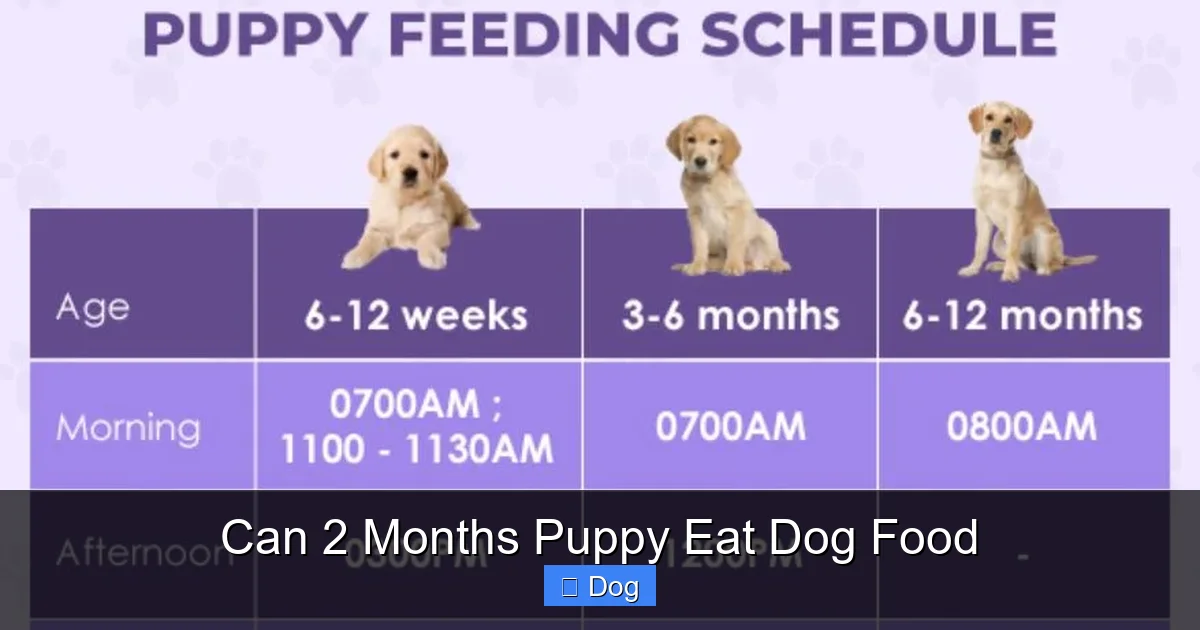
Feeding Frequency: 3–4 Meals a Day
At two months old, puppies have tiny stomachs and high metabolism. They can’t eat large meals, so they need to eat frequently—usually 3 to 4 times a day.
A typical feeding schedule might look like this:
– 7:00 AM – Breakfast
– 12:00 PM – Lunch
– 5:00 PM – Dinner
– 8:00 PM – Evening snack (optional, depending on growth)
Spacing meals evenly helps maintain energy levels and prevents hypoglycemia (low blood sugar), which can be dangerous in small puppies.
As your puppy grows, you’ll gradually reduce the number of meals. By 6 months, most puppies can transition to 2–3 meals per day.
Wet vs. Dry Puppy Food: Which Is Better?
One of the biggest debates among puppy parents is whether to feed wet or dry food. The truth is, both have pros and cons, and many owners choose a combination.
Dry Puppy Food (Kibble)
Dry food is convenient, cost-effective, and helps maintain dental health by reducing plaque buildup. It’s also easy to store and measure. However, some puppies find it hard to chew at 2 months old, especially if the kibble is large or hard.
**Tip:** If your puppy struggles with dry kibble, soak it in warm water or puppy milk replacer for 5–10 minutes until soft. This makes it easier to chew and digest.
Wet Puppy Food
Wet food is highly palatable, hydrating, and easier for puppies to eat. It’s a great option for picky eaters or puppies with teething discomfort. However, it’s more expensive, spoils quickly once opened, and doesn’t offer the same dental benefits as kibble.
Combination Feeding
Many owners mix wet and dry food—adding a spoonful of wet food to kibble to enhance flavor and moisture. This can encourage eating and ensure your puppy gets the benefits of both.
Whichever you choose, make sure it’s labeled for puppies and meets AAFCO standards. Avoid “gravy” or “toppers” that are high in salt and sugar.
How to Transition Your Puppy to Solid Food
If your puppy was still nursing or eating gruel when you brought them home, they may need help transitioning to solid kibble. This process should be gradual to avoid digestive upset.
Step-by-Step Transition Plan
1. **Start with a soft gruel:** Mix high-quality puppy kibble with warm water, puppy milk replacer, or low-sodium chicken broth until it reaches a soupy consistency. Feed this 3–4 times a day.
2. **Gradually thicken the mixture:** Over 5–7 days, reduce the liquid and increase the kibble ratio. By day 7, the food should be mostly dry kibble with just a little moisture.
3. **Introduce dry kibble:** Once your puppy is eating softened kibble well, offer dry kibble as a snack or mix it into their meals.
4. **Monitor for issues:** Watch for signs of digestive upset like diarrhea, vomiting, or refusal to eat. If problems persist, slow the transition or consult your vet.
Some puppies take to kibble immediately; others need more time. Be patient and consistent.
What If My Puppy Won’t Eat?
It’s normal for puppies to be hesitant at first. Try these tips:
– Warm the food slightly to enhance aroma.
– Hand-feed a few pieces to build trust.
– Offer food in a quiet, calm environment.
– Avoid free-feeding; stick to scheduled meals to establish routine.
If your puppy refuses to eat for more than 24 hours, contact your vet. Loss of appetite can signal illness.
Foods to Avoid for 2-Month-Old Puppies
While puppy food is safe and necessary, many human foods and dog products are dangerous for young puppies. Here’s what to avoid:
– **Chocolate:** Contains theobromine, which is toxic to dogs.
– **Grapes and raisins:** Can cause kidney failure.
– **Onions and garlic:** Damage red blood cells.
– **Xylitol (artificial sweetener):** Found in gum and candy, it can cause rapid insulin release and liver failure.
– **Dairy products:** Many puppies are lactose intolerant and can’t digest milk properly.
– **Bones (especially cooked):** Can splinter and cause choking or internal injury.
– **Raw meat or eggs:** Risk of bacterial contamination like Salmonella or E. coli.
Also, avoid giving your puppy treats meant for adult dogs. Puppy-specific treats are smaller, softer, and lower in calories.
Safe Puppy Treats
When training or rewarding your puppy, use small, soft treats designed for puppies. Brands like Zuke’s Mini Naturals, Blue Buffalo Bits, or Wellness Soft Puppy Treats are great options. Limit treats to no more than 10% of daily calories to avoid overfeeding.
Common Mistakes to Avoid When Feeding a 2-Month-Old Puppy
Even with the best intentions, new puppy parents often make feeding mistakes. Here are the most common ones—and how to avoid them:
1. Feeding Adult Dog Food
As mentioned earlier, adult dog food doesn’t provide the nutrients puppies need. Always choose a formula labeled for “puppies” or “growth.”
2. Overfeeding or Underfeeding
Follow the feeding guidelines on the package, but adjust based on your puppy’s body condition. You should be able to feel their ribs but not see them prominently. If your puppy is gaining weight too quickly or too slowly, consult your vet.
3. Free-Feeding
Leaving food out all day can lead to overeating and makes it hard to monitor appetite. Stick to scheduled meals.
4. Sudden Food Changes
Switching brands or formulas abruptly can cause diarrhea. Always transition over 7–10 days by mixing increasing amounts of the new food with the old.
5. Ignoring Water Needs
Puppies need constant access to fresh, clean water—especially when eating dry food. Change their water bowl daily.
6. Feeding Table Scraps
Human food is often too rich, salty, or fatty for puppies. Stick to puppy-safe meals and treats.
When to Consult Your Veterinarian
While most puppies thrive on a balanced diet, some may have special needs. Consult your vet if your puppy:
– Shows signs of malnutrition (lethargy, dull coat, poor growth)
– Has persistent diarrhea or vomiting
– Refuses to eat for more than 24 hours
– Shows signs of food allergies (itching, ear infections, digestive issues)
– Is a giant breed (like Great Dane or Mastiff), which may need specialized large-breed puppy food to prevent rapid growth and joint problems
Your vet can recommend the best food, portion sizes, and feeding schedule based on your puppy’s breed, size, and health.
Conclusion: Setting Your Puppy Up for a Healthy Life
So, can a 2 months puppy eat dog food? Absolutely—but only the right kind. High-quality, AAFCO-approved puppy food is essential for supporting your puppy’s rapid growth, strong immune system, and long-term health. By choosing the right formula, feeding the correct portions, and avoiding harmful foods, you’re laying the foundation for a happy, healthy life.
Remember, every puppy is unique. What works for one may not work for another. Stay observant, stay consistent, and don’t hesitate to reach out to your veterinarian for guidance. With the right nutrition and care, your 2-month-old puppy will grow into a vibrant, well-adjusted dog you’ll cherish for years to come.
Frequently Asked Questions
Can a 2-month-old puppy eat dry dog food?
Yes, but it should be high-quality puppy kibble. If the kibble is too hard, soak it in warm water or puppy milk replacer to soften it, making it easier for your puppy to chew and digest.
How many times a day should I feed my 2-month-old puppy?
Feed your puppy 3 to 4 small meals per day. Their small stomachs and high energy needs require frequent feeding to maintain stable blood sugar and support growth.
Is it okay to mix wet and dry puppy food?
Yes, combining wet and dry food is safe and can encourage eating. It adds moisture and flavor, which is helpful for picky eaters or puppies transitioning to solid food.
Can I feed my puppy adult dog food if I run out of puppy food?
No, adult dog food lacks the calories, protein, and nutrients growing puppies need. Use it only in emergencies and transition back to puppy food as soon as possible.
How do I know if my puppy is eating enough?
Monitor your puppy’s weight, energy levels, and body condition. You should be able to feel their ribs but not see them. Regular vet check-ups can also help ensure they’re growing properly.
When can I switch my puppy to adult dog food?
Most puppies can transition to adult food between 12 and 18 months of age, depending on breed size. Small breeds may switch earlier; large breeds often need puppy food longer to support joint health.