
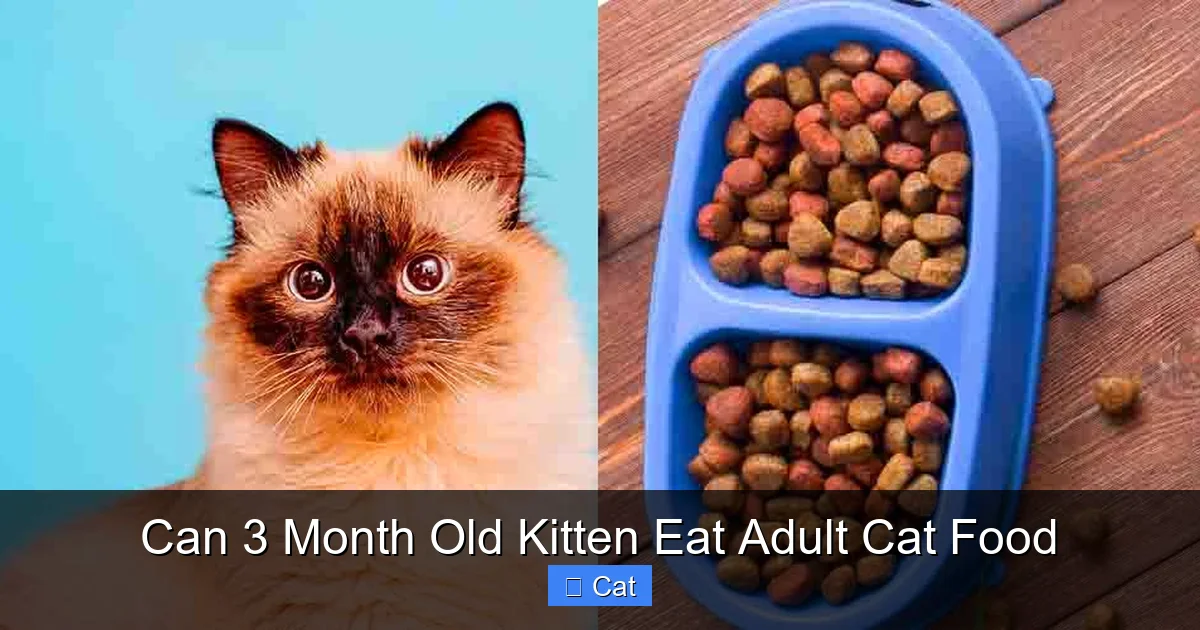
No, a 3-month-old kitten should not eat adult cat food. Kittens have unique nutritional needs that adult formulas don’t meet, especially for growth, energy, and development. Feeding kitten-specific food ensures they get the right balance of protein, fat, and key nutrients for a healthy start.
Key Takeaways
- Kittens need more calories and nutrients: At 3 months old, kittens are growing rapidly and require up to three times more energy per pound than adult cats.
- Adult cat food lacks essential nutrients: It doesn’t contain enough protein, fat, taurine, calcium, and other vital elements needed for healthy development.
- Proper nutrition supports brain and eye development: DHA and taurine in kitten food are crucial for cognitive and vision growth during early months.
- Feeding adult food can lead to health issues: Long-term use may cause malnutrition, stunted growth, or weakened immunity.
- Choose high-quality kitten food: Look for AAFCO-approved labels that specify “for growth” or “kitten” on the packaging.
- Transition gradually when switching foods: Sudden changes can upset a kitten’s stomach—mix old and new food over 7–10 days.
- Consult your vet for personalized advice: Every kitten is different; a veterinarian can recommend the best diet based on breed, size, and health.
📑 Table of Contents
- Can 3 Month Old Kitten Eat Adult Cat Food? The Truth Every Pet Parent Should Know
- Why Kitten Nutrition Is So Different from Adult Cat Food
- The Risks of Feeding Adult Cat Food to a 3-Month-Old Kitten
- What Should You Feed a 3-Month-Old Kitten Instead?
- Can You Ever Mix Kitten and Adult Cat Food?
- When to Transition from Kitten to Adult Food
- Final Thoughts: Prioritize Your Kitten’s Health from Day One
Can 3 Month Old Kitten Eat Adult Cat Food? The Truth Every Pet Parent Should Know
Bringing a tiny, wide-eyed kitten into your home is one of the most joyful experiences a pet lover can have. Their playful pounces, curious meows, and sleepy cuddles quickly steal your heart. But with all that cuteness comes a big responsibility: making sure they’re eating the right food. One of the most common questions new kitten parents ask is, “Can my 3-month-old kitten eat adult cat food?” It’s a fair question—after all, adult cat food is often more readily available, sometimes cheaper, and your older cat might already be eating it. But the short answer is no, and here’s why.
At three months old, your kitten is still in a critical stage of development. They’re not just small cats—they’re growing at an astonishing rate. Their bones are lengthening, their brains are expanding, and their immune systems are still maturing. This rapid growth demands a specialized diet rich in energy, protein, and essential nutrients. Adult cat food simply isn’t designed to meet these intense nutritional needs. While it might keep your kitten alive in a pinch, it won’t support their optimal health or long-term development. Feeding adult food to a kitten is like giving a toddler a senior citizen’s meal—it’s not balanced for their stage of life.
Why Kitten Nutrition Is So Different from Adult Cat Food
Visual guide about Can 3 Month Old Kitten Eat Adult Cat Food
Image source: petisha.com
To understand why adult cat food isn’t suitable for kittens, it helps to know what makes kitten food special. Kittens aren’t just miniature versions of adult cats—they have unique dietary requirements that change as they grow. From birth to about 12 months of age, kittens need significantly more calories, protein, fat, and specific vitamins and minerals than adult cats. This isn’t just about size; it’s about biology.
The High Energy Needs of Growing Kittens
Imagine trying to power a race car with regular gasoline instead of high-octane fuel. That’s what happens when you feed adult cat food to a kitten. Kittens are bundles of energy—they’re constantly moving, playing, exploring, and learning. All that activity burns calories fast. In fact, a 3-month-old kitten needs about two to three times more calories per pound of body weight than an adult cat. Adult cat food simply doesn’t pack enough energy to keep up with this demand. Over time, a calorie deficit can lead to lethargy, poor coat condition, and slowed growth.
Protein: The Building Block of Growth
Protein is the foundation of a kitten’s diet. It’s essential for building muscles, organs, skin, and fur. Kittens need a higher percentage of protein in their diet compared to adult cats—typically around 30–40% on a dry matter basis. Adult cat food usually contains less protein, often around 26–30%, which isn’t enough to support rapid development. High-quality kitten food uses animal-based proteins like chicken, turkey, or fish as the first ingredient, ensuring your kitten gets the amino acids they need.
Fat for Brain and Body Development
Fat isn’t just about energy—it’s also crucial for brain development, hormone production, and healthy skin and coat. Kittens need more dietary fat than adult cats, usually around 20–30% in their food. Fat provides concentrated calories, which is especially important for tiny kittens with small stomachs. They can’t eat large meals, so their food needs to be nutrient-dense. Adult cat food often has lower fat content, which can leave kittens undernourished and sluggish.
Essential Vitamins and Minerals
Kittens require higher levels of certain vitamins and minerals, such as calcium, phosphorus, vitamin D, and taurine. Calcium and phosphorus are vital for strong bones and teeth, and kittens need them in the right ratio to prevent skeletal problems. Taurine, an amino acid found only in animal tissue, is critical for heart function, vision, and immune health. A deficiency can lead to blindness or heart disease. While adult cat food contains some of these nutrients, it doesn’t provide enough to meet a growing kitten’s needs.
The Risks of Feeding Adult Cat Food to a 3-Month-Old Kitten
You might think, “Well, my kitten seems fine eating adult food—why change it?” But the risks of feeding adult cat food to a young kitten go beyond just poor growth. Over time, the nutritional gaps can lead to serious health problems.
Malnutrition and Stunted Growth
One of the most immediate risks is malnutrition. Because adult cat food lacks the right balance of calories, protein, and fat, kittens may not gain weight properly or may grow more slowly than they should. This can result in stunted growth, where the kitten remains smaller than average even into adulthood. In severe cases, malnutrition can affect organ development and lead to long-term health issues.
Weakened Immune System
A kitten’s immune system is still developing, and proper nutrition plays a huge role in keeping it strong. Without enough protein, vitamins, and minerals, their body can’t produce enough white blood cells or antibodies to fight off infections. This makes them more vulnerable to illnesses like upper respiratory infections, parasites, and even more serious diseases. Feeding the right food helps build a resilient immune system from the start.
Digestive Upsets and Poor Gut Health
Kittens have sensitive digestive systems. Adult cat food is often formulated with different fiber levels and ingredients that may be harder for a young kitten to digest. This can lead to diarrhea, constipation, or vomiting. Additionally, kitten food is designed to be highly digestible, meaning more nutrients are absorbed and less waste is produced. Adult food may not be as easily digested, leading to poor nutrient absorption and gastrointestinal discomfort.
Long-Term Health Consequences
Even if your kitten appears healthy now, feeding adult food during critical growth stages can have lasting effects. For example, inadequate calcium and phosphorus can lead to bone deformities or joint problems later in life. Taurine deficiency can cause irreversible vision loss or cardiomyopathy (a heart condition). These aren’t immediate issues, but they can develop over months or years, making early nutrition a lifelong investment in your cat’s health.
What Should You Feed a 3-Month-Old Kitten Instead?
Now that we’ve covered why adult cat food isn’t suitable, let’s talk about what your kitten should be eating. The best choice is high-quality kitten food that’s specifically formulated for growth and development.
Look for AAFCO-Approved Kitten Food
When shopping for kitten food, always check the label for an AAFCO (Association of American Feed Control Officials) statement. This ensures the food meets the nutritional standards for kittens. Look for phrases like “formulated for growth” or “for kittens” on the packaging. These foods are tested and balanced to support healthy development.
Wet vs. Dry Kitten Food: Which Is Better?
Both wet and dry kitten food can be part of a healthy diet, and many veterinarians recommend a combination of both. Wet food has higher moisture content, which helps keep kittens hydrated—especially important since cats naturally have a low thirst drive. It’s also more palatable and easier for small mouths to eat. Dry food, on the other hand, is convenient, cost-effective, and can help with dental health by reducing plaque buildup. You can offer wet food as meals and leave dry food out for free-feeding, depending on your kitten’s preferences and your vet’s advice.
Top Ingredients to Look For
Always read the ingredient list. The first ingredient should be a high-quality animal protein like chicken, turkey, or fish. Avoid foods that list “by-products,” “meat meal,” or vague terms like “animal digest” as the primary ingredient. Look for whole meats and named meat meals (e.g., “chicken meal”). Also, check for added taurine, DHA (an omega-3 fatty acid important for brain and eye development), and essential vitamins and minerals.
Feeding Schedule for a 3-Month-Old Kitten
At three months old, kittens should be eating three to four small meals per day. Their stomachs are tiny, so they can’t eat large amounts at once. Divide their daily food intake into multiple feedings to keep their energy levels stable. As they grow, you can gradually reduce the number of meals. By six months, most kittens can transition to two meals a day.
How Much to Feed
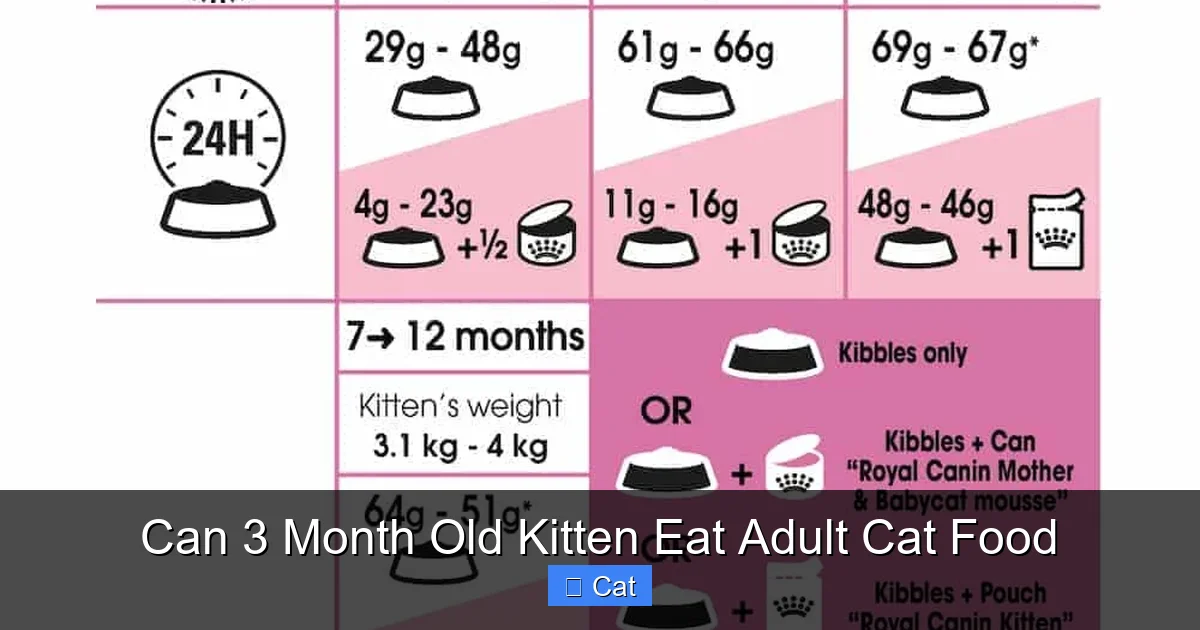
The exact amount depends on the food brand, your kitten’s size, and activity level. Most kitten food packages include a feeding guide based on weight. For example, a 3-pound kitten might need about 1/3 to 1/2 cup of dry food per day, divided into meals. Always monitor your kitten’s weight and body condition. If they’re gaining too much or too little weight, adjust the portion size or consult your vet.
Can You Ever Mix Kitten and Adult Cat Food?
If you have both a kitten and an adult cat, you might be tempted to feed them the same food to simplify things. While it’s okay to occasionally mix a small amount of adult food into your kitten’s meals—especially during a transition—it shouldn’t become a regular habit.
Short-Term Mixing During Transitions
If you’re switching your kitten from one brand or type of food to another, it’s best to do so gradually. Mix the old food with the new, increasing the proportion of new food over 7–10 days. During this time, a small amount of adult food might be included if that’s what you’re transitioning from. But once the switch is complete, return to kitten-specific food.
Free-Feeding Risks
Some households free-feed dry food, meaning it’s available at all times. If you do this, make sure the food is specifically for kittens. Adult food left out all day can lead to your kitten overeating or, worse, not getting enough of the nutrients they need. If your adult cat eats kitten food, that’s usually fine in small amounts—kitten food is higher in calories, so it’s not ideal for adult cats long-term, but it won’t harm them occasionally.
Separate Feeding Areas
To avoid confusion, consider feeding your kitten and adult cat in separate areas. This ensures your kitten gets the right food and isn’t bullied away from their meals. It also helps you monitor how much each cat is eating, which is important for health tracking.
When to Transition from Kitten to Adult Food
Knowing when to switch your kitten to adult food is just as important as knowing what to feed them now. Most kittens should stay on kitten food until they’re about 12 months old. However, this can vary depending on breed and size.
Small vs. Large Breeds
Smaller breeds like Siamese or domestic shorthairs may reach maturity around 10–12 months, while larger breeds like Maine Coons or Ragdolls can continue growing until 18 months or even 2 years. Your vet can help determine the right time to switch based on your kitten’s growth rate and body condition.
Signs Your Kitten Is Ready for Adult Food
Look for signs that your kitten has reached full size and their growth has slowed. They should have a healthy weight, strong muscles, and a shiny coat. If they’re no longer gaining weight rapidly and their energy levels have stabilized, it might be time to consider the transition. Always do this gradually, mixing kitten and adult food over a week or two to avoid digestive upset.
Choosing the Right Adult Food
When the time comes, choose a high-quality adult cat food that’s appropriate for their age, activity level, and health. Look for AAFCO approval and a balanced nutrient profile. Avoid foods with fillers, artificial preservatives, or excessive carbohydrates.
Final Thoughts: Prioritize Your Kitten’s Health from Day One
Feeding your 3-month-old kitten the right food isn’t just about convenience—it’s about setting them up for a long, healthy life. While adult cat food might seem like an easy option, it simply doesn’t provide the nutrition a growing kitten needs. From higher protein and fat to essential vitamins and minerals, kitten food is specially designed to support rapid development, strong immunity, and overall well-being.
Remember, your kitten’s early months are a foundation for their future. What you feed them now can impact their health for years to come. By choosing high-quality kitten food, following a proper feeding schedule, and consulting your veterinarian, you’re giving your furry friend the best possible start.
So, can a 3-month-old kitten eat adult cat food? The answer is clear: not as their main diet. Stick with kitten-specific food, and you’ll be rewarded with a happy, healthy, and thriving companion.
Frequently Asked Questions
Can I give my 3-month-old kitten a little adult cat food as a treat?
It’s best to avoid giving adult cat food as a treat. Even small amounts can disrupt their balanced diet. Instead, use kitten-safe treats or small pieces of cooked, unseasoned chicken.
What if my kitten accidentally eats adult cat food?
One accidental meal won’t harm your kitten, but don’t make it a habit. If it happens occasionally, just return to feeding kitten food at the next meal.
Is wet kitten food better than dry?
Both have benefits. Wet food provides hydration and is easier to eat, while dry food is convenient and supports dental health. A mix of both is often ideal.
How often should I feed my 3-month-old kitten?
Feed your kitten 3–4 small meals per day. Their tiny stomachs can’t handle large portions, so frequent feeding helps maintain energy and growth.
Can adult cats eat kitten food?
Adult cats can eat kitten food occasionally, but not long-term. It’s higher in calories and fat, which can lead to weight gain in less active adult cats.
When should I switch my kitten to adult food?
Most kittens should stay on kitten food until they’re 12 months old. Larger breeds may need it longer. Consult your vet to determine the right time based on growth and health.