
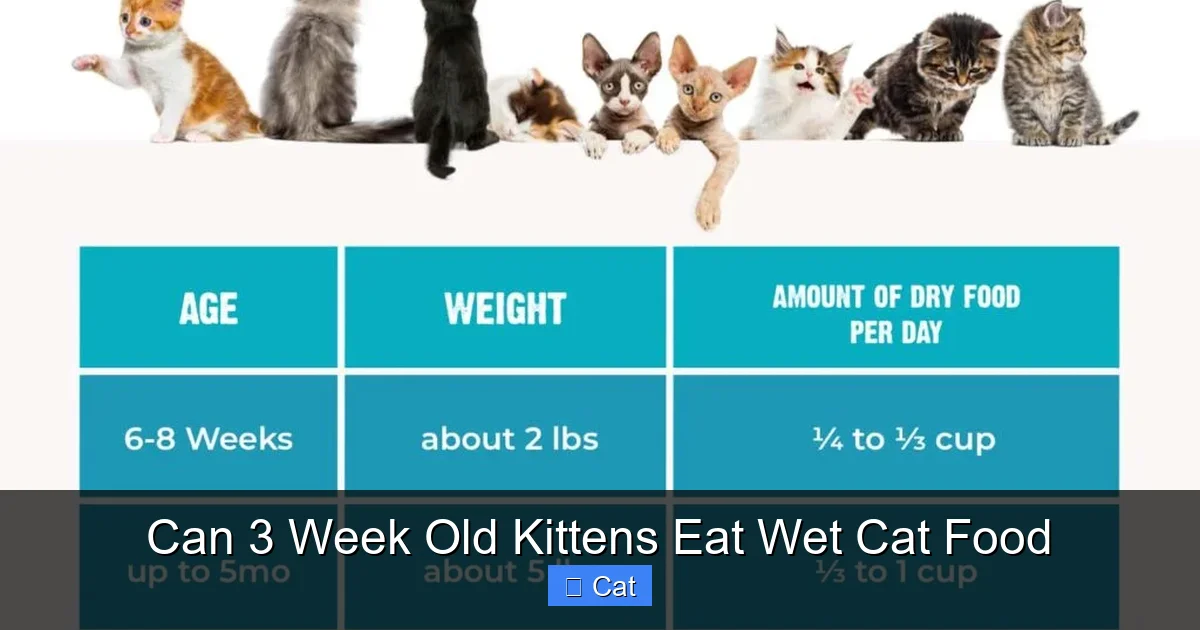
At 3 weeks old, most kittens are not yet ready for wet cat food and should still rely on mother’s milk or kitten milk replacer. While some may begin nibbling on softened food around this age, wet food should only be introduced gradually and under guidance to support safe weaning and proper nutrition.
Welcoming a litter of tiny, wide-eyed kittens into your life is one of the most heartwarming experiences a cat lover can have. Their tiny paws, sleepy meows, and clumsy tumbles bring endless joy—but they also come with big responsibilities. One of the most common questions new kitten caregivers ask is: *Can 3 week old kittens eat wet cat food?* It’s a natural concern. After all, you want to make sure these fragile little creatures are getting the nutrition they need to grow strong and healthy.
At three weeks old, kittens are in a delicate stage of development. They’re just beginning to open their eyes, wobble around, and explore their surroundings. While they’re growing rapidly, their digestive systems are still very immature. This means their diet must be carefully managed to support their needs without overwhelming their tiny bodies. The short answer? Most 3-week-old kittens are not quite ready for wet cat food—but they may be on the cusp of starting the weaning process, which is when wet food can begin to play a role.
Understanding when and how to introduce wet food is crucial. Doing it too early can lead to digestive upset, malnutrition, or even rejection of food. But waiting too long can slow down their development and make the weaning process more difficult. The key is to follow nature’s timeline while giving your kittens the best possible start. In this guide, we’ll walk you through everything you need to know about feeding 3-week-old kittens, including when wet food becomes appropriate, how to prepare it, what to look for in a quality product, and how to monitor your kittens’ progress. Whether you’re caring for a litter from your own cat or fostering orphaned kittens, this information will help you make confident, informed decisions.
Key Takeaways
- Kittens under 4 weeks should primarily drink milk: Mother’s milk or high-quality kitten milk replacer provides essential nutrients and antibodies vital for early development.
- Wet food can be introduced around 3–4 weeks as a supplement: Start with a gruel made from kitten-specific wet food mixed with milk replacer to ease the transition.
- Choose age-appropriate wet food: Look for formulas labeled for “kittens” or “all life stages” to ensure proper protein, fat, and nutrient balance.
- Monitor for digestive issues: Diarrhea, vomiting, or refusal to eat may signal that the kitten isn’t ready for solid food or the food isn’t suitable.
- Weaning is a gradual process: Full weaning typically completes by 6–8 weeks; rushing it can harm the kitten’s health and development.
- Hydration is critical: Even when eating wet food, ensure kittens have access to fresh water, especially as they grow.
- Consult a veterinarian: Always seek professional advice before making dietary changes, especially with orphaned or underweight kittens.
📑 Table of Contents
Understanding Kitten Development at 3 Weeks Old
At three weeks of age, kittens are undergoing significant physical and behavioral changes. They’ve likely opened their eyes within the past week or so, and their ears are beginning to stand upright. Their sense of smell and hearing are improving, and they’re starting to become more aware of their environment. You might notice them attempting to crawl, play, or even take their first wobbly steps. These milestones are exciting, but they also signal that their nutritional needs are evolving.
During this stage, kittens are still heavily dependent on milk—either from their mother or a high-quality kitten milk replacer if they’re orphaned. Mother’s milk provides not only calories and nutrients but also vital antibodies that help protect kittens from infections during their first few weeks of life. These maternal antibodies begin to wane around 6–8 weeks, which is why vaccination schedules typically start at that time.
However, by 3 weeks, some kittens may show curiosity about solid food. You might see them sniffing at their mother’s food bowl or attempting to nibble on kibble or wet food. This is a natural part of the weaning process, but it doesn’t mean they’re ready to switch entirely to solid food. Their digestive systems are still developing the enzymes needed to break down proteins and fats found in cat food. Introducing wet food too abruptly can lead to diarrhea, vomiting, or refusal to eat.
It’s also important to note that every kitten develops at its own pace. Some may be eager eaters by 3 weeks, while others may not show interest until closer to 4 weeks. Factors like litter size, health, and whether the kittens are with their mother can all influence their readiness for solid food. Observing your kittens’ behavior and physical condition is the best way to determine if they’re ready to begin weaning.
Physical and Behavioral Milestones
By 3 weeks, most kittens should be able to:
- Open both eyes fully
- Hear sounds and respond to noise
- Stand and take short, unsteady steps
- Begin grooming themselves and their littermates
- Show curiosity about their surroundings
These milestones indicate that their nervous system and muscles are developing well. However, their teeth are still very small and not yet strong enough to chew solid food effectively. This is another reason why milk remains the primary source of nutrition at this stage.
The Role of Mother Cat in Weaning
If the kittens are with their mother, she will naturally begin the weaning process. Mother cats often start by bringing less milk or nursing for shorter periods, encouraging kittens to explore other food sources. She may also eat near them, allowing them to observe and mimic her behavior. This gradual transition helps kittens learn what to eat and how to eat it.
For orphaned kittens, humans must take on this role. This means carefully introducing food in a way that mimics the natural weaning process. Rushing this step can cause stress and health issues, so patience and consistency are key.
When Can Kittens Start Eating Wet Cat Food?

Visual guide about Can 3 Week Old Kittens Eat Wet Cat Food
Image source: fveap.org
The short answer is: around 3 to 4 weeks of age, kittens can begin to sample wet cat food—but only in a very specific form and as a supplement to milk, not a replacement. This is the beginning of the weaning process, which is a gradual shift from a milk-only diet to solid food. It’s important to understand that weaning is not an overnight switch. It’s a slow, step-by-step process that should be tailored to each kitten’s development.
At 3 weeks, some kittens may show interest in food, but most are not physiologically ready to digest it efficiently. Their stomachs are small, and their digestive enzymes are still maturing. However, introducing tiny amounts of softened wet food can help them get used to the taste and texture, preparing them for full weaning by 6–8 weeks.
The best approach is to start with a “gruel”—a mixture of high-quality kitten wet food and kitten milk replacer (not cow’s milk or water). This creates a soft, porridge-like consistency that’s easy for kittens to lap up. The milk replacer ensures they’re still getting the nutrition they need, while the wet food introduces them to new flavors and textures.
Signs Your Kitten Is Ready for Wet Food
Not all 3-week-old kittens are ready at the same time. Look for these signs to determine if your kitten is prepared to start weaning:
- Shows interest in food (sniffing, pawing at food bowls)
- Attempts to chew or lick food
- Can stand steadily and move around with some coordination
- Has started to lose their baby teeth (though this usually happens later)
- Is gaining weight steadily and appears healthy
If your kitten is lethargic, underweight, or not showing any interest in food, it’s best to wait a few more days or consult a veterinarian.
How to Introduce Wet Food Safely
Start by placing a small amount of gruel on a shallow dish or your fingertip. Let the kitten smell and lick it. Don’t force them to eat—this should be a positive, exploratory experience. Some kittens may take to it immediately; others may need several days of exposure before they try it.
Offer the gruel 2–3 times per day, in addition to regular milk feedings. Gradually increase the amount of wet food and decrease the milk replacer over the next few weeks. By 4–5 weeks, many kittens can eat gruel with less milk, and by 6 weeks, they may be ready for thicker wet food or even softened kibble.
Always use a flat, shallow dish so kittens can easily access the food. Avoid deep bowls that could trap their faces or cause choking.
Choosing the Right Wet Cat Food for Kittens
Not all wet cat food is created equal—especially when it comes to kittens. At 3 weeks old, their nutritional needs are very different from adult cats. They require higher levels of protein, fat, calories, and specific nutrients like taurine, DHA, and calcium to support rapid growth, brain development, and immune function.
When selecting wet food for kittens, always look for products labeled as “for kittens” or “all life stages.” These formulas are specifically designed to meet the nutritional requirements of growing cats. Avoid adult cat food, even if it’s wet, as it may lack the necessary nutrients or be too low in calories.
Key Ingredients to Look For
A high-quality kitten wet food should list a high-protein animal source as the first ingredient—such as chicken, turkey, or salmon. Avoid foods with fillers like corn, soy, or by-products. Here’s what to prioritize:
- High animal protein: At least 30–40% protein content
- Healthy fats: From sources like chicken fat or fish oil for energy and coat health
- Taurine: An essential amino acid for vision and heart health
- DHA: Supports brain and eye development
- Balanced minerals: Including calcium and phosphorus for strong bones
Check the packaging for an AAFCO (Association of American Feed Control Officials) statement confirming the food meets kitten nutritional standards.
Recommended Brands for Kittens
Some trusted brands that offer high-quality kitten wet food include:
- Royal Canin Kitten
- Hill’s Science Diet Kitten
- Purina Pro Plan Kitten
- Blue Buffalo Wilderness Kitten
- Wellness CORE Kitten
These brands offer wet food in small, easy-to-eat portions and are widely available at pet stores and online. Many also offer trial sizes, which can be helpful when introducing new food to kittens.
Homemade vs. Commercial Wet Food
While homemade diets can be appealing, they are not recommended for 3-week-old kittens without veterinary guidance. Kittens have very specific nutritional needs, and even small imbalances can lead to serious health problems. Commercial kitten foods are formulated to provide complete and balanced nutrition, which is especially important during weaning.
If you’re interested in homemade diets, consult a veterinary nutritionist to ensure the recipe meets all requirements. Never feed raw meat to kittens under 4 weeks, as it poses a high risk of bacterial infection.
Preparing and Feeding Wet Food to 3-Week-Old Kittens
Once you’ve chosen the right wet food, the next step is preparing it in a way that’s safe and appealing for tiny kittens. The goal is to make it easy for them to eat while still providing the nutrition they need from milk.
Making Kitten Gruel
To make gruel, follow these steps:
- Take a small amount of high-quality kitten wet food (about 1–2 tablespoons).
- Add warm kitten milk replacer (not water or cow’s milk) to the food.
- Mix thoroughly until it reaches a smooth, soupy consistency—similar to yogurt or applesauce.
- Warm the mixture slightly (to body temperature, around 100°F) by placing the bowl in warm water. Test on your wrist to ensure it’s not too hot.
- Offer immediately in a shallow dish or on your fingertip.
Avoid microwaving the mixture, as it can create hot spots that burn the kitten’s mouth.
Feeding Techniques
At 3 weeks, kittens may not know how to lap food from a bowl. You may need to guide them:
- Place a tiny amount of gruel on your clean fingertip and let the kitten lick it.
- Use a shallow dish and gently dip the kitten’s nose into the food to encourage licking.
- Never force-feed or use a syringe to push food into their mouth—this can cause aspiration (food entering the lungs).
Feed in a quiet, warm area where the kitten feels safe. Keep the feeding area clean to prevent contamination.
Feeding Schedule and Portion Size
At 3 weeks, kittens should still be fed milk every 4–6 hours. Wet food can be offered 2–3 times per day as a supplement. Start with just a teaspoon of gruel per feeding and increase gradually as the kitten shows interest and tolerance.
Monitor the kitten’s weight daily using a kitchen scale. Healthy kittens should gain about 10–15 grams per day. If weight gain slows or stops, consult a veterinarian.
Monitoring Health and Digestion
Introducing new food always comes with the risk of digestive upset. Kittens have sensitive stomachs, and even small changes can cause diarrhea, constipation, or vomiting. It’s essential to monitor your kitten closely during the weaning process.
Signs of Digestive Issues
Watch for these symptoms, which may indicate the kitten isn’t ready for wet food or the food isn’t agreeing with them:
- Diarrhea (loose, watery stools)
- Vomiting or regurgitation
- Lethargy or lack of interest in food
- Dehydration (dry gums, sunken eyes, skin that doesn’t snap back when pinched)
- Bloated or painful abdomen
If you notice any of these signs, stop feeding wet food and return to milk-only feedings. Contact your veterinarian if symptoms persist for more than 24 hours.
When to See a Veterinarian
Always consult a vet if:
- The kitten is not gaining weight
- They refuse to eat for more than 12 hours
- They show signs of illness (fever, coughing, discharge from eyes or nose)
- You’re caring for orphaned kittens and unsure about feeding
A veterinarian can assess the kitten’s health, recommend appropriate food, and provide guidance on weaning.
Common Mistakes to Avoid
Even with the best intentions, caregivers can make mistakes when feeding young kittens. Being aware of these common pitfalls can help you avoid them.
Feeding Adult Cat Food
Adult cat food lacks the higher protein, fat, and calorie content that kittens need. Feeding it too early can lead to malnutrition and stunted growth.
Using Cow’s Milk or Water
Cow’s milk is difficult for kittens to digest and can cause diarrhea. Water alone doesn’t provide the calories or nutrients needed for growth. Always use kitten milk replacer.
Overfeeding or Underfeeding
Too much food can cause digestive upset; too little can lead to malnutrition. Follow feeding guidelines and monitor weight gain.
Rushing the Weaning Process
Weaning should take 3–4 weeks. Trying to switch to solid food too quickly can stress the kitten and harm their health.
Ignoring Hygiene
Always wash your hands and feeding dishes thoroughly. Bacteria can grow quickly in milk-based foods, especially at room temperature.
Conclusion
So, can 3 week old kittens eat wet cat food? The answer is: yes, but with important caveats. At this age, kittens are just beginning the weaning process and should still rely primarily on mother’s milk or kitten milk replacer. Wet food can be introduced as a supplement in the form of a soft gruel, helping kittens transition to solid food gradually and safely.
The key is to be patient, observant, and informed. Choose high-quality kitten-specific wet food, prepare it properly, and monitor your kitten’s health and behavior closely. Every kitten is different, so let their development guide your feeding choices. And when in doubt, always consult a veterinarian—especially with orphaned or underweight kittens.
With the right care, your 3-week-old kittens will grow into healthy, playful cats. The weaning period is a critical time, and your attention to their diet now will set the foundation for a lifetime of good health. So take it slow, stay consistent, and enjoy every tiny milestone along the way.
Frequently Asked Questions
Can I feed my 3-week-old kitten regular wet cat food?
No, you should not feed regular adult wet cat food to 3-week-old kittens. They need food specifically formulated for kittens, which has higher protein, fat, and essential nutrients. Adult food lacks the calories and nutrients required for proper growth.
How often should I feed wet food to a 3-week-old kitten?
At 3 weeks, offer wet food 2–3 times per day as a supplement to milk feedings. Start with small amounts (about a teaspoon of gruel) and increase gradually as the kitten shows interest and tolerance.
What if my 3-week-old kitten won’t eat wet food?
It’s normal for some kittens to be hesitant at first. Continue offering milk and try again in a few days. Make sure the food is warm and the texture is right. If the kitten refuses food for more than 12 hours, contact a vet.
Can I use water instead of milk replacer to make gruel?
No, water does not provide the necessary calories or nutrients. Always use kitten milk replacer to mix with wet food. Cow’s milk is also not safe, as it can cause digestive upset.
How do I know if my kitten is ready for wet food?
Look for signs like curiosity about food, attempts to chew, steady weight gain, and improved mobility. If the kitten is active, gaining weight, and showing interest in eating, they may be ready to start weaning.
Is it safe to wean kittens at 3 weeks old?
Weaning can begin around 3 weeks, but it should be done gradually. Kittens should still receive most of their nutrition from milk until they are 4–6 weeks old. Full weaning is typically complete by 8 weeks.