

No, a 5 month old puppy should not eat adult dog food regularly. Puppies have unique nutritional needs that adult formulas don’t meet, especially for growth, brain development, and bone health. Feeding the right food now sets the foundation for a long, healthy life.
Key Takeaways
- Puppies need more calories and nutrients: At 5 months, puppies are growing rapidly and require up to twice the energy per pound compared to adult dogs.
- Adult dog food lacks essential growth nutrients: It often has lower levels of protein, fat, calcium, and DHA, which are critical for developing bones, muscles, and brains.
- Feeding adult food can cause health problems: Long-term use may lead to developmental orthopedic disease, stunted growth, or obesity due to improper nutrient balance.
- Choose a high-quality puppy formula: Look for AAFCO-approved puppy food with balanced protein, fat, and minerals to support healthy development.
- Transition gradually if switching foods: Sudden changes can upset your puppy’s stomach—mix old and new food over 7–10 days.
- Consult your vet for personalized advice: Breed size, activity level, and health status all influence dietary needs—your vet can guide the best choice.
📑 Table of Contents
- Can a 5 Month Old Puppy Eat Adult Dog Food? The Truth Every Dog Owner Should Know
- Why Puppies Have Different Nutritional Needs Than Adult Dogs
- The Risks of Feeding Adult Dog Food to a 5 Month Old Puppy
- What Should a 5 Month Old Puppy Eat Instead?
- Can You Ever Feed Adult Dog Food to a Puppy?
- How to Choose the Best Puppy Food: A Buyer’s Guide
- Real-Life Example: Max the Golden Retriever
- Final Thoughts: Set Your Puppy Up for Lifelong Health
Can a 5 Month Old Puppy Eat Adult Dog Food? The Truth Every Dog Owner Should Know
Bringing home a 5-month-old puppy is an exciting time. They’re playful, curious, and full of energy—constantly exploring their world with wagging tails and boundless enthusiasm. As a new pet parent, you want to give them the best start in life, and that starts with proper nutrition. But with so many dog food options on the market, it’s easy to wonder: can a 5 month old puppy eat adult dog food?
The short answer? Not really—and here’s why.
While it might seem convenient to feed your puppy the same food as your adult dog, doing so regularly can actually do more harm than good. Puppies aren’t just small versions of adult dogs—they’re in a critical stage of development. Their bodies are growing at an astonishing rate, and their nutritional needs are dramatically different. What works for a 3-year-old Labrador won’t cut it for a 5-month-old Golden Retriever or Chihuahuahua.
In this guide, we’ll dive deep into why adult dog food isn’t suitable for puppies, what nutrients they actually need, and how to choose the right food to support their growth, energy, and long-term health. Whether you’re a first-time dog owner or just looking to fine-tune your pup’s diet, this article will give you the knowledge and confidence to make the best choices.
Why Puppies Have Different Nutritional Needs Than Adult Dogs
Visual guide about Can 5 Month Old Puppy Eat Adult Dog Food
Image source: i.pinimg.com
At 5 months old, your puppy is still in the heart of their growth phase. Depending on their breed, they may reach 50–75% of their adult size by this age. This rapid development demands a diet rich in energy, protein, fats, vitamins, and minerals—far more than what an adult dog requires.
Higher Caloric Needs
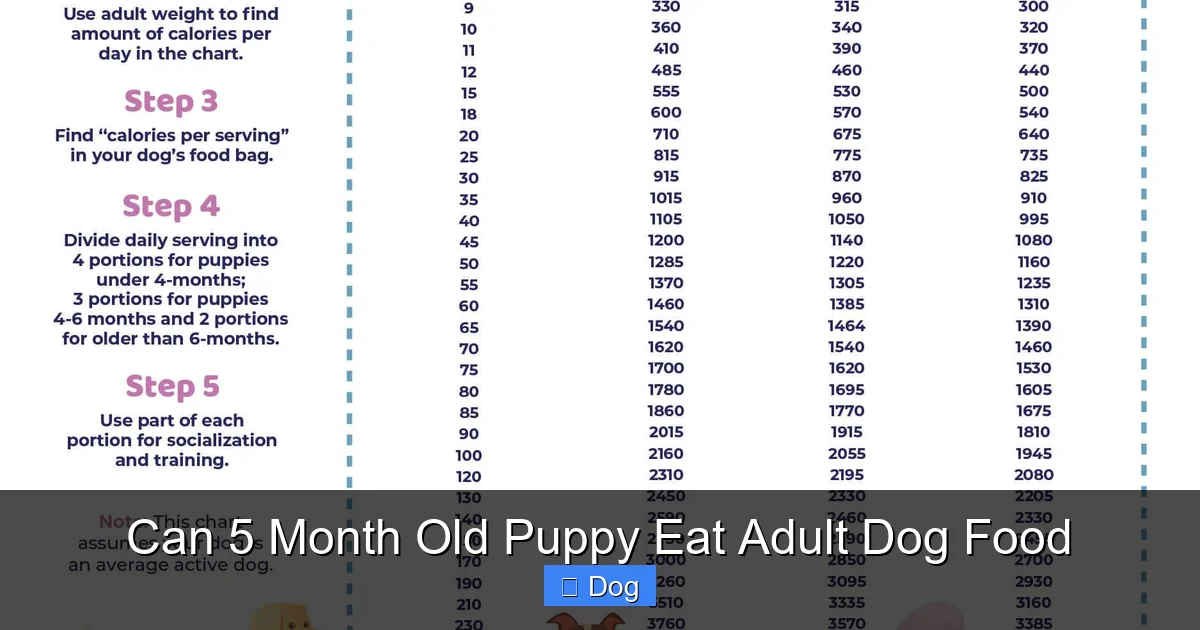
Puppies burn calories at a much faster rate than adult dogs. They’re constantly moving, learning, and growing, which means their metabolism is in overdrive. In fact, a growing puppy needs about twice the calories per pound of body weight compared to an adult dog. For example, a 10-pound puppy might need 600–800 calories a day, while a 10-pound adult dog may only need 300–400.
Adult dog food is formulated with lower calorie density to maintain weight, not support growth. Feeding it to a puppy could leave them undernourished, lethargic, or unable to gain weight properly.
Protein and Fat: The Building Blocks of Growth
Protein is essential for building strong muscles, organs, and immune systems. Puppies need about 22–32% protein in their diet, depending on their breed and size. Adult dog food typically contains only 18–25% protein, which may not be enough to support rapid development.
Fat is another critical nutrient. It provides concentrated energy and supports brain development, especially during the first year of life. Puppies benefit from diets with 8–20% fat, while adult foods often have just 5–15%. Omega-3 fatty acids like DHA (docosahexaenoic acid) are particularly important for cognitive function and vision—nutrients often missing or underrepresented in adult formulas.
Calcium and Phosphorus for Strong Bones
Bone development is one of the most crucial aspects of puppy growth. Large and giant breeds, in particular, are prone to skeletal issues if their calcium and phosphorus levels are unbalanced. Puppies need a precise ratio of these minerals—ideally around 1.2:1 (calcium to phosphorus)—to ensure proper bone formation.
Adult dog food often has lower calcium levels, which can lead to weak bones, joint problems, or even developmental orthopedic diseases like hip dysplasia. Over-supplementation is also dangerous, so it’s essential to use a balanced puppy formula rather than guessing.
Vitamins and Minerals for Overall Development
Beyond macros, puppies need a full spectrum of micronutrients. Vitamins A, D, E, and B-complex support vision, immune function, skin health, and metabolism. Minerals like zinc, iron, and selenium play key roles in enzyme function and oxygen transport.
Adult dog food may not provide optimal levels of these nutrients for growing bodies. For instance, vitamin D helps with calcium absorption—without enough, even a high-calcium diet won’t benefit bone health.
The Risks of Feeding Adult Dog Food to a 5 Month Old Puppy
You might think, “It’s just food—how bad could it be?” But consistently feeding adult dog food to a puppy can lead to real health consequences. Let’s look at the most common risks.
Stunted Growth and Developmental Delays
When a puppy doesn’t get enough calories, protein, or essential nutrients, their growth can slow down or become uneven. This isn’t just about size—it affects organ development, muscle mass, and even brain function. A puppy that’s underfed may appear smaller than peers, be less active, or take longer to reach developmental milestones like house training or learning commands.
Increased Risk of Obesity Later in Life
This might sound counterintuitive—how can underfeeding lead to obesity? But it’s about metabolism. Puppies who don’t get proper nutrition early on may develop slower metabolisms or compensatory eating habits. When they’re finally switched to appropriate food, they might overeat to make up for past deficits, leading to weight gain.
Additionally, adult dog food is often higher in carbohydrates and fillers like corn or wheat, which can contribute to fat storage if consumed in excess during growth phases.
Bone and Joint Problems
As mentioned earlier, calcium and phosphorus imbalance is a major concern. Large breed puppies, like Great Danes or Mastiffs, are especially vulnerable. If they consume too much calcium (or too little), their bones can grow too quickly or unevenly, leading to joint pain, arthritis, or conditions like osteochondritis dissecans (OCD).
Even small breeds aren’t immune. Improper mineral levels can weaken their skeletal structure, making them more prone to fractures or long-term mobility issues.
Weakened Immune System
Puppies are born with immature immune systems and rely on nutrition to build strong defenses. Protein, zinc, vitamin E, and omega-3 fatty acids all play roles in immune function. A diet lacking these nutrients can leave your puppy more susceptible to infections, parasites, or illnesses like parvovirus.
Poor Coat and Skin Health
A shiny coat and healthy skin are signs of good nutrition. Adult dog food often contains lower levels of essential fatty acids, which can result in dry, flaky skin, dull fur, or excessive shedding. Puppies fed inadequate diets may also develop dandruff or be more prone to allergies.
What Should a 5 Month Old Puppy Eat Instead?
Now that we’ve covered why adult food isn’t ideal, let’s talk about what your puppy *should* be eating. The goal is a high-quality, AAFCO-approved puppy food that matches their life stage and breed size.
Choose a Puppy-Specific Formula
Look for dog food labeled “for growth” or “for all life stages” that meets AAFCO (Association of American Feed Control Officials) standards. These foods are scientifically formulated to support puppy development.
Key things to check on the label:
– Protein source listed first (e.g., chicken, lamb, salmon)
– At least 22% protein for small breeds, up to 32% for large breeds
– Fat content between 8–20%
– DHA from sources like fish oil or algae
– Balanced calcium and phosphorus
Consider Your Puppy’s Breed Size
Not all puppies are the same—breed size matters when choosing food.
– **Small breed puppies** (under 20 lbs adult weight): Need calorie-dense food to support fast metabolism. Look for small kibble sizes and higher fat content.
– **Large and giant breed puppies** (over 50 lbs adult weight): Require controlled growth to prevent joint issues. Choose formulas with moderate protein, lower fat, and carefully balanced minerals.
For example, a 5-month-old Chihuahua might thrive on a small-breed puppy food with 28% protein and 16% fat, while a 5-month-old German Shepherd should be on a large-breed puppy formula with 26% protein and 12% fat to avoid rapid growth.
Wet vs. Dry Food: Which Is Better?
Both wet and dry puppy foods can be nutritious. Dry kibble is convenient, helps with dental health, and is cost-effective. Wet food is more palatable, higher in moisture (great for hydration), and often preferred by picky eaters.
Many owners use a combination—dry food for meals and wet food as a topper or treat. Just make sure the total daily intake meets your puppy’s caloric needs.
Feeding Schedule and Portion Control
At 5 months, most puppies should be fed 3 times a day. This helps maintain steady energy levels and prevents overeating. Follow the feeding guidelines on the food package, but adjust based on your puppy’s weight, activity level, and body condition.
Use a measuring cup—don’t guess. Overfeeding can lead to obesity, while underfeeding slows growth. Your vet can help determine the right portion size.
Supplements: Do Puppies Need Them?
In most cases, a complete and balanced puppy food provides all the nutrients your dog needs. Avoid adding extra calcium, vitamins, or fish oil unless recommended by your vet. Over-supplementation can be just as harmful as deficiency.
For example, giving a large breed puppy a calcium supplement on top of a balanced diet can disrupt bone development.
Can You Ever Feed Adult Dog Food to a Puppy?
There are rare exceptions, but they should be temporary and vet-approved.
Short-Term Use in Emergencies
If you run out of puppy food and can’t get more right away, feeding adult food for a day or two is unlikely to cause harm. Just make sure your puppy eats enough to meet their caloric needs—you may need to increase the portion size slightly.
But don’t make this a habit. Prolonged use increases the risk of nutritional deficiencies.
Switching to Adult Food: When and How
Most puppies can transition to adult food between 12 and 18 months of age, depending on breed:
– Small breeds: 12 months
– Medium breeds: 12–14 months
– Large and giant breeds: 15–18 months
When the time comes, switch gradually over 7–10 days:
– Days 1–2: 75% puppy food, 25% adult food
– Days 3–4: 50% puppy, 50% adult
– Days 5–6: 25% puppy, 75% adult
– Day 7+: 100% adult food
Watch for signs of digestive upset like diarrhea or vomiting. If they occur, slow the transition.
How to Choose the Best Puppy Food: A Buyer’s Guide
With so many options, picking the right food can feel overwhelming. Here’s how to make an informed choice.
Read the Ingredient List
The first ingredient should be a high-quality animal protein—chicken, beef, lamb, or fish. Avoid foods that list “meat by-products” or “animal digest” as the primary ingredient.
Look for whole grains (like brown rice or oats) or grain-free options if your puppy has sensitivities. Avoid artificial colors, flavors, or preservatives like BHA or BHT.
Check for AAFCO Statement
This ensures the food meets nutritional standards. Look for a statement like: “This product is formulated to meet the nutritional levels established by the AAFCO Dog Food Nutrient Profiles for growth.”
Consider Your Budget
Premium puppy foods can be pricey, but they often use better ingredients and fewer fillers. That said, there are affordable options that still meet nutritional standards. Brands like Royal Canin, Hill’s Science Diet, Purina Pro Plan, and Wellness Core offer reputable puppy formulas at various price points.
Ask Your Veterinarian
Your vet knows your puppy’s health history and can recommend a food tailored to their needs. They may suggest prescription diets for puppies with allergies, sensitivities, or medical conditions.
Real-Life Example: Max the Golden Retriever
Let’s say you have a 5-month-old Golden Retriever named Max. He’s energetic, loves to play fetch, and is growing fast. You’ve been feeding him adult dog food because it’s what you had on hand.
After a few weeks, you notice Max seems tired, isn’t gaining weight as expected, and has dull fur. You take him to the vet, who diagnoses mild malnutrition and recommends switching to a large-breed puppy formula.
Within two weeks on the new food, Max is brighter, more playful, and his coat is shiny. His growth picks up, and he’s meeting all his developmental milestones. The vet confirms his bones and joints are developing properly.
This story isn’t uncommon. Many puppies show subtle signs of nutritional deficiency that owners mistake for normal behavior. The right food makes all the difference.
Final Thoughts: Set Your Puppy Up for Lifelong Health
Feeding your 5-month-old puppy isn’t just about filling their bowl—it’s about laying the foundation for a healthy, happy life. While adult dog food might seem like a convenient option, it simply doesn’t provide the nutrition your growing pup needs.
From stronger bones and muscles to a sharper mind and resilient immune system, the benefits of proper puppy nutrition are undeniable. By choosing a high-quality, age-appropriate diet, you’re investing in your dog’s future.
Remember, every puppy is unique. What works for one may not work for another. Stay observant, consult your vet regularly, and don’t be afraid to adjust as your pup grows.
Your puppy’s wagging tail and bright eyes are signs of good health—keep them that way with the right food, love, and care.
Frequently Asked Questions
Can I mix adult dog food with puppy food?
Yes, but only temporarily or during a gradual transition. Mixing can help ease digestive changes, but long-term mixing may dilute the nutritional balance your puppy needs for growth.
What if my puppy accidentally eats adult dog food?
One accidental meal won’t harm your puppy. Just return to their regular puppy food as soon as possible. Monitor for any digestive upset, but serious issues are unlikely from a single incident.
Is grain-free puppy food better?
Not necessarily. Grain-free diets are fine for puppies without grain allergies, but they’re not inherently superior. Focus on overall nutrient balance rather than grain content alone.
How much should a 5-month-old puppy eat per day?
Most 5-month-old puppies need 3 meals a day, totaling 1 to 2.5 cups of high-quality puppy food, depending on breed, size, and activity level. Always follow package guidelines and consult your vet.
Can small breed puppies eat large breed puppy food?
It’s not recommended. Large breed formulas have lower calorie density and controlled mineral levels to slow growth. Small breeds need more energy and may not get enough from large breed food.
When should I switch my puppy to adult dog food?
Most puppies transition between 12 and 18 months. Small breeds can switch around 12 months, while large and giant breeds should wait until 15–18 months to support proper bone development.