

Yes, 8-week-old kittens can and should eat wet cat food as part of a balanced diet. At this age, they’re weaning off their mother’s milk and ready to explore solid foods. Wet food supports hydration, digestion, and healthy growth when chosen wisely and introduced gradually.
Welcoming an 8-week-old kitten into your home is an exciting milestone. These tiny, wide-eyed bundles of energy are full of curiosity and charm, but they also come with big responsibilities—especially when it comes to feeding. One of the most common questions new kitten parents ask is: *Can 8 week old kittens eat wet cat food?* The short answer is yes—but there’s more to it than just opening a can and setting it down.
At 8 weeks old, kittens are in a critical stage of development. They’ve typically been weaned from their mother’s milk, or are in the process of weaning, and are ready to start exploring solid foods. This is a natural transition, and wet cat food plays a vital role in supporting their growth, hydration, and overall health. However, not all wet foods are created equal, and how you introduce it matters just as much as what you feed.
In this guide, we’ll walk you through everything you need to know about feeding wet cat food to 8-week-old kittens—from understanding their nutritional needs to choosing the right product, preparing meals, and spotting signs of trouble. Whether you’ve adopted a rescue kitten, brought home a littermate duo, or are fostering a tiny furball, this information will help you give your kitten the best possible start in life.
Key Takeaways
- 8-week-old kittens can eat wet cat food: They’re developmentally ready to start weaning and transitioning to solid foods, including high-quality wet kitten food.
- Choose kitten-specific wet food: Look for formulas labeled “for kittens” or “growth” to ensure proper nutrition for rapid development.
- Introduce gradually: Mix wet food with kitten milk replacer or warm water to soften it and ease the transition from nursing.
- Prioritize hydration: Wet food has high moisture content, which helps prevent dehydration—a common issue in young kittens.
- Feed small, frequent meals: Kittens have tiny stomachs and high energy needs, so offer food 4–6 times per day.
- Avoid adult cat food: Adult formulas lack the calories, protein, and nutrients kittens need for healthy growth.
- Monitor for digestive issues: Watch for diarrhea, vomiting, or refusal to eat, and consult a vet if problems persist.
📑 Table of Contents
- Why Wet Cat Food Is Ideal for 8-Week-Old Kittens
- When to Start Feeding Wet Food to Kittens
- How to Choose the Right Wet Food for 8-Week-Old Kittens
- How to Introduce Wet Food to Your Kitten
- Feeding Schedule and Portion Sizes for 8-Week-Old Kittens
- Common Mistakes to Avoid When Feeding Wet Food to Kittens
- Signs Your Kitten Is Thriving on Wet Food
- Conclusion
Why Wet Cat Food Is Ideal for 8-Week-Old Kittens
Wet cat food offers several advantages for young kittens, especially during the weaning phase. Unlike dry kibble, which can be hard for tiny teeth and jaws to chew, wet food is soft, palatable, and easy to eat. But the benefits go far beyond convenience.
One of the biggest advantages of wet food is its high moisture content—typically around 70–80%. Kittens, like adult cats, have a low thirst drive and often don’t drink enough water on their own. This can lead to dehydration, especially in warm climates or during illness. Wet food helps keep them hydrated naturally, supporting kidney function and urinary tract health from an early age.
Additionally, wet food is highly digestible. Kittens have sensitive digestive systems that are still maturing. The soft texture and high protein content of quality wet kitten food make it easier for their bodies to absorb essential nutrients. This is crucial during a time when they’re growing rapidly—doubling or even tripling their birth weight in just a few weeks.
Another benefit is appetite stimulation. Some kittens are hesitant to try new foods, especially if they’ve been nursing or drinking milk replacer. The strong aroma and rich flavor of wet food can encourage even the pickiest eaters to dig in. This is especially helpful if you’re hand-rearing an orphaned kitten or dealing with a shy or underweight kitten.
Finally, wet food supports dental health indirectly. While it doesn’t provide the same abrasive action as dry kibble (which can help reduce plaque), it reduces the risk of dehydration-related oral issues. Plus, many kitten wet foods are formulated with soft, bite-sized pieces that are gentle on emerging teeth.
When to Start Feeding Wet Food to Kittens
The ideal time to introduce wet food to kittens is around 4 to 6 weeks of age, but by 8 weeks, most kittens should be fully weaned and eating solid food regularly. If your kitten is 8 weeks old and still relying solely on milk or milk replacer, it’s time to make the switch.
Weaning is a gradual process. It typically begins when kittens are about 3–4 weeks old, with the mother cat encouraging them to eat solid food by leaving the nest and eating in front of them. If the mother isn’t present, human caregivers can mimic this by offering small amounts of softened wet food in a shallow dish.
By 8 weeks, kittens should be eating wet food exclusively or in combination with dry kibble. At this point, their digestive systems are mature enough to handle a full diet of solid food, and their nutritional needs are too high to be met by milk alone. Milk, whether from the mother or a replacer, lacks the calories, protein, and fat that growing kittens require.
It’s important to note that every kitten is different. Some may take to wet food immediately, while others may need a little coaxing. If your kitten seems uninterested, try warming the food slightly (to body temperature) or mixing it with a bit of kitten milk replacer to make it more familiar. Patience and consistency are key.
How to Choose the Right Wet Food for 8-Week-Old Kittens
Not all wet cat foods are suitable for kittens. When shopping for food for your 8-week-old kitten, look for products specifically labeled “for kittens” or “growth.” These formulas are designed to meet the unique nutritional needs of young, developing cats.
Here’s what to look for on the label:
High protein content: Kittens need more protein than adult cats—around 30–40% on a dry matter basis. Protein supports muscle development, immune function, and overall growth. Look for named animal proteins like chicken, turkey, or salmon as the first ingredient.
Healthy fats: Fats provide concentrated energy and support brain and vision development. DHA (docosahexaenoic acid), an omega-3 fatty acid found in fish oil, is especially important for cognitive development.
Balanced vitamins and minerals: Kittens need higher levels of certain nutrients, such as calcium and phosphorus, for strong bones and teeth. Taurine, an essential amino acid, is critical for heart and eye health.
No fillers or artificial additives: Avoid foods with corn, soy, by-products, artificial colors, or preservatives. These offer little nutritional value and can cause digestive upset.
AAFCO statement: Check that the food meets the Association of American Feed Control Officials (AAFCO) standards for “growth” or “kitten” diets. This ensures the food is complete and balanced.
Popular brands that offer high-quality kitten wet food include Royal Canin Kitten, Hill’s Science Diet Kitten, Blue Buffalo Wilderness Kitten, and Wellness CORE Kitten. These brands are widely available and trusted by veterinarians.
When in doubt, consult your vet. They can recommend a brand based on your kitten’s breed, size, and health status.
How to Introduce Wet Food to Your Kitten
Transitioning your kitten to wet food should be done gradually to avoid digestive upset. Here’s a step-by-step guide to help make the process smooth and stress-free.
Step 1: Choose the Right Time
Pick a calm time of day when your kitten is relaxed and not overly tired or excited. Early morning or after a nap are good options.
Visual guide about Can 8 Week Old Kittens Eat Wet Cat Food
Image source: i.pinimg.com
Step 2: Prepare the Food
If your kitten is used to milk or milk replacer, start by mixing a small amount of wet food with warm water or kitten milk replacer to create a soupy consistency. This mimics the texture of milk and makes it easier to lap up.
Step 3: Use a Shallow Dish
Place the mixture in a shallow, non-slip dish. Kittens have small mouths and may struggle with deep bowls. A ceramic or stainless steel dish is ideal—avoid plastic, which can harbor bacteria.
Step 4: Encourage Exploration
Gently guide your kitten to the dish. You can even dip your finger in the mixture and let them lick it off. Some kittens learn by watching others, so if you have another cat, let them eat nearby.
Step 5: Be Patient
It may take a few tries before your kitten shows interest. Don’t force it—just keep offering the food at regular intervals. Praise and gentle encouragement can help build positive associations.
Step 6: Gradually Thicken the Consistency
Over the course of a week or two, slowly reduce the amount of liquid and increase the amount of solid food. By the end of the transition, your kitten should be eating thick pâté or chunky wet food on its own.
Step 7: Monitor and Adjust
Watch for signs of enjoyment or discomfort. If your kitten eats eagerly and has normal bowel movements, you’re on the right track. If they refuse to eat or show signs of digestive issues, slow down the transition or try a different brand.
Feeding Schedule and Portion Sizes for 8-Week-Old Kittens
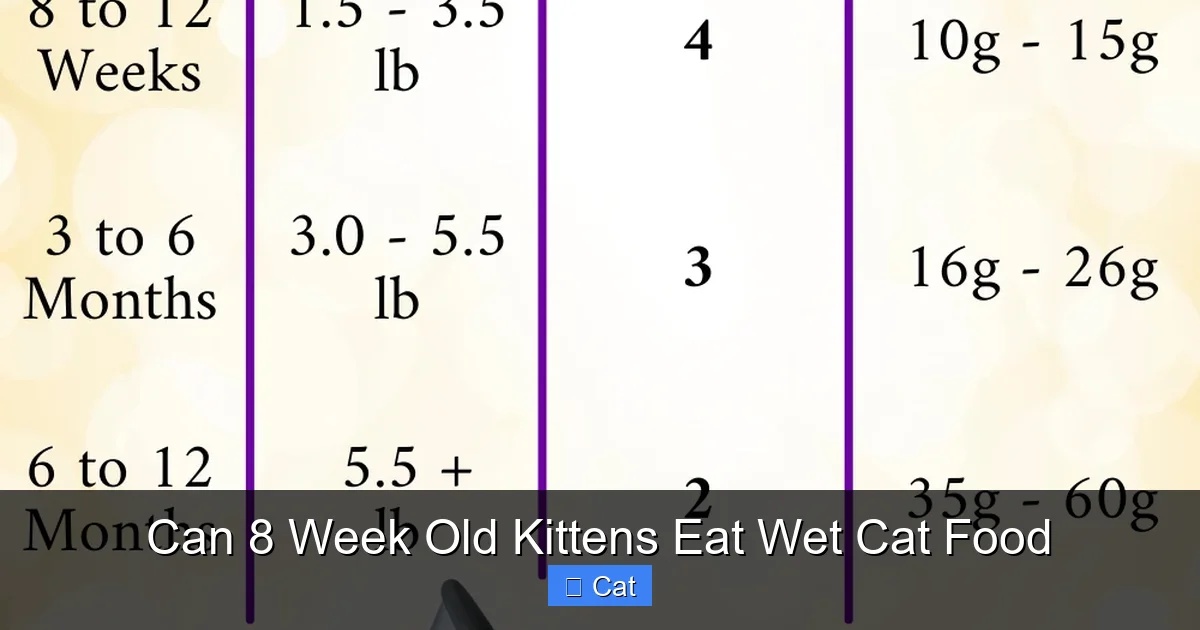
At 8 weeks old, kittens have high energy needs but tiny stomachs. This means they need to eat frequently—typically 4 to 6 small meals per day. Skipping meals or going too long without food can lead to low blood sugar (hypoglycemia), which is dangerous for young kittens.
Here’s a sample feeding schedule:
- 6:00 AM: Morning meal
- 9:00 AM: Mid-morning snack
- 12:00 PM: Lunch
- 3:00 PM: Afternoon snack
- 6:00 PM: Evening meal
- 9:00 PM: Nighttime snack (optional)
Portion sizes vary depending on the brand and your kitten’s size, but a general guideline is 1/4 to 1/2 can of wet food per feeding. Always follow the feeding recommendations on the packaging and adjust based on your kitten’s appetite and weight gain.
It’s normal for kittens to have variable appetites. Some days they’ll eat more; other days, less. As long as they’re gaining weight, playing actively, and having regular bowel movements, they’re likely getting enough food.
Avoid free-feeding (leaving food out all day) with wet food, as it can spoil quickly and lead to overeating or foodborne illness. Instead, offer meals at set times and remove any uneaten food after 20–30 minutes.
Common Mistakes to Avoid When Feeding Wet Food to Kittens
Even with the best intentions, new kitten owners can make mistakes that affect their pet’s health. Here are some common pitfalls to watch out for:
Feeding Adult Cat Food
Adult cat food doesn’t provide the extra calories, protein, and nutrients that kittens need. Feeding it exclusively can lead to malnutrition and stunted growth.
Overfeeding or Underfeeding
Too much food can cause obesity and digestive issues, while too little can lead to weakness and developmental delays. Follow portion guidelines and monitor your kitten’s body condition.
Ignoring Expiration Dates
Wet food spoils quickly once opened. Always check the “best by” date and store opened cans in the refrigerator for no more than 3–5 days.
Not Providing Fresh Water
Even though wet food is hydrating, kittens still need access to clean, fresh water at all times. Use a shallow water dish and change the water daily.
Sudden Diet Changes
Switching brands or formulas too quickly can upset your kitten’s stomach. Always transition gradually over 7–10 days.
Feeding Inappropriate Foods
Never give kittens human food, dog food, or raw meat without veterinary guidance. These can be harmful or unbalanced.
Signs Your Kitten Is Thriving on Wet Food
When your kitten is eating wet food properly, you’ll notice several positive signs:
- Healthy weight gain: Kittens should gain about 100 grams (3.5 ounces) per week.
- Bright eyes and shiny coat: Good nutrition shows in their appearance.
- Active and playful behavior: Energy levels should be high, with plenty of curiosity and movement.
- Normal digestion: Stools should be firm but not hard, and urination should be regular.
- Good appetite: Your kitten should show interest in food and eat eagerly.
If you notice any of the following, consult your vet:
- Refusal to eat for more than 24 hours
- Diarrhea or vomiting lasting more than a day
- Lethargy or weakness
- Weight loss or failure to gain weight
- Signs of dehydration (sunken eyes, dry gums, skin tenting)
Regular vet checkups are essential during the first few months. Your vet can monitor growth, administer vaccinations, and address any concerns early.
Conclusion
Yes, 8-week-old kittens can and should eat wet cat food. It’s a nutritious, hydrating, and developmentally appropriate choice that supports healthy growth during a critical stage of life. By choosing a high-quality kitten formula, introducing it gradually, and feeding on a consistent schedule, you’ll set your kitten up for a lifetime of good health.
Remember, every kitten is unique. What works for one may not work for another. Stay observant, be patient, and don’t hesitate to reach out to your veterinarian for guidance. With the right care and nutrition, your tiny kitten will grow into a strong, happy, and healthy cat.
Frequently Asked Questions
Can 8-week-old kittens eat wet cat food?
Yes, 8-week-old kittens can safely eat wet cat food. At this age, they’re fully weaned and ready for solid food. Wet food provides essential hydration and nutrients for healthy growth.
Should I mix wet food with milk for my kitten?
You can mix wet food with kitten milk replacer during the transition phase to make it more familiar. However, avoid cow’s milk, as it can cause digestive upset.
How often should I feed my 8-week-old kitten wet food?
Feed your kitten 4 to 6 small meals per day. Their tiny stomachs can’t hold much, so frequent feeding supports their high energy needs.
Can I feed my kitten adult wet cat food?
No, adult wet cat food lacks the extra calories, protein, and nutrients kittens need. Always choose a formula labeled for kittens or growth.
What if my kitten refuses to eat wet food?
Try warming the food slightly or mixing it with warm water or milk replacer. Be patient and offer it multiple times a day. If refusal continues, consult your vet.
Is it okay to leave wet food out all day?
No, wet food should not be left out for more than 20–30 minutes to prevent spoilage. Offer meals at set times and remove uneaten food promptly.