

A 9-week-old kitten should not eat adult cat food. At this critical stage, kittens need higher levels of protein, fat, calories, and essential nutrients like DHA and taurine to support rapid growth and brain development. Feeding adult food can lead to nutritional deficiencies and long-term health issues.
Key Takeaways
- Kittens need more calories and nutrients: A 9-week-old kitten requires up to three times more energy per pound than an adult cat, making adult food insufficient for their growth.
- Protein and fat are crucial: Kitten food contains higher levels of animal-based protein and healthy fats to fuel muscle development and energy needs.
- Taurine and DHA support development: These essential nutrients in kitten food promote healthy vision, brain function, and heart health.
- Adult food lacks key ingredients: Adult cat food often has lower nutrient density and may not meet the AAFCO kitten growth standards.
- Feeding adult food risks health problems: Long-term use can cause stunted growth, weakened immunity, and skeletal issues.
- Transition gradually when the time comes: Switch to adult food only after 12 months, and do so slowly over 7–10 days to avoid digestive upset.
- Always consult your vet: Your veterinarian can recommend the best feeding plan based on your kitten’s breed, size, and health.
📑 Table of Contents
- Can a 9-Week-Old Kitten Eat Adult Cat Food? The Short Answer
- Why Kitten Food Is Essential for Growth and Development
- The Risks of Feeding Adult Cat Food to a 9-Week-Old Kitten
- What to Feed a 9-Week-Old Kitten Instead
- When Can Kittens Start Eating Adult Cat Food?
- Common Feeding Mistakes to Avoid
- Conclusion: Prioritize Kitten Nutrition for a Healthy Future
Can a 9-Week-Old Kitten Eat Adult Cat Food? The Short Answer
If you’ve just brought home an adorable 9-week-old kitten, you’re probably full of excitement—and questions. One of the most common concerns new pet parents have is about feeding. Can your tiny furball eat the same food as your adult cat? After all, it’s convenient, right? You already have a bag of adult cat food, and your older cat seems perfectly healthy on it. So, can a 9-week-old kitten eat adult cat food?
The short answer is: **no, not as a primary diet.** While it might seem harmless to let your kitten nibble on adult food occasionally, doing so regularly can seriously impact their health and development. At nine weeks old, kittens are in a critical stage of growth. Their bodies are developing rapidly—bones, muscles, brains, and immune systems are all expanding at an astonishing rate. This means they have very specific nutritional needs that adult cat food simply can’t meet.
Think of it like feeding a toddler a senior citizen’s meal. Sure, the senior food is nutritious for an older adult, but it doesn’t provide the extra energy and building blocks a growing child needs. The same logic applies to kittens. Adult cat food is formulated for maintenance—keeping a full-grown cat healthy and at a stable weight. It doesn’t deliver the extra calories, protein, fat, and key nutrients that a growing kitten requires.
So, while your kitten might *eat* adult food without immediate harm, relying on it as their main source of nutrition can lead to long-term problems. From stunted growth to weakened immunity, the consequences of improper feeding can be serious. In this article, we’ll dive deep into why kitten-specific food is essential, what makes it different from adult food, and how to feed your 9-week-old kitten for optimal health.
Why Kitten Food Is Essential for Growth and Development
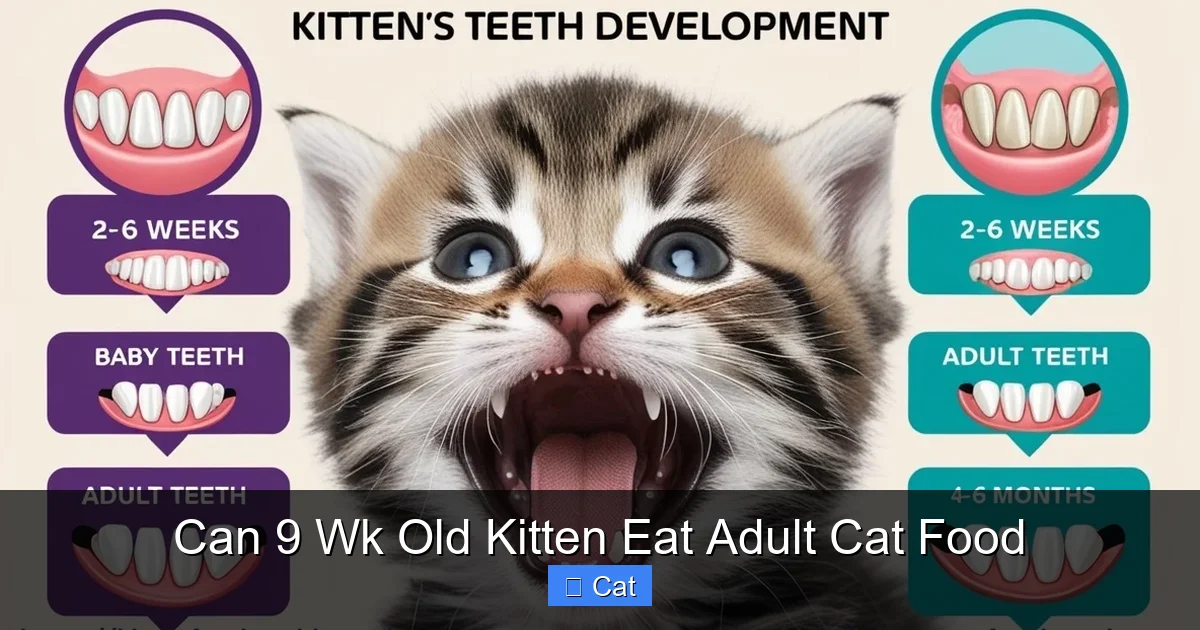
Visual guide about Can 9 Wk Old Kitten Eat Adult Cat Food
Image source: kittenfoodworld.com
At nine weeks old, your kitten is still very much a baby—just a few weeks removed from weaning. During this time, their body is working overtime to grow. In fact, kittens can double or even triple their birth weight in just the first few months of life. This rapid growth demands a diet that’s rich in energy and nutrients.
Kitten food is specifically designed to meet these demands. It contains higher levels of protein, fat, calories, and essential vitamins and minerals compared to adult cat food. Let’s break down why each of these components matters.
Higher Caloric Density
Kittens have tiny stomachs but enormous energy needs. They’re constantly moving—playing, exploring, pouncing—and all that activity burns calories fast. Adult cat food simply doesn’t pack enough calories per serving to keep up. Kitten food, on the other hand, is calorie-dense, meaning your kitten gets more energy from smaller portions. This is crucial because it allows them to eat frequently without overfilling their small stomachs.
For example, a high-quality kitten food might contain around 500 calories per cup, while adult food averages around 350–400 calories. That extra 100–150 calories might not sound like much, but for a kitten weighing just 2–3 pounds, it makes a big difference.
Increased Protein and Fat Levels
Protein is the building block of life—especially for growing kittens. Kitten food typically contains 30–40% protein, compared to 26–30% in adult food. This higher protein content supports muscle development, organ growth, and tissue repair. And it’s not just about quantity—quality matters too. Look for kitten foods with real meat (like chicken, turkey, or fish) as the first ingredient, not by-products or fillers.
Fat is another key player. While too much fat can be unhealthy for adult cats, kittens need it for energy and brain development. Kitten food often has 15–20% fat, compared to 9–15% in adult food. These fats also help absorb fat-soluble vitamins like A, D, E, and K.
Essential Nutrients for Development
Kittens need certain nutrients in higher amounts than adult cats. Two of the most important are taurine and DHA.
Taurine is an amino acid that supports heart function, vision, and immune health. A deficiency can lead to blindness, heart disease, and developmental delays. While most commercial cat foods include taurine, kitten formulas ensure higher levels to meet growing needs.
DHA (docosahexaenoic acid) is an omega-3 fatty acid found in fish oil. It’s critical for brain and eye development. Studies show that kittens fed DHA-enriched diets have better learning abilities and sharper vision. Many premium kitten foods now include DHA from sources like salmon oil or algae.
Other important nutrients include calcium and phosphorus for strong bones, and vitamins like B12 and folic acid for healthy blood and metabolism.
Digestibility and Palatability
Kitten food is also formulated to be highly digestible. Young kittens have sensitive digestive systems, and their bodies are still learning to process solid food. High-quality kitten food uses easily digestible proteins and fats, reducing the risk of stomach upset.
It’s also designed to be tasty. Kittens can be picky eaters, especially when transitioning from milk to solid food. Kitten food often has a stronger aroma and softer texture (in the case of wet food), making it more appealing to young palates.
The Risks of Feeding Adult Cat Food to a 9-Week-Old Kitten
Now that we know why kitten food is so important, let’s talk about the risks of feeding adult food to a 9-week-old kitten. While it might seem like a small thing—after all, it’s still cat food, right?—the consequences can be significant if done long-term.
Nutritional Deficiencies
The biggest risk is nutritional deficiency. Adult cat food doesn’t provide enough calories, protein, or key nutrients to support a kitten’s rapid growth. Over time, this can lead to:
– **Stunted growth:** Without enough protein and calories, your kitten may not reach their full size or weight potential.
– **Weak immune system:** Kittens need extra vitamins and minerals to build strong immunity. A deficiency can make them more susceptible to infections and illnesses.
– **Poor bone development:** Calcium and phosphorus imbalances can lead to skeletal problems like rickets or deformities.
– **Vision and cognitive issues:** Low taurine and DHA levels can impair eyesight and brain function.
These aren’t just theoretical risks. Veterinarians regularly see kittens with developmental issues due to improper feeding. In severe cases, the damage can be permanent.
Digestive Upset
Even if your kitten eats adult food without immediate problems, their digestive system may not handle it well. Adult food is often harder to digest due to lower fat content and different fiber levels. This can lead to diarrhea, constipation, or vomiting—especially in kittens with sensitive stomachs.
For example, a kitten eating adult dry food might struggle to chew and digest the larger kibble. This can cause choking or gastrointestinal blockages. Wet adult food, while softer, still lacks the optimal nutrient profile for growth.
Behavioral and Energy Issues
Kittens are naturally energetic and curious. But if they’re not getting enough calories, they may become lethargic, irritable, or uninterested in play. This isn’t just a mood issue—it’s a sign their body isn’t getting the fuel it needs.
You might also notice your kitten eating more than usual, trying to compensate for the lack of nutrients. This can lead to overeating and digestive discomfort.
Long-Term Health Consequences
Feeding adult food during the critical growth phase can have lasting effects. Kittens who don’t get proper nutrition in their first year are more likely to develop chronic conditions later in life, such as:
– Obesity (from overeating low-nutrient food)
– Dental problems (due to poor bone development)
– Heart disease (from taurine deficiency)
– Weakened joints and mobility issues
These conditions can reduce your cat’s quality of life and increase veterinary costs down the road.
What to Feed a 9-Week-Old Kitten Instead
So, if adult food isn’t the answer, what should you feed your 9-week-old kitten? The best choice is a high-quality, AAFCO-approved kitten food—either wet, dry, or a combination of both.
Choosing the Right Kitten Food
When shopping for kitten food, look for these key features:
– **AAFCO statement:** The packaging should say the food meets AAFCO nutrient profiles for “growth” or “kitten.” This ensures it’s formulated for young cats.
– **High animal protein:** The first ingredient should be a named meat source (e.g., “chicken,” not “meat by-products”).
– **Balanced fat and calories:** Aim for at least 30% protein and 15% fat.
– **Added DHA and taurine:** Check the ingredient list for these essential nutrients.
– **No fillers or artificial additives:** Avoid corn, soy, artificial colors, and preservatives.
Popular brands like Royal Canin Kitten, Hill’s Science Diet Kitten, and Blue Buffalo Wilderness Kitten are well-regarded by veterinarians and pet owners alike.
Wet vs. Dry Food: Which Is Better?
Both wet and dry kitten food have benefits. Many experts recommend a mix of both for balanced nutrition and hydration.
**Wet food** is great for hydration, especially since kittens don’t always drink enough water. It’s also softer and easier to chew, making it ideal for young kittens. Plus, it’s often more palatable, which helps picky eaters.
**Dry food** is convenient, cost-effective, and can help with dental health by reducing plaque buildup. Some kittens prefer the crunch, and it can be left out for free-feeding (though portion control is important).
A good approach is to feed wet food at mealtimes and leave a small amount of dry food out for snacking. Just make sure the dry food is specifically for kittens.
Feeding Schedule and Portions
At 9 weeks old, kittens should eat 3–4 small meals per day. Their stomachs are small, so frequent feeding helps them get enough calories without overeating at once.
Here’s a sample feeding plan:
– **Morning:** 1/4 cup wet food or 1/8 cup dry food
– **Midday:** 1/4 cup wet food
– **Evening:** 1/4 cup wet food or 1/8 cup dry food
– **Before bed:** Small snack (optional)
Adjust portions based on your kitten’s weight, activity level, and appetite. Most kitten food packages include feeding guidelines, but your vet can help fine-tune the amount.
Always provide fresh water, even if you’re feeding wet food. Hydration is key for kidney and urinary health.
Introducing New Foods Gradually
If you’re switching from one kitten food to another, do it slowly over 7–10 days. Mix increasing amounts of the new food with the old to avoid digestive upset. For example:
– Days 1–2: 75% old food, 25% new
– Days 3–4: 50% old, 50% new
– Days 5–6: 25% old, 75% new
– Day 7+: 100% new food
This gradual transition helps your kitten’s system adjust.
When Can Kittens Start Eating Adult Cat Food?
Now that we’ve established that adult food isn’t suitable for 9-week-old kittens, you might be wondering: when is the right time to make the switch?
Most veterinarians recommend waiting until your kitten is **at least 12 months old** before transitioning to adult food. This is because growth slows significantly after the first year, and their nutritional needs begin to align more closely with those of adult cats.
However, the exact timing can vary based on breed and size. Larger breeds like Maine Coons may continue growing until 18–24 months, so they may benefit from kitten food longer. Your vet can help determine the best time based on your cat’s development.
How to Transition to Adult Food
When the time comes, don’t switch abruptly. Follow the same gradual method used when introducing new kitten food:
– Start mixing a small amount of adult food with kitten food.
– Increase the ratio over 7–10 days.
– Monitor your cat’s digestion, energy, and coat condition.
If your cat shows signs of upset—like diarrhea, vomiting, or loss of appetite—slow down the transition or consult your vet.
Choosing the Right Adult Food
Not all adult cat foods are created equal. When selecting an adult formula, look for:
– AAFCO statement for “maintenance”
– High-quality protein as the first ingredient
– Balanced fat and fiber
– No artificial additives
Some cats do well on “all life stages” food, which meets both kitten and adult requirements. These can be a convenient option if you have multiple cats of different ages.
Common Feeding Mistakes to Avoid
Even with the best intentions, new kitten owners can make feeding mistakes. Here are a few to watch out for:
Free-Feeding Adult Food
Leaving adult food out all day might seem convenient, but it’s risky for kittens. They may overeat, or the food may not provide enough nutrients per bite. Stick to scheduled meals with kitten-specific food.
Ignoring Portion Sizes
Overfeeding can lead to obesity, even in kittens. Follow feeding guidelines and adjust based on your kitten’s growth and activity level.
Feeding Human Food or Dog Food
Human food often contains ingredients toxic to cats (like onions, garlic, or chocolate). Dog food lacks taurine and other essential nutrients for cats. Stick to species-appropriate, age-specific food.
Not Consulting a Veterinarian
Every kitten is different. Your vet can provide personalized advice based on your kitten’s breed, health, and development. Regular check-ups ensure they’re growing properly and getting the right nutrition.
Conclusion: Prioritize Kitten Nutrition for a Healthy Future
Bringing a 9-week-old kitten into your home is a joyful experience, but it comes with big responsibilities—especially when it comes to feeding. While it might be tempting to let your kitten share your adult cat’s food, doing so can compromise their health and development.
Kittens need a diet rich in calories, protein, fat, and essential nutrients to support their rapid growth. Adult cat food simply doesn’t deliver what they need. Feeding it long-term can lead to stunted growth, weakened immunity, and long-term health problems.
Instead, choose a high-quality kitten food that meets AAFCO standards, feed on a consistent schedule, and consult your veterinarian for guidance. When the time comes, transition to adult food gradually and thoughtfully.
By prioritizing proper nutrition now, you’re setting your kitten up for a long, healthy, and happy life. After all, a well-fed kitten is a thriving kitten—and that’s what every pet parent wants.
Frequently Asked Questions
Can a 9-week-old kitten eat adult cat food in an emergency?
Yes, but only as a short-term solution. If you run out of kitten food, a small amount of adult food for a day or two is unlikely to cause harm. However, make sure to switch back to kitten food as soon as possible to avoid nutritional gaps.
Is wet or dry kitten food better for a 9-week-old?
Both are fine, but many experts recommend wet food for young kittens because it’s easier to chew and helps with hydration. A mix of both can provide balanced nutrition and variety.
How often should I feed my 9-week-old kitten?
Kittens this age should eat 3–4 small meals per day. Their tiny stomachs can’t handle large portions, so frequent feeding ensures they get enough calories and nutrients.
Can I mix kitten and adult food together?
It’s not recommended for long-term feeding. While a small mix during a transition is okay, adult food lacks the nutrients kittens need. Stick to kitten-specific food until they’re at least 12 months old.
What if my kitten refuses to eat kitten food?
Try warming the food slightly to enhance the aroma, or mix in a bit of kitten-safe broth. If the refusal continues, consult your vet—it could signal an underlying health issue.
When should I switch my kitten to adult food?
Most kittens can transition to adult food around 12 months of age. Larger breeds may need kitten food longer. Always consult your veterinarian before making the switch.