

Yes, a 1-year-old dog can eat puppy food, but it depends on the breed and size. While small breeds may still benefit from puppy formulas at this age, large and giant breeds often need to switch to adult food to avoid overnutrition and joint issues. Always consult your vet before making dietary changes.
Key Takeaways
- Breed size matters: Small dogs may still be growing at 1 year and can safely eat puppy food, while large breeds should typically transition to adult food by this age.
- Puppy food is calorie-dense: It’s formulated for rapid growth, which can lead to obesity in dogs that no longer need that level of energy.
- Overfeeding risks joint problems: Large breed puppies eating high-calorie diets may grow too fast, increasing the risk of hip dysplasia and other skeletal issues.
- Check the label: Look for AAFCO statements to ensure the food meets nutritional standards for your dog’s life stage.
- Gradual transition is key: If switching from puppy to adult food, do it slowly over 7–10 days to avoid digestive upset.
- Veterinary guidance is essential: Your vet can help determine the right diet based on your dog’s health, breed, and development.
- Watch for signs of overnutrition: Excessive weight gain, lethargy, or digestive issues may indicate the food isn’t right for your dog.
📑 Table of Contents
- Can a 1 Year Old Dog Eat Puppy Food? A Complete Guide
- Understanding Dog Development: When Is a Dog No Longer a Puppy?
- What’s in Puppy Food—And Why It’s Different
- Risks of Feeding Puppy Food to a 1-Year-Old Dog
- When to Switch from Puppy to Adult Food
- How to Transition Your Dog to Adult Food
- Choosing the Right Adult Dog Food
- Consult Your Veterinarian
- Conclusion
Can a 1 Year Old Dog Eat Puppy Food? A Complete Guide
So, your dog just turned one—congratulations! That first birthday is a big milestone, and it’s natural to wonder if your pup is still a “puppy” when it comes to food. After all, you’ve been feeding them puppy kibble since they were a tiny ball of fluff, and now they’re bigger, stronger, and maybe even acting more like an adult. But does that mean it’s time to switch to adult dog food? Or is it still okay to keep feeding them puppy chow?
The short answer? It depends—mostly on your dog’s breed and size. While a 1-year-old dog is technically entering adulthood, not all dogs mature at the same rate. Small breeds like Chihuahuas or Pomeranians might still be growing and developing, while large breeds like Great Danes or Mastiffs may have already reached most of their adult size—or even surpassed the safe growth window. That’s why understanding your dog’s specific needs is crucial when deciding whether puppy food is still the right choice.
In this guide, we’ll walk you through everything you need to know about feeding a 1-year-old dog, including when to switch from puppy food, the risks of overfeeding, and how to make the transition smoothly. Whether you’re a first-time dog parent or just looking for clarity, we’ve got you covered.
Understanding Dog Development: When Is a Dog No Longer a Puppy?
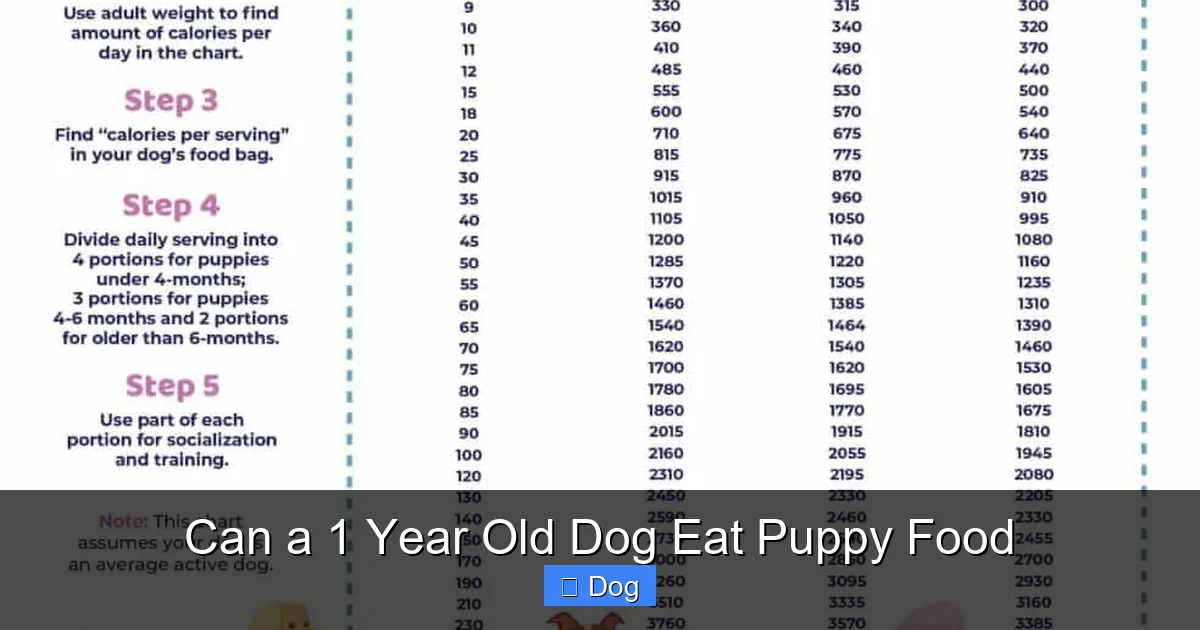
Visual guide about Can a 1 Year Old Dog Eat Puppy Food
Image source: doodledoods.com
Before we dive into food choices, it’s important to understand what “puppyhood” really means. Unlike humans, dogs don’t have a fixed age when they become adults. Instead, their development depends heavily on breed size. This is why a 1-year-old Chihuahua and a 1-year-old Saint Bernard are in very different stages of life—even though they’re the same age.
Small Breeds: Still Growing at 1 Year
Small dog breeds—typically under 20 pounds when fully grown—tend to mature quickly but stay in the “puppy” phase longer in terms of nutrition. Many small breeds don’t reach their full adult size until around 9 to 12 months, and some may continue filling out until 14 or 15 months. Because of this, they often benefit from the higher calorie and nutrient content in puppy food well into their first year.
For example, a Yorkshire Terrier or a Shih Tzu might still need the extra protein, fat, and calcium found in puppy formulas to support brain development, coat health, and energy needs. In these cases, feeding puppy food at 1 year old is not only safe—it’s often recommended.
Medium Breeds: Transition Time
Medium-sized dogs, like Beagles, Cocker Spaniels, or Border Collies, usually reach their full size between 12 and 15 months. At 1 year old, many are still growing, especially in muscle mass and bone density. However, their growth rate begins to slow down significantly by this point.
This means that while they may still benefit from puppy food at 12 months, they should be closely monitored. If your medium breed is gaining weight too quickly or showing signs of overnutrition—like a bloated belly or lethargy—it might be time to start transitioning to adult food. Your vet can help determine the right timing based on your dog’s body condition and growth curve.
Large and Giant Breeds: Time to Switch
Here’s where things get critical. Large and giant breeds—such as German Shepherds, Golden Retrievers, Rottweilers, and Great Danes—grow rapidly during their first year, but their bones and joints are especially vulnerable to improper nutrition. These dogs often reach 50–75% of their adult size by 6 months and may be nearly full-grown by 12 months, though they continue filling out until 18–24 months.
Because of this rapid growth, feeding high-calorie puppy food beyond 12 months can be risky. The excess calories and nutrients—especially calcium and phosphorus—can cause bones to grow too fast, leading to developmental orthopedic diseases like hip dysplasia, elbow dysplasia, or osteochondrosis. That’s why most veterinarians recommend switching large and giant breeds to adult or large-breed-specific food by 12 months of age.
What’s in Puppy Food—And Why It’s Different
You might be wondering: what makes puppy food so special? Why can’t adult dogs just eat it if it’s “better”? The truth is, puppy food isn’t necessarily “better”—it’s just designed for a different life stage. Let’s break down what’s inside and why it matters.
Higher Calorie Content
Puppy food is packed with calories to support rapid growth, high energy levels, and brain development. Puppies burn energy fast—they’re playing, exploring, learning, and growing all at once. A typical puppy formula contains 25–30% more calories per cup than adult dog food. For a small or medium breed still growing, that’s perfect. But for a large breed that’s nearly full size, those extra calories can lead to obesity.
Increased Protein and Fat
Protein is essential for building muscle, organs, and tissues, while fat provides concentrated energy and supports skin and coat health. Puppy foods usually contain 22–32% protein and 8–20% fat, compared to 18–25% protein and 5–15% fat in adult formulas. Again, this is ideal for a growing pup but can be excessive for a dog that’s no longer in a high-growth phase.
Calcium and Phosphorus Balance
This is especially important for large breeds. Puppies need more calcium for bone development, but too much—especially in large breeds—can disrupt the delicate balance of bone growth. Excess calcium can cause bones to grow too quickly and unevenly, leading to joint problems later in life. That’s why large-breed puppy foods are formulated with slightly lower calcium levels than standard puppy foods, and why switching to adult food at the right time is crucial.
Added DHA and Brain-Boosting Nutrients
Many puppy foods include DHA (docosahexaenoic acid), an omega-3 fatty acid that supports brain and eye development. This is especially beneficial for puppies under 6 months, but the need decreases as the dog ages. By 1 year, most dogs have completed the critical window for cognitive development, so the extra DHA isn’t as necessary.
Risks of Feeding Puppy Food to a 1-Year-Old Dog
While puppy food is safe for many 1-year-old dogs, especially small breeds, there are risks to consider—particularly if your dog is large or already at their adult size. Let’s look at the potential downsides.
Obesity and Weight Gain
The most common risk of feeding puppy food to a dog that no longer needs it is weight gain. Puppy food is calorie-dense, and if your dog isn’t burning those extra calories through play and exercise, they’ll store them as fat. Obesity in dogs can lead to a host of health problems, including diabetes, joint stress, heart disease, and reduced lifespan.
For example, a 1-year-old Labrador Retriever who continues eating high-calorie puppy food may gain 10–15 pounds beyond their ideal weight by 18 months. That extra weight puts immense pressure on their hips and spine, increasing the risk of arthritis and mobility issues.
Joint and Bone Problems in Large Breeds
As mentioned earlier, large and giant breeds are especially vulnerable to skeletal issues if fed puppy food too long. The rapid growth fueled by high-calorie, high-calcium diets can cause bones to outpace the development of supporting muscles and ligaments. This imbalance leads to joint instability and conditions like hip dysplasia.
A study by the University of California, Davis, found that large-breed puppies fed free-choice (unlimited) puppy food were twice as likely to develop hip dysplasia as those fed controlled portions of large-breed puppy food. The takeaway? Even if you’re feeding the right food, portion control and timing matter.
Digestive Upset During Transition
If you decide to switch your dog from puppy to adult food, doing it too quickly can cause diarrhea, vomiting, or gas. Dogs have sensitive digestive systems, and sudden changes in diet can disrupt the balance of gut bacteria. That’s why a gradual transition over 7–10 days is recommended (more on that below).
Overnutrition and Nutrient Imbalance
While puppy food is nutritionally complete for growing dogs, it’s not balanced for adult maintenance. Feeding it long-term can lead to excess intake of certain nutrients—like calcium, phosphorus, and vitamin D—which may cause kidney strain or mineral imbalances over time.
When to Switch from Puppy to Adult Food
So, how do you know when it’s time to make the switch? Here are some practical guidelines based on breed size and development.
Small Breeds (Under 20 lbs)
– Switch to adult food between 12 and 14 months of age.
– Look for “small breed adult” formulas that support metabolism and dental health.
– Continue monitoring weight and energy levels.
Medium Breeds (20–50 lbs)
– Begin transition around 12–15 months.
– Use a gradual mix of puppy and adult food over 7–10 days.
– Choose adult food with moderate protein and fat levels.
Large Breeds (50–90 lbs)
– Switch to adult or large-breed adult food by 12 months.
– Avoid high-calorie puppy foods after this point.
– Look for formulas with controlled calcium and joint-supporting ingredients like glucosamine.
Giant Breeds (Over 90 lbs)
– Transition to adult food by 12 months—no later.
– Use large-breed-specific adult food to support joint health.
– Monitor growth closely with your vet.
Signs It’s Time to Switch
– Your dog has reached their expected adult size.
– They’re gaining weight despite normal activity.
– They seem less energetic or more sluggish.
– Your vet recommends a dietary change.
How to Transition Your Dog to Adult Food
Switching foods doesn’t have to be stressful. With a little planning, you can make the transition smooth and comfortable for your dog.
Step-by-Step Transition Plan
- Days 1–2: Mix 25% adult food with 75% puppy food.
- Days 3–4: Use 50% adult and 50% puppy food.
- Days 5–6: Increase to 75% adult and 25% puppy food.
- Day 7 onward: Feed 100% adult food.
Watch for signs of digestive upset during the transition. If your dog has diarrhea or vomiting, slow down the process and give their system more time to adjust.
Tips for a Smooth Transition
– Stick to the same feeding schedule.
– Avoid giving extra treats during the transition.
– Keep fresh water available at all times.
– If your dog refuses the new food, try warming it slightly or adding a small amount of low-sodium broth.
What If Your Dog Doesn’t Like the New Food?
Some dogs are picky eaters. If your dog turns up their nose at adult food, try different brands or flavors. Look for high-quality options with real meat as the first ingredient. You can also consult your vet for recommendations or consider a prescription diet if there are underlying health concerns.
Choosing the Right Adult Dog Food
Not all adult dog foods are created equal. When making the switch, it’s important to choose a high-quality formula that meets your dog’s nutritional needs.
Look for AAFCO Certification
The Association of American Feed Control Officials (AAFCO) sets standards for pet food nutrition. Look for a statement on the label that says the food is “complete and balanced” for “adult maintenance.” This ensures the food meets minimum nutritional requirements.
Ingredients to Prioritize
– High-quality protein source (e.g., chicken, beef, fish) as the first ingredient.
– Whole grains or easily digestible carbohydrates (e.g., brown rice, oats).
– Healthy fats (e.g., chicken fat, flaxseed, fish oil).
– No artificial colors, flavors, or preservatives.
Breed-Specific Formulas
Many brands offer breed-specific or size-specific adult foods. For example:
– Small breed formulas are kibble-sized for tiny mouths and support high metabolism.
– Large breed formulas have controlled calcium and added joint support.
– Sensitive stomach formulas use limited ingredients and probiotics.
Wet vs. Dry Food
Both have pros and cons. Dry food is convenient and helps with dental health, while wet food provides extra hydration and can be more palatable. You can also mix both for variety.
Consult Your Veterinarian
No matter your dog’s age or breed, your veterinarian should be your go-to resource for dietary decisions. They can assess your dog’s body condition, growth rate, and overall health to recommend the best food and feeding plan.
When to See the Vet
– If you’re unsure whether to switch foods.
– If your dog is overweight or underweight.
– If they have digestive issues, allergies, or chronic conditions.
– If they’re a giant breed or have a history of joint problems.
Your vet may also recommend blood work or a nutritional assessment to ensure your dog is getting the right balance of nutrients.
Conclusion
So, can a 1-year-old dog eat puppy food? The answer is: yes, but with important caveats. Small breeds may still benefit from puppy food at this age, while large and giant breeds should typically transition to adult food to protect their joints and prevent obesity. The key is understanding your dog’s individual needs based on breed, size, and development.
Puppy food is designed for rapid growth and high energy, but once that growth phase slows, the extra calories and nutrients can do more harm than good. By monitoring your dog’s weight, consulting your vet, and making a gradual transition to adult food when appropriate, you’ll set them up for a long, healthy life.
Remember, every dog is unique. What works for one may not work for another. Stay observant, stay informed, and always prioritize your dog’s health and happiness. After all, they’re not just pets—they’re family.
Frequently Asked Questions
Can I feed my 1-year-old large breed dog puppy food?
It’s not recommended. Large breed dogs should typically switch to adult or large-breed-specific food by 12 months to avoid rapid growth and joint problems. Continuing puppy food can lead to obesity and skeletal issues.
Is it safe for small dogs to eat puppy food at 1 year old?
Yes, small breed dogs often benefit from puppy food until 12–14 months because they continue growing and have high energy needs. Just monitor their weight to avoid overfeeding.
How do I know if my dog is ready for adult food?
Look for signs like reaching full size, slower growth, weight gain, or decreased energy. Your vet can help assess your dog’s development and recommend the right time to switch.
What happens if I switch my dog’s food too quickly?
Sudden changes can cause digestive upset, including diarrhea, vomiting, or gas. Always transition over 7–10 days by gradually mixing the new food with the old.
Can I mix puppy and adult food together?
Yes, during the transition period, mixing puppy and adult food helps your dog adjust. However, avoid long-term mixing, as it can lead to nutritional imbalances.
Should I choose grain-free adult dog food?
Not necessarily. Grain-free diets are not required for most dogs and have been linked to heart issues in some cases. Choose a balanced diet with high-quality ingredients, whether or not it contains grains.