

At 4 weeks old, kittens are just beginning to wean and can start eating wet food—but only if it’s softened with kitten milk replacer or water. It’s crucial to choose high-quality, age-appropriate formulas and avoid cow’s milk or adult cat food. Always consult your vet before making dietary changes.
Welcoming a 4-week-old kitten into your home is an exciting and heartwarming experience. These tiny, wide-eyed bundles of fluff are just beginning to explore the world beyond their mother’s care. At this delicate stage, their nutritional needs are critical—not just for growth, but for developing strong immune systems, healthy bones, and proper digestion. One of the most common questions new kitten caregivers ask is: *Can a 4 week old cat eat wet food?* The short answer is yes—but with important caveats.
While kittens are still primarily dependent on their mother’s milk (or a high-quality kitten milk replacer if orphaned), they begin the weaning process around 3 to 4 weeks of age. This is when their tiny teeth start to emerge, and they become curious about solid foods. Wet food can be a nutritious and appealing option during this transition, but it must be introduced carefully. Unlike adult cats, 4-week-old kittens have very small stomachs, sensitive digestive systems, and limited chewing ability. That means the wet food they eat must be soft, easy to digest, and specifically formulated for kittens.
In this guide, we’ll walk you through everything you need to know about feeding wet food to a 4-week-old kitten—from how to prepare it safely, what ingredients to look for, and how to monitor your kitten’s progress. Whether you’re fostering an orphaned litter or supporting a mother cat and her babies, understanding the right way to introduce wet food can make a big difference in your kitten’s health and development.
Key Takeaways
- Weaning begins around 4 weeks: Kittens start transitioning from mother’s milk to solid foods, including wet food, at this stage.
- Wet food must be softened: Puree or mash wet kitten food with kitten milk replacer or warm water to make it easy to eat.
- Choose kitten-specific formulas: Only use wet food labeled for kittens—adult cat food lacks essential nutrients growing kittens need.
- Avoid cow’s milk and human foods: These can cause digestive upset or malnutrition in young kittens.
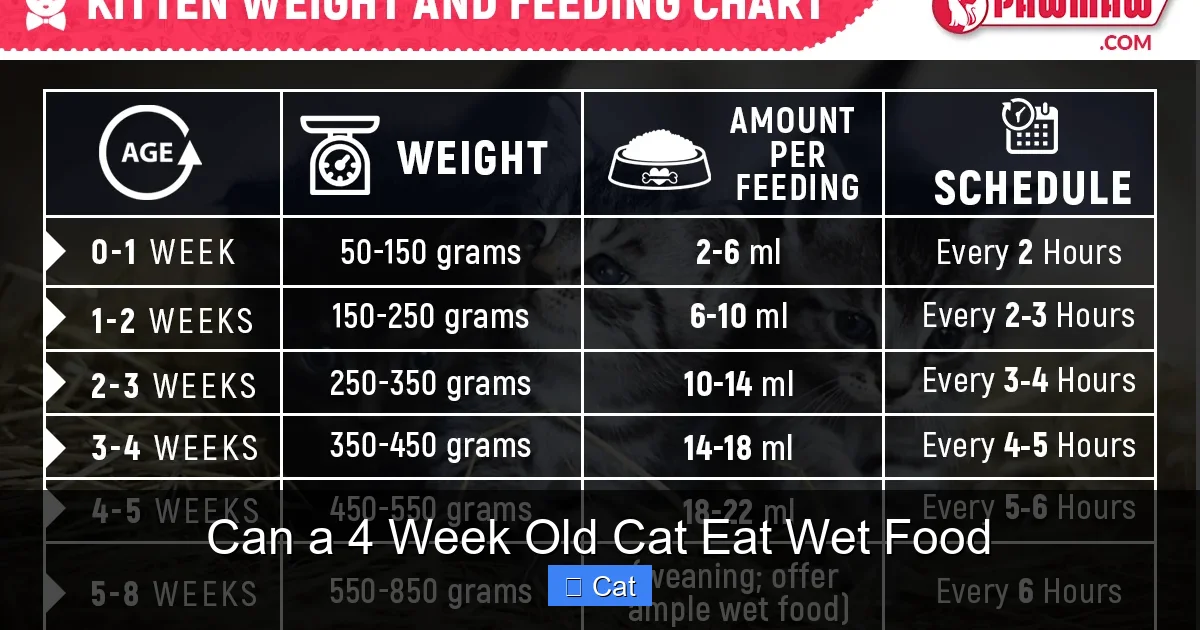
- Feed small, frequent meals: Offer wet food 4–6 times per day in tiny portions to match their small stomachs.
- Monitor for digestive issues: Diarrhea, vomiting, or refusal to eat may signal intolerance—consult a vet if symptoms persist.
- Gradual transition is key: Mix wet food with milk replacer initially, increasing solid content over 1–2 weeks.
📑 Table of Contents
Understanding the Weaning Process in Kittens
Weaning is a natural and gradual process that marks the transition from a milk-only diet to solid foods. For kittens, this journey typically begins between 3 and 4 weeks of age and continues until they are about 8 weeks old. During this time, their bodies are rapidly changing—they’re growing stronger, their eyes and ears are fully functional, and they’re becoming more active and curious. These developmental milestones coincide with the need for more calories and nutrients than mother’s milk alone can provide.
At 4 weeks old, kittens are just starting to show interest in their mother’s food. You might notice them sniffing around her food bowl or even attempting to nibble on kibble or wet food. This is a sign that they’re ready to begin the weaning process. However, their digestive systems are still immature, and they lack the enzymes needed to break down complex proteins and fats found in adult cat food. That’s why it’s essential to introduce solid foods slowly and in a form they can easily consume.
The weaning process should be gentle and stress-free. For mother-raised kittens, the mother will naturally encourage her babies to try solid food by eating in front of them and allowing them to approach her bowl. If you’re caring for orphaned kittens, you’ll need to take on this role by offering soft, palatable food in a shallow dish. The goal is to mimic the natural progression—starting with a milk-based mixture and gradually increasing the amount of solid food over time.
Signs Your Kitten Is Ready for Wet Food
Not all 4-week-old kittens are ready to eat wet food at the same time. While most begin showing interest around this age, some may need a little more time. Here are a few signs that your kitten is ready to start trying wet food:
– **Teething begins:** Tiny teeth start to emerge around 3–4 weeks. This makes it easier for kittens to chew and swallow soft foods.
– **Increased curiosity:** Your kitten may start sniffing or pawing at your food or their mother’s bowl.
– **Improved coordination:** They can now walk steadily and approach food dishes without stumbling.
– **Reduced nursing frequency:** While they still nurse frequently, they may spend less time at the mother and more time exploring.
If your kitten shows these behaviors, it’s a good indication that they’re ready to begin the weaning process. However, always proceed slowly and watch for signs of discomfort or disinterest.
Why Wet Food Is Ideal for Weaning
Wet food is often recommended during weaning because it’s easier for kittens to eat than dry kibble. Its soft texture requires minimal chewing, and the high moisture content helps keep kittens hydrated—especially important since young kittens don’t always drink water on their own. Additionally, wet food is typically more aromatic and flavorful, which can entice picky eaters.
Another advantage of wet food is its nutrient density. High-quality kitten wet food is packed with protein, healthy fats, vitamins, and minerals—all essential for rapid growth. Look for formulas that list real meat (like chicken, turkey, or fish) as the first ingredient and avoid those with fillers like corn, soy, or artificial preservatives.
How to Safely Introduce Wet Food to a 4-Week-Old Kitten
Visual guide about Can a 4 Week Old Cat Eat Wet Food
Image source: pawmaw.com
Introducing wet food to a 4-week-old kitten requires patience and attention to detail. The key is to make the food as easy to eat and digest as possible. Here’s a step-by-step guide to help you get started:
Step 1: Choose the Right Wet Food
Not all wet cat food is created equal—especially when it comes to kittens. Always select a product specifically labeled for “kittens” or “growth.” These formulas are designed to meet the unique nutritional needs of young cats, including higher levels of protein, fat, calcium, and essential fatty acids like DHA, which supports brain and vision development.
Avoid adult cat food, even if it’s wet. Adult formulas are lower in calories and certain nutrients that kittens need to thrive. Also, steer clear of foods with added salt, sugar, or artificial flavors—these offer no nutritional benefit and can harm a kitten’s developing system.
Some trusted brands for kitten wet food include Royal Canin Kitten, Hill’s Science Diet Kitten, and Blue Buffalo Healthy Growth Kitten. Read labels carefully and choose grain-free or limited-ingredient options if your kitten has sensitivities.
Step 2: Soften the Food
At 4 weeks old, kittens can’t chew solid food effectively. To make wet food easier to eat, you’ll need to soften it. Here’s how:
– Take a small amount of wet kitten food (about 1–2 tablespoons) and place it in a shallow dish.
– Add warm kitten milk replacer (not cow’s milk) or warm water to the food. Use a ratio of about 1 part food to 2 parts liquid.
– Mash or blend the mixture until it reaches a soupy, pudding-like consistency. You can use a fork or a small blender for this.
The goal is to create a texture that’s easy for the kitten to lap up with their tongue. Avoid making it too thick—kittens may struggle to eat it, and too-thin mixtures can cause digestive upset.
Step 3: Offer Small, Frequent Meals
Kittens have tiny stomachs and high energy needs, so they require frequent meals throughout the day. At 4 weeks old, aim to feed your kitten 4–6 small meals daily. Each serving should be no more than 1–2 tablespoons of the softened wet food mixture.
Use a shallow dish or a small plate to make it easy for the kitten to access the food. You can also place your finger in the mixture and let the kitten lick it off to encourage them to try it. Be patient—some kittens take to food immediately, while others may need a few days of encouragement.
Step 4: Monitor and Adjust
After feeding, observe your kitten for signs of enjoyment or discomfort. Are they eating eagerly? Do they seem satisfied afterward? Are their stools firm and normal?
If your kitten refuses to eat, don’t force it. Try offering the food at a different time or warming it slightly (never hot). Some kittens prefer food at room temperature, while others like it warmed to mimic body heat.
If you notice diarrhea, vomiting, or lethargy, stop feeding the wet food and consult your veterinarian. These could be signs of food intolerance or an underlying health issue.
Nutritional Needs of 4-Week-Old Kittens
At 4 weeks old, kittens are in a critical stage of growth. They’re gaining weight rapidly—often doubling their birth weight within the first few weeks—and their bodies are developing at an astonishing pace. To support this growth, they need a diet rich in high-quality protein, healthy fats, and essential vitamins and minerals.
Protein: The Building Block of Growth
Protein is the most important nutrient for growing kittens. It provides the amino acids needed to build muscle, organs, skin, and fur. Look for wet foods that list a named animal protein (like “chicken” or “salmon”) as the first ingredient. Avoid products with vague terms like “meat by-products” or “animal digest.”
Kittens need about 30–40% protein in their diet—significantly more than adult cats. This high protein requirement supports their rapid development and high energy needs.
Fats and Fatty Acids
Healthy fats are another crucial component of a kitten’s diet. They provide concentrated energy and help absorb fat-soluble vitamins (A, D, E, and K). Omega-3 and omega-6 fatty acids, particularly DHA, are essential for brain and eye development.
Look for wet foods that include sources of healthy fats, such as chicken fat, fish oil, or flaxseed. Avoid foods with excessive saturated fats or added vegetable oils.
Vitamins and Minerals
Kittens need a balanced mix of vitamins and minerals to support bone growth, immune function, and overall health. Calcium and phosphorus are especially important for developing strong bones and teeth. However, the ratio must be correct—too much calcium can lead to skeletal problems.
Taurine, an amino acid found in animal proteins, is vital for heart and vision health. Deficiencies can lead to serious health issues, so ensure your kitten’s food contains adequate taurine.
Hydration Matters
While kittens get some moisture from their mother’s milk or milk replacer, wet food helps increase their overall fluid intake. This is important because kittens are prone to dehydration, especially if they’re not drinking water on their own.
Wet food typically contains 70–80% water, making it an excellent source of hydration. Encourage your kitten to drink water by placing a shallow water dish near their food bowl, but don’t be alarmed if they don’t drink much at first—many kittens rely on wet food for hydration during weaning.
Common Mistakes to Avoid When Feeding Wet Food
Even with the best intentions, caregivers can make mistakes when introducing wet food to young kittens. Here are some common pitfalls to avoid:
Using Cow’s Milk
Many people assume that milk is good for kittens—but cow’s milk is a big no-no. It’s difficult for kittens to digest and can cause diarrhea, dehydration, and nutrient imbalances. Always use a commercial kitten milk replacer, which is specially formulated to mimic mother’s milk.
Feeding Adult Cat Food
Adult cat food lacks the higher protein, fat, and calorie content that kittens need. Feeding it to a 4-week-old kitten can result in malnutrition and stunted growth. Always choose kitten-specific formulas.
Overfeeding or Underfeeding
Kittens have small stomachs and can’t eat large meals. Overfeeding can cause vomiting or diarrhea, while underfeeding leads to weakness and poor growth. Stick to small, frequent meals and adjust portions based on your kitten’s appetite and weight gain.
Ignoring Food Temperature
Kittens prefer food that’s slightly warm—similar to body temperature. Cold food may be unappealing and harder to digest. Warm the mixture gently before serving, but never microwave it, as hot spots can burn your kitten’s mouth.
Not Cleaning Dishes Regularly
Wet food can spoil quickly, especially in warm environments. Always clean food and water dishes after each meal to prevent bacterial growth and illness.
When to Consult a Veterinarian
While most kittens transition to wet food without issues, some may experience challenges. Always consult your veterinarian if you notice any of the following:
– Refusal to eat for more than 24 hours
– Persistent diarrhea or vomiting
– Lethargy or weakness
– Weight loss or failure to gain weight
– Signs of dehydration (sunken eyes, dry gums, skin that doesn’t snap back when gently pinched)
Your vet can assess your kitten’s health, recommend appropriate foods, and rule out underlying conditions like parasites, infections, or congenital issues.
Conclusion
So, can a 4 week old cat eat wet food? Absolutely—but only when it’s introduced correctly and with care. At this stage, kittens are just beginning to explore solid foods, and wet food can be a nutritious, hydrating, and appealing option during weaning. The key is to choose high-quality, kitten-specific formulas, soften the food with kitten milk replacer or water, and offer small, frequent meals.
Remember, every kitten is different. Some may take to wet food right away, while others need more time and encouragement. Be patient, observant, and responsive to your kitten’s needs. And when in doubt, don’t hesitate to reach out to your veterinarian for guidance.
With the right approach, you’ll help your 4-week-old kitten build a strong foundation for a healthy, happy life. Whether you’re fostering, adopting, or raising a litter, your care and attention during this critical stage will make all the difference.
Frequently Asked Questions
Can I feed my 4-week-old kitten regular adult wet food?
No, adult wet food doesn’t meet the high nutritional needs of growing kittens. Always use wet food specifically labeled for kittens to ensure proper growth and development.
How often should I feed wet food to a 4-week-old kitten?
Feed your kitten 4–6 small meals per day. Their tiny stomachs can’t handle large portions, so frequent, small servings are best.
What if my kitten won’t eat the wet food?
Try warming the food slightly or mixing it with more milk replacer to make it more appealing. Be patient—some kittens take a few days to adjust.
Can I use water instead of milk replacer to soften wet food?
Yes, warm water is a safe alternative, but kitten milk replacer provides extra nutrients and calories that support growth.
Is it okay if my kitten only eats a little at first?
Yes, it’s normal for kittens to eat small amounts during weaning. As they grow, their appetite will increase gradually.
When can my kitten stop eating softened wet food?
By 6–8 weeks, most kittens can eat wet food without added liquid. Transition to a thicker consistency over 1–2 weeks as their chewing improves.