

At 6 weeks old, puppies can begin transitioning to dog food, but it must be specially formulated for puppies and properly softened with water or milk replacer. While they’re weaning off their mother’s milk, it’s crucial to choose high-quality, nutrient-dense food and follow a gradual feeding plan to support healthy growth and digestion.
Key Takeaways
- Yes, a 6 week old puppy can eat dog food — but only if it’s high-quality puppy food that’s been softened with warm water or puppy milk replacer.
- Weaning should begin around 3–4 weeks and be nearly complete by 6–8 weeks, making this a critical time to introduce solid food.
- Choose food labeled “complete and balanced” for growth — look for AAFCO certification to ensure it meets nutritional standards for puppies.
- Feed small, frequent meals — 4–6 times per day — to match their tiny stomachs and high energy needs.
- Avoid adult dog food — it lacks the extra protein, fat, and calories growing puppies require.
- Monitor for digestive upset — diarrhea or vomiting may signal the food is too rich or the transition is too fast.
- Always provide fresh water — even though they’re still nursing or drinking milk replacer, water supports digestion and hydration.
📑 Table of Contents
Can a 6 Week Old Puppy Eat Dog Food?
Bringing home a 6-week-old puppy is an exciting milestone — full of wagging tails, clumsy steps, and endless cuddles. But with that joy comes responsibility, especially when it comes to feeding. One of the most common questions new puppy parents ask is: *Can a 6 week old puppy eat dog food?* The short answer is yes — but with important caveats. At this age, puppies are in the middle of weaning and beginning to explore solid food, but their digestive systems are still delicate and developing. Feeding the right kind of food, in the right way, is essential for their growth, immunity, and long-term health.
While puppies are biologically ready to start eating solid food around 3 to 4 weeks of age, by 6 weeks they should be well on their way to transitioning from mother’s milk (or milk replacer) to puppy food. This doesn’t mean you should dump dry kibble in front of them and walk away. Instead, it’s about gently introducing soft, digestible meals that support their rapid development. The key is choosing the right food, preparing it properly, and feeding it in a way that matches their tiny bodies and big appetites.
In this guide, we’ll walk you through everything you need to know about feeding a 6-week-old puppy — from what type of dog food to choose, how to prepare it, how often to feed, and what to avoid. Whether you’re a first-time dog owner or adding a new furry friend to your pack, this information will help you set your puppy up for a healthy, happy life.
Understanding the Weaning Process
Visual guide about Can a 6 Week Old Puppy Eat Dog Food
Image source: purina.co.uk
When Does Weaning Begin?
Weaning is the natural process where puppies gradually stop relying on their mother’s milk and start eating solid food. This transition typically begins around 3 to 4 weeks of age. At first, puppies will nibble on food that’s been softened with water or milk, often mimicking their mother as she eats. By 6 weeks, most puppies are eating a mix of solid food and milk, and by 8 weeks, they should be fully weaned.
It’s important to note that weaning should be gradual. Sudden changes in diet can upset a puppy’s stomach and lead to diarrhea or refusal to eat. The process allows their digestive system to adapt to new textures and nutrients. During this time, puppies still get vital antibodies and nutrition from their mother’s milk, so don’t rush the transition.
Signs Your Puppy Is Ready for Solid Food
How do you know if your 6-week-old puppy is ready to eat dog food? Look for these signs:
– They show interest in their mother’s food or your food.
– They start chewing on toys or other objects.
– They can lap up water or milk from a shallow dish.
– They’re gaining weight steadily and seem energetic.
If your puppy is still very small, weak, or not showing interest in food, consult your veterinarian. Some puppies, especially those from large litters or with health issues, may need extra time or support during weaning.
The Role of Mother’s Milk
Even though your puppy is starting to eat solid food, mother’s milk remains a crucial source of nutrition at 6 weeks. It provides antibodies that help protect puppies from infections during their vulnerable early weeks. If the mother is still present, allow her to nurse as much as the puppy wants. If she’s not available — for example, if the puppy was orphaned or separated early — you’ll need to use a high-quality puppy milk replacer (not cow’s milk, which can cause digestive issues).
Milk replacer should be fed according to the package instructions, usually every 2–4 hours for young puppies. As solid food intake increases, milk feedings can gradually decrease.
Choosing the Right Dog Food for a 6 Week Old Puppy
Puppy Food vs. Adult Dog Food
Not all dog food is created equal — especially when it comes to puppies. A 6-week-old puppy has very different nutritional needs than an adult dog. Puppies grow rapidly, sometimes doubling or tripling their birth weight in just a few weeks. This explosive growth requires more calories, protein, fat, calcium, and other nutrients.
That’s why you should always feed food specifically labeled for “puppies” or “growth.” These formulas are designed to support development, strong bones, healthy brains, and a robust immune system. Adult dog food, even if it’s high-quality, doesn’t provide enough of these critical nutrients and can lead to growth problems or deficiencies.
Look for labels that say “complete and balanced” and meet AAFCO (Association of American Feed Control Officials) standards for growth or all life stages. This ensures the food has been tested and proven to meet a puppy’s nutritional needs.
Wet vs. Dry Food: Which Is Better?
Both wet and dry puppy food can be appropriate for 6-week-old puppies, but each has pros and cons.
Dry kibble is convenient, cost-effective, and helps promote dental health by reducing plaque buildup. However, at 6 weeks, puppies may struggle to chew hard kibble. That’s why it’s usually softened with warm water or milk replacer to create a soft, porridge-like consistency.
Wet food is softer, more aromatic, and often more appealing to picky eaters. It also has higher moisture content, which can help with hydration. However, it’s more expensive and can spoil quickly once opened.
Many owners use a combination: softened dry food for meals and a bit of wet food as a topper to encourage eating. The most important thing is that the food is nutritionally complete and appropriate for puppies.
Ingredients to Look For (and Avoid)
When choosing puppy food, read the ingredient list carefully. High-quality puppy food should have:
– A named animal protein as the first ingredient (e.g., “chicken,” “lamb,” or “salmon” — not “meat meal” or “by-products”).
– Healthy fats like chicken fat or fish oil for brain and coat development.
– Digestible carbohydrates such as rice, oats, or sweet potatoes.
– Added DHA (an omega-3 fatty acid) for cognitive development.
– No artificial colors, flavors, or preservatives.
Avoid foods with fillers like corn, soy, or wheat, which offer little nutritional value and can cause allergies. Also steer clear of foods with excessive salt, sugar, or unnamed meat sources.
How to Prepare and Feed Dog Food to a 6 Week Old Puppy
Softening the Food
At 6 weeks, puppies don’t have all their teeth yet — in fact, their baby teeth are just starting to come in. That means they can’t chew hard kibble effectively. To make dry food easier to eat, soak it in warm water or puppy milk replacer for 10–15 minutes until it reaches a soft, mushy consistency.
Use warm (not hot) water to avoid destroying nutrients. The goal is a texture similar to oatmeal or yogurt. You can also blend it briefly for an even smoother mix, especially for smaller breeds.
If using wet food, you can mix it with a small amount of warm water or milk replacer to create a soupy consistency. This helps puppies lap it up more easily and prevents choking.
Feeding Schedule and Portion Size
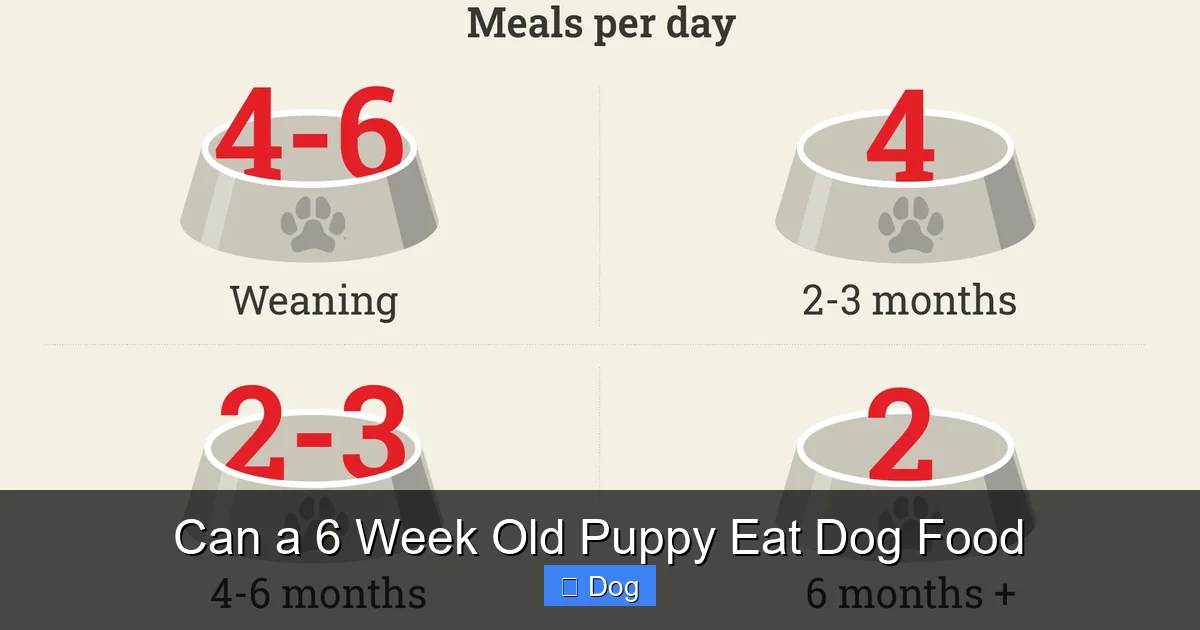
Puppies have tiny stomachs but high energy needs, so they need to eat frequently. At 6 weeks, aim for 4 to 6 small meals per day — roughly every 3 to 4 hours. This keeps their blood sugar stable and supports steady growth.
Portion size depends on the puppy’s breed, size, and the food’s calorie content. Check the feeding guidelines on the food package, but use them as a starting point. A small breed puppy (like a Chihuahua) may only need ¼ to ½ cup of food per day, divided into multiple meals. A large breed puppy (like a Labrador) might need closer to 1 cup.
Watch your puppy’s body condition. You should be able to feel their ribs but not see them prominently. If they’re gaining weight too quickly or too slowly, adjust portions accordingly and consult your vet.
Feeding Techniques and Tips
– Use a shallow dish or plate so your puppy can easily reach the food.
– Place the food in a quiet, clean area away from high-traffic zones.
– Stay nearby during meals to encourage eating and prevent accidents.
– Don’t force-feed — let your puppy eat at their own pace.
– Clean food and water bowls daily to prevent bacteria buildup.
Some puppies are shy or nervous about eating in new environments. If your puppy isn’t eating, try warming the food slightly (to enhance smell), hand-feeding a few bites, or mixing in a small amount of wet food or broth (make sure it’s dog-safe and low-sodium).
Common Mistakes to Avoid When Feeding a 6 Week Old Puppy
Feeding Adult Dog Food
One of the biggest mistakes new owners make is feeding adult dog food to a puppy. While it might seem harmless, adult food doesn’t provide the extra calories, protein, and fat that growing puppies need. Over time, this can lead to stunted growth, weak bones, and developmental issues.
Always choose food labeled for puppies or all life stages with AAFCO growth certification.
Overfeeding or Underfeeding
It’s easy to overfeed a puppy — especially when they’re so small and adorable. But overfeeding can cause rapid growth, which is especially dangerous for large breed puppies. Rapid growth increases the risk of joint problems like hip dysplasia.
On the flip side, underfeeding can lead to malnutrition, low energy, and weakened immunity. Follow feeding guidelines, monitor weight gain, and adjust portions as needed.
Using Cow’s Milk or Human Food
Never give cow’s milk to a puppy. Most dogs are lactose intolerant, and cow’s milk can cause severe diarrhea, dehydration, and even life-threatening conditions.
Similarly, avoid feeding human food — especially chocolate, onions, garlic, grapes, and anything with sugar or salt. Even “safe” foods like plain chicken should only be given occasionally and in small amounts, if at all. Stick to high-quality puppy food to ensure balanced nutrition.
Skipping Veterinary Guidance
Every puppy is different. Factors like breed, health, and weaning history can affect feeding needs. Always consult your veterinarian before making major changes to your puppy’s diet. They can recommend specific brands, portion sizes, and feeding schedules based on your puppy’s individual needs.
Monitoring Your Puppy’s Health and Growth
Signs of a Healthy Puppy
A well-fed, healthy 6-week-old puppy should:
– Have bright, clear eyes
– Be active and playful
– Have a shiny coat
– Gain weight steadily
– Have normal bowel movements (firm but not hard)
If your puppy is lethargic, vomiting, has diarrhea, or isn’t gaining weight, contact your vet immediately.
When to Transition to Less Frequent Meals
As your puppy grows, you can gradually reduce the number of meals. By 12 weeks, most puppies can eat 3 meals per day. By 6 months, many can transition to 2 meals. Large breed puppies may benefit from 3 meals until they’re 12 months old to support controlled growth.
Always make transitions slowly — over 7 to 10 days — to avoid digestive upset.
The Importance of Regular Vet Checkups
Puppies need frequent vet visits for vaccinations, deworming, and health monitoring. Your vet can also assess your puppy’s growth and nutrition, ensuring they’re on the right track. Keep a record of weight, feeding habits, and any concerns to share during appointments.
Conclusion
So, can a 6 week old puppy eat dog food? Absolutely — but it must be done thoughtfully and with care. At this age, puppies are transitioning from mother’s milk to solid food, and their nutritional needs are very specific. Choosing high-quality puppy food, softening it properly, and feeding small, frequent meals will support their rapid growth and development.
Remember, every puppy is unique. What works for one may not work for another. Stay observant, stay informed, and don’t hesitate to reach out to your veterinarian with questions. With the right food and plenty of love, your 6-week-old puppy will grow into a healthy, happy dog.
Frequently Asked Questions
Can I feed my 6 week old puppy dry kibble without soaking it?
It’s not recommended. At 6 weeks, puppies don’t have all their teeth and may struggle to chew hard kibble. Soaking it in warm water or milk replacer makes it easier to eat and digest.
How much should a 6 week old puppy eat per day?
Most 6-week-old puppies need about ¼ to 1 cup of food per day, divided into 4–6 small meals. The exact amount depends on breed, size, and the food’s calorie content.
Is it okay to mix wet and dry puppy food?
Yes, mixing wet and dry food is fine and can encourage picky eaters. Just make sure both are high-quality, AAFCO-approved puppy formulas.
Can I give my puppy water at 6 weeks old?
Yes, always provide fresh water. Even though they’re still drinking milk, water supports digestion and hydration, especially once they start eating solid food.
What if my 6 week old puppy won’t eat dog food?
Try warming the food, hand-feeding, or mixing in a small amount of wet food or broth. If they still refuse to eat for more than 24 hours, contact your vet.
When can I stop feeding puppy food?
Most puppies can transition to adult food between 12 and 18 months, depending on breed size. Small breeds may switch earlier; large breeds often need puppy food longer for proper growth.