
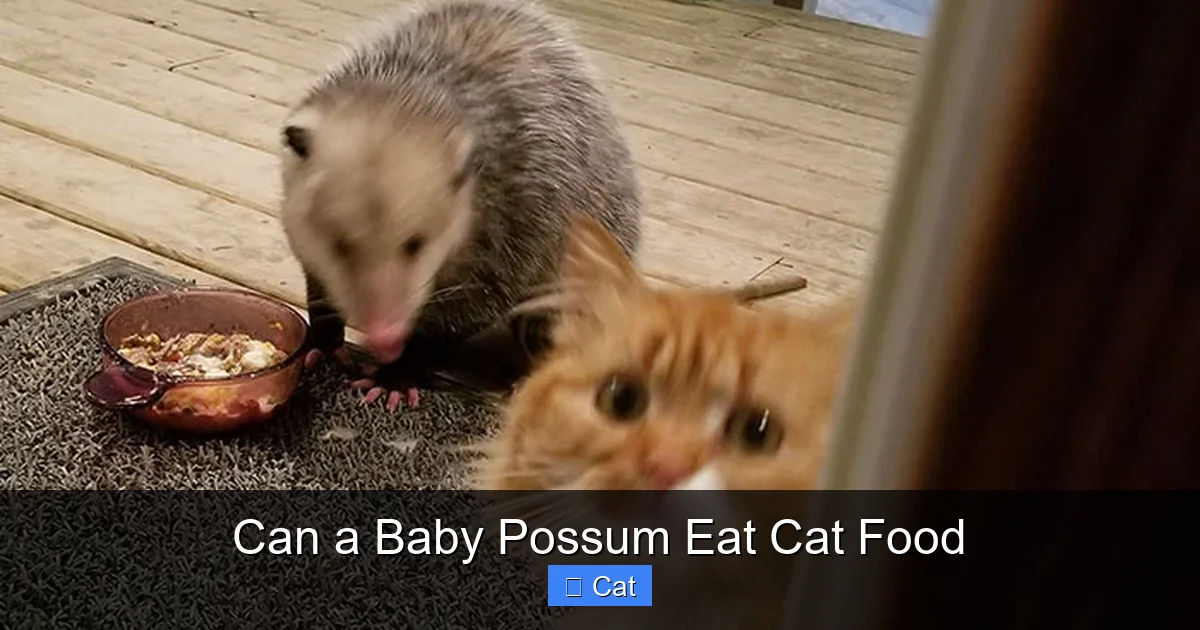
Baby possums should not be fed regular cat food as a primary diet. While it may seem like a convenient option, cat food lacks the proper nutrition and balance that young possums need to grow strong and healthy. Specialized formulas and expert guidance are essential for their survival.
If you’ve ever spotted a tiny, wide-eyed baby possum clinging to a tree or wandering alone at night, your first instinct might be to help. Maybe you’ve even thought, “Can a baby possum eat cat food?” After all, it’s high in protein, readily available, and designed for carnivorous animals—so it seems like a logical choice. But here’s the truth: while cat food might seem like a quick fix, it’s not the best—or even safe—option for a growing baby possum.
Possums, also known as opossums in North America, are North America’s only marsupial. They’re incredibly resilient creatures, often misunderstood and underestimated. Baby possums, called joeys, are born extremely underdeveloped—about the size of a honeybee—and spend the first two months of life in their mother’s pouch, nursing and growing. If a joey is orphaned or separated from its mother too early, its survival depends entirely on proper care, especially when it comes to diet.
Feeding a baby possum isn’t as simple as opening a can of cat food. Their digestive systems, nutritional needs, and developmental stages are vastly different from those of kittens. While cat food is formulated for obligate carnivores with high protein and fat needs, baby possums require a more balanced, varied diet that includes specific ratios of calcium, phosphorus, and essential vitamins. Feeding them the wrong food—even something as seemingly harmless as cat food—can lead to serious health problems, including metabolic bone disease, stunted growth, and even death.
So, can a baby possum eat cat food? The short answer is: only in very limited, emergency situations—and even then, it should be a last resort. This article will explore the real dietary needs of baby possums, why cat food falls short, what to feed them instead, and how to give these little survivors the best chance at a healthy life.
Key Takeaways
- Baby possums have unique dietary needs: Their nutritional requirements differ significantly from cats, especially in protein, fat, calcium, and vitamin content.
- Cat food is not ideal for baby possums: While it may be used temporarily in emergencies, it should never replace a proper marsupial-specific formula.
- Improper diet can cause serious health issues: Feeding the wrong food can lead to metabolic bone disease, digestive problems, and developmental delays.
- Orphaned possums need expert care: Always contact a licensed wildlife rehabilitator before attempting to feed or care for a baby possum.
- Proper hydration is critical: Baby possums dehydrate quickly and require fluids even before solid food.
- Weaning and diet progression matter: As possums grow, their diet must evolve from liquid formula to insects, fruits, and vegetation.
- Never feed cow’s milk or human baby food: These can cause severe digestive upset and are potentially life-threatening.
📑 Table of Contents
- Understanding the Baby Possum’s Natural Diet
- Why Cat Food Is Not Ideal for Baby Possums
- What to Feed a Baby Possum Instead
- The Importance of Hydration and Feeding Technique
- When to Call a Wildlife Rehabilitator
- Myths and Misconceptions About Feeding Baby Possums
- Conclusion: Prioritize Proper Care Over Convenience
Understanding the Baby Possum’s Natural Diet
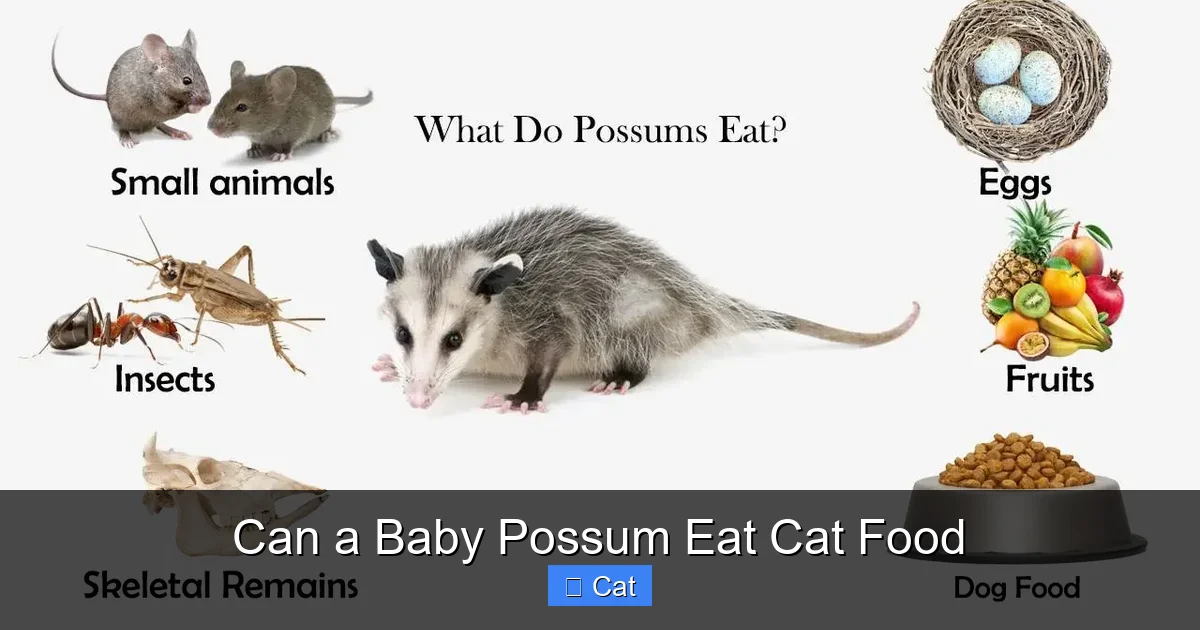
To understand why cat food isn’t ideal for baby possums, it helps to know what they eat in the wild. Possums are omnivores with a surprisingly diverse diet. As joeys grow, they transition from milk to a mix of insects, small animals, fruits, vegetables, and even carrion. This varied intake provides them with the right balance of nutrients needed for healthy development.
In the wild, a mother possum nurses her young for about 70 to 100 days. During this time, her milk changes in composition to meet the growing joey’s needs—starting with high fat and protein for rapid growth, then gradually shifting to support bone development and immune function. After weaning, joeys begin eating solid foods, starting with soft items like mashed insects and fruit, then progressing to harder foods like beetles, snails, and small vertebrates.
This natural progression is crucial. Baby possums need a diet that supports not just growth, but also proper bone formation, organ development, and immune system strength. Their bodies are designed to process a wide range of foods, not just high-protein animal matter like cats.
What Baby Possums Eat in the Wild
In their natural habitat, baby possums begin exploring food around 8 to 10 weeks of age. They follow their mother, learning what’s safe to eat by observation and trial. Their diet includes:
– Insects (crickets, beetles, caterpillars)
– Earthworms and grubs
– Small frogs, lizards, and mice
– Fruits (berries, apples, bananas)
– Vegetables (leafy greens, sweet potatoes)
– Eggs (when available)
– Carrion (dead animals)
This variety ensures they get a mix of protein, fats, carbohydrates, vitamins, and minerals. For example, insects provide chitin (a fiber-like substance), while fruits offer natural sugars and antioxidants. The calcium from bones in small prey helps build strong skeletons.
Why This Matters for Captive Care
When caring for an orphaned baby possum, replicating this natural diet as closely as possible is essential. Unfortunately, most commercial cat foods are designed for a different species with different needs. Cats are obligate carnivores—they require high levels of animal protein and specific amino acids like taurine. While possums also eat meat, they don’t have the same metabolic demands.
Feeding cat food exclusively can lead to imbalances. For instance, too much protein without enough calcium can cause skeletal deformities. Too little fiber can lead to digestive issues. And without the right vitamins, a joey may develop deficiencies that affect everything from vision to immune function.
Why Cat Food Is Not Ideal for Baby Possums
Visual guide about Can a Baby Possum Eat Cat Food
Image source: feedingnature.com
Now, let’s address the big question: can a baby possum eat cat food? The answer is complicated. In a true emergency—like finding a dehydrated, orphaned joey with no access to specialized formula—small amounts of high-quality, wet kitten food might be used temporarily. But it should never be a long-term solution.
Nutritional Imbalances in Cat Food
Cat food, especially kitten food, is high in protein and fat—great for growing kittens, but not ideal for baby possums. Here’s why:
– Excess Protein: While possums need protein, too much can strain their developing kidneys and lead to dehydration.
– Imbalanced Calcium-to-Phosphorus Ratio: Baby possums need a calcium-to-phosphorus ratio of about 1.5:1 to 2:1 for proper bone development. Most cat foods have a ratio closer to 1:1 or even lower, which can contribute to metabolic bone disease—a painful condition where bones become soft and brittle.
– Lack of Fiber: Possums need dietary fiber from plant matter to support healthy digestion. Cat food is typically low in fiber, which can cause constipation or diarrhea.
– Missing Nutrients: Cat food doesn’t contain the right mix of vitamins and minerals for marsupials. For example, possums need more vitamin E and certain B vitamins than cats.
Digestive System Differences
Possums have a unique digestive system adapted to a varied diet. They have a simple stomach and a relatively short digestive tract, which works well for processing both meat and plant matter. However, their system isn’t designed to handle the high concentration of animal protein and fat found in cat food over long periods.
Feeding cat food can disrupt the natural gut flora, leading to digestive upset, bloating, or even bacterial imbalances. In severe cases, this can result in sepsis or organ failure.
Real-World Example: A Cautionary Tale
A wildlife rehabilitator once shared a story about a well-meaning person who found a baby possum and fed it kitten food for two weeks. The joey initially seemed to thrive—it gained weight and was active. But by week three, it became lethargic, stopped eating, and developed swollen joints. A vet diagnosed metabolic bone disease due to the imbalanced diet. Despite intensive care, the possum didn’t survive.
This story highlights a critical point: short-term use of cat food might not show immediate harm, but the damage can be cumulative and irreversible.
What to Feed a Baby Possum Instead
So, if cat food isn’t the answer, what should you feed a baby possum? The best option is a specialized marsupial milk replacer, available through wildlife rehabilitators or veterinary supply companies. These formulas are scientifically designed to mimic the composition of possum milk and support healthy growth.
Specialized Marsupial Formula
Products like Wombaroo Possum Milk Replacer or Biolac M100 are formulated specifically for marsupials. They provide the right balance of protein, fat, carbohydrates, vitamins, and minerals. These formulas come in different stages (e.g., early, mid, late lactation) to match the joey’s developmental needs.
When using a commercial formula:
– Always follow the mixing instructions carefully.
– Warm the formula to body temperature (around 98–100°F) before feeding.
– Use a small syringe or dropper to feed slowly, mimicking natural nursing.
– Feed every 2–4 hours, depending on the joey’s age.
Emergency Substitutes (Short-Term Only)
If you can’t access a specialized formula immediately, here are a few temporary options—use only until you can get the proper food:
– Goat’s Milk: Easier to digest than cow’s milk and closer in composition to marsupial milk. Mix with a pinch of sugar and a drop of pediatric electrolyte solution.
– Pediatric Electrolyte Solution: For dehydrated joeys, start with fluids like Pedialyte before introducing food.
– Diluted Kitten Formula: If no other option is available, use a high-quality kitten milk replacer (not adult cat food) and dilute it with water. Add a calcium supplement if possible.
Never use cow’s milk, soy milk, or human baby formula. These can cause severe digestive issues and are not safe for possums.
Introducing Solid Foods
As the joey grows (around 8–10 weeks), begin introducing soft solid foods. Start with:
– Mashed hard-boiled egg
– Pureed insects (crickets, mealworms)
– Mashed banana or apple
– Cooked sweet potato
Gradually increase the variety and texture. By 12–14 weeks, the possum should be eating a mix of insects, fruits, vegetables, and small amounts of lean meat.
The Importance of Hydration and Feeding Technique
One of the most critical aspects of caring for a baby possum is ensuring proper hydration. Joeys dehydrate quickly, especially if they’re orphaned or stressed. Dehydration can lead to kidney failure and death within hours.
Signs of Dehydration
Look for these warning signs:
– Sunken eyes
– Dry mouth and nose
– Skin that doesn’t snap back when gently pinched
– Lethargy or weakness
– Cold to the touch
If you suspect dehydration, offer an electrolyte solution immediately. Use a dropper to give small amounts every 15–30 minutes until the joey shows improvement.
Safe Feeding Practices
Feeding a baby possum requires care and precision:
– Position: Hold the joey upright, like a mother possum would carry it. Never feed on its back—this can cause aspiration.
– Pace: Feed slowly. Let the joey suckle at its own pace. Force-feeding can lead to choking or pneumonia.
– Frequency: Newborns need feeding every 2–3 hours, including overnight. As they grow, the interval increases.
– Hygiene: Clean all feeding equipment with hot, soapy water after each use. Sterilize if possible.
Weaning Process
Weaning begins around 8 weeks. Start by offering small amounts of soft food alongside formula. Gradually reduce the number of bottle feedings as the joey eats more solids. By 12–14 weeks, most possums are fully weaned and eating a varied diet.
When to Call a Wildlife Rehabilitator
While it’s tempting to try and save a baby possum on your own, the best thing you can do is contact a licensed wildlife rehabilitator. These professionals have the training, resources, and experience to provide proper care.
Why Professional Help Matters
Wildlife rehabilitators understand the complex needs of baby possums. They can:
– Diagnose health issues early
– Provide species-specific nutrition
– Administer necessary medications
– Prepare the possum for release into the wild
Attempting to raise a possum without guidance often leads to improper development, imprinting (where the animal becomes too attached to humans), or failure to thrive.
How to Find a Rehabilitator
– Search online for “wildlife rehabilitator near me” or check with local animal control, humane societies, or veterinary clinics.
– In the U.S., the National Wildlife Rehabilitators Association (NWRA) and the International Wildlife Rehabilitation Council (IWRC) have directories.
– Call ahead—many rehabilitators are volunteers and may need time to respond.
If you must care for the possum temporarily, keep it warm, quiet, and safe until help arrives. Use a small box with soft bedding and a heat source (like a heating pad on low, wrapped in a towel).
Myths and Misconceptions About Feeding Baby Possums
There are many myths about what baby possums can eat. Let’s clear up some common misconceptions.
Myth: “Cat food is fine because possums eat meat.”
While possums do eat meat, their dietary needs are more complex. Cat food lacks the right balance of nutrients and can cause long-term health problems.
Myth: “Cow’s milk is a good substitute for possum milk.”
Cow’s milk is too high in lactose and protein for possums. It can cause severe diarrhea, dehydration, and even death.
Myth: “Baby possums can eat human baby food.”
Most human baby foods contain ingredients unsafe for possums, like onion powder, garlic, or added sugars. Always check labels and avoid anything with additives.
Myth: “If it’s eating, it’s healthy.”
A possum may appear to eat and grow on an improper diet, but internal damage—like bone deformities or organ stress—can develop silently.
Conclusion: Prioritize Proper Care Over Convenience
So, can a baby possum eat cat food? Technically, yes—but only in rare, emergency situations and never as a long-term solution. The health and survival of a baby possum depend on a diet that matches its natural nutritional needs, not convenience or assumption.
If you find an orphaned or injured baby possum, your best action is to contact a licensed wildlife rehabilitator immediately. While waiting for help, keep the joey warm, hydrated, and safe—but avoid feeding it unless absolutely necessary and only with appropriate fluids.
Remember, these tiny creatures are wild animals, not pets. Their best chance at a full, healthy life comes from expert care and a return to their natural habitat. By understanding their needs and resisting the urge to “fix” things with human solutions, you give them the respect and support they deserve.
With the right knowledge and compassion, we can all play a role in protecting these misunderstood marsupials—one proper meal at a time.
Frequently Asked Questions
Can a baby possum eat cat food in an emergency?
Yes, but only as a very short-term solution. In life-threatening situations where no other food is available, small amounts of high-quality wet kitten food can be used temporarily. However, it should be replaced with a proper marsupial formula as soon as possible.
What happens if a baby possum eats too much cat food?
Feeding cat food long-term can lead to nutritional imbalances, metabolic bone disease, kidney strain, and digestive problems. These issues may not appear immediately but can become life-threatening over time.
What is the best milk substitute for a baby possum?
The best option is a specialized marsupial milk replacer like Wombaroo or Biolac M100. These formulas are designed to match the nutritional profile of possum milk and support healthy development.
How often should I feed a baby possum?
Newborn joeys need feeding every 2–3 hours, including overnight. As they grow, the frequency decreases. Always follow the guidelines provided by a wildlife rehabilitator or the formula manufacturer.
Can I feed a baby possum fruits and vegetables right away?
No. Baby possums should not eat solid food until they are at least 8 weeks old. Start with soft, mashed foods like hard-boiled egg or pureed insects, and gradually introduce fruits and vegetables.
Is it legal to keep a baby possum as a pet?
In most places, it is illegal to keep wild animals, including possums, as pets without a permit. Always contact a licensed wildlife rehabilitator to ensure the animal receives proper care and can be released back into the wild.