
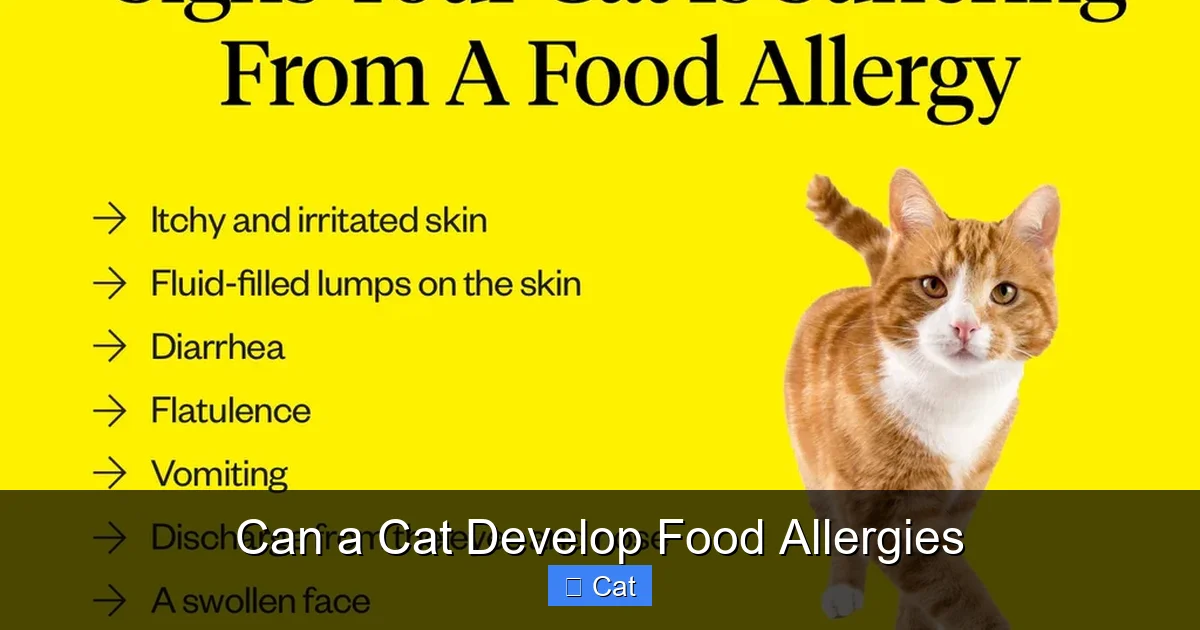
Yes, cats can develop food allergies—even if they’ve eaten the same food for years. These allergies often show up as skin irritation, vomiting, or diarrhea, and require careful diagnosis and dietary changes to manage effectively.
Key Takeaways
- Food allergies in cats are real and increasingly common: Unlike simple food intolerances, true allergies involve the immune system and can develop at any age, even with long-term exposure to a particular ingredient.
- Symptoms often appear on the skin: Itchy ears, face, or paws, hair loss, and recurrent ear infections are common signs, though digestive issues like vomiting or diarrhea can also occur.
- Common allergens include proteins: Beef, dairy, fish, chicken, and eggs are frequent culprits, not grains—despite popular misconceptions.
- Diagnosis requires an elimination diet: Blood and skin tests are unreliable; the gold standard is an 8–12 week trial with a novel or hydrolyzed protein diet.
- Grain-free doesn’t mean allergy-free: Most cat food allergies are triggered by animal proteins, so switching to grain-free food may not solve the problem.
- Management is lifelong: Once identified, allergens must be permanently avoided, and treats or flavored medications should be carefully vetted.
- Work closely with your vet: Self-diagnosing or using over-the-counter “hypoallergenic” foods can delay proper treatment and worsen symptoms.
📑 Table of Contents
- Can a Cat Develop Food Allergies? Understanding the Truth Behind Feline Food Sensitivities
- What Exactly Is a Food Allergy in Cats?
- Common Signs and Symptoms of Food Allergies in Cats
- What Causes Food Allergies in Cats? Common Culprits
- How Are Food Allergies Diagnosed in Cats?
- Managing and Treating Food Allergies in Cats
- Can Food Allergies Be Prevented?
- Conclusion: Helping Your Cat Live Comfortably with Food Allergies
Can a Cat Develop Food Allergies? Understanding the Truth Behind Feline Food Sensitivities
If you’ve ever noticed your cat scratching more than usual, vomiting after meals, or dealing with recurring ear infections, you might wonder: *Can a cat develop food allergies?* The short answer is yes—absolutely. And the longer answer is even more important: food allergies in cats are more common than many pet owners realize, often misunderstood, and frequently misdiagnosed.
Unlike temporary stomach upsets or picky eating, food allergies in cats are immune-mediated reactions to specific ingredients in their diet. These aren’t the same as food intolerances, which are digestive issues without immune involvement (like lactose intolerance). True food allergies trigger the immune system to overreact, leading to inflammation and a range of uncomfortable symptoms. What’s surprising to many cat parents is that these allergies can develop at any point in a cat’s life—even if they’ve been eating the same food for years without issue.
Imagine your cat has enjoyed the same chicken-based kibble since kittenhood. Suddenly, at age five, they start licking their paws raw, losing fur around their face, or having frequent bouts of diarrhea. You switch foods, but the symptoms persist. This scenario is more common than you’d think. Cats can develop sensitivities to ingredients they’ve consumed for years, making diagnosis tricky. The good news? With proper veterinary guidance, most food allergies can be identified and managed effectively, giving your cat relief and a better quality of life.
What Exactly Is a Food Allergy in Cats?

Visual guide about Can a Cat Develop Food Allergies
Image source: sbt-news-assets-prod.s3.sa-east-1.amazonaws.com
To understand how and why cats develop food allergies, it helps to know what’s happening inside their bodies. A food allergy occurs when the immune system mistakenly identifies a harmless food protein as a threat—like a virus or bacteria. In response, it launches an attack, releasing antibodies and inflammatory chemicals that cause symptoms.
This process is called a hypersensitivity reaction, and in cats, it most often manifests as dermatological (skin-related) issues. However, gastrointestinal symptoms can also occur. The immune system doesn’t “forget” this reaction—once sensitized, even tiny amounts of the allergen can trigger symptoms upon future exposure.
It’s important to distinguish food allergies from other conditions with similar signs. For example, environmental allergies (like pollen or dust mites) can cause itchy skin, just like food allergies. So can parasites, bacterial infections, or even stress. That’s why a proper diagnosis is essential—treating the wrong cause won’t help your cat and may even make things worse.
How Is a Food Allergy Different from a Food Intolerance?
Many people use the terms “food allergy” and “food intolerance” interchangeably, but they’re not the same. A food intolerance is a digestive issue—your cat’s body simply can’t process a certain ingredient properly. For example, some cats lack enough lactase enzyme to digest milk, leading to gas or diarrhea. This is an intolerance, not an allergy.
In contrast, a food allergy involves the immune system. The body produces IgE antibodies in response to the allergen, leading to inflammation and symptoms that can affect the skin, gut, or even respiratory system. Intolerances are usually dose-dependent (more of the ingredient = worse symptoms), while allergies can be triggered by even trace amounts.
Understanding this difference is crucial because the treatment approaches vary. Intolerances may improve with enzyme supplements or gradual reintroduction, but allergies require complete avoidance of the offending ingredient.
Common Signs and Symptoms of Food Allergies in Cats
Recognizing the signs of a food allergy is the first step toward helping your cat. Unfortunately, symptoms can be subtle or mimic other conditions, so it’s easy to overlook them. The most common signs fall into two categories: skin-related and digestive.
Skin Symptoms: The Most Common Clue
If your cat has a food allergy, there’s a strong chance you’ll notice changes in their skin or coat. These symptoms often appear gradually and can be mistaken for seasonal allergies or flea infestations.
One of the most telling signs is **excessive scratching**, especially around the head, neck, and ears. Cats may rub their faces against furniture, lick their paws obsessively, or chew at their skin. Over time, this can lead to **hair loss**, redness, scabs, or even open sores. You might also see **miliary dermatitis**—small, crusty bumps scattered across the skin, particularly along the back and neck.
Another common issue is **chronic ear infections**. If your cat frequently shakes their head, scratches their ears, or has dark, waxy discharge, a food allergy could be the underlying cause. These infections often recur despite treatment because the root trigger—the allergen—remains in the diet.
Some cats develop **facial swelling** or **hives** after eating, though this is less common. These reactions are more typical of acute allergic responses and may require immediate veterinary attention.
Digestive Symptoms: Not Always Obvious
While skin issues dominate, some cats with food allergies experience gastrointestinal problems. These can include **chronic vomiting**, **diarrhea**, or **increased gas**. Unlike occasional hairballs or dietary indiscretion, these symptoms are persistent—occurring multiple times a week over several weeks or months.
In some cases, the digestive signs are mild, like soft stools or occasional regurgitation. In others, they’re severe, leading to weight loss, dehydration, or lethargy. Kittens with food allergies may fail to thrive, showing poor growth despite a good appetite.
It’s worth noting that digestive symptoms alone are less specific. Many conditions—from inflammatory bowel disease to parasites—can cause similar issues. That’s why a thorough veterinary evaluation is essential before assuming a food allergy.
Behavioral and Secondary Signs
Chronic discomfort from itching or digestive upset can affect your cat’s behavior. You might notice increased irritability, restlessness, or hiding. Some cats become less active or stop grooming themselves properly, leading to a dull, matted coat.
Secondary infections are also common. Constant scratching can break the skin, allowing bacteria to enter and cause pyoderma (skin infections). Similarly, ear infections may progress to more serious conditions if left untreated.
If you observe any of these signs—especially if they persist for more than a few weeks—it’s time to talk to your veterinarian. Early intervention can prevent complications and improve your cat’s comfort.
What Causes Food Allergies in Cats? Common Culprits
Now that we know the symptoms, let’s explore what’s actually triggering these reactions. Contrary to popular belief, grains are rarely the problem. In fact, most cat food allergies are caused by **animal proteins**.
Top Food Allergens in Cats
The most common food allergens in cats include:
– **Beef**: One of the top offenders, especially in cats fed commercial diets containing beef meal or by-products.
– **Dairy products**: Milk, cheese, and other dairy items are frequent triggers, even in small amounts.
– **Fish and seafood**: Tuna, salmon, and shrimp are common in cat foods and treats, making them likely suspects.
– **Chicken and eggs**: Despite being “lean” proteins, these are also common allergens, particularly in cats fed poultry-based diets.
– **Lamb**: Once considered a “novel” protein, lamb is now widely used and can also cause reactions.
– **Soy and wheat**: While less common, some cats react to plant-based proteins or fillers.
Interestingly, **grains like corn, wheat, and rice are rarely the cause** of true food allergies in cats. Most feline allergies are protein-based, which is why grain-free diets don’t always solve the problem.
Why Do Cats Develop Allergies to Foods They’ve Eaten Before?
This is one of the most puzzling aspects of food allergies: they can develop after years of eating the same food. The exact reason isn’t fully understood, but several theories exist.
One possibility is **immune system sensitization**. Over time, repeated exposure to a protein may cause the immune system to “remember” it as a threat. This is similar to how people can develop allergies to foods they’ve eaten their whole lives.
Another theory involves **leaky gut syndrome**, where the intestinal lining becomes more permeable, allowing undigested food particles to enter the bloodstream. The immune system then reacts to these particles as foreign invaders.
Stress, illness, or changes in gut bacteria (microbiome) may also play a role. For example, a cat recovering from a viral infection might develop new food sensitivities during recovery.
Regardless of the cause, the key takeaway is that **food allergies can develop at any age**—even in senior cats who’ve never had issues before.
Are Certain Breeds or Ages More at Risk?
While any cat can develop a food allergy, some factors may increase risk. Siamese and other Oriental breeds appear to have a higher predisposition, though the reason isn’t clear. Age-wise, food allergies can occur in kittens, adults, and seniors, but they’re most commonly diagnosed in cats between 2 and 6 years old.
There’s no strong evidence that spaying or neutering increases risk, but hormonal changes may influence immune responses in some cases.
How Are Food Allergies Diagnosed in Cats?
Diagnosing a food allergy in cats isn’t as simple as running a blood test. In fact, many common tests are unreliable. The only proven method is a **strict elimination diet trial**—and it requires patience and commitment.
The Elimination Diet: The Gold Standard
An elimination diet involves feeding your cat a diet containing **novel proteins and carbohydrates** they’ve never eaten before. A novel protein is one your cat hasn’t been exposed to—like duck, rabbit, venison, or kangaroo. Novel carbohydrates might include sweet potato, green peas, or chickpeas.
Alternatively, your vet may recommend a **hydrolyzed protein diet**. In these foods, proteins are broken down into tiny fragments too small to trigger an immune response. Brands like Hill’s z/d or Royal Canin Hydrolyzed Protein are commonly prescribed.
The diet must be fed **exclusively** for 8 to 12 weeks. This means no treats, table scraps, flavored medications, or even toothpaste. Even a small amount of the old food can sabotage the trial.
During this time, you’ll monitor your cat’s symptoms. If they improve significantly, a food allergy is likely. To confirm, your vet will recommend a **provocation test**: reintroducing the original food. If symptoms return within days, the diagnosis is confirmed.
Why Blood and Skin Tests Are Unreliable
Many pet owners ask about blood tests (IgE testing) or skin prick tests for food allergies. While these tests exist, they’re not recommended for diagnosing food allergies in cats.
Blood tests can show elevated antibodies to certain foods, but this doesn’t always mean your cat is allergic. Some cats have antibodies without symptoms. Conversely, cats with clear allergies may test negative.
Skin tests are even less reliable for food allergies and are primarily used for environmental allergens like pollen or dust mites.
Relying on these tests can lead to unnecessary dietary restrictions or missed diagnoses. Always follow your vet’s guidance and stick to the elimination diet for accurate results.
Working with Your Veterinarian
A proper diagnosis requires teamwork. Your vet will rule out other causes—like fleas, mites, infections, or hormonal disorders—before starting the diet trial. They’ll also help you choose the right food and monitor your cat’s progress.
Keep a symptom journal during the trial. Note changes in itching, vomiting, diarrhea, coat condition, and behavior. This information helps your vet assess whether the diet is working.
If symptoms don’t improve after 12 weeks, your vet may explore other conditions, such as inflammatory bowel disease or small intestinal bacterial overgrowth (SIBO).
Managing and Treating Food Allergies in Cats
Once a food allergy is confirmed, the focus shifts to long-term management. The goal is simple: **avoid the allergen completely**. But in practice, it takes vigilance and planning.
Choosing the Right Diet
After the elimination diet, your vet will help you select a long-term food. Options include:
– **Novel protein diets**: Continue feeding a protein your cat hasn’t been exposed to, like duck or rabbit.
– **Hydrolyzed protein diets**: These are safe for most allergic cats and can be used long-term.
– **Homemade diets**: Some owners prepare balanced meals at home, but this requires veterinary nutritionist guidance to ensure proper nutrient levels.
Avoid “limited ingredient” or “natural” foods unless specifically recommended. Many contain trace ingredients or cross-contamination that can trigger reactions.
Reading Labels Carefully
Food labels can be misleading. Ingredients like “meat by-products” or “animal digest” may contain allergens. Always check for hidden sources—for example, some fish oils are derived from allergenic fish.
Treats are a common pitfall. Many commercial treats contain chicken, beef, or dairy. Look for single-ingredient treats made from novel proteins, or make your own at home.
Even flavored medications (like certain antibiotics or heartworm preventives) can contain allergens. Ask your vet for hypoallergenic alternatives if needed.
Preventing Accidental Exposure
Cross-contamination is a real risk. If you have multiple pets, feed them separately to avoid your allergic cat stealing food. Wash bowls thoroughly, and store foods in sealed containers.
Be cautious with human food. Even small amounts of cheese, milk, or meat can trigger symptoms. Educate family members and visitors about the importance of not sharing food.
Monitoring for Relapses
Even with careful management, relapses can happen. Stress, illness, or accidental ingestion may cause symptoms to return. Keep a close eye on your cat and contact your vet if signs reappear.
Regular check-ups help ensure your cat stays healthy. Your vet may recommend periodic reassessment, especially if new symptoms develop.
Can Food Allergies Be Prevented?
Unfortunately, there’s no surefire way to prevent food allergies in cats. However, some strategies may reduce risk:
– **Rotate proteins occasionally**: Feeding a variety of proteins from an early age may help prevent sensitization, though evidence is limited.
– **Avoid overfeeding one protein**: If your cat eats only chicken-based food for years, they’re more likely to develop an allergy to it.
– **Maintain gut health**: Probiotics and a balanced diet may support a healthy microbiome, potentially reducing immune overreactions.
That said, prevention isn’t guaranteed. Many cats develop allergies despite careful feeding practices. The key is early recognition and prompt treatment.
Conclusion: Helping Your Cat Live Comfortably with Food Allergies
So, can a cat develop food allergies? The answer is a resounding yes—and it’s more common than many realize. These allergies can develop at any age, often in response to proteins your cat has eaten for years. Symptoms range from itchy skin and hair loss to chronic vomiting and diarrhea, and they can significantly impact your cat’s quality of life.
The good news is that with proper diagnosis—primarily through an elimination diet—and careful management, most cats with food allergies can live happy, comfortable lives. Avoiding the allergen, reading labels diligently, and working closely with your veterinarian are essential steps.
Remember, food allergies are a lifelong condition, but they’re manageable. With patience, attention, and the right support, you can help your cat thrive—no matter what their dietary needs may be.
Frequently Asked Questions
Can kittens develop food allergies?
Yes, kittens can develop food allergies, although it’s less common than in adult cats. Symptoms may include diarrhea, vomiting, or skin irritation. If you notice persistent issues, consult your vet for evaluation.
How long does it take for a cat to show signs of a food allergy?
Symptoms can appear within hours of eating the allergen, but in many cases, they develop gradually over weeks or months of repeated exposure. Chronic itching or digestive issues are common indicators.
Can a cat be allergic to dry food but not wet food?
It’s unlikely. Most food allergies are caused by specific ingredients (like chicken or beef), not the food’s form. If your cat reacts to one, they’ll likely react to the other if it contains the same proteins.
Are grain-free diets better for cats with food allergies?
Not necessarily. Most cat food allergies are caused by animal proteins, not grains. Switching to grain-free food may not help unless the allergen is removed entirely.
Can food allergies in cats be cured?
No, food allergies cannot be cured, but they can be effectively managed by avoiding the allergen. With proper diet and care, most cats live symptom-free lives.
What should I do if I suspect my cat has a food allergy?
Schedule a vet visit to rule out other conditions. Your vet will likely recommend an elimination diet trial to confirm the diagnosis and identify the allergen.