
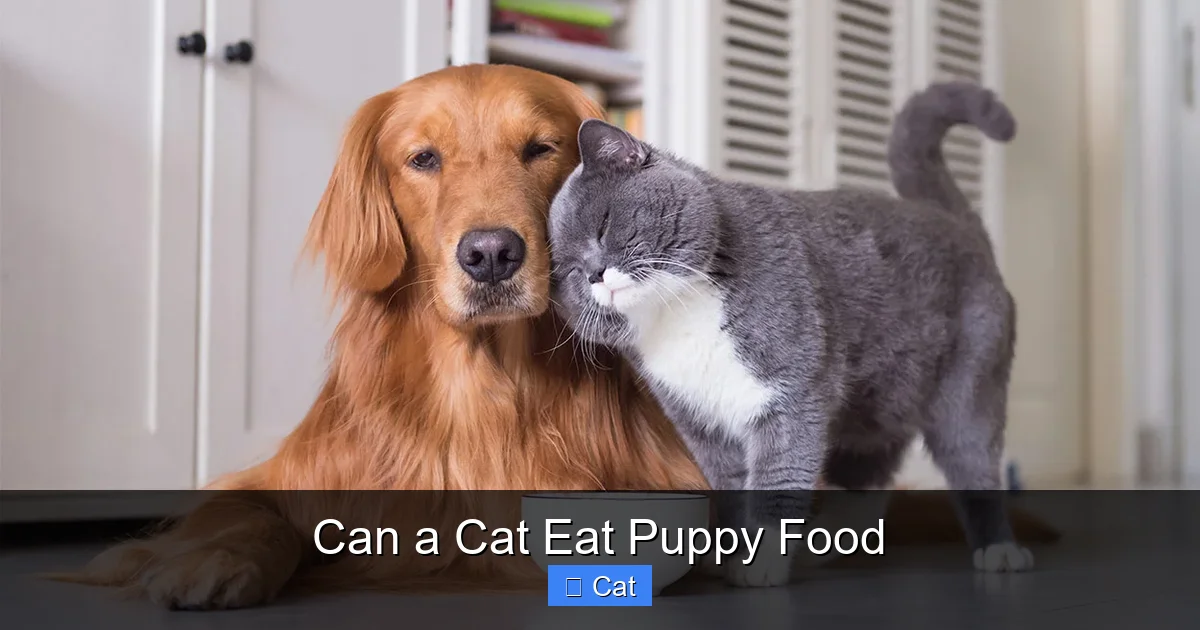
While a cat might nibble on puppy food without immediate harm, it’s not safe or healthy for regular consumption. Cats have unique dietary needs that puppy food doesn’t meet, especially when it comes to protein, taurine, and fat. Feeding your cat puppy food long-term can lead to serious health problems.
Key Takeaways
- Cats are obligate carnivores: They require a meat-based diet rich in animal protein, which puppy food often lacks in the right balance.
- Puppy food is too high in calories and fat: This can lead to obesity and pancreatitis in cats, especially if fed regularly.
- Taurine deficiency is a major risk: Cats cannot synthesize enough taurine on their own, and puppy food doesn’t contain enough to meet their needs.
- Short-term ingestion is usually not dangerous: If your cat sneaks a few bites, monitor for vomiting or diarrhea but don’t panic.
- Always choose species-specific food: Feed your cat high-quality cat food formulated for their life stage and health needs.
- Consult your vet if accidental feeding occurs: Especially if your cat has eaten large amounts or has pre-existing health conditions.
- Prevent access to puppy food: Store dog food in closed containers or elevated areas to avoid temptation.
📑 Table of Contents
- Can a Cat Eat Puppy Food? What Every Cat Owner Should Know
- Understanding the Nutritional Needs of Cats
- What’s in Puppy Food? A Closer Look
- Can a Cat Eat Puppy Food Safely? Short-Term vs. Long-Term
- What to Do If Your Cat Eats Puppy Food
- Choosing the Right Food for Your Cat
- Myths and Misconceptions About Cat and Dog Food
- Conclusion: Keep Your Cat Safe and Healthy
Can a Cat Eat Puppy Food? What Every Cat Owner Should Know
You’re in the middle of feeding your puppy, and your curious cat saunters over, eyes locked on the kibble bowl. Before you know it, your feline friend has taken a few quick bites. Your heart skips a beat—should you be worried? Can a cat eat puppy food?
It’s a common scenario in multi-pet households, and while it might seem harmless at first glance, the truth is more nuanced. Cats and dogs have very different nutritional needs, and what’s good for a growing puppy isn’t always safe for a cat—even if it looks and smells appealing.
In this article, we’ll dive deep into whether cats can eat puppy food, the potential risks involved, and what you should do if your cat sneaks a snack. We’ll also explore the science behind feline nutrition, compare puppy and cat food ingredients, and offer practical tips to keep your pets healthy and well-fed.
Whether you’re a new cat parent or a seasoned pet lover juggling both cats and dogs, understanding the differences between pet foods is essential. Let’s get started.
Understanding the Nutritional Needs of Cats

Visual guide about Can a Cat Eat Puppy Food
Image source: candogseatguide.com
To answer the question “Can a cat eat puppy food?” we first need to understand what cats actually need to thrive. Cats are not just small dogs—they’re obligate carnivores, which means their bodies are designed to run on a diet almost entirely made up of animal-based proteins and fats.
Unlike omnivores like dogs or humans, cats cannot efficiently digest plant matter or synthesize certain nutrients on their own. Their metabolism is built for processing meat, and they rely on specific amino acids, vitamins, and fatty acids that must come from animal sources.
Why Cats Need Animal Protein
Protein is the cornerstone of a cat’s diet. It provides the amino acids necessary for everything from muscle development to immune function. Cats require at least 26–30% protein in their diet, and many high-quality cat foods contain even more—sometimes up to 40% or higher.
One of the most critical amino acids for cats is taurine. Without enough taurine, cats can develop serious health issues, including blindness, heart disease (dilated cardiomyopathy), and reproductive problems. While dogs can make taurine from other amino acids, cats cannot—they must get it directly from their food.
Essential Nutrients Unique to Cats
In addition to taurine, cats need several other nutrients that are either absent or insufficient in puppy food:
- Arginine: An amino acid vital for removing ammonia from the body. A deficiency can cause vomiting, lethargy, and even death within hours.
- Vitamin A (Retinol): Cats can’t convert beta-carotene (found in plants) into vitamin A like dogs can. They need preformed vitamin A from animal sources.
- Niacin (Vitamin B3): Cats require dietary niacin because they can’t synthesize enough from tryptophan.
- Arachidonic Acid: An omega-6 fatty acid that cats can’t produce from linoleic acid and must obtain from animal fats.
These nutrients are carefully balanced in commercial cat food but are not prioritized in puppy food, which is formulated for a different species with different metabolic needs.
Water Intake and Dry Food
Another often-overlooked aspect of feline nutrition is hydration. Cats evolved from desert animals and have a low thirst drive. They get most of their water from their food, which is why wet cat food is often recommended.
Puppy food, especially dry kibble, is typically lower in moisture than wet cat food. Feeding your cat dry puppy food regularly could contribute to chronic dehydration, increasing the risk of urinary tract issues like crystals or blockages—especially in male cats.
What’s in Puppy Food? A Closer Look
Now that we know what cats need, let’s examine what puppy food actually contains. While both puppy and kitten foods are high in protein and fat to support rapid growth, the balance and sources of these nutrients differ significantly.
Protein and Fat Content
Puppy food is designed to fuel the explosive growth of young dogs. It’s typically high in calories, protein, and fat—sometimes even higher than kitten food. For example, a premium puppy formula might contain 28–32% protein and 15–20% fat.
At first glance, this might seem great for a cat. But the issue isn’t just the quantity—it’s the quality and source of the protein. Puppy food often includes plant-based proteins like corn gluten meal or soybean meal to boost protein percentages. While dogs can utilize these, cats cannot digest them efficiently and may miss out on essential amino acids.
Carbohydrates and Fillers
Puppy food tends to have more carbohydrates than cat food. Ingredients like rice, corn, wheat, and potatoes are common. While dogs can thrive on moderate carbs, cats have a limited ability to digest them. Excess carbohydrates can lead to weight gain, insulin resistance, and even diabetes in cats over time.
Vitamin and Mineral Imbalances
Puppy food is fortified with vitamins and minerals, but not always in the right proportions for cats. For instance, it may contain too much calcium and phosphorus, which can disrupt a cat’s delicate mineral balance and potentially lead to kidney strain.
Additionally, as mentioned earlier, puppy food often lacks sufficient taurine. Even if it contains some, it’s usually not enough to meet a cat’s daily requirement, especially if the cat is eating only puppy food.
Caloric Density and Portion Control
Puppy food is calorie-dense—sometimes containing 400–500 kcal per cup. Cats, especially indoor ones, have much lower energy needs. A typical adult cat only needs about 200–300 kcal per day. Feeding puppy food regularly could easily lead to overfeeding and obesity.
Obesity in cats is linked to a host of problems, including arthritis, diabetes, liver disease, and reduced lifespan. So even if the ingredients aren’t toxic, the caloric load can be harmful over time.
Can a Cat Eat Puppy Food Safely? Short-Term vs. Long-Term
So, back to the original question: Can a cat eat puppy food?
The short answer is: Yes, but only in small amounts and only occasionally.
Occasional Snacking: Low Risk
If your cat sneaks a few pieces of puppy kibble while your dog is eating, don’t panic. A one-time or infrequent taste is unlikely to cause harm. Most cats will simply digest it like any other food, though they might experience mild digestive upset like gas, loose stools, or vomiting.
Think of it like a human eating a fast-food meal—occasionally, it’s not a big deal. But if it becomes a regular habit, problems arise.
Long-Term Feeding: High Risk
Feeding your cat puppy food as a primary diet is a different story. Over weeks or months, the nutritional imbalances can lead to serious health consequences.
For example, a cat eating only puppy food may develop:
- Taurine deficiency: Leading to vision loss, heart disease, or immune dysfunction.
- Obesity: Due to high calorie and fat content.
- Urinary tract issues: From dehydration and mineral imbalances.
- Digestive problems: From excess carbohydrates and poor protein quality.
There are documented cases of cats fed exclusively dog food developing life-threatening conditions. In one well-known case, a cat went blind due to taurine deficiency after being fed a vegetarian dog food for several months.
Kittens vs. Adult Cats
You might wonder: What about kittens? Can they eat puppy food?
The answer is still no—though kitten food and puppy food are more similar than adult versions, they’re not interchangeable. Kitten food is higher in protein, fat, and certain nutrients like DHA (important for brain development) than puppy food. Feeding a kitten puppy food could stunt growth or lead to deficiencies.
Always choose food specifically formulated for kittens if you have a young cat.
What to Do If Your Cat Eats Puppy Food
Accidents happen. If your cat has eaten puppy food, here’s what you should do:
Assess the Amount and Frequency
Ask yourself:
- How much did they eat?
- Was it a one-time incident or have they been eating it regularly?
- Are they showing any symptoms like vomiting, diarrhea, lethargy, or changes in appetite?
If it was just a few bites and your cat seems fine, monitor them for 24–48 hours. Most cats will be okay.
Watch for Warning Signs
Contact your veterinarian if you notice:
- Vomiting or diarrhea lasting more than a day
- Lethargy or weakness
- Loss of appetite
- Difficulty breathing
- Seizures or tremors (rare but possible with severe deficiencies)
These could indicate a more serious reaction, especially if your cat has eaten large amounts or has an underlying health condition.
Prevent Future Incidents
The best way to handle accidental feeding is to prevent it from happening again. Here are some practical tips:
- Feed pets separately: Use different rooms or feed at different times to avoid cross-eating.
- Use elevated feeding stations: Cats prefer to eat off the ground. Place their food on a counter or cat tree.
- Store food securely: Keep puppy food in sealed containers or in cabinets cats can’t access.
- Use puzzle feeders: These can slow down eating and make it harder for cats to steal dog food.
- Train your dog: Teach your dog to stay away from the cat’s food and vice versa.
Choosing the Right Food for Your Cat
Now that we’ve established that puppy food isn’t suitable for cats, let’s talk about what is.
Look for Species-Specific Formulas
Always choose cat food labeled for your cat’s life stage:
- Kitten: High in protein, fat, and calories for growth.
- Adult: Balanced nutrition for maintenance.
- Senior: Lower in calories, higher in fiber, and often includes joint support.
Check the ingredient list. The first ingredient should be a named animal protein like “chicken,” “salmon,” or “turkey”—not “meat meal” or “by-products.”
Wet vs. Dry Food
Both have pros and cons:
- Wet food: Higher in moisture, lower in carbs, and often more palatable. Great for hydration and urinary health.
- Dry food: Convenient, cost-effective, and helps with dental health (though not a substitute for brushing).
Many veterinarians recommend a mix of both to get the benefits of each.
Avoid Fillers and Artificial Additives
Steer clear of foods with:
- Corn, wheat, or soy as primary ingredients
- Artificial colors, flavors, or preservatives (like BHA, BHT, or ethoxyquin)
- Excessive carbohydrates
Look for foods with natural preservatives like mixed tocopherols (vitamin E) and avoid “mystery meats” like “animal digest” or “meat by-products.”
Consult Your Veterinarian
Every cat is different. If your cat has health issues like kidney disease, diabetes, or food allergies, your vet can recommend a prescription or therapeutic diet tailored to their needs.
Myths and Misconceptions About Cat and Dog Food
There are several myths floating around about pet food that can lead to confusion. Let’s clear them up.
Myth 1: “Cats and dogs can eat the same food if it’s high quality.”
False. Even premium “all-life-stage” foods are formulated with dogs in mind. They may meet minimum feline nutrient requirements, but they’re not optimized for cats. Always choose species-specific food.
Myth 2: “Puppy food is fine for cats because it’s high in protein.”
Not necessarily. While protein is important, the type and balance matter. Puppy food often includes plant proteins and lacks sufficient taurine—both problematic for cats.
Myth 3: “My cat has been eating puppy food for years and is fine.”
This is risky thinking. Nutritional deficiencies can develop slowly and may not show symptoms until serious damage has occurred. Just because your cat “seems fine” doesn’t mean their diet is healthy.
Myth 4: “Cats can’t get sick from eating dog food.”
They can. While acute toxicity is rare, chronic feeding can lead to malnutrition, obesity, and organ damage. Prevention is always better than treatment.
Conclusion: Keep Your Cat Safe and Healthy
So, can a cat eat puppy food? The answer is a cautious “yes” for the occasional nibble—but a firm “no” as a regular part of their diet.
Cats have evolved to thrive on a meat-rich, nutrient-dense diet that puppy food simply can’t provide. From taurine deficiency to obesity and urinary issues, the risks of feeding your cat puppy food long-term are real and potentially dangerous.
The best way to keep your cat healthy is to feed them high-quality, species-appropriate food designed specifically for feline needs. Store pet foods separately, supervise meal times, and consult your veterinarian if you’re ever unsure about your cat’s diet.
Remember: just because two pets share a home doesn’t mean they should share a bowl. Your cat deserves food that’s made for them—not a compromise.
By understanding the science behind feline nutrition and making informed choices, you’re giving your cat the best chance at a long, happy, and healthy life.
Frequently Asked Questions
Can a cat eat puppy food in an emergency?
Yes, in a true emergency where no cat food is available, a small amount of puppy food is unlikely to cause immediate harm. However, it should only be a temporary solution until proper cat food can be obtained.
How much puppy food is too much for a cat?
There’s no exact amount, but if your cat eats more than a few tablespoons or does so regularly, it could lead to nutritional imbalances. Monitor for symptoms and consult your vet if concerned.
Can kittens eat puppy food?
No, kittens should not eat puppy food. They have higher protein and calorie needs than puppies and require nutrients like DHA and extra taurine that puppy food doesn’t provide.
What happens if my cat eats a lot of puppy food?
Large amounts can cause digestive upset, vomiting, or diarrhea. Long-term, it may lead to taurine deficiency, obesity, or urinary issues. Contact your vet if your cat shows signs of illness.
Is wet puppy food safer for cats than dry?
Wet puppy food is slightly better due to higher moisture content, but it still lacks essential feline nutrients like taurine. It’s not a safe substitute for cat food.
Can I mix puppy food with cat food?
It’s not recommended. Mixing can dilute the nutritional balance of the cat food and still expose your cat to inappropriate ingredients. Stick to 100% cat food for your feline.