
Yes, a cat can get diarrhea from eating kitten food—especially if it’s sudden or long-term. While kitten food is safe in small amounts, its high fat and protein content may upset an adult cat’s digestive system. Learn how to feed responsibly and when to consult your vet.
Key Takeaways
- Kitten food is higher in calories, fat, and protein than adult cat food. This rich formula supports rapid growth in kittens but can overwhelm an adult cat’s digestive system.
- Sudden dietary changes are a common cause of diarrhea in cats. Switching to kitten food without a gradual transition can disrupt gut bacteria and lead to loose stools.
- Occasional kitten food is usually safe for adult cats. A few bites as a treat or during food shortages won’t harm most healthy cats.
- Long-term feeding of kitten food to adult cats can cause health issues. Obesity, pancreatitis, and chronic diarrhea are possible risks due to excess fat and calories.
- Diarrhea lasting more than 24–48 hours requires veterinary attention. Persistent symptoms may signal an underlying condition beyond diet.
- Choose age-appropriate food for optimal health. Adult cats thrive on formulas designed for their life stage, with balanced nutrients and lower fat.
- Always transition foods slowly over 7–10 days. Mix increasing amounts of new food with old to help your cat’s gut adjust.
📑 Table of Contents
Can a Cat Get Diarrhea from Eating Kitten Food?
If you’ve ever caught your adult cat sneaking into the kitten’s bowl, you might wonder: Is this harmless mischief, or could it cause real problems? The short answer is yes—your cat can get diarrhea from eating kitten food, especially if it’s a regular habit or introduced too quickly. While kitten food isn’t toxic to adult cats, it’s not formulated for their nutritional needs, and that mismatch can lead to digestive upset.
Kitten food is packed with energy. It’s designed to fuel rapid growth, support developing bones and muscles, and keep tiny bodies warm and active. That means higher levels of fat, protein, and calories compared to adult cat food. For a growing kitten, this is perfect. For an adult cat, it’s like eating a constant diet of fast food—tasty in moderation, but hard on the system over time.
Diarrhea in cats can stem from many causes: infections, parasites, stress, allergies, or sudden diet changes. When an adult cat eats kitten food, especially in large amounts or without warning, their digestive system may react. The rich fat content can speed up gut motility, leading to loose, watery stools. In some cases, the imbalance in nutrients can disrupt the delicate gut microbiome, making diarrhea more likely.
But don’t panic if your cat stole a few bites. Occasional exposure is rarely dangerous. The real concern comes with repeated or long-term feeding. Understanding why kitten food affects adult cats differently—and how to manage it—can help you keep your feline friend healthy, happy, and free from tummy troubles.
Why Kitten Food Is Different from Adult Cat Food

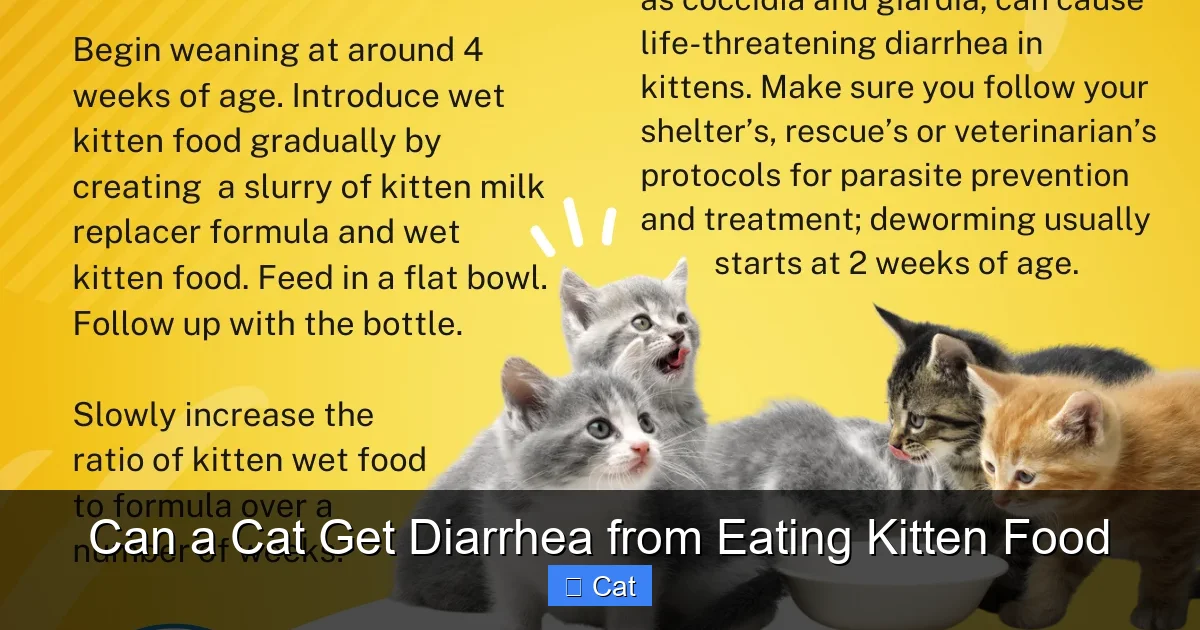
Visual guide about Can a Cat Get Diarrhea from Eating Kitten Food
Image source: cats.com
To understand why kitten food might cause diarrhea in adult cats, it helps to know what makes it different. Kitten food isn’t just “more of the same”—it’s a completely different recipe tailored to the unique needs of growing kittens.
Higher Caloric Density
Kitten food is significantly more calorie-dense than adult cat food. A single cup can contain up to 500 calories or more, compared to 300–400 in adult formulas. This is because kittens burn energy quickly. They’re growing bones, muscles, and organs at an astonishing rate. Their metabolism runs hot, and they need fuel to match.
For an adult cat, however, those extra calories don’t translate into growth—they turn into fat. Over time, this can lead to weight gain and obesity, which brings its own set of health problems, including diabetes and joint stress. But even before weight becomes an issue, the high caloric load can stress the digestive system, especially if the cat isn’t active enough to burn it off.
Increased Fat Content
Fat is a major source of energy in kitten food. It helps kittens absorb fat-soluble vitamins (A, D, E, and K) and supports brain development. Kitten formulas often contain 15–20% fat, while adult cat food typically ranges from 10–15%. That extra fat can be hard for an adult cat’s pancreas and liver to process, especially if they’re not used to it.
High-fat diets are a known risk factor for pancreatitis in cats—an inflammation of the pancreas that can cause vomiting, diarrhea, and abdominal pain. While not every cat will develop this condition, the risk increases with frequent consumption of rich foods like kitten chow.
Elevated Protein Levels
Protein is essential for muscle development, immune function, and tissue repair. Kitten food contains higher levels of high-quality animal protein—often 35–45%—compared to adult food, which usually sits around 26–35%. Again, this is perfect for a growing kitten but excessive for most adult cats.
While cats are obligate carnivores and need plenty of protein, too much can strain the kidneys over time, especially in older cats or those with preexisting kidney issues. Additionally, sudden spikes in protein can alter the gut environment, potentially leading to digestive upset like diarrhea.
Different Mineral Ratios
Kitten food also has higher levels of certain minerals, like calcium and phosphorus, to support bone growth. While these are vital for kittens, adult cats don’t need as much. Excess minerals can disrupt the body’s balance and, in rare cases, contribute to urinary tract issues or kidney stones.
Added Ingredients for Growth
Some kitten foods include supplements like DHA (an omega-3 fatty acid) for brain and eye development, or extra taurine for heart health. These are beneficial for kittens but unnecessary—and potentially overwhelming—for adult cats who already get adequate amounts from their regular diet.
In short, kitten food is like a high-performance sports drink for a growing athlete. It’s powerful, nutrient-dense, and essential at the right time. But for an adult cat, it’s overkill—and that overkill can show up as diarrhea, weight gain, or other health concerns.
How Dietary Changes Trigger Diarrhea in Cats
One of the most common reasons cats develop diarrhea—whether from kitten food or any new diet—is a sudden change in what they eat. Cats have sensitive digestive systems. Their guts are home to trillions of bacteria that help break down food, absorb nutrients, and fight off harmful pathogens. This microbiome thrives on consistency.
When you introduce a new food too quickly, you disrupt that balance. The gut bacteria aren’t prepared for the new nutrient profile, and the result can be digestive chaos—gas, bloating, and yes, diarrhea.
The Science Behind Gut Sensitivity
A cat’s digestive tract is designed to process a steady, predictable diet. In the wild, cats eat small, frequent meals of prey—mostly meat, with some bones and organs. Their systems are optimized for this high-protein, low-carbohydrate intake. Even domesticated cats retain this biology.
When you switch foods abruptly, especially to something richer like kitten food, the gut has to work harder. Enzymes that digest fat and protein may be overwhelmed. The intestines may speed up to expel the “foreign” substance, leading to loose stools. This is the body’s way of saying, “This doesn’t belong here.”
Common Signs of Dietary Upset
Diarrhea caused by diet change usually appears within 12 to 48 hours of eating the new food. It may be mild—slightly softer stools—or more severe, with watery, frequent bowel movements. Some cats may also experience vomiting, loss of appetite, or lethargy.
In most cases, these symptoms are temporary. Once the gut adjusts—or the cat stops eating the new food—things return to normal. But if diarrhea persists, it could signal a deeper issue, like an allergy, infection, or intolerance.
Why Gradual Transitions Matter
The best way to avoid diarrhea from any diet change—including kitten food—is to transition slowly. Veterinarians recommend a 7- to 10-day process:
– Days 1–2: 25% new food, 75% old food
– Days 3–4: 50% new food, 50% old food
– Days 5–6: 75% new food, 25% old food
– Day 7+: 100% new food
This gradual shift gives the gut microbiome time to adapt. It’s like training for a marathon—you don’t go from couch to 10K overnight. The same principle applies to your cat’s digestive system.
When to Be Concerned
Most diet-related diarrhea resolves on its own within a day or two. But if your cat has:
– Diarrhea lasting more than 48 hours
– Blood or mucus in the stool
– Vomiting, lethargy, or loss of appetite
– Signs of dehydration (dry gums, sunken eyes, skin tenting)
Then it’s time to call the vet. These could be signs of a more serious condition, such as inflammatory bowel disease, parasites, or a bacterial infection.
When Is Kitten Food Safe for Adult Cats?
Despite the risks, kitten food isn’t off-limits for adult cats—especially in certain situations. The key is moderation and context.
Short-Term Use During Emergencies
If you run out of adult cat food and only have kitten food on hand, it’s okay to feed it for a day or two. Most healthy adult cats can handle a brief switch without issues. Just monitor for signs of digestive upset and return to their regular diet as soon as possible.
Feeding Underweight or Convalescing Cats
Kitten food can be beneficial for adult cats who are underweight, recovering from illness, or nursing. The extra calories and nutrients help them regain strength and maintain energy. In these cases, your vet may actually recommend a high-calorie diet like kitten food—temporarily.
For example, a cat recovering from surgery or a chronic illness may have a reduced appetite. Kitten food’s strong smell and rich taste can entice them to eat. Similarly, senior cats with poor appetites or dental issues may benefit from the softer texture and higher palatability of some kitten formulas.
As an Occasional Treat
A few kibbles of kitten food as a treat won’t hurt most adult cats. Think of it like a human eating a slice of cheesecake—indulgent, but not harmful in small amounts. Just don’t make it a daily habit.
Some pet owners use kitten food to “spice up” mealtime, especially for picky eaters. Mixing a small amount into regular food can boost aroma and flavor, encouraging a reluctant cat to eat.
Multi-Cat Households
In homes with both kittens and adult cats, it’s common for adults to sneak bites from the kitten’s bowl. While this can be frustrating, it’s usually not dangerous—unless the adult cat is eating large quantities regularly.
To prevent this, feed kittens separately. Use baby gates, closed doors, or elevated feeding stations to keep adult cats away. You can also feed kittens in a room where the adult cat can’t access, then remove the food after 15–20 minutes.
When to Avoid Kitten Food Altogether
There are times when kitten food should be avoided for adult cats:
– If the cat is overweight or obese
– If the cat has kidney disease or pancreatitis
– If the cat has a sensitive stomach or history of dietary intolerance
– If the cat is diabetic (high fat can affect blood sugar control)
In these cases, even small amounts of kitten food could worsen existing conditions. Always consult your vet before making dietary changes for cats with health issues.
How to Prevent Diarrhea from Kitten Food
Prevention is always better than treatment—especially when it comes to your cat’s digestive health. Here are practical steps to reduce the risk of diarrhea from kitten food.
Stick to Age-Appropriate Diets
The simplest way to avoid problems is to feed your adult cat food formulated for their life stage. Adult cat food is balanced for maintenance, not growth. It has the right levels of protein, fat, fiber, and minerals to support long-term health without overloading the system.
Look for labels that say “for adult maintenance” or “all life stages” (which means it meets the needs of both kittens and adults). Avoid “growth” or “kitten” formulas unless advised by your vet.
Transition Foods Slowly
If you do need to switch to kitten food—even temporarily—do it gradually. Use the 7- to 10-day transition method mentioned earlier. This gives your cat’s gut time to adapt and reduces the chance of diarrhea.
Monitor Portion Sizes
If your adult cat eats kitten food, adjust portion sizes to account for the higher calorie content. Overfeeding can lead to weight gain and digestive stress. Use a measuring cup to ensure you’re not giving too much.
For example, if your cat normally eats ½ cup of adult food per day, they may only need ⅓ cup of kitten food to get the same calories. Check the feeding guidelines on the package and adjust based on your cat’s weight and activity level.
Provide Plenty of Fresh Water
High-protein, high-fat diets increase the risk of dehydration. Make sure your cat always has access to clean, fresh water. Consider a cat water fountain—many cats prefer running water and drink more when it’s available.
Watch for Signs of Digestive Upset
Keep an eye on your cat’s litter box habits. Note the frequency, consistency, and color of their stools. Soft or runny stools are early warning signs. If you notice changes, stop the kitten food and return to their regular diet.
Consult Your Veterinarian
If your cat has a history of digestive issues, talk to your vet before introducing kitten food. They can recommend safe alternatives or help you create a feeding plan that meets your cat’s needs without risking diarrhea.
What to Do If Your Cat Gets Diarrhea from Kitten Food
If your cat develops diarrhea after eating kitten food, don’t panic—but do take action.
Step 1: Stop Feeding Kitten Food
Immediately switch back to your cat’s regular adult food. This removes the trigger and gives the digestive system a chance to recover.
Step 2: Offer Bland Food (If Needed)
For mild diarrhea, you can offer a bland diet for 24–48 hours. Cooked, plain chicken (no skin or seasoning) and plain white rice are gentle on the stomach. Alternatively, use a vet-recommended gastrointestinal diet.
Avoid dairy, fatty foods, or human junk food—these can worsen diarrhea.
Step 3: Ensure Hydration
Diarrhea can lead to dehydration, especially in cats. Encourage drinking by offering fresh water frequently. You can also offer low-sodium chicken broth (no onions or garlic) to entice them.
Step 4: Monitor Symptoms
Most cases of diet-related diarrhea improve within 24–48 hours. If your cat is still having loose stools after two days, or if they show other symptoms (vomiting, lethargy, blood in stool), contact your vet.
Step 5: Prevent Future Episodes
Once your cat recovers, be more cautious about diet changes. Stick to adult food, transition slowly, and limit access to kitten food.
Conclusion
So, can a cat get diarrhea from eating kitten food? Absolutely—but it’s not inevitable. With the right knowledge and precautions, you can keep your adult cat safe and healthy, even in multi-cat households or emergency situations.
Kitten food is a powerful tool for growth, but it’s not meant for adult maintenance. Its high fat, protein, and calorie content can overwhelm an adult cat’s digestive system, especially if introduced suddenly. Diarrhea is a common result, along with potential long-term risks like obesity and pancreatitis.
The good news? Most cats recover quickly once they return to their regular diet. And with simple strategies—like gradual transitions, portion control, and age-appropriate feeding—you can prevent problems before they start.
Remember: your cat’s digestive health is closely tied to what they eat. By choosing the right food for their life stage and listening to their body’s signals, you’re giving them the best chance at a long, comfortable life. When in doubt, consult your veterinarian. They’re your best partner in keeping your feline friend happy, healthy, and diarrhea-free.
Frequently Asked Questions
Can adult cats eat kitten food once in a while?
Yes, adult cats can safely eat kitten food occasionally, such as a few kibbles as a treat or during a short-term food shortage. Just avoid making it a daily habit.
How long does it take for diarrhea to start after eating kitten food?
Diarrhea can begin within 12 to 48 hours of eating kitten food, especially if the switch was sudden. The rich fat and protein content may upset the digestive system quickly.
Is kitten food bad for senior cats?
Not necessarily—some senior cats with poor appetites may benefit from the extra calories in kitten food. However, overweight or diabetic seniors should avoid it. Always check with your vet first.
Can kitten food cause pancreatitis in adult cats?
Yes, the high fat content in kitten food can increase the risk of pancreatitis, especially in cats prone to the condition. Long-term feeding should be avoided in at-risk cats.
Should I feed kitten food to my underweight adult cat?
It can help, but only under veterinary guidance. Kitten food provides extra calories and nutrients that may support weight gain, but it’s not a substitute for a proper medical evaluation.
How do I stop my adult cat from eating kitten food?
Feed kittens separately in a closed room or use baby gates. Remove kitten food after 15–20 minutes and store it out of reach. Consistency is key to breaking the habit.