
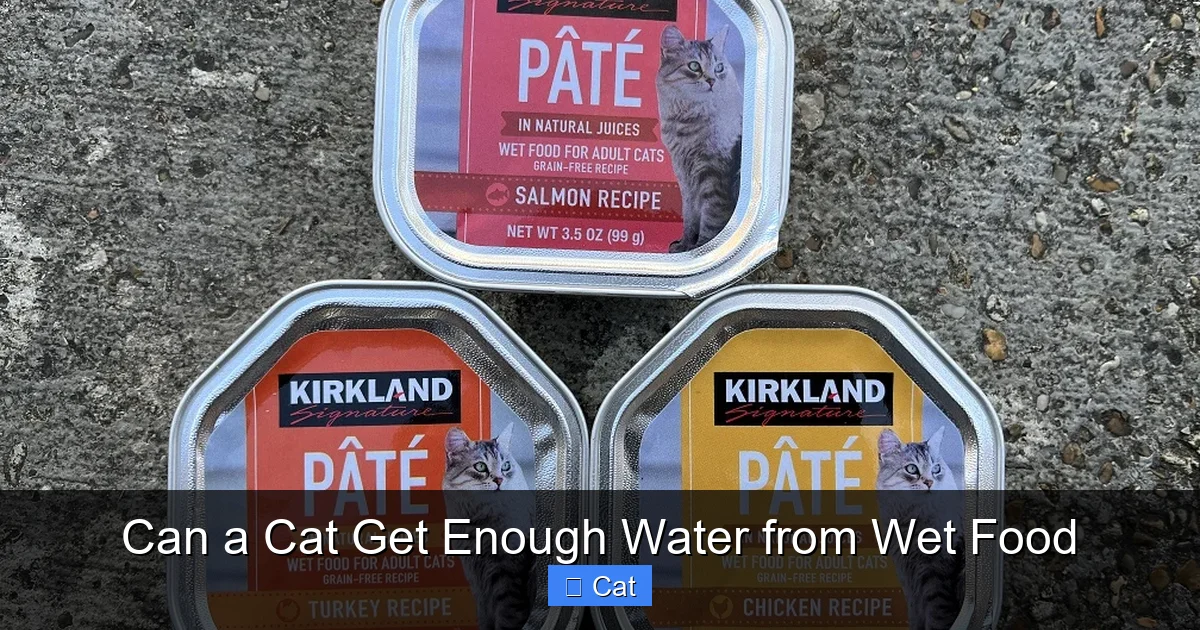
Yes, a cat can get a significant portion of its daily water needs from wet food, but it may not be enough on its own. While wet food contains up to 80% moisture, most cats still benefit from additional fresh water sources to stay fully hydrated and support kidney and urinary tract health.
Key Takeaways
- Wet food is high in moisture: It typically contains 70–80% water, closely mimicking the natural diet of wild cats and helping increase overall fluid intake.
- Cats have low thirst drive: Unlike dogs, cats evolved to get most of their water from prey, so they don’t always drink enough on their own.
- Hydration supports vital organs: Proper water intake helps prevent urinary tract infections, kidney disease, and constipation in cats.
- Wet food alone may not be sufficient: While it contributes greatly, most cats still need access to fresh drinking water to meet full hydration needs.
- Combine wet food with water sources: Offering multiple water bowls, fountains, or flavored water can encourage drinking and boost total hydration.
- Monitor your cat’s habits: Watch for signs of dehydration like dry gums, lethargy, or infrequent urination, and consult a vet if concerned.
- Transition gradually: If switching to wet food, do so slowly to avoid digestive upset and help your cat adjust.
📑 Table of Contents
Can a Cat Get Enough Water from Wet Food?
If you’ve ever watched your cat nibble on kibble and then ignore their water bowl for hours, you’re not alone. Many cat owners wonder: Is my cat really getting enough water? After all, cats aren’t known for their enthusiasm when it comes to drinking. But what if their food could help? That’s where wet food comes in.
Wet cat food, also known as canned or moist food, has become increasingly popular among pet parents—and for good reason. It’s packed with flavor, easier to chew (especially for senior cats or those with dental issues), and, most importantly, it’s loaded with moisture. In fact, wet food typically contains between 70% and 80% water. Compare that to dry kibble, which usually has only about 10% moisture, and the difference is staggering.
But here’s the big question: Can a cat get enough water from wet food alone? The short answer is: it depends. While wet food can significantly boost your cat’s hydration, most experts agree that it shouldn’t be the *only* source of water. Cats still need access to fresh drinking water to stay fully hydrated, especially as they age or if they have certain health conditions.
In this article, we’ll dive deep into how wet food contributes to your cat’s water intake, why hydration matters so much for feline health, and how you can ensure your furry friend is getting enough fluids—whether from food, water bowls, or creative hydration tricks.
Why Hydration Matters for Cats

Visual guide about Can a Cat Get Enough Water from Wet Food
Image source: s7d2.scene7.com
Let’s start with the basics: why does water matter so much for cats? Unlike humans, who are constantly reminded to “drink more water,” cats have a naturally low thirst drive. This isn’t laziness—it’s evolution. Wildcats in the desert historically got most of their moisture from the prey they ate, like mice and birds, which are about 70% water. As a result, domestic cats still have a reduced urge to drink water compared to other animals.
But just because they don’t *feel* thirsty doesn’t mean they don’t *need* water. Water is essential for nearly every bodily function. It helps regulate body temperature, aids digestion, transports nutrients, and flushes out toxins through the kidneys and urinary tract. Without enough water, cats can quickly become dehydrated, which can lead to serious health problems.
One of the most common issues linked to low water intake is feline lower urinary tract disease (FLUTD). This umbrella term includes conditions like urinary tract infections, bladder stones, and urethral blockages—especially dangerous in male cats. Chronic dehydration can also contribute to kidney disease, which is one of the leading causes of death in older cats.
Even mild dehydration can cause lethargy, dry skin, constipation, and reduced appetite. So while your cat might seem fine on the surface, they could be quietly struggling with inadequate hydration.
That’s why it’s so important to think beyond the water bowl. If your cat isn’t drinking much, their food can play a crucial role in making up the difference. And that’s where wet food shines.
How Wet Food Boosts Your Cat’s Water Intake
Wet food isn’t just tasty—it’s a hydration powerhouse. With up to 80% moisture content, a single can of wet food can provide a significant portion of your cat’s daily water needs. To put it in perspective, a 5.5-ounce (156g) can of wet food contains roughly 4.4 ounces (130ml) of water. That’s more than many cats drink in a full day from their water bowl.
Let’s break it down with a real-world example. Suppose your cat needs about 6–8 ounces (180–240ml) of water per day, depending on their size, activity level, and environment. If they eat two cans of wet food daily, they could be getting 8–9 ounces of water just from their meals. That’s already meeting or exceeding their total requirement—on paper.
But here’s the catch: not all of that moisture is absorbed efficiently. Some water is lost during digestion, and cats may not eat every bite. Plus, if your cat only eats one small meal a day, their water intake from food drops significantly.
Still, the benefits are clear. Studies have shown that cats fed a wet food diet tend to have better hydration markers, such as lower urine concentration, than those on dry food. This means their kidneys are working more efficiently, and they’re less likely to develop urinary crystals or stones.
Another advantage? Wet food encourages slower eating. Unlike kibble, which cats often gulp down, wet food requires more chewing and licking. This slower pace can stimulate saliva production and improve digestion, while also giving your cat more time to absorb moisture.
The Science Behind Moisture and Feline Health
Research supports the idea that moisture-rich diets improve feline health. A well-known study published in the *Journal of Veterinary Internal Medicine* found that cats fed wet food had significantly lower urine specific gravity—a measure of urine concentration—compared to those on dry diets. Lower urine concentration means the kidneys aren’t working as hard to conserve water, reducing the risk of crystal formation and urinary blockages.
Additionally, veterinarians often recommend wet food for cats with a history of urinary issues. The extra moisture helps dilute urine, making it less likely for minerals like struvite or calcium oxalate to form into painful stones.
Even for healthy cats, the long-term benefits are worth considering. Chronic low-level dehydration can strain the kidneys over time, potentially leading to early-onset kidney disease. By increasing water intake through wet food, you’re giving your cat’s organs a much-needed break.
Practical Tips for Maximizing Hydration from Wet Food
So how can you make the most of wet food’s hydrating power? Here are a few practical tips:
– Feed multiple small meals: Instead of one large serving, offer two to three smaller meals throughout the day. This spreads out water intake and mimics a cat’s natural grazing behavior.
– Choose high-moisture recipes: Not all wet foods are created equal. Look for brands that list water or broth as one of the first ingredients, and avoid those with excessive fillers or gravy thickeners.
– Warm the food slightly: Cats are more likely to eat food that’s close to body temperature. Gently warming wet food in the microwave (test it first!) can enhance aroma and encourage eating—and thus, water intake.
– Add water or broth: If your cat is a picky eater, try mixing in a tablespoon of warm water or low-sodium chicken broth to boost moisture content even further.
Is Wet Food Enough on Its Own?
Now for the million-dollar question: Can a cat get *enough* water from wet food alone? The answer isn’t a simple yes or no—it depends on several factors.
In ideal conditions, a cat eating a balanced wet food diet *could* meet most of their hydration needs. For example, an average 10-pound cat eating two 5.5-ounce cans of wet food per day might get close to their daily water requirement. But “close” isn’t always “enough.”
Several variables can affect how much water your cat actually absorbs:
– Activity level: Active cats or those in warm climates may need more water.
– Health status: Cats with kidney disease, diabetes, or hyperthyroidism often require increased fluid intake.
– Age: Senior cats may have reduced kidney function and need more hydration support.
– Environment: Dry indoor air (especially in winter) can increase water loss through respiration and skin.
Moreover, relying solely on wet food can be risky. What if your cat refuses to eat one day? Or what if you run out of cans and have to switch to dry food temporarily? Without a backup water source, your cat could quickly become dehydrated.
That’s why most veterinarians recommend a dual approach: feed wet food to boost moisture intake, but always provide fresh, clean drinking water as well.
Signs Your Cat May Not Be Getting Enough Water
Even with wet food, it’s important to monitor your cat for signs of dehydration. These include:
– Dry or sticky gums: Gently press your finger against your cat’s gums. If it takes more than 2 seconds for the color to return, they may be dehydrated.
– Sunken eyes: This is a more advanced sign and should prompt a vet visit.
– Lethargy or weakness: A dehydrated cat may seem less active or reluctant to move.
– Reduced skin elasticity: Gently pinch the skin on the back of your cat’s neck. If it doesn’t snap back quickly, dehydration could be an issue.
– Infrequent urination or dark urine: Healthy cats should urinate 2–4 times per day. Dark yellow or strong-smelling urine can indicate concentrated waste due to low water intake.
If you notice any of these signs, contact your veterinarian right away. Dehydration can escalate quickly in cats and may require medical intervention.
Combining Wet Food with Other Hydration Strategies
While wet food is a fantastic tool for boosting hydration, it works best as part of a broader strategy. Think of it as one piece of the puzzle—important, but not the whole picture.
Here are some additional ways to encourage your cat to drink more:
– Use a cat water fountain: Many cats prefer running water. A fountain can make drinking more appealing and fun.
– Place multiple water bowls around the house: Cats are territorial and may avoid drinking near their food or litter box. Offer water in different rooms, especially quiet, low-traffic areas.
– Try different bowl materials: Some cats dislike the taste of metal or plastic. Try ceramic, glass, or stainless steel bowls to see what your cat prefers.
– Add flavor to water: A splash of tuna juice (from water-packed tuna, not oil) or bone broth can entice reluctant drinkers. Just don’t overdo it—too much sodium isn’t healthy.
– Keep water fresh: Change the water at least once a day, and wash bowls regularly to prevent bacteria buildup.
Hydration for Special Needs Cats
Some cats need extra help staying hydrated. For example:
– Senior cats: As cats age, their sense of thirst may decline. Wet food and water fountains can be especially helpful.
– Cats with kidney disease: Vets often prescribe subcutaneous fluids, but wet food can support daily hydration between treatments.
– Indoor cats: Without access to puddles or outdoor moisture sources, indoor cats rely entirely on food and bowls for water.
In these cases, wet food isn’t just beneficial—it’s essential.
Transitioning Your Cat to Wet Food
If you’re thinking of switching your cat from dry to wet food, it’s important to do it gradually. Sudden changes can upset your cat’s stomach, leading to vomiting or diarrhea.
Start by mixing a small amount of wet food into their regular kibble—maybe 10% wet to 90% dry. Over the course of 7–10 days, slowly increase the proportion of wet food while decreasing the dry. Most cats adjust well, but some may be picky. If your cat refuses wet food, try different textures (pâté, chunks in gravy, shredded) or flavors (chicken, fish, turkey).
Also, be mindful of portion control. Wet food is less calorie-dense than kibble, so you may need to feed slightly more to maintain your cat’s weight. Check the feeding guidelines on the can and adjust based on your cat’s activity level and body condition.
Cost and Convenience Considerations
One common concern about wet food is cost. Yes, it’s generally more expensive than dry kibble—both in upfront price and storage space. Cans need refrigeration after opening, and they don’t last as long on the shelf.
But consider the long-term health benefits. Preventing urinary or kidney issues can save thousands in vet bills down the line. Plus, many pet parents find that the improved energy, coat quality, and litter box habits are worth the extra expense.
If budget is a concern, try a mixed feeding approach: use wet food for one meal and high-quality dry food for the other. This balances cost, convenience, and hydration.
Conclusion: Wet Food Is a Powerful Tool—But Not a Magic Solution
So, can a cat get enough water from wet food? The answer is: yes, in many cases, wet food can provide a substantial portion of a cat’s daily water needs—especially when combined with other hydration strategies. Its high moisture content supports kidney function, reduces the risk of urinary issues, and aligns with a cat’s natural dietary instincts.
However, wet food shouldn’t be viewed as a complete replacement for drinking water. Cats still need access to fresh, clean water every day. Think of wet food as a helpful ally in the fight for better feline hydration, not a standalone solution.
By feeding wet food, offering multiple water sources, and monitoring your cat’s habits, you can help ensure they stay healthy, happy, and well-hydrated for years to come. After all, a well-hydrated cat isn’t just a healthier cat—it’s a more playful, energetic, and content companion.
Frequently Asked Questions
Can a cat survive on wet food alone?
Yes, a cat can survive on wet food alone, as it provides essential nutrients and a significant amount of moisture. However, it’s still important to offer fresh water daily to support full hydration and overall health.
How much water does wet cat food contain?
Wet cat food typically contains 70% to 80% water, depending on the brand and recipe. This is significantly higher than dry kibble, which usually has only about 10% moisture.
Do cats need to drink water if they eat wet food?
Yes, even cats eating wet food should have access to fresh drinking water. While wet food boosts hydration, it may not meet 100% of a cat’s needs, especially in hot weather or for cats with health conditions.
Can wet food prevent urinary tract problems in cats?
Wet food can help reduce the risk of urinary tract issues by promoting dilute urine and encouraging fluid intake. However, it’s not a guaranteed prevention—genetics, stress, and other factors also play a role.
How can I tell if my cat is dehydrated?
Signs of dehydration include dry gums, lethargy, sunken eyes, reduced skin elasticity, and infrequent urination. If you suspect dehydration, contact your veterinarian immediately.
Is it safe to mix wet and dry food?
Yes, mixing wet and dry food is safe and can offer the benefits of both—hydration from wet food and dental support from dry kibble. Just ensure the total diet is balanced and meets your cat’s nutritional needs.