
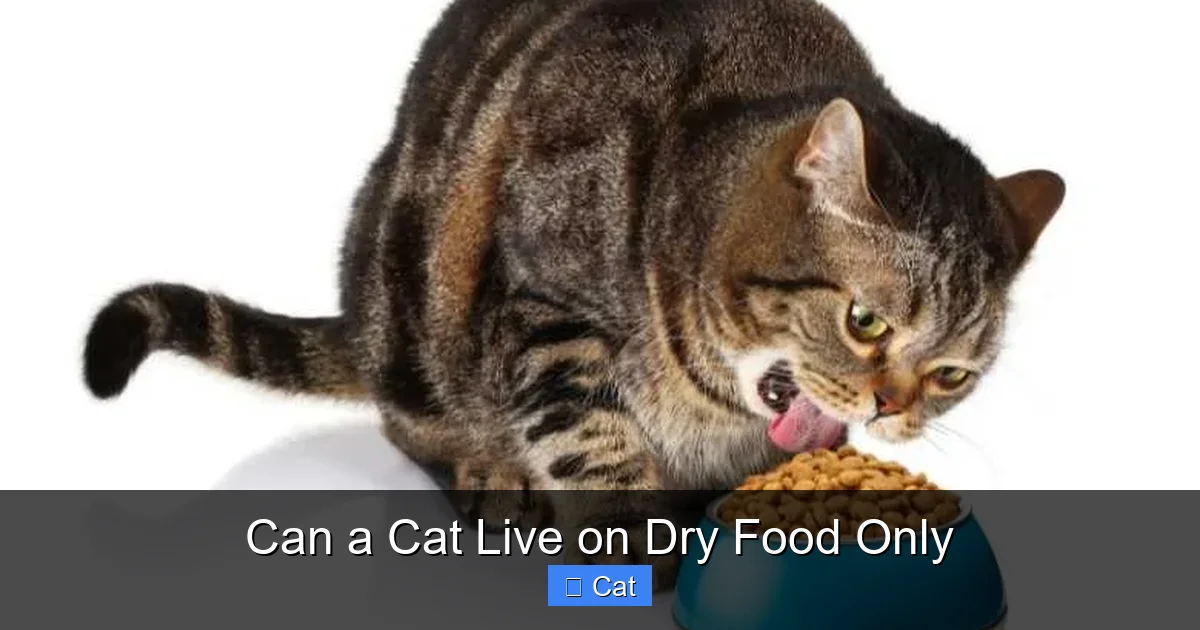
Yes, a cat can live on dry food only, but it’s not ideal for every feline. While convenient and cost-effective, dry food lacks the moisture and protein levels that mimic a cat’s natural diet. With proper hydration and high-quality ingredients, some cats thrive—but others may face health risks like urinary issues or obesity.
Key Takeaways
- Dry food is convenient but low in moisture: Cats naturally get water from prey, so dry food alone may lead to dehydration if water intake isn’t monitored.
- High-quality dry food matters: Look for brands with real meat as the first ingredient and minimal fillers like corn or soy.
- Hydration is critical: Always provide fresh water and consider a cat water fountain to encourage drinking.
- Some cats thrive on kibble-only diets: Especially indoor, less active cats, but regular vet checkups are essential.
- Health risks include urinary tract issues and obesity: Dry food diets may contribute to FLUTD or weight gain if portion control and exercise aren’t managed.
- Wet food offers nutritional advantages: It provides hydration and higher protein, better aligning with a cat’s carnivorous needs.
- Consult your vet before deciding: Every cat is different—your veterinarian can help determine the best diet based on age, health, and lifestyle.
📑 Table of Contents
- Can a Cat Live on Dry Food Only? The Truth Behind Kibble-Only Diets
- Understanding a Cat’s Natural Diet
- The Pros and Cons of Feeding Dry Food Only
- Health Risks of a Dry Food-Only Diet
- How to Make Dry Food Safer for Your Cat
- Alternatives and Supplements to Dry Food
- Real-Life Examples: Cats Who Thrive on Dry Food
- Conclusion: Is Dry Food Right for Your Cat?
Can a Cat Live on Dry Food Only? The Truth Behind Kibble-Only Diets
If you’re a cat parent, you’ve probably wondered: Can a cat live on dry food only? It’s a question that sparks debate among pet owners, veterinarians, and animal nutritionists. On one hand, dry cat food—also known as kibble—is affordable, easy to store, and convenient for busy households. On the other hand, many experts argue that it doesn’t meet a cat’s natural dietary needs. So, what’s the real story?
Cats are obligate carnivores, which means their bodies are designed to thrive on a diet rich in animal protein and moisture. In the wild, they get most of their water from the prey they eat—think mice, birds, and small animals with high water content. Domestic cats, however, often eat processed dry food that contains only about 10% moisture, compared to the 70–80% found in fresh meat. This mismatch raises concerns about long-term health, especially when it comes to hydration and urinary health.
But here’s the good news: many cats do live long, healthy lives on dry food alone—especially when their owners take extra steps to support their well-being. The key is understanding the pros and cons, choosing high-quality kibble, and monitoring your cat’s health closely. In this guide, we’ll break down everything you need to know about feeding your cat a dry food-only diet, from nutritional science to practical tips and red flags to watch for.
Understanding a Cat’s Natural Diet

Visual guide about Can a Cat Live on Dry Food Only
Image source: mybritishshorthair.com
To answer whether a cat can live on dry food only, we first need to understand what cats are biologically designed to eat. Unlike dogs, which are omnivores and can thrive on a mix of plant and animal matter, cats are obligate carnivores. This means their bodies rely almost entirely on animal-based nutrients to function properly.
What Does “Obligate Carnivore” Mean?
An obligate carnivore is an animal that must eat meat to survive. Cats lack certain enzymes needed to efficiently process plant-based nutrients, and they require specific amino acids—like taurine, arginine, and arachidonic acid—that are only found in animal tissue. For example, taurine deficiency can lead to serious health problems, including blindness and heart disease.
In the wild, a cat’s diet consists of small prey animals that provide a balanced mix of protein, fat, moisture, and essential nutrients. A typical mouse, for instance, is about 65–75% water, 20% protein, and 5–10% fat—perfectly aligned with a cat’s nutritional needs. This natural diet keeps them hydrated, supports muscle development, and maintains healthy organ function.
The Problem with Dry Food’s Moisture Content
One of the biggest concerns with dry food is its low moisture content. Most kibble contains only 6–10% water, which is drastically lower than what cats evolved to consume. This can lead to chronic low-level dehydration, especially in cats that don’t drink enough water on their own.
Dehydration may not seem like a big deal at first, but over time, it can contribute to serious health issues. The kidneys and urinary tract are particularly vulnerable. Cats on dry food-only diets are at higher risk for conditions like feline lower urinary tract disease (FLUTD), urinary crystals, and even kidney disease.
Protein and Fat: Are They Balanced?
Another consideration is the protein-to-fat ratio in dry food. While many commercial kibbles meet the minimum protein requirements set by the Association of American Feed Control Officials (AAFCO), not all are created equal. Some brands use plant-based proteins like corn gluten meal or soybean meal to boost protein levels on the label—but these aren’t as bioavailable or beneficial as animal-based proteins.
High-quality dry food should list a named animal protein (like chicken, turkey, or salmon) as the first ingredient. It should also contain healthy fats from animal sources, which provide energy and support skin and coat health. Avoid foods with excessive fillers, artificial preservatives, or by-products.
The Pros and Cons of Feeding Dry Food Only
Now that we understand a cat’s natural dietary needs, let’s weigh the advantages and disadvantages of a dry food-only diet.
Advantages of Dry Food
- Convenience: Dry food doesn’t spoil quickly, so you can leave it out for free-feeding or use automatic feeders.
- Cost-effective: Kibble is generally cheaper per serving than wet food, making it a budget-friendly option.
- Dental benefits: Some studies suggest that the crunchy texture of kibble may help reduce plaque and tartar buildup, though this is debated.
- Long shelf life: Unopened bags can last for months, and opened bags stay fresh for weeks if stored properly.
- Portion control: Measuring out kibble is easy, which helps prevent overfeeding and obesity.
Disadvantages of Dry Food
- Low moisture content: As discussed, this can lead to dehydration and urinary issues.
- Lower protein quality: Some brands rely on plant proteins or by-products, which aren’t ideal for carnivores.
- Higher carbohydrate content: Many dry foods contain grains, starches, or sugars to bind the kibble, which cats don’t need in large amounts.
- Risk of obesity: Free-feeding dry food can lead to overeating, especially in sedentary indoor cats.
- Less palatable for some cats: Picky eaters may turn their noses up at kibble, especially if they’re used to wet food.
When Dry Food Works Well
Despite the drawbacks, many cats do just fine on dry food—especially if it’s high-quality and part of a balanced lifestyle. For example, an active indoor cat with access to fresh water and regular playtime may thrive on kibble. Some owners also use dry food as a supplement to wet food, offering it during the day and wet food at night.
The key is monitoring your cat’s health. If they’re drinking plenty of water, maintaining a healthy weight, and have regular, normal bathroom habits, a dry food-only diet might be working for them.
Health Risks of a Dry Food-Only Diet
While dry food isn’t inherently dangerous, relying on it exclusively can increase the risk of certain health problems—especially if your cat doesn’t drink enough water.
Urinary Tract Issues
One of the most common concerns is feline lower urinary tract disease (FLUTD). This umbrella term includes conditions like urinary crystals, bladder stones, and urethral blockages. Male cats are especially at risk because their narrow urethras can become blocked by crystals or mucus.
Dehydration plays a major role in FLUTD. When a cat doesn’t get enough water, their urine becomes concentrated, creating an environment where crystals can form. Dry food contributes to this because it doesn’t provide the moisture cats need. Studies have shown that cats on wet food diets produce more dilute urine, which helps flush out the urinary tract and reduce the risk of blockages.
Kidney Disease
Chronic kidney disease (CKD) is a leading cause of death in older cats. While it’s often age-related, dehydration can accelerate kidney damage. Cats on dry food-only diets may be more prone to CKD because their kidneys have to work harder to concentrate urine and remove waste.
Early signs of kidney issues include increased thirst, frequent urination, weight loss, and lethargy. Regular vet checkups and blood tests can help catch problems early.
Obesity and Diabetes
Dry food is often higher in carbohydrates and calories than wet food. When combined with a sedentary lifestyle, this can lead to weight gain. Obesity increases the risk of diabetes, joint problems, and heart disease.
Cats are prone to insulin resistance, and a high-carb diet can worsen this condition. Diabetic cats may show symptoms like excessive thirst, frequent urination, and changes in appetite. Managing weight through portion control and exercise is crucial.
Dental Health: Myth vs. Reality
Many people believe that dry food helps clean a cat’s teeth, but the evidence is mixed. While the crunchy texture may remove some plaque, it doesn’t replace brushing or professional cleanings. In fact, some cats swallow kibble whole, getting no dental benefit at all.
Dental disease is common in cats, and poor oral health can lead to pain, infections, and even organ damage. Regular dental care—including brushing, dental treats, and vet cleanings—is essential, regardless of diet.
How to Make Dry Food Safer for Your Cat
If you choose to feed your cat dry food only, there are steps you can take to reduce health risks and support their well-being.
Choose High-Quality Kibble
Not all dry food is created equal. Look for brands that:
– List a named animal protein (e.g., “chicken” or “salmon”) as the first ingredient
– Avoid artificial colors, flavors, and preservatives
– Are free from fillers like corn, wheat, and soy
– Meet AAFCO nutritional standards for your cat’s life stage
Some reputable brands include Royal Canin, Hill’s Science Diet, Wellness CORE, and Orijen. Always read the ingredient list and guaranteed analysis.
Encourage Hydration
Since dry food is low in moisture, it’s vital to encourage your cat to drink more water. Try these tips:
– Provide multiple water bowls around the house
– Use a cat water fountain—many cats prefer running water
– Place water bowls away from food and litter boxes
– Offer fresh water daily
– Add a splash of low-sodium chicken broth (make sure it’s onion- and garlic-free) to entice drinking
Some owners also mix a small amount of water into the kibble to increase moisture intake.
Monitor Portion Sizes and Weight
Overfeeding is a common problem with dry food. Follow the feeding guidelines on the package, but adjust based on your cat’s age, activity level, and body condition. Use a measuring cup to avoid guesswork.
Weigh your cat regularly and feel their ribs—you should be able to feel them with a slight fat cover. If you can’t, they may be overweight.
Provide Mental and Physical Stimulation
Indoor cats are more prone to obesity and boredom. Combat this with:
– Interactive toys and puzzle feeders
– Daily play sessions with wand toys or laser pointers
– Cat trees and climbing shelves
– Rotating toys to keep things interesting
A stimulated cat is more likely to stay active and maintain a healthy weight.
Schedule Regular Vet Checkups
Even if your cat seems healthy, annual (or biannual for seniors) vet visits are essential. Your vet can:
– Monitor kidney and urinary health with blood and urine tests
– Check for early signs of diabetes or dental disease
– Adjust diet recommendations based on your cat’s needs
Early detection is key to managing chronic conditions.
Alternatives and Supplements to Dry Food
While dry food can work, many experts recommend incorporating wet food or other alternatives to provide balance.
The Benefits of Wet Food
Wet food has several advantages:
– High moisture content (70–80%) supports hydration
– Higher protein and lower carbohydrate levels
– More palatable for picky eaters
– Easier to eat for senior cats or those with dental issues
Even adding one can of wet food per day can make a big difference. You can mix it with kibble or serve it as a topper.
Raw and Homemade Diets
Some owners opt for raw or homemade diets to mimic a cat’s natural eating habits. These can be nutritionally complete but require careful planning to avoid deficiencies or bacterial contamination.
If you’re considering a raw diet, consult a veterinary nutritionist to ensure it’s balanced. Homemade diets should include muscle meat, organ meat, and supplements like taurine and calcium.
Freeze-Dried and Dehydrated Options
These foods offer the convenience of dry food with the nutritional benefits of raw. They’re lightweight, shelf-stable, and can be rehydrated with water. Brands like Stella & Chewy’s and Primal offer high-quality options.
Transitioning Between Foods
If you decide to switch from dry to wet food (or vice versa), do it gradually over 7–10 days. Mix increasing amounts of the new food with the old to avoid digestive upset.
Real-Life Examples: Cats Who Thrive on Dry Food
Not every cat needs wet food to be healthy. Here are a few real-life scenarios where dry food works well:
– **Luna, a 5-year-old indoor tabby:** Luna eats high-quality kibble, drinks from a fountain, and plays with feather toys daily. Her vet says she’s in excellent health with no urinary issues.
– **Max, a 12-year-old senior cat:** Max has mild kidney disease but manages well on a prescription dry food designed for kidney support. His owner adds water to his meals and monitors his water intake closely.
– **Bella, a multi-cat household:** Bella and her three siblings share a dry food station with timed feeders. Their owner supplements with wet food twice a week and ensures all cats have access to fresh water.
These examples show that with the right approach, dry food can be part of a healthy diet.
Conclusion: Is Dry Food Right for Your Cat?
So, can a cat live on dry food only? The answer is yes—but with caveats. Dry food is convenient, affordable, and can meet a cat’s nutritional needs if it’s high-quality and part of a thoughtful feeding plan. However, it’s not the ideal diet for every cat, especially those prone to urinary issues, kidney disease, or obesity.
The most important factors are hydration, protein quality, and overall health monitoring. If you choose to feed kibble exclusively, make sure your cat drinks plenty of water, eats a balanced diet, and sees the vet regularly. And don’t be afraid to mix in wet food or other alternatives to give your cat the best of both worlds.
Ultimately, every cat is unique. What works for one may not work for another. Listen to your cat’s body, pay attention to their habits, and consult your veterinarian to make the best decision for their long-term health. After all, a happy cat is a healthy cat—no matter what’s in their bowl.
Frequently Asked Questions
Can a cat live on dry food only?
Yes, many cats can live on dry food only, especially if it’s high-quality and they stay well-hydrated. However, it’s not the most natural diet for obligate carnivores and may increase risks for urinary and kidney issues over time.
Is dry food bad for cats?
Dry food isn’t inherently bad, but it has drawbacks like low moisture and potential fillers. When chosen carefully and supplemented with water, it can be part of a healthy diet.
How can I get my cat to drink more water on a dry food diet?
Use a cat water fountain, place multiple water bowls around the house, and try adding water or low-sodium broth to their kibble to encourage hydration.
Should I mix wet and dry food?
Mixing wet and dry food can offer the best of both worlds—convenience and hydration. Even one can of wet food per day can improve your cat’s water intake and nutrition.
Can dry food cause urinary problems in cats?
Yes, dry food can contribute to urinary issues like FLUTD because of its low moisture content. Cats on kibble-only diets are at higher risk if they don’t drink enough water.
What’s the best dry food for cats?
Look for brands with real meat as the first ingredient, minimal fillers, and AAFCO certification. Popular options include Wellness CORE, Orijen, and Hill’s Science Diet.