

Yes, a puppy can eat dog food—but not just any kind. Puppies have unique nutritional needs that differ from adult dogs, so feeding them the right formula is crucial for healthy development. Always choose high-quality puppy-specific dog food to support their rapid growth and energy demands.
Key Takeaways
- Puppies need puppy-specific food: Their bodies require more protein, fat, calories, and key nutrients like DHA for brain and eye development.
- Adult dog food lacks essential nutrients: Feeding adult food to puppies can lead to deficiencies and slow growth.
- Life stage labels matter: Look for “puppy,” “growth,” or “all life stages” on the label to ensure it meets AAFCO standards for puppies.
- Small breeds vs. large breeds: Large breed puppies need controlled calcium and phosphorus to prevent joint issues, while small breeds need calorie-dense food.
- Transition gradually: When switching foods, mix the old and new over 7–10 days to avoid digestive upset.
- Consult your vet: Every puppy is different—your veterinarian can recommend the best diet based on breed, size, and health.
- Watch for signs of poor nutrition: Dull coat, lethargy, or digestive issues may indicate the food isn’t meeting your puppy’s needs.
📑 Table of Contents
- Can a Puppy Eat Dog Food? The Truth Behind Feeding Your Growing Pup
- Why Puppies Need Specialized Nutrition
- Understanding Dog Food Labels: What to Look For
- Special Considerations for Different Breeds
- How to Transition Your Puppy to New Food
- Common Mistakes to Avoid When Feeding Puppies
- When to Consult Your Veterinarian
- Conclusion: Feeding Your Puppy Right Sets the Foundation for Life
Can a Puppy Eat Dog Food? The Truth Behind Feeding Your Growing Pup
Bringing a puppy home is one of the most joyful experiences a pet parent can have. From their tiny paws to their wagging tails, every moment feels magical. But with that joy comes responsibility—especially when it comes to feeding. One of the most common questions new dog owners ask is: Can a puppy eat dog food? The short answer is yes, but with a big caveat: not all dog food is created equal, and puppies have very specific dietary needs that adult dog food often doesn’t meet.
Puppies are not just small versions of adult dogs. They’re growing at an astonishing rate—some breeds can double or even triple their weight in just a few weeks. This rapid development demands a diet rich in energy, protein, healthy fats, and essential vitamins and minerals. While adult dog food is formulated for maintenance, puppy food is designed for growth. Feeding a puppy the wrong kind of food—even if it’s labeled “dog food”—can lead to nutritional imbalances, developmental problems, and long-term health issues.
In this guide, we’ll dive deep into what makes puppy food different, why adult dog food isn’t ideal, and how to choose the best nutrition for your furry friend. Whether you’re raising a tiny Chihuahua or a giant Great Dane, understanding your puppy’s dietary needs is the first step toward a long, healthy, and happy life together.
Why Puppies Need Specialized Nutrition
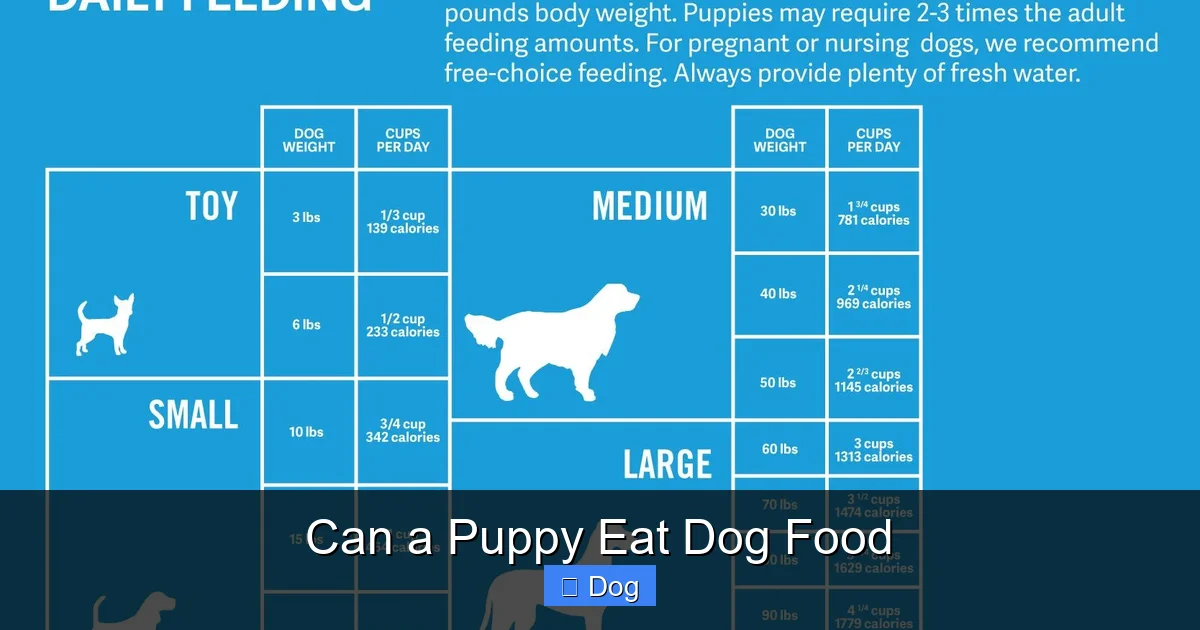
Visual guide about Can a Puppy Eat Dog Food
Image source: i.pinimg.com
The Science Behind Puppy Growth
Puppies grow faster in their first year than at any other point in their lives. For example, a Labrador Retriever puppy may weigh just 10 pounds at 8 weeks but can reach over 70 pounds by their first birthday. This explosive growth requires a diet that’s significantly different from what an adult dog needs.
During the first 6 to 12 months, puppies need:
– Higher protein levels (typically 22–32%) to support muscle and tissue development.
– Increased fat content (usually 8–20%) for energy and brain development.
– More calories per pound of body weight—sometimes double that of an adult dog.
– Essential fatty acids like DHA (docosahexaenoic acid), which supports vision and cognitive function.
– Balanced calcium and phosphorus for strong bones and teeth.
These nutrients are critical during key developmental windows. For instance, DHA plays a vital role in brain and retinal development during the first 16 weeks of life. Without adequate DHA, puppies may experience learning difficulties or vision problems later on.
How Adult Dog Food Falls Short
Adult dog food is formulated for dogs who have stopped growing. It’s designed to maintain weight, support organ function, and promote overall health—but it doesn’t provide the extra boost a growing puppy needs.
For example, most adult dog foods contain:
– Lower protein levels (around 18–25%)
– Reduced fat and calorie content
– Less DHA and other developmental nutrients
– Different calcium-to-phosphorus ratios
Feeding adult food to a puppy might seem harmless, especially if the puppy appears to be eating well. But over time, the lack of essential nutrients can lead to:
– Slower growth rates
– Weak bones and joints
– Poor coat quality
– Lower energy levels
– Increased risk of developmental orthopedic diseases (especially in large breeds)
Imagine trying to build a house with half the bricks and no foundation. That’s what happens when a puppy doesn’t get the right nutrition—their body simply can’t develop properly.
Real-Life Example: The Case of Max the Golden Retriever
Consider Max, a 10-week-old Golden Retriever puppy. His owner, Sarah, initially fed him a popular adult dry dog food because it was on sale and “seemed fine.” Within a few weeks, Max became lethargic, had a dull coat, and wasn’t gaining weight as expected. After consulting her vet, Sarah switched Max to a high-quality puppy formula. Within two weeks, his energy returned, his coat became shiny, and he began growing at a healthy rate.
This story isn’t uncommon. Many puppies show subtle signs of nutritional deficiency long before serious health problems develop. The good news? These issues are entirely preventable with the right food.
Understanding Dog Food Labels: What to Look For
Decoding the Packaging
Not all dog food labels are created equal, and marketing can be misleading. Just because a bag says “premium” or “natural” doesn’t mean it’s right for your puppy. To make an informed choice, you need to know how to read the label.
The most important thing to look for is the AAFCO statement. The Association of American Feed Control Officials (AAFCO) sets nutritional standards for pet food. A label that says “formulated to meet the nutritional levels established by the AAFCO Dog Food Nutrient Profiles” is a good start—but it must also specify the life stage.
For puppies, look for one of these phrases:
– “For growth”
– “For puppies”
– “All life stages” (this means it meets the needs of puppies, adults, and seniors)
Avoid foods labeled only for “maintenance” or “adult” dogs—these are not suitable for growing puppies.
Ingredient Quality Matters
The ingredient list is listed by weight, so the first few ingredients are the most important. For puppies, look for:
– A high-quality animal protein as the first ingredient (e.g., chicken, lamb, salmon)
– Whole meat or meat meal (not “by-products” or “meat digest”)
– Healthy fats like chicken fat or fish oil (rich in omega-3s)
– Whole grains or vegetables (e.g., brown rice, sweet potatoes, peas)
– Added DHA (often from fish oil or algae)
Avoid foods with:
– Fillers like corn, soy, or wheat gluten
– Artificial colors, flavors, or preservatives (BHA, BHT, ethoxyquin)
– Generic terms like “meat meal” or “animal fat”
Wet vs. Dry: Which Is Better?
Both wet and dry puppy food can be nutritious, but they have different benefits:
– Dry food is convenient, cost-effective, and helps reduce plaque buildup.
– Wet food has higher moisture content, which can help with hydration, and is often more palatable for picky eaters.
Many owners choose to feed a combination—dry kibble during the day and a small portion of wet food as a topper or treat. Just make sure the total daily intake meets your puppy’s caloric needs.
Special Considerations for Different Breeds
Small Breed Puppies: High Energy, Small Stomachs
Small breed puppies (like Chihuahuas, Pomeranians, and Yorkshire Terriers) have fast metabolisms and high energy needs. They also have tiny stomachs, so they need calorie-dense food that provides maximum nutrition in small portions.
Look for puppy foods labeled “small breed” or “toy breed.” These formulas typically have:
– Smaller kibble size for easy chewing
– Higher fat and protein content
– Added nutrients like L-carnitine to support metabolism
Feeding frequency is also important. Small breed puppies should eat 3–4 small meals per day to prevent hypoglycemia (low blood sugar), which can be life-threatening.
Large and Giant Breed Puppies: Slow and Steady Wins the Race
Large breed puppies (like German Shepherds, Labrador Retrievers, and Great Danes) grow quickly, but too-fast growth can lead to joint problems like hip dysplasia or osteochondritis dissecans (OCD).
For these puppies, it’s crucial to choose a large breed puppy formula. These foods are specially balanced to:
– Limit calcium and phosphorus levels
– Control calorie density to prevent rapid weight gain
– Include glucosamine and chondroitin for joint health
Feeding a large breed puppy a high-calorie, high-calcium food can cause bones to grow too fast, leading to misalignment and pain. Always follow the feeding guidelines on the package and monitor your puppy’s weight and body condition.
Mixed Breeds and Unknown Lineage
If you’re unsure of your puppy’s breed or size, start with a general puppy formula and adjust based on growth. Your vet can help estimate adult size and recommend the best diet. Regular weigh-ins and body condition scoring (feeling the ribs—should be palpable but not visible) will help you track progress.
How to Transition Your Puppy to New Food
Why a Gradual Switch Is Essential
Puppies have sensitive digestive systems. Suddenly switching from one food to another can cause diarrhea, vomiting, or loss of appetite. To avoid upset, always transition gradually over 7–10 days.
Step-by-Step Transition Plan
Here’s a safe way to switch your puppy’s food:
– Days 1–2: 75% old food + 25% new food
– Days 3–4: 50% old food + 50% new food
– Days 5–6: 25% old food + 75% new food
– Day 7 onward: 100% new food
Monitor your puppy’s stool, energy, and appetite during the transition. If you notice persistent diarrhea or refusal to eat, slow down the process or consult your vet.
Tips for Picky Eaters
Some puppies are hesitant to try new food. To encourage eating:
– Warm the food slightly (not hot) to enhance aroma
– Add a small amount of warm water or low-sodium broth
– Mix in a spoonful of wet food or plain cooked chicken
– Feed at the same time each day to establish routine
Never reward picky behavior with human food or treats. This can lead to begging and nutritional imbalances.
Common Mistakes to Avoid When Feeding Puppies
Feeding Adult Dog Food by Accident
It’s easy to grab the wrong bag, especially if you have multiple dogs. Always double-check the label before feeding. If you’ve accidentally fed adult food, don’t panic—just switch to puppy food as soon as possible and monitor for any changes.
Overfeeding or Free-Feeding
Puppies need structure. Free-feeding (leaving food out all day) can lead to overeating, obesity, and poor digestion. Instead, feed measured meals at set times. Use a kitchen scale or measuring cup to ensure accuracy.
Ignoring Feeding Guidelines
Feeding charts on dog food packages are a great starting point, but every puppy is different. Adjust portions based on your puppy’s age, weight, activity level, and body condition. If your puppy is gaining too much or too little weight, consult your vet.
Giving Human Food or Table Scraps
Many human foods are toxic to dogs (like chocolate, grapes, onions, and xylitol). Even “safe” foods like bread or cheese can add unnecessary calories and disrupt nutrition. Stick to puppy-safe treats and avoid sharing your meals.
Not Providing Fresh Water
Puppies dehydrate quickly, especially during play or hot weather. Always provide clean, fresh water. Change it daily and wash the bowl regularly to prevent bacteria buildup.
When to Consult Your Veterinarian
Your vet is your best resource for puppy nutrition. Schedule regular check-ups to monitor growth, discuss diet, and address any concerns. Bring a sample of your puppy’s food to appointments so your vet can review the ingredients and nutritional profile.
Signs it’s time to call the vet:
– Sudden weight loss or lack of appetite
– Persistent vomiting or diarrhea
– Lethargy or weakness
– Swollen joints or limping
– Poor coat condition or hair loss
Your vet may recommend a prescription diet if your puppy has specific health issues like food allergies, digestive disorders, or growth abnormalities.
Conclusion: Feeding Your Puppy Right Sets the Foundation for Life
So, can a puppy eat dog food? Absolutely—but only the right kind. Puppy-specific dog food is specially formulated to meet the unique needs of growing dogs, providing the protein, fat, calories, and nutrients essential for healthy development. Adult dog food simply doesn’t cut it.
By choosing a high-quality puppy formula, reading labels carefully, and feeding according to your puppy’s breed and size, you’re giving them the best possible start in life. Remember, nutrition isn’t just about filling their belly—it’s about building strong bones, sharp minds, and vibrant health.
Take the time to learn what your puppy needs, transition foods gradually, and stay in touch with your veterinarian. With the right care and nutrition, your puppy will grow into a happy, healthy, and well-balanced dog. And that’s something worth wagging about.
Frequently Asked Questions
Can I feed my puppy adult dog food in a pinch?
It’s not recommended, but a few meals of adult dog food won’t harm your puppy. However, prolonged feeding can lead to nutritional deficiencies. Switch to a puppy-specific formula as soon as possible and consult your vet if you’re concerned.
How often should I feed my puppy?
Puppies under 6 months should eat 3–4 small meals per day. After 6 months, you can reduce to 2 meals daily. Small breeds may need more frequent feeding to maintain blood sugar levels.
Is grain-free puppy food better?
Not necessarily. Grains like rice and oats can be healthy sources of energy and fiber. Unless your puppy has a diagnosed grain allergy, there’s no proven benefit to grain-free diets. Focus on overall ingredient quality instead.
Can puppies eat raw food?
Raw diets are controversial and not recommended for most puppies due to risks of bacterial contamination (like Salmonella) and nutritional imbalances. If you’re considering raw feeding, consult your vet and a veterinary nutritionist first.
How do I know if my puppy is getting enough nutrients?
Signs of good nutrition include steady weight gain, a shiny coat, high energy, firm stools, and alert behavior. If your puppy seems lethargic, has a dull coat, or digestive issues, the food may not be meeting their needs.
When can I switch my puppy to adult dog food?
Most puppies can transition to adult food between 12 and 18 months of age. Small breeds may switch closer to 12 months, while large breeds may need puppy food until 18 months. Always consult your vet before making the switch.