
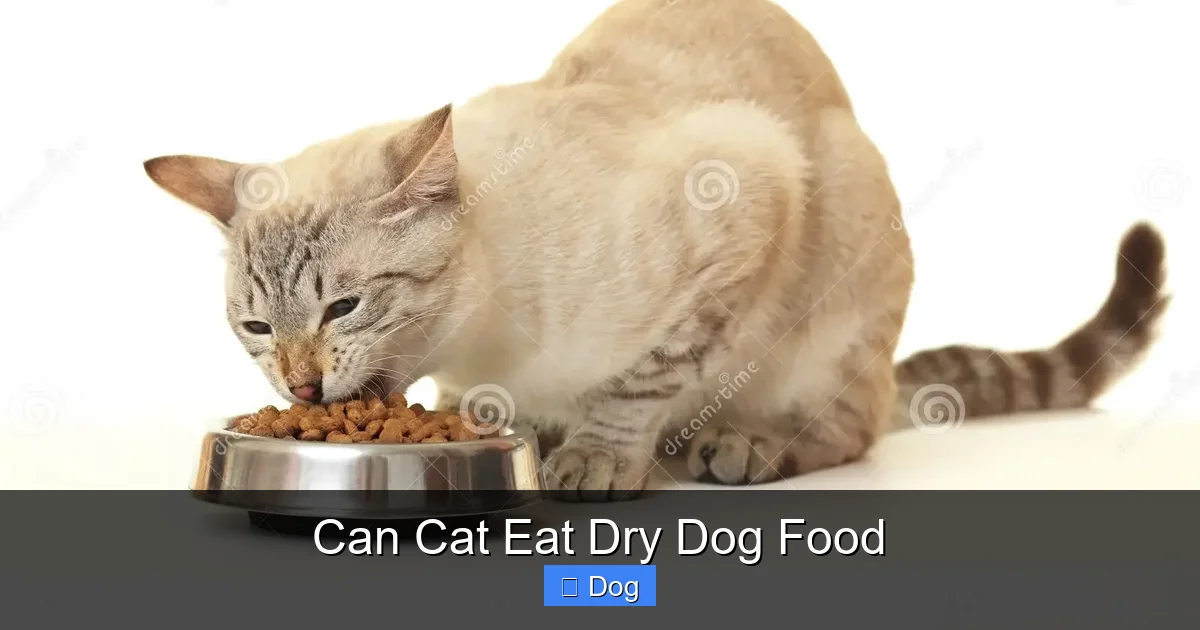
While cats might nibble on dry dog food out of curiosity, it’s not safe or nutritionally adequate for them. Dog food lacks essential nutrients like taurine that cats need to stay healthy, and long-term consumption can lead to serious health issues.
Key Takeaways
- Dog food lacks taurine: Cats require taurine for heart and eye health, which dog food doesn’t provide in sufficient amounts.
- Different nutritional needs: Cats are obligate carnivores and need high protein, arachidonic acid, and vitamin A—nutrients not prioritized in dog food.
- Short-term nibbling is low risk: Occasional tasting won’t harm your cat, but regular feeding can cause deficiencies.
- Digestive issues may occur: Dog food is formulated for dogs’ digestive systems, which differ from cats’, leading to upset stomachs.
- Hydration concerns: Dry dog food has low moisture content, increasing the risk of urinary tract problems in cats.
- Choose species-specific food: Always feed your cat high-quality cat food designed to meet their unique dietary requirements.
- Consult your vet if concerned: If your cat eats dog food regularly, talk to your veterinarian about potential health impacts.
📑 Table of Contents
- Can Cat Eat Dry Dog Food? The Truth Every Pet Owner Should Know
- Why Cats and Dogs Have Different Dietary Needs
- The Dangers of Feeding Dog Food to Cats
- What to Do If Your Cat Eats Dog Food
- Signs Your Cat May Be Nutritionally Deficient
- How to Choose the Right Food for Your Cat
- Myths and Misconceptions About Cat and Dog Food
- Conclusion: Prioritize Your Cat’s Health
Can Cat Eat Dry Dog Food? The Truth Every Pet Owner Should Know
You’ve probably seen it happen—your curious cat sneaks over to the dog’s food bowl and takes a few bites of dry kibble. Maybe your dog food is left out all day, or your cat just seems intrigued by the crunchy texture. It’s a common scene in multi-pet households, and while it might seem harmless, the question lingers: Can cat eat dry dog food?
The short answer is: technically, yes—your cat can physically eat dry dog food without immediate danger. But that doesn’t mean it’s safe or healthy. Cats and dogs have very different nutritional needs, and dog food simply isn’t formulated to meet the unique requirements of feline biology. While a few accidental nibbles won’t send your cat to the emergency room, making dog food a regular part of their diet can lead to serious health problems over time.
Why Cats and Dogs Have Different Dietary Needs
To understand why dog food isn’t suitable for cats, it helps to know how their bodies work. Cats are what scientists call obligate carnivores. That means their bodies are designed to thrive on a diet made almost entirely of animal-based proteins and fats. Dogs, on the other hand, are omnivores—they can digest and benefit from both plant and animal sources.

Visual guide about Can Cat Eat Dry Dog Food
Image source: i.pinimg.com
This fundamental difference shapes everything about their nutrition. Cats need certain nutrients that dogs can either produce on their own or don’t require in the same amounts. For example, cats can’t synthesize enough taurine—an amino acid critical for heart function, vision, and reproduction—so they must get it from their food. Dogs, however, can make their own taurine, so dog food doesn’t need to include as much. Feeding a cat a diet low in taurine can lead to blindness, heart disease, and even death.
The Role of Protein in Feline Health
Protein isn’t just important for cats—it’s essential. Unlike dogs, cats have a higher metabolic demand for protein because their bodies use it not only for muscle maintenance but also as a primary energy source. Dog food typically contains less protein than cat food, and the protein sources may not be as bioavailable or complete for feline needs.
For instance, many dog foods use plant-based proteins like corn gluten meal or soy to meet protein requirements. While these can work for dogs, cats struggle to digest and utilize plant proteins efficiently. They need animal-based proteins like chicken, turkey, fish, or beef to get the full spectrum of amino acids they require.
Vitamins and Minerals Cats Can’t Live Without
Beyond protein and taurine, cats need specific vitamins and minerals that dog food often lacks. One of the most important is vitamin A. Dogs can convert beta-carotene (found in plants like carrots) into vitamin A, but cats cannot. They must consume pre-formed vitamin A, which is only found in animal tissues. Without it, cats can develop night blindness, skin problems, and weakened immune systems.
Another key nutrient is arachidonic acid, a fatty acid that supports skin health, kidney function, and reproductive health. Dogs can produce it from plant-based linoleic acid, but cats cannot. They need to get arachidonic acid directly from animal fats—something dog food doesn’t prioritize.
Even niacin (vitamin B3) is a concern. Cats have a higher requirement for niacin than dogs, and they can’t convert tryptophan (an amino acid) into niacin as efficiently. A deficiency can lead to weight loss, diarrhea, and even neurological issues.
The Dangers of Feeding Dog Food to Cats
So what happens if your cat regularly eats dry dog food? The risks aren’t immediate, but they can be serious over time. Because dog food is nutritionally incomplete for cats, long-term consumption can lead to a range of health problems.
Malnutrition and Deficiency Diseases
The most obvious danger is malnutrition. Without adequate taurine, cats can develop dilated cardiomyopathy (a weakened heart muscle) or central retinal degeneration (leading to blindness). These conditions may not show symptoms right away, but by the time they do, the damage can be irreversible.
For example, a cat that eats only dog food for several months might start losing weight, become lethargic, or have trouble seeing in low light. These signs could be mistaken for aging or stress, but they’re actually red flags for nutritional deficiency.
Digestive Upset and Poor Nutrient Absorption
Even if a cat eats dog food without showing major symptoms, their digestive system may not handle it well. Dog food is formulated for a dog’s gut, which is longer and better suited to breaking down plant matter. Cats have a shorter, more acidic digestive tract optimized for digesting meat.
As a result, eating dog food can cause stomach upset, vomiting, diarrhea, or constipation. Over time, poor digestion can lead to malabsorption—where the body can’t properly extract nutrients from food—even if the food seems adequate on paper.
Increased Risk of Urinary Tract Issues
Another often-overlooked risk is urinary health. Dry dog food has very low moisture content—usually around 10%. Cats, especially those who don’t drink much water, already have a higher risk of developing urinary crystals, bladder infections, or even blockages. Feeding them dry food that’s not designed for their physiology can worsen this risk.
Cat food, especially wet varieties, contains more moisture and is formulated to promote healthy urine pH levels. Dog food doesn’t offer these benefits, so relying on it can contribute to chronic urinary problems.
What to Do If Your Cat Eats Dog Food
If your cat sneaks a few pieces of dog food now and then, don’t panic. Occasional ingestion isn’t likely to cause harm. But it’s important to take steps to prevent it from becoming a habit.
Separate Feeding Areas
In multi-pet homes, the best solution is to feed your pets in separate rooms. Use baby gates or closed doors to keep your cat away from the dog’s food bowl. You can also feed your dog during specific meal times and remove the bowl afterward, rather than leaving food out all day.
Some pet owners use elevated feeding stations or puzzle feeders that only dogs can access. These tools help ensure your cat doesn’t get tempted by kibble that’s not meant for them.
Supervise Meal Times
If you have a particularly sneaky cat, consider supervising meal times. Watch your pets while they eat and gently redirect your cat if they try to approach the dog’s bowl. Positive reinforcement—like giving your cat a treat when they stay away—can help reinforce good behavior.
Switch to Species-Appropriate Food
The most important step is to make sure your cat has access to high-quality cat food. Look for brands that meet AAFCO (Association of American Feed Control Officials) standards for feline nutrition. These foods are specifically designed to provide the right balance of protein, fats, vitamins, and minerals that cats need.
Consider offering a mix of wet and dry cat food. Wet food helps with hydration and is often more palatable, while dry food can support dental health (though not as effectively as once believed). Rotating flavors and textures can also keep your cat interested and prevent them from seeking out alternative snacks—like dog food.
Signs Your Cat May Be Nutritionally Deficient
If your cat has been eating dog food regularly, it’s wise to watch for signs of nutritional deficiency. Early detection can prevent long-term damage.
Physical Symptoms
Look for changes in your cat’s coat, eyes, or energy levels. A dull, flaky coat or excessive shedding can indicate a lack of essential fatty acids. Cloudy eyes, dilated pupils, or difficulty seeing at night may point to taurine deficiency. Weight loss, muscle wasting, or a pot-bellied appearance can signal protein malnutrition.
Behavioral Changes
Deficiencies can also affect behavior. A normally active cat may become lethargic or irritable. Some cats develop pica—eating non-food items like paper or fabric—which can be a sign of nutritional imbalance.
Digestive and Urinary Issues
Frequent vomiting, diarrhea, or constipation could mean your cat isn’t digesting their food properly. Straining to urinate, blood in the urine, or frequent trips to the litter box may indicate urinary tract problems linked to poor diet.
If you notice any of these signs, contact your veterinarian right away. They may recommend blood tests, urine analysis, or dietary changes to address the issue.
How to Choose the Right Food for Your Cat
Now that you know why dog food isn’t suitable for cats, it’s time to focus on what they should eat. Choosing the right cat food can make a big difference in their health and longevity.
Read the Ingredient List
Start by checking the ingredient list on the cat food package. The first ingredient should be a named animal protein—like “chicken,” “turkey,” or “salmon”—not a by-product or meal. Avoid foods that list corn, wheat, or soy as primary ingredients, as these are fillers that offer little nutritional value to cats.
Look for AAFCO Statements
A reliable cat food will include an AAFCO statement on the label, indicating that it meets the nutritional standards for feline growth, maintenance, or all life stages. This ensures the food has been tested and balanced for cats.
Consider Your Cat’s Age and Health
Kittens, adult cats, and seniors have different nutritional needs. Kittens need more calories and protein for growth, while senior cats may benefit from lower-calorie diets with joint-supporting ingredients. Cats with health conditions like kidney disease or diabetes may require prescription diets—always consult your vet before making changes.
Don’t Be Swayed by Marketing
Just because a food is labeled “grain-free,” “natural,” or “premium” doesn’t mean it’s the best choice. Focus on the actual ingredients and nutritional profile, not the packaging or buzzwords. Some grain-free foods, for example, use legumes as fillers, which may not be ideal for cats.
Myths and Misconceptions About Cat and Dog Food
There are several myths floating around about feeding cats and dogs. Let’s clear up a few common ones.
Myth: “Cats and dogs can share food if it’s high-quality.”
Even high-quality dog food isn’t formulated for cats. No matter how premium the brand, it won’t contain the right balance of taurine, vitamin A, or arachidonic acid that cats need. Sharing food—even occasionally—can lead to long-term deficiencies.
Myth: “If my cat eats dog food and seems fine, it must be okay.”
Cats are masters at hiding illness. Just because your cat appears healthy doesn’t mean they’re thriving. Nutritional deficiencies can take months or even years to show symptoms, and by then, the damage may be done.
Myth: “Dry food is bad for cats, so I should only feed wet food.”
While wet food is excellent for hydration, dry food isn’t inherently bad. Many high-quality dry cat foods are nutritionally complete and convenient. The key is balance—offering both wet and dry food can give your cat the best of both worlds.
Conclusion: Prioritize Your Cat’s Health
So, can cat eat dry dog food? The answer is clear: while it won’t cause immediate harm in small amounts, it’s not safe or appropriate for regular consumption. Cats have unique dietary needs that dog food simply can’t meet. From taurine deficiency to urinary issues, the risks far outweigh any convenience.
The best way to keep your cat healthy is to feed them a balanced, species-appropriate diet. Choose high-quality cat food, monitor their eating habits, and keep dog food out of reach. If you’re ever unsure about your cat’s nutrition, don’t hesitate to consult your veterinarian. A little prevention goes a long way in ensuring your feline friend lives a long, happy, and healthy life.
Frequently Asked Questions
Can a cat survive on dog food alone?
No, a cat cannot survive long-term on dog food alone. Dog food lacks essential nutrients like taurine, vitamin A, and arachidonic acid that cats need to stay healthy. Over time, this can lead to serious health problems, including blindness and heart disease.
Is it okay if my cat eats dog food once in a while?
Occasional nibbling is unlikely to cause harm, but it shouldn’t become a habit. A few pieces of dog food now and then won’t hurt your cat, but regular consumption can lead to nutritional deficiencies.
What should I do if my cat eats a lot of dog food?
If your cat has eaten a large amount of dog food, monitor them for signs of digestive upset like vomiting or diarrhea. Contact your veterinarian if symptoms persist or if your cat shows signs of lethargy or illness.
Can kittens eat dog food?
No, kittens should never eat dog food. They have even higher protein and calorie needs than adult cats, and dog food doesn’t provide the right balance of nutrients for proper growth and development.
Why does my cat keep eating dog food?
Your cat might be curious, bored, or simply attracted to the smell or texture. It could also mean they’re not getting enough nutrition from their own food. Try offering more engaging cat food or increasing meal frequency.
Can I mix cat and dog food together?
No, you should never mix cat and dog food. Each is formulated for different species, and mixing them won’t correct the nutritional imbalances. Always feed your pets separately and with species-specific diets.