
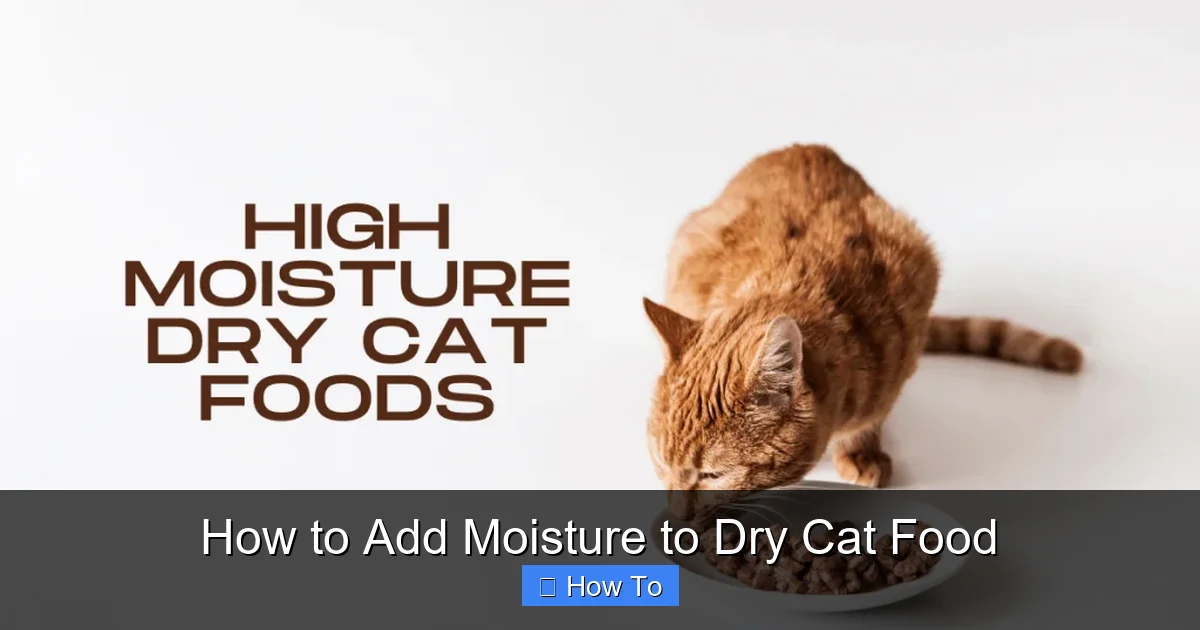
Adding moisture to dry cat food helps increase your cat’s water intake, supports kidney health, and makes meals more appealing. This guide covers safe, practical methods like using water, broth, or wet food toppers—plus tips to avoid common mistakes.
Key Takeaways
- Hydration is critical: Cats naturally have low thirst drives, so adding moisture helps prevent urinary and kidney issues.
- Use plain, safe liquids: Always choose low-sodium, onion-free broths or filtered water—never milk or seasoned stocks.
- Start slowly: Introduce moisture gradually to avoid digestive upset or food rejection.
- Wet food toppers work well: Small amounts of high-quality wet food can boost flavor and moisture without switching diets entirely.
- Monitor your cat’s response: Watch for changes in drinking habits, litter box output, and appetite to ensure the method is working.
- Store properly: Moistened dry food should be served fresh and discarded after 1–2 hours to prevent bacterial growth.
- Consult your vet: Especially if your cat has health conditions like CKD or diabetes, get professional advice before making dietary changes.
Why Adding Moisture to Dry Cat Food Matters
Cats are desert animals by nature. In the wild, they get most of their water from prey—like mice, which are about 70% water. But domestic cats often eat dry kibble, which contains only 6–10% moisture. That means they’re missing out on a vital source of hydration.
Over time, low water intake can lead to serious health problems. Chronic dehydration is a major risk factor for urinary tract infections, bladder stones, and kidney disease—especially in older cats. In fact, kidney disease is one of the leading causes of death in senior cats.
Adding moisture to dry cat food is a simple, effective way to help your cat stay hydrated. It can also make meals more appealing, especially for picky eaters or cats recovering from illness. Plus, moistened kibble is easier to chew, which benefits senior cats with dental issues.
But not all methods are created equal. Some liquids can be harmful, and too much moisture too fast can upset your cat’s stomach. That’s why it’s important to know the right techniques, safe ingredients, and how to introduce changes gradually.
In this guide, you’ll learn step-by-step how to add moisture to dry cat food safely and effectively. Whether you’re using water, broth, or wet food toppers, we’ll cover the best practices, common mistakes to avoid, and how to tailor the approach to your cat’s needs.
Understanding Your Cat’s Hydration Needs
Visual guide about How to Add Moisture to Dry Cat Food
Image source: m.media-amazon.com
Before you start adding moisture, it helps to understand why hydration matters so much for cats.
Unlike dogs, cats don’t always show obvious signs of thirst. They may not drink much water, even when they need it. This is because their bodies are adapted to conserve water. But in a domestic setting, where food is dry and water sources aren’t as appealing, this adaptation can backfire.
A healthy cat should drink about 3.5 to 4.5 ounces of water per 5 pounds of body weight each day. But if they’re eating only dry food, they may not reach that amount. Adding moisture helps bridge the gap.
For example, a 10-pound cat eating dry food might only drink 2–3 ounces of water daily. But if you add 2–3 ounces of liquid to their kibble, they’re much more likely to stay properly hydrated.
Hydration supports nearly every system in your cat’s body:
– Kidneys: Flush out toxins and prevent crystal formation.
– Urinary tract: Reduce the risk of infections and blockages.
– Digestion: Soften stool and prevent constipation.
– Skin and coat: Promote healthy fur and reduce shedding.
Even behavioral issues—like litter box avoidance—can sometimes be linked to urinary discomfort from dehydration.
So, adding moisture isn’t just about making food tastier. It’s a proactive step toward long-term health.
Safe Liquids to Add to Dry Cat Food
Not all liquids are safe for cats. Some common kitchen staples—like milk or seasoned broths—can cause digestive upset or even toxicity. Here’s what you can and can’t use.
Safe Options
1. Filtered or Bottled Water
This is the simplest and safest choice. Use room-temperature or slightly warmed water to make kibble softer and more aromatic. Warm water helps release food smells, which can entice reluctant eaters.
2. Low-Sodium, Onion-Free Broth
Look for broths labeled “low sodium” or “no salt added.” Avoid any that contain onions, garlic, or chives—these are toxic to cats. Chicken or bone broth (without seasonings) works well. You can find pet-safe broths at pet stores or make your own by simmering plain chicken or turkey bones (no seasonings) and straining the liquid.
3. Goat’s Milk or Kitten Milk Replacer (in moderation)
Some cats enjoy a splash of goat’s milk, which is easier to digest than cow’s milk. Kitten milk replacer (like KMR) can also be used occasionally, but it’s high in calories—so use sparingly.
4. Canned Pumpkin Puree (unsweetened)
While not a liquid, a teaspoon of plain pumpkin adds moisture and fiber. It’s great for cats with constipation. Just make sure it’s 100% pumpkin—not pumpkin pie filling.
Liquids to Avoid
– Cow’s milk: Most adult cats are lactose intolerant. It can cause diarrhea and stomach pain.
– Seasoned broths or soups: Onions, garlic, salt, and spices are harmful.
– Vegetable or beef stock with additives: Even if labeled “natural,” they often contain hidden toxins.
– Saltwater or seawater: Extremely dangerous—can cause sodium ion poisoning.
Always check labels carefully. When in doubt, stick to plain water or vet-approved broths.
Step-by-Step Guide to Adding Moisture
Now that you know what’s safe, here’s how to add moisture to your cat’s dry food the right way.
Step 1: Choose Your Liquid
Decide which liquid works best for your cat. If you’re just starting, go with filtered water. It’s neutral, safe, and easy to adjust.
If your cat is hesitant to eat, try warming the water slightly (not hot) to enhance the food’s aroma. You can also try a small amount of low-sodium chicken broth for extra flavor.
Step 2: Measure the Right Amount
Start with a small amount—about 1–2 tablespoons of liquid per ¼ cup of dry food. This is enough to soften the kibble without turning it into soup.
You can increase the amount gradually over a few days if your cat enjoys it. Some cats prefer their food very moist, while others like just a hint of dampness.
Step 3: Mix Thoroughly
Pour the liquid over the kibble in your cat’s bowl. Let it sit for 5–10 minutes to allow the food to absorb the moisture. Stir gently to ensure even distribution.
Avoid over-soaking, which can make the food mushy and unappetizing. The goal is soft, not soggy.
Step 4: Serve at Room Temperature
Cats are more likely to eat food that’s close to body temperature. Cold food smells less, and hot food can burn their mouths.
If you used warm liquid, let the mixture cool slightly before serving. Never serve food straight from the microwave.
Step 5: Observe Your Cat’s Reaction
Watch how your cat responds. Do they eat it eagerly? Ignore it? Vomit afterward?
If they eat it well, great! Continue with the same method. If they reject it, try a different liquid or reduce the amount of moisture.
Some cats take time to adjust. Be patient and consistent.
Alternative Methods to Add Moisture
If your cat doesn’t like liquid-soaked kibble, there are other ways to increase moisture intake.
Mix in Wet Food
One of the easiest ways to add moisture is to mix a small amount of wet food into dry kibble. Use a high-quality, grain-free wet food with real meat as the first ingredient.
Start with 1–2 tablespoons of wet food per ¼ cup of dry food. Gradually increase the ratio if your cat enjoys it.
This method boosts hydration, adds protein, and enhances flavor—without requiring a full switch to wet food.
Use a Hydrating Topper
Pet stores sell hydrating toppers made from bone broth, freeze-dried meat, or liquid supplements. These are designed to be poured over dry food.
Look for products with simple ingredients—no artificial flavors, colors, or preservatives. Some popular brands include Tiki Cat Broth Toppers and Weruva B.F.F. OMG Broth.
These toppers add moisture and flavor with minimal effort.
Try a Water Fountain
Some cats prefer running water. A pet water fountain encourages drinking by mimicking a fresh stream.
Place the fountain away from the food bowl—cats instinctively avoid water near their food to prevent contamination.
Clean the fountain regularly to prevent bacteria buildup.
Offer Ice Cubes as a Treat
Some cats enjoy batting around ice cubes or licking them. You can make cat-safe ice cubes by freezing low-sodium broth or water with a bit of tuna juice.
This is more of a fun supplement than a hydration solution, but it can help increase water intake on hot days.
How Much Moisture Should You Add?
There’s no one-size-fits-all answer. The right amount depends on your cat’s size, diet, and health.
A general rule is to aim for a total daily moisture intake of about 4–6 ounces per 5 pounds of body weight. If your cat eats ½ cup of dry food (about 150 calories), adding 2–3 ounces of liquid can make a big difference.
For example:
– A 10-pound cat eating ½ cup dry food: add 2–3 tablespoons of liquid.
– A 15-pound cat eating ¾ cup dry food: add 3–4 tablespoons.
Monitor your cat’s water bowl and litter box. If they’re urinating more frequently and producing larger volumes, that’s a good sign they’re better hydrated.
Avoid over-moistening, which can lead to:
– Spoiled food (bacteria grow quickly in moist environments)
– Reduced kibble shelf life
– Digestive upset from sudden changes
Always serve moistened food fresh and discard leftovers after 1–2 hours, especially in warm weather.
Tips for Picky Eaters
Some cats turn their noses up at moistened kibble. Here’s how to win them over.
Warm It Up
Heat enhances aroma. Warm the liquid slightly before adding it to the food. This mimics the smell of fresh prey and can trigger your cat’s appetite.
Add a Flavor Booster
Sprinkle a tiny bit of freeze-dried chicken, tuna flakes, or a dash of nutritional yeast over the food. These are low-calorie and highly appealing.
Avoid fish oils or strong-smelling additives unless approved by your vet—some can cause digestive issues.
Gradual Transition
If your cat has never eaten moist food, start with just a few drops of water. Increase the amount over 7–10 days.
You can also mix a small amount of wet food into dry kibble and slowly increase the ratio.
Serve in a Clean Bowl
Cats are sensitive to smells. Wash food bowls daily with mild soap and hot water. Residue from old food or detergent can deter eating.
Try Different Textures
Some cats prefer soft, soupy food. Others like kibble that’s just lightly dampened. Experiment to find what your cat likes.
Troubleshooting Common Problems
Even with the best intentions, things don’t always go smoothly. Here’s how to handle common issues.
Cat Refuses to Eat Moist Food
Possible Causes:
– Too much moisture too fast
– Unfamiliar smell or texture
– Food left out too long and spoiled
Solutions:
– Reduce the amount of liquid and reintroduce slowly.
– Try a different liquid (e.g., switch from water to broth).
– Serve smaller portions more frequently.
– Ensure the food is fresh and not sitting out for hours.
Digestive Upset (Vomiting or Diarrhea)
Possible Causes:
– Sudden dietary change
– Allergic reaction to broth or wet food
– Spoiled food
Solutions:
– Go back to dry food for a few days.
– Reintroduce moisture more gradually.
– Switch to plain water if using broth.
– Consult your vet if symptoms persist.
Food Spoils Quickly
Moist food is a breeding ground for bacteria. Never leave it out for more than 1–2 hours, especially in warm climates.
Solutions:
– Serve smaller portions.
– Use a timed feeder that dispenses dry food, then add moisture just before mealtime.
– Refrigerate unused broth or wet food in airtight containers.
Cat Drinks Less Water
Some cats drink less from their water bowl when food is moistened. This is normal—they’re getting hydration from food.
Solutions:
– Keep water bowls full and clean.
– Offer multiple water sources around the house.
– Use a fountain to encourage drinking.
Special Considerations for Health Conditions
If your cat has a medical condition, adding moisture can be especially beneficial—but it’s important to proceed carefully.
Kidney Disease (CKD)
Cats with CKD are at high risk for dehydration. Adding moisture to food is often recommended by vets.
Use low-phosphorus wet food or broth if your cat is on a renal diet. Avoid high-sodium liquids.
Diabetes
Moisture helps with weight management and insulin sensitivity. Choose low-carb wet foods and avoid sugary broths.
Urinary Tract Issues
Increased water intake helps dilute urine and prevent crystal formation. Moist food is a key part of prevention.
Dental Problems
Soft, moist food is easier to eat for cats with tooth pain or missing teeth. Avoid hard kibble if chewing is difficult.
Always consult your veterinarian before making dietary changes for a cat with health issues. They can recommend specific products and monitor progress.
How to Store Moistened Cat Food
Proper storage is crucial to keep food safe and fresh.
At Room Temperature
Moistened dry food should be served immediately and discarded after 1–2 hours. Bacteria multiply rapidly in warm, moist environments.
In the Refrigerator
If you prepare food in advance, store it in an airtight container in the fridge for up to 24 hours. Reheat slightly before serving.
Never refrigerate food that’s been sitting out—it may already be contaminated.
Freezing
You can freeze portions of moistened food for up to 1 month. Thaw in the fridge overnight and warm before serving.
Label containers with the date and ingredients.
When to Avoid Adding Moisture
While adding moisture is generally safe, there are a few situations where it’s not recommended.
During Travel or Boarding
Moist food spoils quickly and is harder to transport. Stick to dry food when traveling or boarding your cat.
If Your Cat Has a Strong Preference for Dry Food
Some cats simply prefer crunchy kibble. Forcing moist food can cause stress or food aversion.
In these cases, focus on encouraging water intake through fountains, multiple bowls, or flavored ice cubes.
If Your Vet Advises Against It
Rarely, a vet may recommend against adding moisture—for example, if a cat has a specific metabolic condition. Always follow professional advice.
Final Thoughts: Making Hydration a Habit
Adding moisture to dry cat food is one of the simplest ways to improve your cat’s health. It supports hydration, digestion, and urinary health—and can even extend your cat’s lifespan.
Start small, be consistent, and pay attention to your cat’s preferences. With a little patience, most cats adapt well to moistened meals.
Remember, every cat is different. What works for one may not work for another. The key is to stay observant, flexible, and proactive.
By making hydration a priority, you’re giving your cat the gift of better health—one moist meal at a time.