
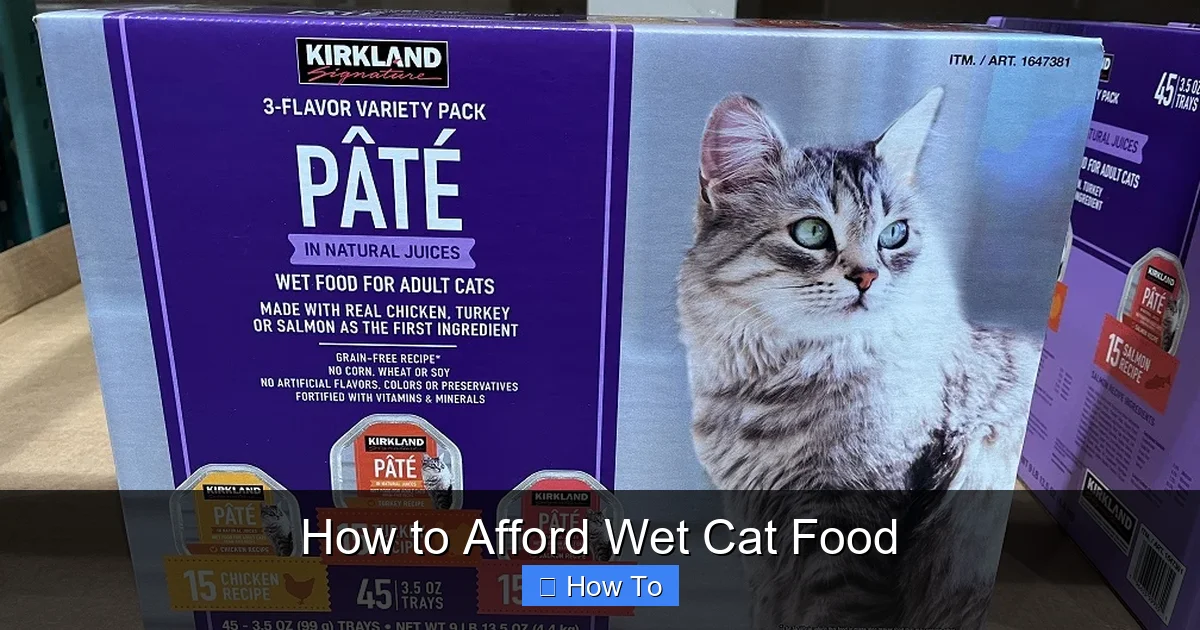
Wet cat food is healthier for your feline friend, but it can be expensive. This guide shows you practical ways to make it affordable—from buying in bulk to making your own—without sacrificing quality or nutrition.
Key Takeaways
- Buy in bulk during sales: Stock up when prices drop to save up to 30% on wet cat food.
- Use store brands and generics: Many offer the same nutrition as premium brands at a lower cost.
- Make your own wet food: Homemade recipes using affordable ingredients can cut costs by half.
- Subscribe and save: Auto-shipping programs often include discounts and free delivery.
- Mix wet and dry food: Combining both extends your wet food supply while maintaining hydration.
- Look for coupons and rebates: Digital coupons and cashback apps can significantly reduce monthly expenses.
- Choose value-sized cans: Larger cans often cost less per ounce than single-serve portions.
How to Afford Wet Cat Food: A Complete Guide for Budget-Savvy Pet Parents
If you’ve ever stood in the pet aisle staring at the price tag on a can of wet cat food and thought, “There’s no way I can afford this every day,” you’re not alone. Wet cat food is widely recommended by veterinarians for its high moisture content, which supports urinary and kidney health, especially in older cats. It’s also more palatable for picky eaters and can help with weight management. But let’s be honest—those little cans add up fast.
The good news? You don’t have to choose between your cat’s health and your wallet. With a few smart strategies, you can afford wet cat food consistently without breaking the bank. Whether you’re feeding one cat or a whole clowder, this guide will walk you through practical, proven ways to make wet food a regular part of your pet care routine—on a budget.
In this guide, you’ll learn how to shop smarter, stretch your supply, and even make your own wet food at home. We’ll cover everything from bulk buying and subscription discounts to DIY recipes and portion control. By the end, you’ll have a clear plan to keep your cat happy, hydrated, and well-fed—without the financial stress.
Why Wet Cat Food Matters (And Why It’s Worth the Cost)

Visual guide about How to Afford Wet Cat Food
Image source: cats.com
Before we dive into cost-saving tips, let’s quickly talk about why wet food is so important. Cats are natural desert animals, which means they evolved to get most of their water from their prey—not from drinking. In the wild, a mouse is about 70% water. But domestic cats eating dry kibble often consume far less moisture, which can lead to chronic dehydration, urinary tract issues, and kidney disease over time.
Wet cat food typically contains 70–80% water, making it an excellent way to boost your cat’s hydration. It’s also usually higher in protein and lower in carbohydrates than dry food, which aligns better with a cat’s natural diet. Many cats also prefer the texture and smell of wet food, making it easier to encourage eating in seniors or sick pets.
So while wet food may cost more upfront, the long-term health benefits can reduce vet bills and improve your cat’s quality of life. That makes finding affordable ways to feed it not just a money-saving move—but a smart investment in your pet’s well-being.
Step 1: Buy in Bulk During Sales
One of the easiest ways to afford wet cat food is to take advantage of sales and buy in bulk. Most pet stores and online retailers run regular promotions—especially around holidays like Black Friday, Prime Day, or end-of-season clearances. When you see a good deal, stock up.
How to Spot a Good Sale
Look for “buy one, get one free” (BOGO) offers, percentage discounts (like 20% off), or clearance sections. Sign up for email newsletters from stores like Chewy, Petco, or Amazon to get alerts about upcoming sales. Many stores also offer loyalty programs that give you points or exclusive discounts.
For example, Chewy often runs “Buy 3, Get 1 Free” deals on select wet food brands. If you normally spend $20 on four cans, you’re suddenly paying $15—a 25% savings. Over time, those savings add up.
Storage Tips for Bulk Buying
Buying in bulk only works if you can store the food properly. Unopened cans of wet cat food can last 2–5 years when stored in a cool, dry place. Avoid damp basements or hot garages. Keep cans in their original packaging or use airtight bins to protect them from pests and odors.
If you have limited space, consider buying larger cases (like 24-can packs) instead of individual cans. They take up less room and often cost less per can.
Example: Bulk Buying in Action
Let’s say your cat eats one 5.5-ounce can per day. That’s about 365 cans a year. If a single can costs $1.50, you’re spending $547.50 annually. But if you find a sale where a 24-can case is $28 (about $1.17 per can), your annual cost drops to $427.05—saving you over $120 per year.
Step 2: Choose Store Brands and Generics
Premium brands like Royal Canin, Hill’s Science Diet, or Blue Buffalo are great—but they’re not the only options. Many store brands and generics offer similar nutrition at a fraction of the price.
What to Look for on the Label
When comparing brands, check the ingredient list and guaranteed analysis. A good wet cat food should have:
– A named meat source (like “chicken” or “salmon”) as the first ingredient
– High protein (at least 8–10% on a dry matter basis)
– Low carbohydrates (avoid foods with corn, wheat, or soy as fillers)
– Added taurine (essential for heart and eye health)
Store brands like Purina ONE, Iams, or even Walmart’s Special Kitty often meet these standards. Some even use the same manufacturing facilities as premium brands—just without the fancy packaging and marketing budget.
Try a Trial Pack
Before switching your cat to a new brand, buy a small variety pack to test it out. Cats can be picky, and a sudden change in diet might upset their stomach. Gradually mix the new food with the old over 7–10 days to help them adjust.
Real-World Savings
A 5.5-ounce can of premium wet food might cost $2.00, while a comparable store brand could be $1.20. That’s a 40% savings per can. Over a year, that’s over $290 saved—enough to cover a vet visit or a new toy.
Step 3: Make Your Own Wet Cat Food
If you’re really looking to cut costs, consider making your own wet cat food at home. Homemade food can be healthier, more customizable, and significantly cheaper—especially if you use affordable ingredients.
Basic Homemade Wet Cat Food Recipe
Here’s a simple, vet-approved recipe you can make in bulk:
- 1 pound ground chicken (or turkey, beef, or fish)
- 1/2 cup cooked brown rice or quinoa (optional, for fiber)
- 1/4 cup pureed pumpkin (for digestion)
- 1/4 cup water or low-sodium broth
- 1 teaspoon fish oil (for omega-3s)
- 1/2 teaspoon taurine powder (available online or at pet stores)
Instructions
- Cook the ground meat thoroughly in a skillet. Drain excess fat.
- Add cooked rice or quinoa, pumpkin, and broth. Stir well.
- Let the mixture cool, then blend until smooth (or leave chunky if your cat prefers).
- Stir in fish oil and taurine powder.
- Store in airtight containers in the fridge for up to 5 days, or freeze for up to 3 months.
This recipe makes about 4–5 servings and costs roughly $1.00 per serving—half the price of most store-bought wet food.
Safety Tips for Homemade Food
Always consult your vet before switching to homemade food, especially if your cat has health issues. Cats have specific nutritional needs, and deficiencies (like lack of taurine) can be serious. Use a balanced recipe or consider adding a feline vitamin supplement.
Avoid onions, garlic, grapes, chocolate, and dairy—these are toxic to cats. Stick to plain meats and cat-safe vegetables.
Batch Cooking for Efficiency
Make a large batch once a week and portion it into ice cube trays or small containers. This saves time and ensures you always have food ready. Label each container with the date to keep track of freshness.
Step 4: Use Subscription and Auto-Ship Programs
Many online retailers offer subscription services that deliver wet cat food to your door on a regular schedule. These programs often come with discounts, free shipping, and the convenience of never running out.
Popular Subscription Services
– **Chewy Autoship**: Save 5–10% on every order, plus free shipping on orders over $49.
– **Amazon Subscribe & Save**: Get up to 15% off when you subscribe to 5 or more items.
– **Petco Repeat Delivery**: Earn rewards points and get free shipping on recurring orders.
How to Maximize Savings
Set your delivery schedule to match your cat’s consumption. For example, if your cat eats one can per day, order a 30-can case every month. This ensures you never run low and locks in the discount.
You can also pause or skip deliveries if you have extra stock, so you’re never stuck with too much food.
Example: Subscription Savings
A 24-can case of wet food costs $30 retail. With a 10% subscription discount, you pay $27. Add free shipping (worth $5–$10), and you’re saving $8–$13 per order. Over a year, that’s $96–$156 in savings.
Step 5: Mix Wet and Dry Food
You don’t have to feed 100% wet food to reap the benefits. Many pet parents use a combination of wet and dry food to balance cost, convenience, and nutrition.
The 50/50 Approach
Try feeding wet food in the morning and dry food at night. Or use wet food as a topper—mix a spoonful into your cat’s kibble to boost moisture and flavor.
This method stretches your wet food supply while still providing hydration. It’s also helpful for cats who graze throughout the day and prefer the crunch of dry food.
Portion Control Tips
Use a kitchen scale or measuring cup to track portions. Overfeeding can lead to obesity and higher costs. Most adult cats need about 3–4 ounces of wet food per day, depending on size and activity level.
If you’re mixing foods, adjust portions so your cat gets the right amount of calories. For example, if you feed 2 ounces of wet food, reduce the dry food by about 1/4 cup.
Benefits of Mixing
– Saves money on wet food
– Encourages hydration
– Keeps meals interesting
– Supports dental health (dry food can help reduce tartar)
Step 6: Use Coupons, Rebates, and Cashback Apps
Never pay full price again. There are dozens of ways to save on wet cat food using digital tools and promotions.
Digital Coupons
Check store apps like Target, Walmart, or Petco for digital coupons. Many offer $1–$2 off specific brands or categories. You can also find printable coupons on websites like Coupons.com or Sunday newspaper inserts.
Cashback and Rewards Apps
Use apps like Rakuten, Ibotta, or Fetch Rewards to earn cashback on pet food purchases. For example, Ibotta often has $2 back on a 12-can case of wet food. Over time, these small rebates add up.
Loyalty Programs
Join store loyalty programs to earn points, get birthday rewards, or access member-only sales. Petco’s Pals Rewards gives you 5% back in rewards, and Chewy’s Autoship includes exclusive discounts.
Example: Stacking Savings
Imagine you buy a 24-can case for $30. You use a $5 digital coupon, get $3 back from Ibotta, and earn $1.50 in rewards points. Your final cost is $20.50—a 32% savings.
Step 7: Choose Value-Sized Cans
Not all cans are created equal. Larger cans often cost less per ounce than single-serve portions, making them a better value.
Compare Unit Prices
Always check the price per ounce (or per gram) when comparing products. This is usually listed on the shelf tag or product page. For example:
– 3-ounce can: $1.20 → $0.40 per ounce
– 5.5-ounce can: $1.80 → $0.33 per ounce
– 12.5-ounce can: $3.50 → $0.28 per ounce
The 12.5-ounce can is the best deal, even if it’s more food at once.
Storage for Large Cans
If you buy large cans, transfer unused portions to airtight containers and refrigerate. Wet food stays fresh for 3–5 days in the fridge. You can also freeze portions in ice cube trays for longer storage.
Adjust Feeding Amounts
If your cat only eats small meals, consider splitting a large can into two servings. This reduces waste and ensures freshness.
Troubleshooting Common Challenges
Even with the best plans, you might run into issues. Here’s how to handle common problems:
My Cat Won’t Eat the New Food
Cats are creatures of habit. If your cat rejects a new brand or homemade recipe, try mixing it with their old food gradually. Start with 90% old food and 10% new, then increase the ratio over 7–10 days.
I Can’t Afford to Buy in Bulk
Start small. Buy one extra case during a sale instead of your usual amount. Over time, you’ll build a stockpile without a huge upfront cost.
Homemade Food Seems Too Time-Consuming
Try batch cooking on weekends. Make a large batch and freeze portions. On busy days, just thaw and serve. It takes about 30 minutes of prep time per week.
I’m Worried About Nutrition
Consult your vet or a veterinary nutritionist before switching to homemade food. They can recommend balanced recipes or supplements to ensure your cat gets all the nutrients they need.
Conclusion: Affordable Wet Cat Food Is Within Reach
Feeding your cat wet food doesn’t have to be a luxury. With smart shopping, DIY options, and a few budget-friendly strategies, you can make it a regular part of their diet—without straining your finances.
Start by buying in bulk during sales, choosing store brands, and using subscription discounts. Consider making your own food at home or mixing wet and dry to stretch your supply. And don’t forget to use coupons, rebates, and cashback apps to save even more.
Remember, every small saving adds up. Over time, these tips can save you hundreds of dollars a year—money you can use for toys, treats, or even a vet visit. Most importantly, you’ll know you’re giving your cat the hydration and nutrition they need to live a long, healthy life.
So go ahead—open that can with confidence. Your cat (and your wallet) will thank you.