
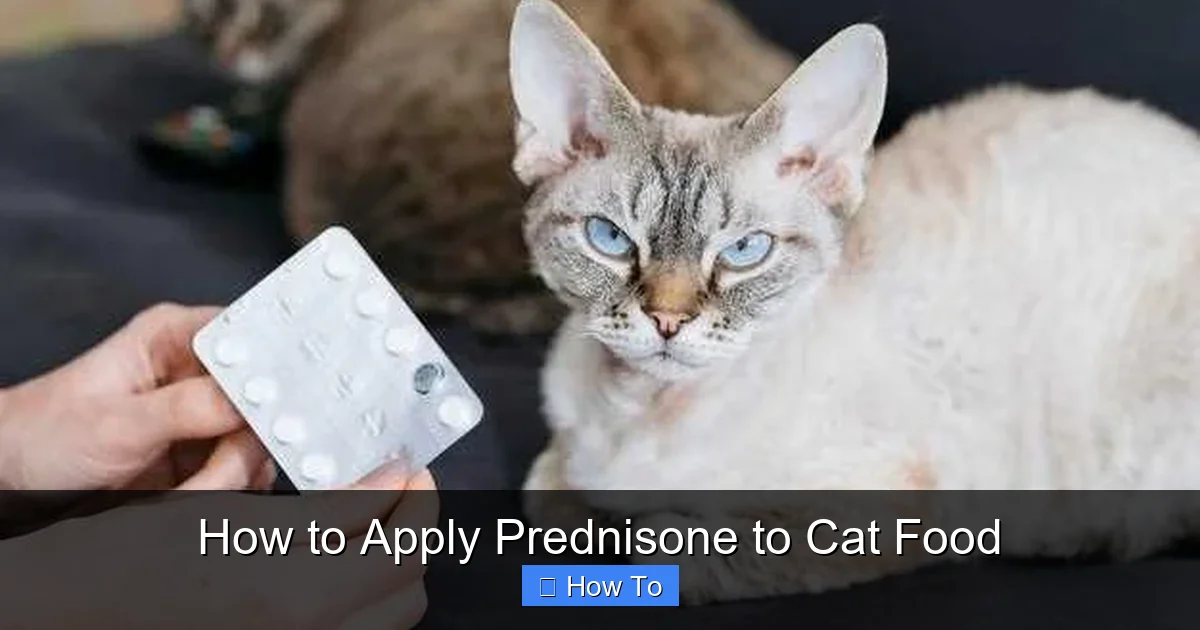
This guide walks you through the safe and effective process of applying prednisone to cat food, ensuring your feline gets the medication without stress. You’ll learn proper dosing, mixing techniques, and how to monitor your cat’s response.
Key Takeaways
- Always consult your vet first: Never give prednisone without a prescription and dosage instructions from a licensed veterinarian.
- Use the right form of prednisone: Liquid or crushed tablets work best for mixing into food; avoid enteric-coated pills unless directed.
- Mix thoroughly but gently: Combine the medication evenly with a small portion of wet food to prevent clumping and ensure full consumption.
- Monitor your cat closely: Watch for side effects like increased thirst, appetite changes, or lethargy, and report concerns to your vet.
- Stick to a consistent routine: Administer prednisone at the same time each day, ideally with food, to maintain steady drug levels.
- Never stop suddenly: Prednisone must be tapered off gradually under veterinary supervision to avoid adrenal crisis.
- Store medication properly: Keep prednisone in a cool, dry place away from light and out of reach of pets and children.
How to Apply Prednisone to Cat Food: A Complete Step-by-Step Guide
If your cat has been prescribed prednisone, you’re likely feeling a mix of concern and responsibility. Prednisone is a powerful corticosteroid used to treat a variety of conditions in cats—from allergies and asthma to inflammatory bowel disease and certain autoimmune disorders. While it can be highly effective, administering it correctly is crucial for your cat’s safety and well-being.
One of the most common challenges pet owners face is getting their cat to take medication. Cats are notoriously picky eaters, and they have a keen sense of smell that can detect even tiny amounts of medicine. That’s why learning how to apply prednisone to cat food properly is so important. When done right, your cat may never even know they’re taking medication.
In this comprehensive guide, you’ll learn everything you need to know about safely and effectively applying prednisone to your cat’s food. We’ll cover why prednisone is used, how to prepare it, the best mixing techniques, timing tips, and what to watch for afterward. You’ll also find troubleshooting advice for common problems and answers to frequently asked questions.
By the end of this guide, you’ll feel confident and prepared to help your cat through their treatment—without the stress and struggle.
Why Prednisone Is Prescribed for Cats

Visual guide about How to Apply Prednisone to Cat Food
Image source: studbaywritingvip.com
Before we dive into the how-to, it’s important to understand why your vet has prescribed prednisone. This medication is a synthetic corticosteroid that mimics the effects of hormones naturally produced by the adrenal glands. It works by reducing inflammation, suppressing the immune system, and alleviating allergic reactions.
Common conditions treated with prednisone in cats include:
- Allergic skin reactions: Such as flea allergy dermatitis or environmental allergies.
- Feline asthma: Helps reduce airway inflammation and improve breathing.
- Inflammatory bowel disease (IBD): Reduces gut inflammation and improves digestion.
- Autoimmune disorders: Like immune-mediated hemolytic anemia or lupus.
- Certain cancers: Used as part of chemotherapy protocols to reduce swelling and improve comfort.
Because prednisone is so effective, it’s often a go-to medication for vets. However, it’s not without risks. Long-term use or incorrect dosing can lead to side effects such as increased thirst and urination, weight gain, diabetes, or weakened immune function. That’s why following your vet’s instructions precisely—and learning how to apply prednisone to cat food correctly—is essential.
Preparing to Administer Prednisone
Before you even think about mixing medication into your cat’s food, there are several important preparation steps to follow. Taking the time to prepare properly will make the process smoother and safer for both you and your cat.
Step 1: Confirm the Prescription and Dosage
Always start by double-checking your vet’s prescription. Make sure you have the correct:
- Medication name: Ensure it’s prednisone (not prednisolone, unless specifically prescribed).
- Dosage: The amount (in milligrams) your cat should receive per dose.
- Frequency: How many times per day the medication should be given.
- Duration: How long the treatment will last.
If anything is unclear, call your vet’s office for clarification. Never guess the dosage or frequency.
Step 2: Choose the Right Form of Prednisone
Prednisone comes in several forms, and not all are suitable for mixing into food. Here’s what to look for:
- Liquid prednisone: Often the easiest to mix. It can be measured precisely with a syringe and blends well with wet food.
- Crushable tablets: Standard tablets can usually be crushed into a fine powder. Avoid enteric-coated tablets unless your vet says it’s okay—these are designed to dissolve in the intestines, not the stomach, and crushing them can reduce effectiveness or cause irritation.
- Compounded formulations: Some vets may prescribe a custom-made liquid or flavored version that’s easier to administer.
If you’re unsure whether your tablet can be crushed, ask your pharmacist or vet.
Step 3: Gather Your Supplies
Having everything ready ahead of time will reduce stress and prevent mistakes. You’ll need:
- The prescribed prednisone (liquid or tablets)
- A pill crusher or mortar and pestle (if using tablets)
- A small spoon or syringe (for measuring liquid)
- Wet cat food (preferably strong-smelling, like fish or liver)
- A small bowl or dish
- Clean water
- Treats (for positive reinforcement)
Keep these items in a designated area so you can access them quickly and calmly.
Step 4: Wash Your Hands
Always wash your hands before and after handling medication. This prevents contamination and reduces the risk of transferring germs to your cat or the medication.
How to Apply Prednisone to Cat Food: Step-by-Step Instructions
Now that you’re prepared, it’s time to apply the prednisone to your cat’s food. Follow these steps carefully to ensure your cat gets the full dose.
Step 1: Measure the Correct Dose
Accuracy is critical. Even a small error in dosage can affect your cat’s health.
- If using liquid prednisone, use the syringe provided by the pharmacy. Draw up the exact amount prescribed. Check the measurement twice.
- If using tablets, count the number of tablets needed. For partial doses (e.g., half a tablet), use a pill splitter or ask your pharmacist to pre-split them.
Never estimate the dose by eye. Use proper measuring tools.
Step 2: Crush the Tablet (If Needed)
If you’re using tablets, you’ll need to crush them into a fine powder.
- Place the tablet in a pill crusher or between two spoons.
- Press down firmly and grind until it becomes a smooth, even powder.
- Transfer the powder to a small bowl. Use a clean brush or the back of a spoon to get every bit out.
Avoid breathing in the powder—some medications can be harmful if inhaled.
Step 3: Choose the Right Food
Not all cat foods are created equal when it comes to hiding medication. The goal is to use a food your cat loves and that will mask the taste and smell of the medicine.
- Wet food is best: It’s easier to mix with and has a stronger aroma that can overpower the medication.
- Strong-smelling flavors: Fish (like salmon or tuna), liver, or chicken pâté are ideal. These scents help disguise the medicine.
- Small portion: Use only a tablespoon or two of food—just enough to mix with the medication. This ensures your cat eats it all in one go.
Avoid dry kibble unless your vet specifically recommends it. It’s harder to mix with and may not hold the medication evenly.
Step 4: Mix the Medication Thoroughly
This is the most important step in applying prednisone to cat food. If the medication isn’t mixed well, your cat might get too much or too little.
- Add the crushed powder or liquid prednisone to the small portion of wet food.
- Use a clean spoon to mix thoroughly. Scrape the sides and bottom of the bowl to ensure no medication is left behind.
- If using liquid, stir gently to avoid creating bubbles that could affect the dose.
The mixture should look uniform—no visible clumps or streaks.
Step 5: Offer the Medicated Food Immediately
Once mixed, offer the food to your cat right away. Don’t let it sit, as the medication could settle or degrade.
- Call your cat to their feeding area in a calm, positive tone.
- Present the bowl and encourage them to eat. You can gently pet them or use a soft voice to reassure them.
- If your cat is hesitant, try warming the food slightly (not hot) to enhance the aroma.
Most cats will eat the food quickly, especially if it’s a favorite flavor.
Step 6: Confirm Full Consumption
After your cat eats, check the bowl to make sure they consumed all of the medicated food.
- Look for any leftover bits or residue.
- If your cat leaves food behind, don’t assume they got the full dose. You may need to administer the medication directly or try a different method.
If only a small amount is left, you can offer a treat immediately after to encourage licking the bowl clean.
Step 7: Offer Water and a Treat
After eating, offer fresh water. Prednisone can increase thirst, so your cat may drink more than usual.
Then, give a small treat as a reward. Positive reinforcement helps build a good association with medication time.
Tips for Success When Applying Prednisone to Cat Food
Even with the best preparation, some cats are tricky to medicate. Here are practical tips to increase your chances of success.
Tip 1: Be Consistent with Timing
Administer prednisone at the same time each day, ideally with a meal. This helps maintain steady drug levels in your cat’s system and reduces the risk of side effects.
- Morning doses are often easiest to remember.
- Set a daily alarm or add it to your routine (e.g., after breakfast).
Consistency also helps your cat get used to the process.
Tip 2: Use High-Value Foods
If your cat is particularly resistant, try using “high-value” foods—those they only get during medication time.
- Canned tuna (in water, not oil)
- Baby food (meat-based, no onion or garlic)
- Chicken or turkey baby food
- Commercial pill pockets designed for cats
Rotating these options can prevent boredom and keep your cat interested.
Tip 3: Try the “Meatball” Method
For cats who refuse mixed food, try forming a small “meatball” with the medicated food.
- Take a small amount of wet food and flatten it in your palm.
- Place the crushed medication in the center.
- Fold the food over and roll it into a ball.
- Offer it by hand or place it in the bowl.
Some cats prefer eating from your hand, which can make the process feel more personal and less clinical.
Tip 4: Stay Calm and Patient
Cats are highly sensitive to their owner’s emotions. If you’re stressed or rushed, your cat will pick up on it.
- Take a few deep breaths before starting.
- Speak in a soft, soothing voice.
- Move slowly and avoid sudden gestures.
A calm environment makes a big difference.
Troubleshooting Common Problems
Even with the best intentions, things don’t always go smoothly. Here’s how to handle common issues.
Problem: My Cat Won’t Eat the Medicated Food
If your cat sniffs the food and walks away, don’t panic.
- Try a different flavor or brand of wet food.
- Warm the food slightly to enhance the smell.
- Mix in a small amount of tuna juice or chicken broth (low-sodium, no onions).
- If all else fails, ask your vet about compounding the medication into a flavored liquid or using a pill pocket.
Never force-feed your cat. This can cause stress and aspiration.
Problem: My Cat Vomits After Eating
Occasional vomiting can happen, especially if the food is rich or the medication irritates the stomach.
- Try giving the medication with a larger meal to buffer the stomach.
- Split the dose if approved by your vet (e.g., half in the morning, half at night).
- Avoid giving prednisone on an empty stomach unless directed.
If vomiting persists, contact your vet. It could be a sign of an adverse reaction.
Problem: I Missed a Dose
If you forget to give a dose, don’t double up the next time.
- If it’s only been a few hours, give the missed dose right away.
- If it’s close to the next scheduled dose, skip the missed one and continue with the regular schedule.
- Never give two doses at once—this can lead to overdose.
Set reminders on your phone or use a pill organizer to stay on track.
Problem: My Cat Is Acting Differently
Prednisone can cause behavioral changes. Watch for:
- Increased thirst and urination
- Increased appetite
- Lethargy or restlessness
- Changes in litter box habits
These are common side effects, but report any severe or persistent changes to your vet.
Monitoring Your Cat During Treatment
Administering prednisone is only half the battle. You also need to monitor your cat closely throughout treatment.
Keep a Medication Log
Track each dose, including:
- Date and time
- Amount given
- Food used
- Any side effects or behaviors
This log helps you stay organized and provides valuable information for your vet.
Watch for Side Effects
While prednisone is generally safe when used correctly, long-term use can lead to complications.
- Early signs: Increased drinking, frequent urination, weight gain.
- Serious signs: Vomiting, diarrhea, difficulty breathing, seizures.
Contact your vet immediately if you notice anything unusual.
Schedule Follow-Up Appointments
Your vet will likely want to see your cat regularly to monitor progress and adjust the dose if needed.
- Blood tests may be required to check liver and kidney function.
- Imaging or other diagnostics may be repeated to assess the condition.
Don’t skip these appointments—they’re essential for your cat’s long-term health.
How to Safely Discontinue Prednisone
One of the most important things to remember about prednisone is that it must be tapered off gradually. Stopping suddenly can cause an adrenal crisis—a life-threatening condition.
Follow Your Vet’s Tapering Schedule
Your vet will provide a specific plan for reducing the dose over time. This might involve:
- Decreasing the dose by a small amount every few days or weeks.
- Switching from daily to every-other-day dosing.
- Monitoring for signs of relapse.
Never stop prednisone on your own, even if your cat seems better.
Watch for Withdrawal Symptoms
As the dose decreases, your cat may show signs of withdrawal, such as:
- Lethargy
- Loss of appetite
- Joint pain
These are usually temporary but should be reported to your vet.
Conclusion
Learning how to apply prednisone to cat food doesn’t have to be stressful. With the right preparation, technique, and mindset, you can help your cat receive their medication safely and comfortably. Remember to always follow your vet’s instructions, use the correct form of the drug, mix it thoroughly with a small portion of strong-smelling wet food, and monitor your cat closely for any changes.
Prednisone can be a lifesaver for cats with chronic conditions, but it requires careful handling. By staying consistent, patient, and informed, you’re giving your feline friend the best possible care. And when treatment is over, you’ll have the peace of mind knowing you did everything you could to help them feel better.
If you ever have questions or concerns, don’t hesitate to reach out to your veterinarian. They’re your best resource for ensuring your cat’s health and happiness.