

Understanding how to calculate carbohydrates in cat food is essential for managing your cat’s health, especially if they have diabetes or weight concerns. This guide walks you through simple methods to estimate carb content using guaranteed analysis and ingredient lists found on pet food labels.
Key Takeaways
- Carbohydrates aren’t listed directly on labels: You must calculate them using other nutritional values like protein, fat, moisture, and ash.
- Use the “nitrogen-free extract” method: Subtract protein, fat, moisture, and ash percentages from 100% to estimate carb content.
- Check ingredient lists for hidden carbs: Ingredients like corn, rice, potatoes, and peas indicate higher carbohydrate levels.
- Wet food typically has fewer carbs than dry food: Moisture content affects the calculation, so always adjust for dry matter basis.
- Low-carb diets benefit some cats: Especially those with diabetes, obesity, or urinary issues, but consult your vet first.
- Online calculators can help: Use trusted pet nutrition tools to double-check your math and save time.
- Always read labels carefully: Marketing terms like “grain-free” don’t always mean low-carb—some substitutes are still high in starch.
How to Calculate Carbohydrates in Cat Food
If you’re a cat parent who cares about your furry friend’s health, you’ve probably heard that cats are obligate carnivores. That means their bodies are built to thrive on a diet rich in animal protein and low in carbohydrates. Yet, many commercial cat foods—especially dry kibble—contain surprising amounts of carbs from grains, starches, and fillers.
So how do you know how many carbohydrates your cat is actually eating? The answer isn’t always obvious. Unlike protein or fat, carbohydrate content isn’t listed directly on pet food labels. That’s why learning how to calculate carbohydrates in cat food is such a valuable skill.
In this guide, we’ll walk you through everything you need to know: from understanding why carbs matter for cats, to decoding pet food labels, performing simple math, and choosing the best options for your pet. Whether you’re managing a diabetic cat, trying to help your kitty lose weight, or just want to feed a more natural diet, this step-by-step guide will empower you to make informed decisions.
By the end, you’ll be able to confidently estimate the carbohydrate content in any cat food—wet or dry—and understand what those numbers really mean for your cat’s health.
Why Carbohydrates Matter for Cats
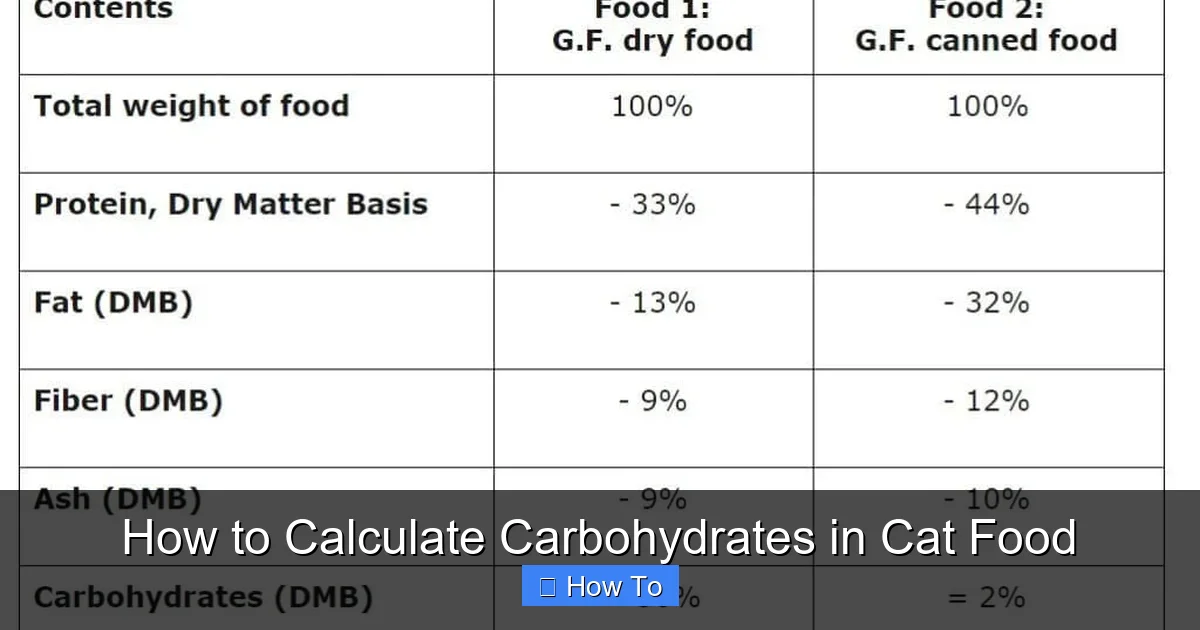
Visual guide about How to Calculate Carbohydrates in Cat Food
Image source: thecatsite.com
Before diving into calculations, it’s important to understand why carbohydrates are a big deal in feline nutrition.
Cats evolved as hunters, eating prey high in protein and fat but very low in carbohydrates. Their bodies aren’t designed to process large amounts of carbs efficiently. Unlike dogs or humans, cats lack certain enzymes needed to break down and utilize carbohydrates effectively. This means excess carbs can lead to weight gain, insulin resistance, and even diabetes.
High-carb diets have also been linked to urinary tract issues and inflammatory conditions in some cats. While not every cat will have problems, those with preexisting conditions—like obesity, diabetes, or kidney disease—often benefit greatly from a low-carb diet.
That said, not all carbs are bad. Small amounts from digestible sources (like pumpkin or sweet potato in moderation) can provide fiber and energy. But the key is balance. Most experts agree that cats should get less than 10% of their daily calories from carbohydrates, and ideally even less.
So how do you know if your cat’s food fits this guideline? That’s where calculating carbs comes in.
Understanding Pet Food Labels
Pet food labels can be confusing, but they contain all the information you need—if you know where to look.
The two most important sections for calculating carbohydrates are:
- Guaranteed Analysis: This lists minimum or maximum percentages of key nutrients like protein, fat, fiber, and moisture.
- Ingredient List: Ingredients are listed by weight, so the first few items make up the bulk of the food.
Let’s break down what each part tells you.
Guaranteed Analysis
This is usually found on the back or side of the packaging. It shows:
- Crude Protein (min): The minimum percentage of protein.
- Crude Fat (min): The minimum percentage of fat.
- Crude Fiber (max): The maximum percentage of fiber.
- Moisture (max): The maximum percentage of water.
- Ash (max): The mineral content left after burning the food (not always listed, but often included).
Note: Carbohydrates are not listed here. That’s why you need to calculate them.
Ingredient List
This tells you what’s actually in the food. Look for:
- Animal proteins first: Chicken, turkey, salmon, or beef should be at the top.
- Grains and starches: Corn, wheat, rice, barley, oats, potatoes, peas, and lentils are common carb sources.
- By-products and fillers: These often indicate lower-quality ingredients and higher carb content.
For example, if a food lists “chicken” first but then includes “corn gluten meal,” “brewer’s rice,” and “potato starch,” it’s likely high in carbs—even if it’s marketed as “grain-free.”
Step-by-Step: How to Calculate Carbohydrates in Cat Food
Now for the main event: calculating carbohydrate content.
There are two main methods: the “nitrogen-free extract” (NFE) method and the “dry matter basis” method. We’ll cover both.
Method 1: The Nitrogen-Free Extract (NFE) Method
This is the most common way to estimate carbs. It works by subtracting all the known components from 100%. What’s left is mostly carbohydrates (and a small amount of other compounds).
Here’s the formula:
Carbohydrates (%) = 100% – (Protein % + Fat % + Moisture % + Ash % + Fiber %)
Let’s walk through an example.
Example: Dry Cat Food
Suppose you have a dry cat food with the following guaranteed analysis:
- Crude Protein: 32% (min)
- Crude Fat: 14% (min)
- Crude Fiber: 4% (max)
- Moisture: 10% (max)
- Ash: 8% (max)
Now plug the numbers into the formula:
Carbohydrates = 100 – (32 + 14 + 10 + 8 + 4)
Carbohydrates = 100 – 68
Carbohydrates = 32%
So this food contains approximately 32% carbohydrates.
That’s quite high for a cat! Ideally, you’d want this number under 10–15%.
Example: Wet Cat Food
Wet food has much higher moisture content, so the calculation changes.
Let’s say a wet food has:
- Crude Protein: 10% (min)
- Crude Fat: 5% (min)
- Crude Fiber: 1% (max)
- Moisture: 78% (max)
- Ash: 2% (max)
Carbohydrates = 100 – (10 + 5 + 78 + 2 + 1)
Carbohydrates = 100 – 96
Carbohydrates = 4%
Wait—only 4%? That seems great! But remember, this is on an “as-fed” basis, meaning it includes all the water.
To compare wet and dry foods fairly, we need to convert to a “dry matter basis.”
Method 2: Dry Matter Basis (DMB) Calculation
Dry matter basis removes the moisture so you can compare foods on equal footing.
Here’s how to do it:
Step 1: Find the dry matter percentage.
Dry Matter % = 100% – Moisture %
For the wet food above:
Dry Matter = 100 – 78 = 22%
Step 2: Calculate the dry matter percentage of each nutrient.
Dry Matter Protein % = (Protein % ÷ Dry Matter %) × 100
So:
Dry Matter Protein = (10 ÷ 22) × 100 ≈ 45.5%
Do the same for fat, fiber, and ash.
Then use the NFE formula on dry matter values:
Carbohydrates (DMB) = 100 – (Protein DMB + Fat DMB + Fiber DMB + Ash DMB)
Let’s calculate:
- Protein DMB: (10 ÷ 22) × 100 ≈ 45.5%
- Fat DMB: (5 ÷ 22) × 100 ≈ 22.7%
- Fiber DMB: (1 ÷ 22) × 100 ≈ 4.5%
- Ash DMB: (2 ÷ 22) × 100 ≈ 9.1%
Carbohydrates (DMB) = 100 – (45.5 + 22.7 + 4.5 + 9.1)
Carbohydrates (DMB) = 100 – 81.8
Carbohydrates (DMB) ≈ 18.2%
So even though the wet food looked low-carb at first, it’s actually about 18% carbs on a dry matter basis—still higher than ideal, but much better than the 32% dry food.
Practical Tips for Accurate Calculations
Now that you know the math, here are some tips to make your calculations more accurate and useful.
Use Maximum and Minimum Values Wisely
Guaranteed analysis shows “min” or “max” values. For protein and fat, use the minimum. For moisture, fiber, and ash, use the maximum. This gives you a realistic estimate.
Look Up Ash if It’s Not Listed
Some labels don’t include ash. If that’s the case, assume 6–8% for dry food and 1–3% for wet food. This is a general range, but it’s better than ignoring it.
Double-Check with Online Tools
Websites like PetFoodCalculator.com or ThePetFoodCalculator.com let you input label data and automatically calculate carbs. These tools are great for verifying your math.
Compare Similar Foods
Always compare wet vs. wet and dry vs. dry. Converting to dry matter basis lets you see which food is truly lower in carbs.
Watch for Hidden Carbs
Even “grain-free” foods can be high in carbs if they use potatoes, peas, or lentils. These are starchy and count as carbohydrates.
For example, a food with “chicken, chicken meal, peas, potato protein, tapioca” may still be high in carbs—even without grains.
Troubleshooting Common Problems
Problem: The Label Doesn’t List Ash
As mentioned, ash is often missing. Use 7% as a default for dry food and 2% for wet food. This won’t be exact, but it’s close enough for comparison.
Problem: The Food Has Added Vitamins or Minerals
These are part of the ash content, so they’re already accounted for. No need to adjust.
Problem: The Carbohydrate Number Seems Too High or Too Low
Double-check your math. Make sure you’re using the right values (min for protein/fat, max for moisture/fiber/ash). Also, confirm whether you’re calculating on an as-fed or dry matter basis.
Problem: You’re Comparing Wet and Dry Foods Directly
Don’t! Always convert to dry matter basis first. A wet food with 5% carbs (as-fed) might be 20% on dry matter—higher than a dry food with 15% carbs.
How to Choose Low-Carb Cat Food
Now that you can calculate carbs, how do you pick the best food?
Here’s what to look for:
- High animal protein: Look for named meats (chicken, turkey, salmon) as the first ingredients.
- Low carbohydrate sources: Avoid corn, wheat, soy, rice, potatoes, and peas.
- Minimal fillers: No “by-products,” “meat meal” (unless specified), or artificial additives.
- Wet food preferred: Most wet foods are lower in carbs than dry foods.
- Carb content under 10% (DMB): Ideal for most cats, especially those with health issues.
Example of a Low-Carb Food
Let’s say you find a wet food with:
- Crude Protein: 12%
- Crude Fat: 7%
- Crude Fiber: 1%
- Moisture: 78%
- Ash: 2%
Dry Matter = 100 – 78 = 22%
Protein DMB = (12 ÷ 22) × 100 ≈ 54.5%
Fat DMB = (7 ÷ 22) × 100 ≈ 31.8%
Fiber DMB = (1 ÷ 22) × 100 ≈ 4.5%
Ash DMB = (2 ÷ 22) × 100 ≈ 9.1%
Carbs (DMB) = 100 – (54.5 + 31.8 + 4.5 + 9.1) = 100 – 99.9 ≈ 0.1%
That’s extremely low—almost zero carbs! This would be an excellent choice for a diabetic or overweight cat.
When to Consult Your Veterinarian
While calculating carbs is helpful, it’s not a substitute for professional advice.
Always talk to your vet before making major diet changes, especially if your cat has:
- Diabetes
- Obesity
- Kidney disease
- Urinary tract issues
- Food allergies
Your vet can help you determine the ideal carb level for your cat and recommend specific brands or homemade recipes.
Final Thoughts
Learning how to calculate carbohydrates in cat food gives you powerful insight into what your cat is really eating. With a little math and label reading, you can avoid hidden carbs, support your cat’s natural biology, and promote long-term health.
Remember: cats don’t need carbohydrates to thrive. In fact, too many can do more harm than good. By choosing high-protein, low-carb foods—and knowing how to verify the numbers—you’re giving your feline friend the best chance at a healthy, happy life.
Start today: grab a can or bag of your cat’s current food, find the guaranteed analysis, and do the calculation. You might be surprised by what you discover.