
Understanding how to calculate carbs in wet cat food helps you make smarter feeding choices for your cat’s health. This guide walks you through simple steps to estimate carbohydrate content using label information and basic math.
Key Takeaways
- Carbohydrates aren’t listed directly on pet food labels: You’ll need to calculate them by subtracting protein, fat, moisture, and ash from 100%.
- Wet cat food is naturally lower in carbs than dry food: High moisture content dilutes carb concentration, but some brands still use fillers like grains or starches.
- Use the guaranteed analysis on the label: This section provides the percentages of key nutrients needed for your calculation.
- Ash content matters: Ash represents inorganic minerals and should be included in your subtraction to avoid overestimating carbs.
- Online calculators can help: Tools like the Pet Nutrition Alliance’s calculator simplify the process if math isn’t your strength.
- Look for high-protein, low-carb ingredients: Foods with meat as the first ingredient and no added sugars or grains are usually lower in carbs.
- Consult your vet before making dietary changes: Especially if your cat has diabetes, obesity, or kidney issues.
Why Calculating Carbs in Wet Cat Food Matters
Cats are obligate carnivores, which means their bodies are designed to thrive on a diet rich in animal protein and low in carbohydrates. Unlike dogs or humans, cats don’t have a biological need for carbs. In fact, too many carbohydrates can lead to weight gain, diabetes, and digestive issues in felines.
While wet cat food is generally healthier than dry kibble—thanks to its high moisture content and lower carb levels—it’s still possible for some wet foods to contain hidden carbohydrates. These often come from ingredients like rice, corn, potatoes, or tapioca, which are used as thickeners or binders.
That’s why learning how to calculate carbs in wet cat food is so important. It empowers you to choose the best nutrition for your cat, especially if they have specific health needs. This guide will walk you through the process step by step, using real label examples and simple math. By the end, you’ll be able to confidently assess any wet cat food and make informed decisions.
Understanding Pet Food Labels
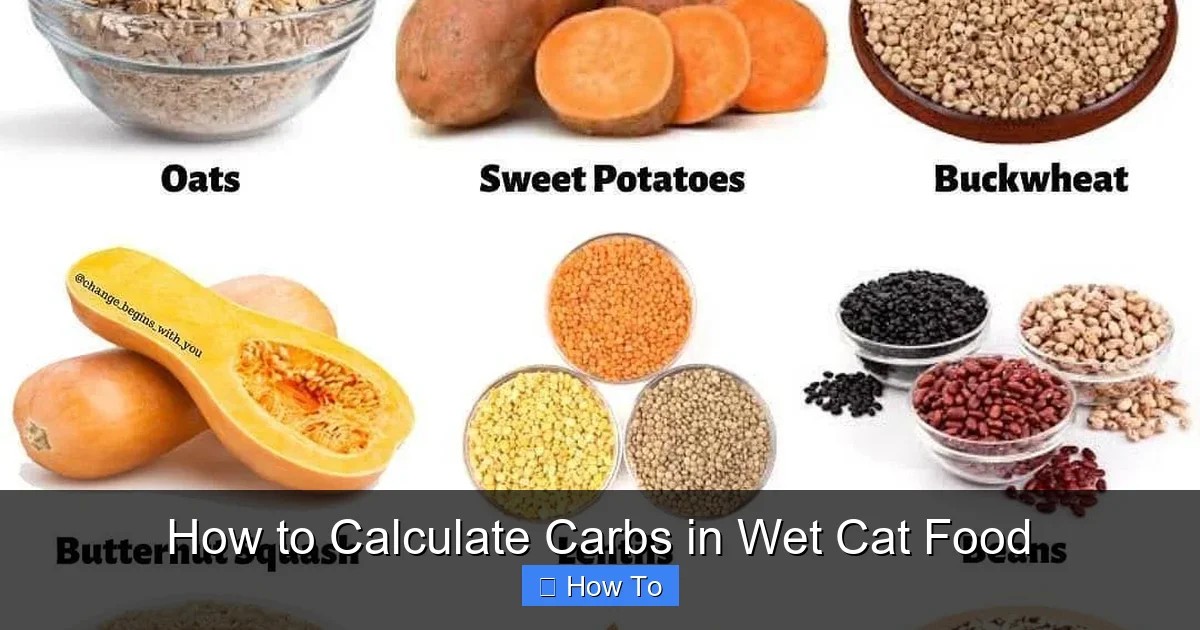
Visual guide about How to Calculate Carbs in Wet Cat Food
Image source: i.pinimg.com
Before you can calculate carbs, you need to know how to read a pet food label. The most important section for this task is the “Guaranteed Analysis.” This part lists the minimum or maximum percentages of key nutrients in the food.
Here’s what you’ll typically find:
- Crude Protein (minimum %): The amount of protein in the food.
- Crude Fat (minimum %): The amount of fat.
- Crude Fiber (maximum %): The indigestible portion of plant material.
- Moisture (maximum %): The water content—usually very high in wet food (70–85%).
- Ash (maximum %): The mineral content left after burning the food.
Note: Carbohydrates are not listed because they’re not considered an essential nutrient for pets. That’s why we have to calculate them indirectly.
Let’s look at a sample label:
Guaranteed Analysis (as fed):
- Crude Protein: 10.0%
- Crude Fat: 7.0%
- Crude Fiber: 1.5%
- Moisture: 78.0%
- Ash: 2.0%
This is a typical wet cat food label. Now, let’s use this data to calculate the carbohydrate content.
Step 1: Gather the Nutritional Information
The first step is to collect all the percentages from the guaranteed analysis. You’ll need:
- Protein (%)
- Fat (%)
- Fiber (%)
- Moisture (%)
- Ash (%)
Write these down or keep them handy. Make sure you’re looking at the “as fed” basis, not “dry matter.” The “as fed” values include moisture, which is crucial for accurate calculations.
For our example:
- Protein: 10.0%
- Fat: 7.0%
- Fiber: 1.5%
- Moisture: 78.0%
- Ash: 2.0%
Step 2: Add Up the Known Components
Now, add all the percentages together:
Protein + Fat + Fiber + Moisture + Ash = Total Known Percentage
So:
10.0 + 7.0 + 1.5 + 78.0 + 2.0 = 98.5%
This means 98.5% of the food is accounted for by these five components.
Step 3: Subtract from 100% to Find Carbohydrates
Since the total must equal 100%, the remaining percentage is carbohydrates (and possibly other minor components like sugar or additives, which are also carb-based).
Calculation:
100% – 98.5% = 1.5%
So, this wet cat food contains approximately 1.5% carbohydrates on an “as fed” basis.
That’s very low—great for a cat! But remember, this number includes all non-protein, non-fat, non-fiber, non-moisture, and non-ash components, which are mostly carbs.
Step 4: Convert to Dry Matter Basis (Optional but Helpful)
The “as fed” percentage includes water, which can make carb levels look deceptively low. To compare foods more accurately—especially when comparing wet to dry food—you may want to convert to a “dry matter basis.”
Dry matter basis removes the moisture so you’re only looking at the solid nutrients.
How to Calculate Dry Matter Carbohydrates
First, find the dry matter percentage:
100% – Moisture % = Dry Matter %
In our example:
100% – 78% = 22% dry matter
Now, calculate the carbohydrate percentage on a dry matter basis:
(Carbohydrate % as fed ÷ Dry Matter %) × 100
So:
(1.5% ÷ 22%) × 100 = 6.8%
This means the food contains about 6.8% carbohydrates on a dry matter basis.
This number is more useful for comparing to dry foods, which typically have 30–50% carbs on a dry matter basis. A wet food under 10% dry matter carbs is considered low-carb.
Practical Tips for Accurate Calculations
Double-Check the Label
Not all labels list ash. If ash isn’t included, your carb calculation will be slightly off. In that case, assume ash is around 2–3% for most wet foods. Add that to your total before subtracting from 100%.
For example, if ash isn’t listed, add 2.5% to your known total.
Watch for Hidden Carb Sources
Even if the calculated carb count is low, check the ingredient list. Ingredients like:
- Brown rice
- Potato starch
- Tapioca
- Corn gluten meal
- Pea fiber
…are all carbohydrate sources. If these appear high on the list, the food may still be higher in carbs than the calculation suggests—especially if the brand uses them as thickeners.
Use Online Calculators
If math isn’t your thing, try using a pet food carb calculator. The Pet Nutrition Alliance offers a free tool where you can input the percentages and get instant results. Just search “Pet Nutrition Alliance carb calculator” online.
Compare Multiple Brands
Once you know how to calculate, compare a few popular brands. You might be surprised by the differences. For example:
- Brand A: 1.2% carbs (as fed), 5.5% (dry matter)
- Brand B: 3.8% carbs (as fed), 18% (dry matter)
Even though both are wet foods, Brand B has over three times the carbs. That could matter for a diabetic cat.
Common Mistakes to Avoid
Ignoring Ash Content
Ash is often overlooked, but it’s a real part of the food. Skipping it will inflate your carb estimate. Always include it if listed, or estimate 2–3% if not.
Using Dry Matter Values Incorrectly
Don’t compare “as fed” carbs to “dry matter” carbs. They’re different scales. Always convert both foods to the same basis before comparing.
Assuming All Wet Food Is Low-Carb
Some wet foods use大量 starches to create a pâté or gravy texture. These can sneak in extra carbs. Always check the label and ingredients.
Forgetting About Additives
Some preservatives, flavor enhancers, or thickeners are carb-based. While they’re usually in small amounts, they still count toward the total.
Real-Life Example: Calculating Carbs in Two Popular Brands
Let’s compare two real-world examples.
Brand X: Chicken & Liver Pâté
- Protein: 11.0%
- Fat: 6.0%
- Fiber: 1.0%
- Moisture: 78.0%
- Ash: 2.5%
Step 1: Add known components:
11.0 + 6.0 + 1.0 + 78.0 + 2.5 = 98.5%
Step 2: Subtract from 100%:
100 – 98.5 = 1.5% carbs (as fed)
Step 3: Dry matter:
100 – 78 = 22% dry matter
(1.5 ÷ 22) × 100 = 6.8% carbs (dry matter)
Brand Y: Salmon with Rice in Gravy
- Protein: 9.0%
- Fat: 5.0%
- Fiber: 1.5%
- Moisture: 80.0%
- Ash: 2.0%
Step 1: Add known components:
9.0 + 5.0 + 1.5 + 80.0 + 2.0 = 97.5%
Step 2: Subtract from 100%:
100 – 97.5 = 2.5% carbs (as fed)
Step 3: Dry matter:
100 – 80 = 20% dry matter
(2.5 ÷ 20) × 100 = 12.5% carbs (dry matter)
Even though both are wet foods, Brand Y has nearly double the carbs. The rice in the gravy likely contributes to this.
When to Be Extra Cautious
Cats with Diabetes
Diabetic cats benefit from very low-carb diets. Aim for wet foods under 5% carbs on a dry matter basis. Calculate carefully and consult your vet.
Overweight Cats
Carbs can contribute to weight gain. Lower-carb wet foods help with weight management, especially when combined with portion control.
Kittens and Senior Cats
While kittens need more calories, they still don’t need carbs. Senior cats may have reduced metabolism, so low-carb diets can help maintain health.
Troubleshooting Common Issues
“My Calculation Doesn’t Add Up to 100%”
If your total is over 100%, you may have misread the label. Double-check the numbers. If it’s under 100%, the difference is carbs—just proceed as normal.
“The Ingredient List Shows Grains, But Carbs Are Low”
Sometimes grains are used in small amounts. The calculation is still accurate. Focus on the numbers, but also consider ingredient order.
“I Can’t Find Ash on the Label”
Estimate 2–3%. Most wet foods have ash in that range. It’s better to estimate than ignore it.
“My Cat Doesn’t Like Low-Carb Food”
Transition slowly. Mix the new food with the old, increasing the ratio over 7–10 days. Add a little warm water or broth to enhance smell and taste.
How to Choose the Best Low-Carb Wet Cat Food
Now that you know how to calculate carbs, use these tips to pick the best food:
- Meat as the first ingredient: Look for named meats like “chicken,” “turkey,” or “salmon”—not “meat by-products.”
- No grains or starches: Avoid rice, corn, wheat, potatoes, or tapioca.
- High protein, moderate fat: Protein should be the highest percentage after moisture.
- Low carb calculation: Aim for under 10% dry matter carbs, ideally under 5%.
- AAFCO statement: Ensure the food meets AAFCO standards for complete and balanced nutrition.
Conclusion
Calculating carbs in wet cat food might seem tricky at first, but it’s a simple process once you know the steps. By using the guaranteed analysis and basic subtraction, you can estimate carbohydrate content and make better choices for your cat’s health.
Remember: cats don’t need carbs, and too many can lead to health problems. Wet food is a great option, but not all wet foods are created equal. Some contain hidden carbohydrates from fillers and thickeners.
Use this guide to read labels, do the math, and compare brands. Whether your cat is healthy, diabetic, or overweight, knowing how to calculate carbs gives you the power to feed them right.
And when in doubt, talk to your veterinarian. They can help you choose the best diet based on your cat’s age, weight, and medical history.
With a little effort, you can ensure your feline friend gets the high-protein, low-carb nutrition they deserve—one can at a time.