
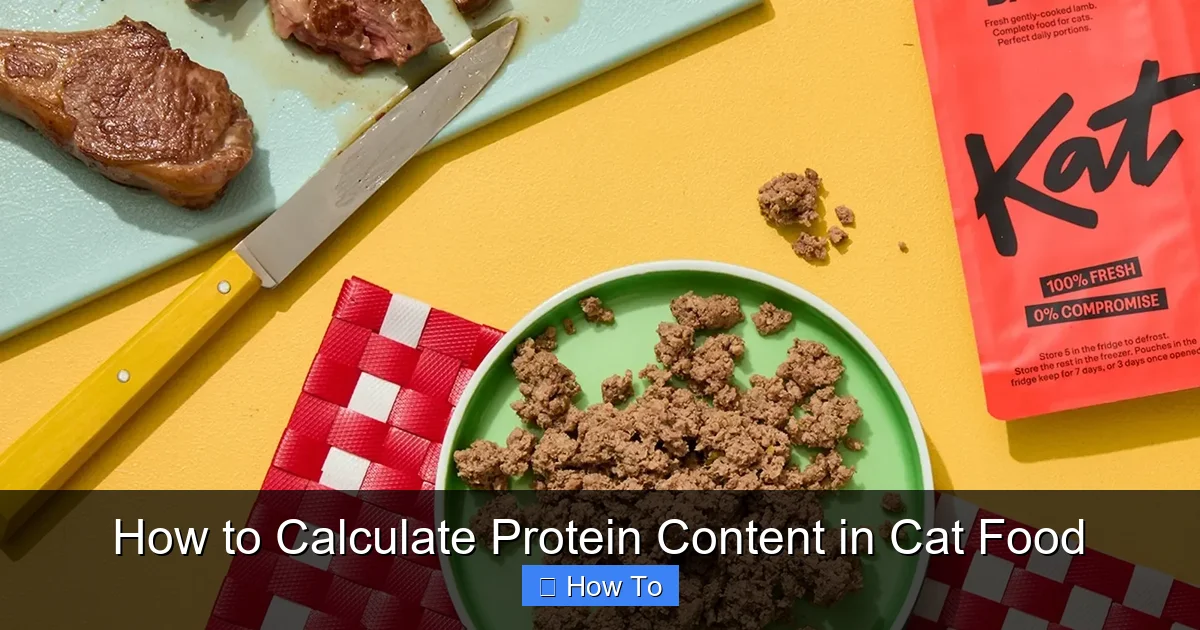
Understanding how to calculate protein content in cat food is essential for ensuring your feline gets the nutrition they need. This guide walks you through reading labels, converting percentages, and comparing brands effectively.
Key Takeaways
- Read the guaranteed analysis: Always check the label for protein, fat, moisture, and ash percentages to understand the nutritional breakdown.
- Convert to dry matter basis: Calculating protein on a dry matter basis removes moisture, giving a more accurate comparison between wet and dry foods.
- Know your cat’s needs: Adult cats need at least 26% protein on a dry matter basis, while kittens and pregnant cats require 30% or more.
- Watch for fillers and by-products: High-quality protein sources should be listed first, and avoid foods heavy in grains or unnamed meat meals.
- Use online calculators and tools: Free dry matter calculators can simplify the math and help you compare brands quickly.
- Consult your vet: Always discuss dietary changes with a veterinarian, especially for cats with health conditions like kidney disease.
- Track your cat’s response: Monitor energy, coat quality, and digestion to see if the protein level is working for your cat.
How to Calculate Protein Content in Cat Food
If you’re a cat parent who wants to make sure your furry friend is getting the best nutrition, you’re not alone. One of the most important nutrients in a cat’s diet is protein. Cats are obligate carnivores, which means they need a diet rich in animal-based protein to thrive. But here’s the catch: not all cat foods are created equal. Some may claim to be “high protein,” but when you dig into the details, the actual protein content might not be as impressive as it seems.
That’s why learning how to calculate protein content in cat food is so valuable. It empowers you to look beyond marketing claims and make informed decisions based on science and nutrition. Whether you’re comparing wet food to dry food, switching brands, or managing a health condition, knowing how to read and interpret protein levels can make a big difference in your cat’s health and happiness.
In this guide, we’ll walk you through everything you need to know—step by step. You’ll learn how to read pet food labels, convert protein percentages to a dry matter basis, understand what those numbers really mean, and choose the best food for your cat’s life stage and needs. We’ll also cover common pitfalls, helpful tools, and tips from veterinarians. By the end, you’ll be confident in your ability to evaluate cat food like a pro.
Let’s get started!
Why Protein Matters for Cats
Before we dive into the calculations, it’s important to understand why protein is so critical for cats. Unlike dogs or humans, cats have unique dietary requirements that stem from their biology as obligate carnivores. This means their bodies are designed to get essential nutrients—like taurine, arginine, and arachidonic acid—from animal tissue. They can’t synthesize these nutrients efficiently on their own, so they must come from their diet.
Protein provides the amino acids that support everything from muscle maintenance and immune function to healthy skin and a shiny coat. Without enough high-quality protein, cats can develop serious health issues, including muscle wasting, heart problems, and vision loss.
The Association of American Feed Control Officials (AAFCO) sets nutritional standards for pet food. According to AAFCO, adult cat maintenance diets should contain a minimum of 26% protein on a dry matter basis, while growth and reproduction diets (for kittens and pregnant/nursing cats) should have at least 30% protein. These are minimums—many experts recommend higher levels, especially for active or indoor cats.
But here’s the problem: pet food labels don’t always make it easy to see if a food meets these standards. That’s where learning to calculate protein content becomes essential.
Step 1: Read the Guaranteed Analysis on the Label
The first step in calculating protein content is to find the Guaranteed Analysis on the cat food label. This section is usually located on the back or side of the packaging and lists the minimum or maximum percentages of key nutrients.
Look for these four values:
- Crude Protein (minimum %)
- Crude Fat (minimum %)
- Crude Fiber (maximum %)
- Moisture (maximum %)
For example, a can of wet cat food might list:
- Crude Protein: 10.0% (min)
- Crude Fat: 6.0% (min)
- Crude Fiber: 1.5% (max)
- Moisture: 78.0% (max)
At first glance, 10% protein might seem low—especially compared to a dry food that lists 32% protein. But here’s the catch: wet food has a lot of water, and that water dilutes the percentages. To make a fair comparison, we need to remove the moisture and calculate the protein on a dry matter basis.
Step 2: Understand the Difference Between As-Fed and Dry Matter Basis
Pet food labels show nutrient percentages on an as-fed basis, which includes moisture. This can be misleading when comparing wet and dry foods because dry food naturally has less water.
For example:
- A dry food might have 32% protein and 10% moisture.
- A wet food might have 10% protein and 78% moisture.
Even though the dry food looks much higher in protein, the actual protein content—when moisture is removed—might be closer than it seems.
That’s why we convert to a dry matter basis (DMB). This calculation removes the water and shows you what percentage of the food’s solid content is protein. It’s the most accurate way to compare different types of cat food.
Step 3: Calculate Protein on a Dry Matter Basis
Now for the math—don’t worry, it’s simpler than it sounds. Here’s how to calculate protein on a dry matter basis:
Gather the Numbers
You’ll need two values from the guaranteed analysis:
- Crude Protein (as-fed %)
- Moisture (as-fed %)
For our wet food example:
- Crude Protein = 10.0%
- Moisture = 78.0%
Calculate the Dry Matter Percentage
Subtract the moisture percentage from 100% to find the dry matter:
100% – 78% = 22% dry matter

Visual guide about How to Calculate Protein Content in Cat Food
Image source: wikihow.com
This means 22% of the food is solid material (protein, fat, fiber, ash, etc.), and 78% is water.
Divide Protein by Dry Matter
Now, divide the crude protein percentage by the dry matter percentage:
10.0% ÷ 22% = 0.4545
Convert to Percentage
Multiply by 100 to get the dry matter protein percentage:
0.4545 × 100 = 45.45%
So, this wet food contains approximately 45.5% protein on a dry matter basis—much higher than the 10% listed on the label!
Try It with Dry Food
Let’s do the same for a dry food:
- Crude Protein = 32.0%
- Moisture = 10.0%
Dry matter = 100% – 10% = 90%
Protein (DMB) = 32% ÷ 90% = 0.3555 → 35.6%
Even though the dry food has a higher as-fed protein percentage, the wet food actually has more protein when moisture is removed. This shows why dry matter calculations are so important.
Step 4: Compare Foods Fairly
Now that you know how to calculate dry matter protein, you can compare different cat foods accurately—whether they’re wet, dry, or semi-moist.
Let’s compare three popular brands:
Brand A (Wet Food)
- Protein (as-fed): 9.5%
- Moisture: 78%
- Dry matter: 22%
- Protein (DMB): 9.5 ÷ 22 = 43.2%
Brand B (Dry Food)
- Protein (as-fed): 34%
- Moisture: 10%
- Dry matter: 90%
- Protein (DMB): 34 ÷ 90 = 37.8%
Brand C (Wet Food)
- Protein (as-fed): 11%
- Moisture: 75%
- Dry matter: 25%
- Protein (DMB): 11 ÷ 25 = 44.0%
Even though Brand B has the highest as-fed protein, Brand C has the highest dry matter protein. This means Brand C provides more concentrated protein per bite.
Step 5: Check the Ingredient List
Calculating protein is only part of the story. You also need to look at where that protein comes from. Not all protein sources are equal.
The ingredient list is ordered by weight, so the first few ingredients matter most. Look for:
- Named animal proteins: “Chicken,” “Salmon,” “Turkey,” etc.
- Meat meals: “Chicken meal,” “Fish meal”—these are concentrated protein sources (but avoid “meat meal” or “animal by-product meal” without a named source).
Avoid foods where grains, fillers, or unnamed by-products are listed first. For example:
- ✅ Good: “Chicken, chicken meal, turkey meal, peas, potato protein…”
- ❌ Avoid: “Corn gluten meal, meat by-products, rice, soy protein concentrate…”
High-quality animal protein should make up the majority of the first five ingredients.
Step 6: Consider Your Cat’s Life Stage and Health
Not all cats need the same amount of protein. Here’s a quick guide:
Kittens (under 1 year)
Require high protein (30%+ DMB) for growth and development.
Adult Cats (1–7 years)
Need at least 26% DMB protein, but many benefit from 30–40% for muscle maintenance and energy.
Senior Cats (7+ years)
May need moderate protein, but quality is key. Avoid excess phosphorus if kidney issues are present.
Cats with Health Conditions
- Kidney disease: May require reduced protein, but never feed low-protein food without vet approval.
- Diabetes or obesity: High-protein, low-carb diets can help regulate blood sugar and support weight loss.
- Urinary issues: Wet food with moderate protein can help increase water intake.
Always consult your veterinarian before making dietary changes, especially for medical conditions.
Step 7: Use Online Tools and Calculators
You don’t have to do all the math by hand. Several free online tools can help you calculate dry matter protein quickly:
- Dry Matter Calculator by Pet Nutrition Alliance – Simple input fields for protein and moisture.
- Cat Food Calculator by Feline Nutrition Foundation – Compares brands and shows DMB values.
- Mobile Apps: Some pet nutrition apps let you scan barcodes and see analyzed data.
These tools save time and reduce errors, especially when comparing multiple products.
Troubleshooting Common Mistakes
Even experienced cat owners can make mistakes when evaluating protein content. Here are some common pitfalls and how to avoid them:
Mistake 1: Comparing As-Fed Percentages Directly
Don’t compare 10% protein in wet food to 30% in dry food without converting to dry matter. You’ll underestimate the wet food’s protein.
Mistake 2: Ignoring Ash Content
Ash is the mineral content left after burning food. High ash (over 8–10%) can indicate low-quality ingredients or excessive bone content. While not directly part of protein calculation, it affects overall nutrition.
Mistake 3: Overlooking Carbohydrates
High-carb ingredients (like corn, wheat, or potatoes) can displace protein in the diet. Look for low-carb options, especially for diabetic or overweight cats.
Mistake 4: Assuming “Grain-Free” Means High Protein
Grain-free doesn’t always mean high protein. Some grain-free foods use potato or tapioca as fillers, which can lower protein density.
Mistake 5: Not Checking for AAFCO Statements
Make sure the food meets AAFCO standards for your cat’s life stage. Look for a statement like: “Formulated to meet the nutritional levels established by the AAFCO Cat Food Nutrient Profiles.”
Tips for Choosing the Best High-Protein Cat Food
Now that you know how to calculate and evaluate protein, here are some practical tips to help you choose the best food:
1. Prioritize Animal-Based Protein
Look for whole meats or named meat meals as the first ingredients. Avoid vague terms like “poultry by-product meal” or “animal digest.”
2. Choose Wet Food When Possible
Wet food typically has higher protein and lower carbs than dry food. It also increases water intake, which is great for urinary health.
3. Rotate Proteins
Feeding a variety of protein sources (chicken, fish, turkey, duck) can prevent allergies and provide a broader amino acid profile.
4. Watch the Calorie Count
High-protein foods can be calorie-dense. Adjust portion sizes to avoid weight gain, especially for indoor cats.
5. Monitor Your Cat’s Response
After switching foods, watch for changes in energy, coat quality, stool consistency, and appetite. These are good indicators of whether the protein level is right.
Conclusion
Learning how to calculate protein content in cat food is one of the most empowering things you can do as a cat owner. It helps you cut through marketing hype, compare products fairly, and make choices that support your cat’s long-term health.
By reading the guaranteed analysis, converting to dry matter basis, checking ingredients, and considering your cat’s individual needs, you can ensure they’re getting the high-quality protein they require. And with the help of online tools and your veterinarian, the process becomes even easier.
Remember, every cat is unique. What works for one may not work for another. Stay observant, stay informed, and always prioritize your cat’s well-being. With the right knowledge and a little math, you can feed your feline friend with confidence—knowing they’re getting the nutrition they need to live a happy, healthy life.