
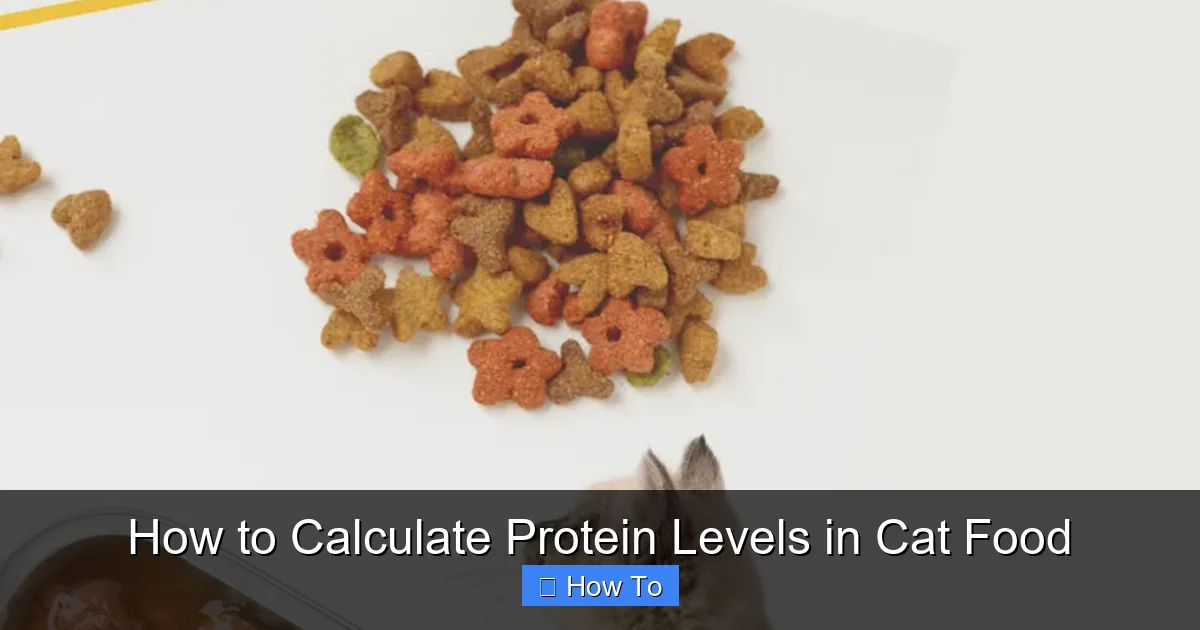
Understanding how to calculate protein levels in cat food helps you make informed decisions about your cat’s nutrition. This guide walks you through reading labels, converting values, and comparing brands to ensure your feline gets the right amount of protein.
Key Takeaways
- Read the guaranteed analysis: Always check the guaranteed analysis on the cat food label to find crude protein percentages.
- Convert to dry matter basis: Calculate protein levels on a dry matter basis for accurate comparisons between wet and dry foods.
- Understand moisture content: Wet food has high water content, which lowers the apparent protein percentage—adjust for this.
- Know your cat’s needs: Kittens, pregnant cats, and active adults need more protein than senior or less active cats.
- Compare brands fairly: Use dry matter calculations to compare protein levels across different food types and brands.
- Watch for misleading labels: High protein doesn’t always mean high quality—check ingredient lists for whole meat sources.
- Consult your vet: Always discuss dietary changes with a veterinarian, especially for cats with health conditions.
How to Calculate Protein Levels in Cat Food: A Complete Guide
If you’re a cat parent who cares about your feline friend’s health, you’ve probably asked yourself: “Is my cat getting enough protein?” Protein is one of the most critical nutrients in a cat’s diet. Unlike dogs, cats are obligate carnivores, meaning they must eat meat to survive. Their bodies rely on protein for energy, muscle maintenance, immune function, and overall vitality.
But here’s the catch: not all cat foods are created equal. Some labels boast “high protein,” but what does that really mean? How can you tell if your cat is actually getting the right amount? The answer lies in learning how to calculate protein levels in cat food accurately.
In this guide, we’ll walk you through everything you need to know—from reading pet food labels to performing simple math that reveals the true protein content. Whether you’re feeding wet food, dry kibble, or a mix of both, you’ll learn how to compare brands, understand moisture content, and make smarter choices for your cat’s long-term health.
By the end of this guide, you’ll be able to confidently assess any cat food product and determine whether it meets your cat’s nutritional needs. Let’s dive in.
Why Protein Matters for Cats

Visual guide about How to Calculate Protein Levels in Cat Food
Image source: eatplant-based.com
Before we get into calculations, it’s important to understand why protein is so vital for cats. Unlike humans and dogs, cats have unique metabolic needs. They can’t efficiently convert plant-based nutrients into usable energy. Instead, they rely on animal-based proteins to get essential amino acids like taurine, arginine, and methionine.
These amino acids support:
- Healthy heart function
- Clear vision
- Strong immune system
- Proper digestion
- Muscle development and maintenance
A lack of quality protein can lead to serious health issues, including muscle wasting, heart disease, and blindness. That’s why choosing a cat food with adequate protein isn’t just a preference—it’s a necessity.
But how much protein does your cat actually need? The answer depends on age, activity level, and health status. For example:
- Kittens: Need 30–40% protein for growth and development.
- Adult cats: Require 26–30% protein for maintenance.
- Senior cats: May need slightly less, but quality still matters.
- Pregnant or nursing cats: Need up to 40% protein to support kitten development.
These percentages are based on dry matter, which we’ll explain shortly. The key takeaway? Your cat’s life stage and health directly influence how much protein they need.
Understanding Cat Food Labels
The first step in calculating protein levels is learning how to read a cat food label. All commercial pet foods in the U.S. must include a “Guaranteed Analysis” on the packaging. This section lists minimum and maximum percentages of key nutrients, including:
- Crude protein (minimum %)
- Crude fat (minimum %)
- Crude fiber (maximum %)
- Moisture (maximum %)
Let’s focus on crude protein. This number represents the total amount of nitrogen-containing compounds in the food, which includes both true protein and non-protein nitrogen sources. While it’s not a perfect measure of protein quality, it’s the best starting point for comparison.
For example, a can of wet cat food might list:
- Crude protein: 10% (minimum)
- Moisture: 78% (maximum)
At first glance, 10% seems low—especially when compared to a dry food that lists 30% protein. But that’s because wet food contains a lot of water. To make a fair comparison, we need to adjust for moisture.
Step-by-Step: How to Calculate Protein on a Dry Matter Basis
To accurately compare protein levels across different types of cat food—wet, dry, or semi-moist—you need to calculate the protein content on a dry matter basis. This removes the water content and gives you the true proportion of protein in the food.
Here’s how to do it:
Step 1: Find the Crude Protein Percentage
Look at the guaranteed analysis on the label. Note the minimum crude protein percentage. For example:
- Wet food: 10% crude protein
- Dry food: 30% crude protein
Step 2: Find the Moisture Percentage
Next, find the maximum moisture percentage. This tells you how much water is in the food.
- Wet food: 78% moisture
- Dry food: 10% moisture
Step 3: Calculate the Dry Matter Percentage
Subtract the moisture percentage from 100% to find the dry matter.
- Wet food: 100% – 78% = 22% dry matter
- Dry food: 100% – 10% = 90% dry matter
Step 4: Divide Protein by Dry Matter
Now, divide the crude protein percentage by the dry matter percentage. This gives you the protein level on a dry matter basis.
For the wet food:
- 10% protein ÷ 22% dry matter = 0.4545
- Multiply by 100 to get a percentage: 45.45%
For the dry food:
- 30% protein ÷ 90% dry matter = 0.3333
- Multiply by 100: 33.33%
Step 5: Compare the Results
Now you can see the truth: the wet food actually has a higher protein content (45.45%) than the dry food (33.33%) when adjusted for moisture. This is why simply comparing the numbers on the label can be misleading.
Practical Example: Comparing Two Cat Foods
Let’s walk through a real-world example to make this even clearer.
Imagine you’re choosing between two brands:
Brand A (Wet Food):
- Crude protein: 11%
- Moisture: 75%
Brand B (Dry Food):
- Crude protein: 32%
- Moisture: 12%
At first glance, Brand B seems better—32% vs. 11%. But let’s calculate the dry matter protein.
For Brand A:
- Dry matter = 100% – 75% = 25%
- Protein on dry matter basis = (11 ÷ 25) × 100 = 44%
For Brand B:
- Dry matter = 100% – 12% = 88%
- Protein on dry matter basis = (32 ÷ 88) × 100 ≈ 36.36%
Result: Brand A (wet food) has a higher protein content on a dry matter basis (44%) than Brand B (36.36%). So even though the label makes it look inferior, it’s actually the better protein source.
Why Dry Matter Basis Matters
You might be wondering: why go through all this math? Can’t I just trust the label?
Unfortunately, no. Pet food labels are designed to meet regulatory requirements, not to make comparisons easy. Wet foods naturally have high moisture content, which dilutes the percentage of protein listed. Dry foods, on the other hand, have very little water, so their protein percentage appears higher.
But cats don’t eat “percentages”—they eat food. And the actual amount of protein they get depends on what’s left after you remove the water.
Using the dry matter basis allows you to:
- Compare wet and dry foods fairly
- Identify truly high-protein options
- Avoid being misled by marketing claims
- Make informed decisions based on nutrition, not packaging
Think of it like comparing orange juice to frozen concentrate. The juice has more water, so the vitamin C percentage looks lower—but the concentrate, when diluted, might actually have less. The dry matter basis is like looking at the pure vitamin content before water is added.
How to Use This Information When Shopping
Now that you know how to calculate protein levels, here’s how to apply this knowledge when shopping for cat food.
1. Always Check the Guaranteed Analysis
Don’t skip this step. Even if the front of the package says “high protein” or “grain-free,” the real story is in the fine print. Look for the crude protein and moisture percentages.
2. Calculate Dry Matter Protein for Every Product
Use the formula:
- Dry matter % = 100% – moisture %
- Protein (dry matter) = (crude protein % ÷ dry matter %) × 100
You can do this quickly with a calculator or even a smartphone app. Some pet nutrition websites also offer dry matter calculators online.
3. Aim for At Least 30–40% Dry Matter Protein
For most adult cats, a dry matter protein level of 30–40% is ideal. Kittens, pregnant cats, and highly active cats may need closer to 40% or higher.
If the dry matter protein is below 30%, the food may not meet your cat’s needs—especially if they’re young or active.
4. Don’t Forget About Protein Quality
High protein percentage doesn’t always mean high quality. Look at the ingredient list. The first ingredient should be a named animal protein, such as:
- Chicken
- Turkey
- Salmon
- Beef
Avoid foods that list “meat by-products,” “animal digest,” or vague terms like “poultry meal” as the first ingredient. These are lower-quality protein sources.
5. Consider Your Cat’s Preferences and Needs
Some cats prefer wet food, while others love kibble. Wet food has the added benefit of increasing water intake, which is great for urinary health. Dry food is convenient and can help with dental health.
But regardless of form, the protein content should be adequate. Use your dry matter calculations to choose the best option for your cat’s lifestyle.
Common Mistakes to Avoid
Even experienced cat owners can make errors when evaluating protein levels. Here are some common pitfalls to watch out for:
1. Comparing Labels Directly Without Adjusting for Moisture
This is the biggest mistake. A wet food with 10% protein may actually be better than a dry food with 30% if you adjust for water content.
2. Ignoring the Ingredient List
Protein percentage tells you how much, but not how good it is. A food with 40% protein from plant sources (like peas or corn) won’t meet a cat’s needs as well as 35% from real meat.
3. Overlooking Life Stage Requirements
A senior cat doesn’t need the same protein level as a growing kitten. Make sure the food is appropriate for your cat’s age and health.
4. Assuming “Grain-Free” Means High Protein
Grain-free doesn’t automatically mean high protein. Some grain-free foods use legumes or potatoes as fillers, which can dilute protein quality.
5. Not Consulting a Veterinarian
If your cat has kidney disease, diabetes, or other health issues, their protein needs may differ. Always talk to your vet before making major dietary changes.
Troubleshooting: What If the Protein Level Is Too Low?
You’ve done the math, and the dry matter protein is below 30%. What now?
First, don’t panic. Not every meal needs to be perfect. But if this is your cat’s primary food, it’s worth considering a switch.
Here’s what you can do:
1. Supplement with High-Protein Treats
Add small amounts of cooked chicken, turkey, or freeze-dried meat treats to boost protein intake. Just make sure treats don’t exceed 10% of daily calories.
2. Mix in a Higher-Protein Food
Combine the current food with a higher-protein wet or dry food. Gradually increase the ratio over a week to avoid digestive upset.
3. Switch to a Better Brand
Use your dry matter calculations to find a food with at least 35–40% protein. Look for brands that list real meat as the first ingredient and have transparent labeling.
4. Monitor Your Cat’s Health
Signs of protein deficiency include:
- Weight loss
- Muscle wasting
- Dull coat
- Lethargy
- Poor wound healing
If you notice any of these, consult your vet immediately.
Advanced Tips for Serious Cat Nutrition Enthusiasts
If you’re really passionate about your cat’s diet, here are a few advanced tips:
1. Calculate All Nutrients on Dry Matter Basis
You can use the same method to calculate fat, fiber, and carbohydrate levels. This gives you a complete picture of the food’s nutritional profile.
For example, to calculate fat on dry matter basis:
- Dry matter % = 100% – moisture %
- Fat (dry matter) = (crude fat % ÷ dry matter %) × 100
2. Use Online Tools and Apps
Websites like PetFoodInfo.org and apps like “Pet Food Calculator” can help you compare brands and calculate dry matter values quickly.
3. Keep a Food Journal
Track what you feed your cat, including brand, protein percentage, and dry matter calculation. Note any changes in energy, coat quality, or digestion. This helps you identify what works best.
4. Consider Homemade or Raw Diets (With Caution)
Some owners choose to prepare homemade or raw diets for maximum control over ingredients. However, these require careful balancing to avoid deficiencies. Always work with a veterinary nutritionist.
Final Thoughts: Empowering Your Cat’s Health
Learning how to calculate protein levels in cat food might seem like a small step, but it’s a powerful one. With this knowledge, you’re no longer at the mercy of marketing claims or misleading labels. You can make informed, science-based decisions that support your cat’s long-term health.
Remember, protein isn’t the only nutrient that matters—but for cats, it’s non-negotiable. By understanding how to read labels, adjust for moisture, and compare foods fairly, you’re giving your feline friend the best possible start.
Take the time to calculate the dry matter protein for your current cat food. You might be surprised by what you find. And if needed, make a gradual switch to a higher-quality option. Your cat will thank you with purrs, playfulness, and a shiny coat.
Conclusion
Calculating protein levels in cat food is a simple yet essential skill for any responsible cat owner. By using the dry matter basis method, you can cut through the confusion of pet food labels and make choices that truly benefit your cat’s health.
Start by reading the guaranteed analysis, noting the crude protein and moisture percentages. Then, apply the dry matter formula to compare foods accurately. Aim for a dry matter protein level of at least 30–40%, and always prioritize high-quality animal proteins in the ingredient list.
Don’t forget to consider your cat’s age, activity level, and health when evaluating their dietary needs. And when in doubt, consult your veterinarian.
With this guide, you’re now equipped to navigate the world of cat nutrition with confidence. Your cat deserves the best—and now, you know how to give it to them.