

Feeding your cat the right mix of wet and dry food is essential for their health and happiness. This guide walks you through how to calculate the perfect portions based on weight, age, activity level, and dietary needs—ensuring your furry friend gets balanced nutrition without overfeeding or underfeeding.
Key Takeaways
- Know your cat’s ideal weight: Use your cat’s current or target weight to determine daily caloric needs, which form the basis of portion calculations.
- Understand calorie content: Wet food typically has fewer calories per gram than dry food, so you’ll need to adjust portions accordingly to meet energy requirements.
- Balance wet and dry food: A mix of both supports hydration and dental health—aim for at least 50% wet food in most adult cat diets.
- Adjust for life stage and activity: Kittens, seniors, and active cats have different nutritional needs; tailor portions to match their lifestyle.
- Monitor body condition: Regularly check your cat’s weight and body shape to fine-tune portions and prevent obesity or malnutrition.
- Read labels carefully: Always check feeding guidelines on packaging, but treat them as starting points—individual cats vary.
- Consult your vet: For cats with health issues like diabetes or kidney disease, professional guidance ensures safe and effective feeding.
How to Calculate Wet and Dry Food for Cat
Feeding your cat the right amount of food might seem simple, but it’s one of the most important things you can do for their long-term health. Too little food can lead to malnutrition and weight loss, while too much can cause obesity, diabetes, and joint problems. The good news? With a little knowledge and attention, you can easily calculate the perfect balance of wet and dry food for your feline friend.
In this guide, you’ll learn how to determine your cat’s daily caloric needs, understand the differences between wet and dry food, and create a feeding plan that supports optimal health. Whether you’re feeding a playful kitten, a lazy senior, or a high-energy adult, this step-by-step approach will help you get it right—every time.
We’ll cover everything from reading food labels to adjusting portions based on your cat’s lifestyle. By the end, you’ll feel confident in your ability to nourish your cat properly, keeping them happy, healthy, and at their ideal weight.
Step 1: Determine Your Cat’s Daily Calorie Needs
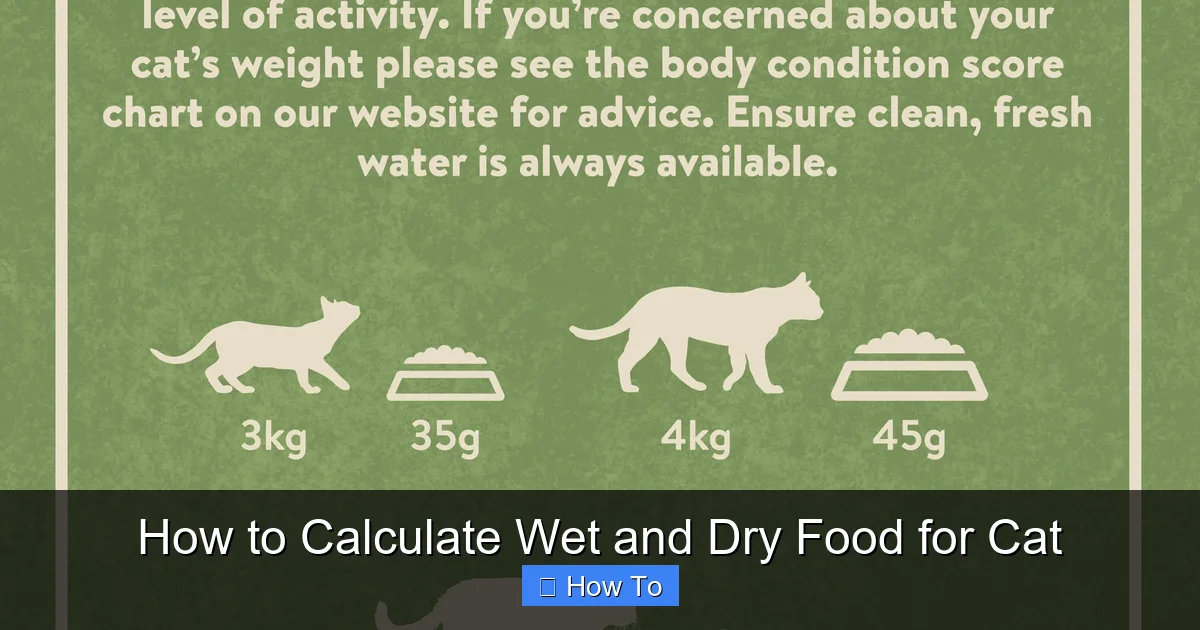
Visual guide about How to Calculate Wet and Dry Food for Cat
Image source: harringtonspetfood.com
The foundation of any feeding plan is knowing how many calories your cat needs each day. This number depends on several factors, including weight, age, activity level, and whether they’re spayed or neutered.
Calculate Resting Energy Requirement (RER)
Start by calculating your cat’s Resting Energy Requirement (RER)—the number of calories needed to maintain basic bodily functions at rest. Use this simple formula:
RER = 70 × (body weight in kg)^0.75
For example, a 4.5 kg (about 10 lb) cat would have an RER of:
70 × (4.5)^0.75 ≈ 70 × 3.34 ≈ 234 calories per day
Adjust for Life Stage and Activity Level
Once you have the RER, multiply it by a factor based on your cat’s lifestyle:
- Neutered adult cat: RER × 1.2
- Intact adult cat: RER × 1.4
- Kitten (under 4 months): RER × 2.5–3.0
- Kitten (4–12 months): RER × 2.0
- Senior cat (over 7 years): RER × 1.0–1.2 (may need fewer calories if less active)
- Active or outdoor cat: RER × 1.6–2.0
- Indoor, sedentary cat: RER × 1.0–1.2
Using our 4.5 kg example, a neutered indoor cat would need:
234 × 1.2 ≈ 281 calories per day
This is your cat’s daily caloric target. Now, you’ll divide this between wet and dry food.
Step 2: Understand Wet vs. Dry Food Nutrition
Not all cat food is created equal. Wet and dry foods differ in moisture, calorie density, and nutritional profile. Understanding these differences helps you make informed choices.
Wet Food: High Moisture, Lower Calories
Wet food typically contains 70–80% water, which helps keep your cat hydrated—especially important since many cats don’t drink enough water on their own. It’s also lower in carbohydrates and often higher in protein, making it a great choice for weight management and urinary health.
However, because it’s less calorie-dense, you’ll need to feed more by volume to meet your cat’s energy needs.
For example, a typical 5.5 oz (156 g) can of wet food contains about 150–200 calories. So, to reach 281 calories, your cat might need 1.5 to 2 cans per day—depending on the brand.
Dry Food: Convenient, Calorie-Dense
Dry food is convenient, cost-effective, and has a long shelf life. It’s also higher in calories per gram—usually 300–500 calories per cup (about 85–100 grams).
This means a small amount goes a long way. For our 4.5 kg cat needing 281 calories, just over half a cup of dry food might be enough.
But dry food has downsides: lower moisture content can contribute to dehydration and urinary tract issues, and some brands are high in carbohydrates, which aren’t ideal for obligate carnivores like cats.
Why a Mix Is Best
Most veterinarians recommend a combination of wet and dry food. Here’s why:
- Hydration: Wet food boosts water intake, reducing the risk of kidney and bladder problems.
- Dental health: Dry food can help scrape away plaque, though it’s not a substitute for brushing.
- Appetite stimulation: Some cats prefer the texture or smell of one type over the other—offering both keeps them interested.
- Weight control: Wet food’s lower calorie density helps prevent overeating.
Aim for at least 50% of your cat’s diet to come from wet food, especially if they’re prone to urinary issues or obesity.
Step 3: Read Food Labels Accurately
Feeding guidelines on packaging are helpful, but they’re not one-size-fits-all. Always use them as a starting point, not a rule.
Find the Calorie Content
Look for “calories per kilogram” or “kcal/kg” on the label. This tells you the energy density of the food. Then convert it to calories per can or cup.
For example:
- If wet food has 1,000 kcal/kg and a can weighs 156 g (0.156 kg), then:
1,000 × 0.156 = 156 calories per can - If dry food has 3,800 kcal/kg and a cup weighs 85 g (0.085 kg), then:
3,800 × 0.085 = 323 calories per cup
Compare Feeding Guidelines
A label might suggest feeding 1 can of wet food and ¼ cup of dry food per day for a 4.5 kg cat. But if that adds up to 156 + 80 = 236 calories, and your cat needs 281, you’re underfeeding.
Always do the math yourself using your cat’s specific caloric needs.
Check Ingredients
Look for high-quality protein sources (like chicken, turkey, or fish) as the first ingredient. Avoid foods with fillers like corn, soy, or by-products. For cats with sensitivities, grain-free or limited-ingredient diets may be better.
Step 4: Calculate Portions for Wet and Dry Food
Now it’s time to put it all together. Let’s use our 4.5 kg neutered indoor cat needing 281 calories per day as an example.
Option 1: 70% Wet, 30% Dry
This is a common and healthy ratio.
- Wet food: 70% of 281 = 197 calories
- Dry food: 30% of 281 = 84 calories
Now, convert calories to portions:
- If wet food has 156 calories per can:
197 ÷ 156 ≈ 1.26 cans → feed 1 full can and a little extra (about ¼ of another can) - If dry food has 323 calories per cup:
84 ÷ 323 ≈ 0.26 cups → about ¼ cup
So, feed 1.25 cans of wet food and ¼ cup of dry food daily.
Option 2: 50% Wet, 50% Dry
- Wet food: 140 calories → 140 ÷ 156 ≈ 0.9 cans (just under 1 can)
- Dry food: 140 calories → 140 ÷ 323 ≈ 0.43 cups (a little under ½ cup)
Feed 1 can of wet food and ½ cup of dry food.
Option 3: 100% Wet Food
Some owners prefer all-wet diets for hydration. In this case:
281 ÷ 156 ≈ 1.8 cans per day → feed 2 cans, split into two meals.
This works well for cats with kidney issues or low water intake.
Adjust for Multiple Meals
Most cats do best with 2–3 small meals per day. Split the total daily portion accordingly.
For example, with 1.25 cans and ¼ cup dry:
- Morning: ½ can wet + ⅛ cup dry
- Evening: ¾ can wet + ⅛ cup dry
Or offer dry food in a puzzle feeder for slow grazing.
Step 5: Monitor and Adjust Portions
Calculating is just the beginning. You must watch your cat’s body condition and adjust as needed.
Check Body Condition Weekly
Use the Body Condition Score (BCS) system:
- Score 1–3 (Underweight): Ribs, spine, and hip bones are highly visible. Increase food by 10–15%.
- Score 4–5 (Ideal): Ribs felt with slight fat cover, waist visible from above, abdominal tuck present. Maintain current portions.
- Score 6–9 (Overweight): Ribs hard to feel, no waist, rounded abdomen. Reduce food by 10–20%.
Weigh your cat every 2–4 weeks using a pet scale or by weighing yourself holding them and subtracting your weight.
Watch for Signs of Overfeeding
- Weight gain
- Lethargy
- Difficulty grooming
- Vomiting or diarrhea
Watch for Signs of Underfeeding
- Weight loss
- Visible ribs or spine
- Low energy
- Dull coat
If your cat gains or loses more than 10% of their body weight in a month, consult your vet.
Step 6: Special Considerations
Not all cats are the same. Adjust your feeding plan for unique needs.
Kittens
Growing kittens need more calories and frequent meals. Feed 3–4 times daily with high-protein, high-fat kitten food.
A 3-month-old kitten may need 2–3 times the RER. For a 2 kg kitten:
RER = 70 × (2)^0.75 ≈ 70 × 1.68 ≈ 118 calories
Daily need = 118 × 2.5 ≈ 295 calories
Feed a mix of wet and dry kitten food, ensuring at least 30% protein.
Senior Cats
Older cats often become less active and may develop health issues. They may need fewer calories but more easily digestible protein.
Monitor kidney function—many seniors benefit from wet food and lower phosphorus diets.
Pregnant or Nursing Cats
These cats need 2–3 times their normal calorie intake. Feed high-quality kitten food (higher in calories and nutrients) and increase portions gradually.
Cats with Health Conditions
- Diabetes: Low-carb, high-protein wet food is best. Feed at consistent times with insulin.
- Kidney disease: Low-phosphorus, high-moisture diets. Wet food is essential.
- Obesity: Portion control, low-calorie food, and increased activity. Avoid free-feeding dry food.
- Food allergies: Use hypoallergenic or limited-ingredient diets. Work with your vet.
Always consult your veterinarian before making major dietary changes for medical reasons.
Troubleshooting Common Feeding Problems
Even with the best plan, issues can arise. Here’s how to handle them.
My Cat Won’t Eat the Food I Calculated
Cats are picky! Try:
- Warming wet food to body temperature (enhances smell)
- Mixing new food with old gradually
- Offering different textures (pâté, chunks, shreds)
- Using food toppers (broth, freeze-dried meat)
Never force-feed. If appetite loss lasts more than 24 hours, see a vet.
My Cat Is Gaining Weight
Reassess portions. Reduce by 10% and increase playtime. Switch to a weight-management formula if needed.
Avoid free-feeding dry food—it’s easy to overeat.
My Cat Is Losing Weight
Increase calories slightly. Rule out medical issues like hyperthyroidism or parasites. Offer more frequent, nutrient-dense meals.
My Cat Drinks Very Little Water
Increase wet food percentage. Add water or low-sodium broth to meals. Use a cat water fountain to encourage drinking.
Food Spoils or Is Left Uneaten
Wet food should be refrigerated after opening and used within 3–4 days. Discard uneaten wet food after 1 hour at room temperature.
Dry food can be left out for free-feeding, but measure daily to avoid overeating.
Conclusion
Calculating wet and dry food for your cat doesn’t have to be complicated. By understanding your cat’s caloric needs, reading labels carefully, and balancing moisture and nutrition, you can create a feeding plan that supports a long, healthy life.
Start with the RER formula, adjust for lifestyle, and choose a mix of wet and dry food that fits your cat’s preferences and health needs. Monitor their weight and body condition regularly, and don’t hesitate to tweak portions as needed.
Remember, every cat is unique. What works for one may not work for another. When in doubt, consult your veterinarian—they’re your best partner in keeping your feline friend thriving.
With a little effort and attention, you’ll master the art of feline feeding. Your cat will thank you with purrs, playfulness, and years of companionship.