
Switching your cat’s dry food doesn’t have to be stressful. This guide walks you through a safe, gradual transition to prevent digestive issues and ensure your cat accepts the new diet. Follow these expert tips for a smooth change every time.
Key Takeaways
- Gradual transition is essential: Sudden changes can upset your cat’s stomach. Mix the old and new food over 7–10 days to allow their digestive system to adjust.
- Choose the right food: Look for high-quality ingredients, appropriate life stage nutrition, andAAFCO certification to ensure your cat gets balanced nutrition.
- Watch for signs of intolerance: Vomiting, diarrhea, or lack of appetite may indicate the new food isn’t suitable. Consult your vet if symptoms persist.
- Maintain consistent feeding routines: Feed at the same times daily and avoid overfeeding during the transition to reduce stress on your cat’s system.
- Introduce variety slowly: If switching between flavors or brands, do so gradually to prevent picky eating or digestive upset.
- Hydration matters: Always provide fresh water, especially when feeding dry food, to support kidney and urinary health.
- Patience pays off: Some cats resist change. Stay calm, consistent, and positive to help your cat adapt comfortably.
How to Change Cat Dry Food: A Complete Step-by-Step Guide
Changing your cat’s dry food might seem simple, but doing it the right way is crucial for your pet’s health and happiness. Whether you’re upgrading to a higher-quality brand, switching due to allergies, or adjusting for age-related needs, a sudden change can lead to digestive upset, refusal to eat, or even long-term aversion to food. This comprehensive guide will walk you through the entire process—from choosing the right new food to monitoring your cat’s response—so you can make the switch safely and stress-free.
In this guide, you’ll learn how to transition your cat’s diet gradually, recognize signs of food intolerance, and maintain a consistent feeding routine. We’ll also cover practical tips for picky eaters, troubleshooting common problems, and why hydration is especially important when feeding dry food. By the end, you’ll feel confident in managing your cat’s dietary changes with care and knowledge.
Why You Might Need to Change Your Cat’s Dry Food

Visual guide about How to Change Cat Dry Food
Image source: images.salsify.com
There are many valid reasons to switch your cat’s dry food. Understanding why you’re making the change will help you choose the best option and explain the process to others in your household.
Health and Nutritional Needs
As cats age, their nutritional requirements change. Kittens need high-calorie, protein-rich food to support growth, while senior cats may benefit from lower-calorie diets with added joint support or fiber. If your vet recommends a special diet—such as one for kidney health, urinary tract issues, or weight management—switching foods becomes essential.
Food Allergies or Sensitivities
Some cats develop allergies to common ingredients like chicken, beef, or grains. Symptoms may include itchy skin, ear infections, vomiting, or diarrhea. In such cases, switching to a limited-ingredient or hypoallergenic formula can provide relief.
Improved Quality or Ingredients
You might decide to upgrade to a premium brand with higher protein content, fewer fillers, or natural preservatives. Many pet owners switch to grain-free, raw-inspired, or human-grade options for better overall health.
Availability or Cost Changes
Sometimes, your usual brand may become unavailable or too expensive. In these cases, finding a suitable alternative quickly is important—but still requires a gradual transition.
Behavioral or Appetite Issues
If your cat is losing interest in their current food or becoming picky, a flavor or texture change might reignite their appetite. Just remember: variety should be introduced slowly to avoid stomach upset.
How to Choose the Right New Dry Food
Before you begin the transition, it’s important to select a high-quality dry food that meets your cat’s specific needs. Not all cat foods are created equal, and making an informed choice will set the stage for a successful switch.
Check the Ingredient List
Look for a named animal protein as the first ingredient—such as “chicken,” “salmon,” or “turkey”—rather than vague terms like “meat meal” or “by-products.” Avoid foods with excessive fillers like corn, soy, or wheat, which offer little nutritional value.
Ensure AAFCO Compliance
The Association of American Feed Control Officials (AAFCO) sets nutritional standards for pet food. Look for a statement on the packaging that says the food is “complete and balanced” for your cat’s life stage (kitten, adult, or senior).
Consider Your Cat’s Age and Health
Choose a formula designed for your cat’s life stage. For example:
– Kittens: High in calories, protein, and DHA for brain development.
– Adults: Balanced protein, fat, and fiber for maintenance.
– Seniors: Lower in calories, with added glucosamine or omega-3s for joint and cognitive health.
If your cat has a medical condition, consult your vet before switching. Prescription diets are often necessary for conditions like diabetes, kidney disease, or urinary crystals.
Texture and Kibble Size Matter
Some cats prefer smaller kibble, while others like larger, crunchier pieces. If your cat has dental issues, softer or specially designed dental diets may be better. Observe your cat’s chewing habits and preferences when selecting a new food.
Read Reviews and Ask for Recommendations
Check online reviews from other cat owners, especially those with similar breeds or health concerns. Your veterinarian or local pet store staff can also offer trusted suggestions.
Step-by-Step Guide to Changing Cat Dry Food
Now that you’ve chosen the right new food, it’s time to begin the transition. The key to success is gradual change. Rushing the process can lead to digestive issues like diarrhea, vomiting, or refusal to eat.
Step 1: Gather Your Supplies
Before starting, make sure you have:
– The new dry food
– The current dry food
– A measuring cup or scale for accurate portions
– Fresh water
– A calm, quiet feeding area
Step 2: Start the Transition Gradually
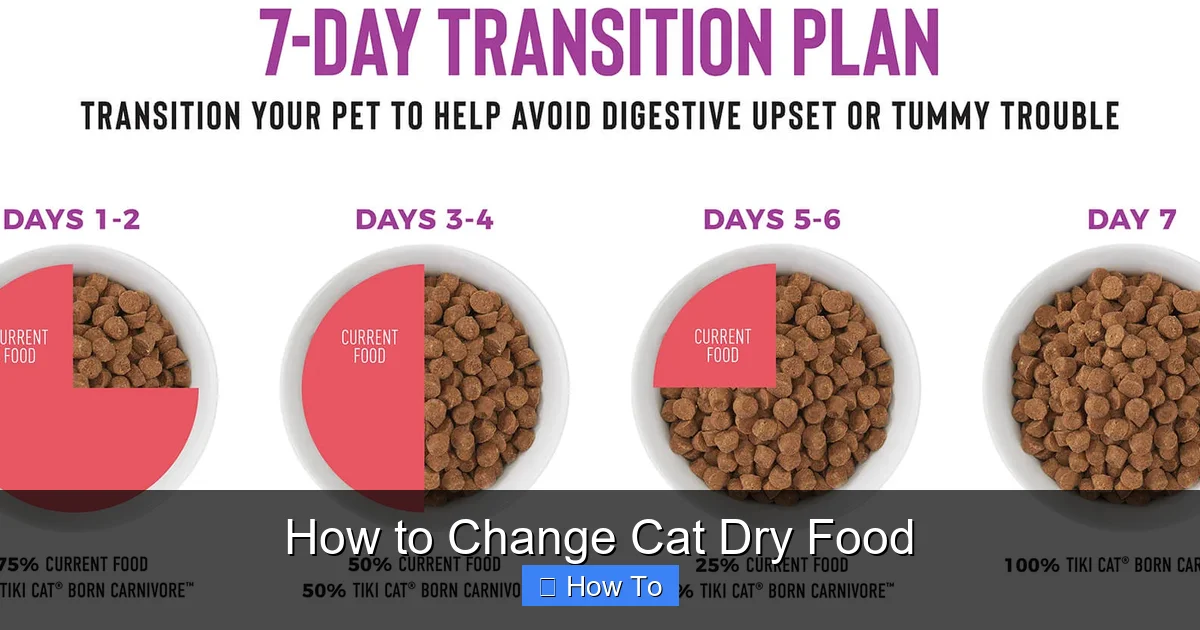
The safest method is to mix the old and new food over 7 to 10 days. This allows your cat’s digestive system to adapt slowly.
Here’s a sample transition schedule:
- Days 1–2: 75% old food + 25% new food
- Days 3–4: 50% old food + 50% new food
- Days 5–6: 25% old food + 75% new food
- Day 7 onward: 100% new food
Adjust the timeline if your cat shows signs of digestive upset. Some cats may need 10–14 days, especially if they have sensitive stomachs.
Step 3: Monitor Your Cat’s Response
Watch for any changes in behavior, appetite, or litter box habits. Normal signs of adjustment may include slight changes in stool consistency, but these should resolve within a day or two.
Red flags to watch for:
– Persistent vomiting
– Diarrhea lasting more than 24 hours
– Loss of appetite for more than 24 hours
– Lethargy or unusual behavior
If any of these occur, pause the transition and consult your veterinarian.
Step 4: Maintain Consistent Feeding Times
Cats thrive on routine. Feed your cat at the same times each day, and avoid free-feeding (leaving food out all day) during the transition. This helps regulate their digestion and makes it easier to monitor how much they’re eating.
Step 5: Offer Fresh Water Daily
Dry food contains very little moisture—typically less than 10%. Since cats have a low thirst drive, they rely on food for hydration. Always provide fresh, clean water in a bowl or fountain to support kidney and urinary health.
Step 6: Be Patient with Picky Eaters
Some cats are naturally cautious about new foods. If your cat sniffs but refuses to eat, don’t panic. Try these tips:
– Warm the food slightly (to room temperature or slightly warmer) to enhance aroma.
– Add a small amount of warm water or low-sodium broth to soften the kibble and release scent.
– Mix in a teaspoon of wet food or a favorite treat as a topper.
Never force-feed or starve your cat into eating. This can lead to hepatic lipidosis (fatty liver disease), a serious condition.
Troubleshooting Common Problems
Even with the best planning, issues can arise during a food transition. Here’s how to handle the most common challenges.
My Cat Won’t Eat the New Food
This is one of the most frequent concerns. Cats are creatures of habit and may reject unfamiliar textures or smells.
Solutions:
– Stick to the gradual mix longer—extend the transition to 10–14 days.
– Try a different flavor or brand if the first choice isn’t accepted.
– Offer the new food at room temperature or slightly warmed.
– Use a food topper like freeze-dried chicken or tuna flakes.
If your cat refuses to eat for more than 24 hours, contact your vet immediately.
My Cat Has Diarrhea or Vomiting
Mild digestive upset is common during transitions, but persistent symptoms are not normal.
What to do:
– Slow down the transition. Go back to a higher ratio of old food and increase the new food more slowly.
– Ensure the new food is high quality and not spoiled.
– Rule out other causes like parasites, infections, or stress.
If symptoms last more than 24–48 hours, or if your cat seems lethargic, seek veterinary care.
The New Food Causes Gas or Bloating
Some ingredients, like legumes or certain fibers, can cause gas in sensitive cats.
Tips:
– Choose a food with easily digestible proteins and limited fillers.
– Avoid foods with excessive peas, lentils, or beet pulp if your cat is gassy.
– Consider probiotics designed for cats to support gut health.
My Cat Is Gaining or Losing Weight
Changes in food can affect weight. High-calorie foods may lead to weight gain, while low-calorie options can cause weight loss.
Monitor:
– Weigh your cat weekly during the transition.
– Adjust portion sizes based on your vet’s recommendations.
– Choose a food appropriate for your cat’s activity level and body condition.
The New Food Doesn’t Seem to Agree with My Cat
Even high-quality foods may not suit every cat. If your cat shows ongoing signs of discomfort, itching, or digestive issues, the new food may not be the right fit.
Next steps:
– Return to the previous food temporarily.
– Try a different formula—perhaps a different protein source or grain-free option.
– Consult your vet to rule out food allergies or intolerances.
Tips for a Smooth Transition
A little preparation and patience go a long way. Here are some expert tips to make the process easier for you and your cat.
Keep a Feeding Journal
Track what you feed, how much, and your cat’s response. Note any changes in appetite, stool quality, energy levels, or behavior. This helps you identify patterns and share useful info with your vet if needed.
Involve the Whole Household
Make sure everyone in the house knows the transition plan. Inconsistent feeding can confuse your cat and slow down the process.
Use Positive Reinforcement
Praise your cat when they eat the new food. Avoid scolding or forcing—this can create negative associations.
Store Food Properly
Keep dry food in an airtight container in a cool, dry place. Exposure to air, heat, or moisture can cause spoilage and reduce palatability.
Don’t Mix Too Many Changes at Once
Avoid switching food, litter, toys, or routines simultaneously. Too many changes can stress your cat and make it harder to identify the cause of any issues.
When to Consult Your Veterinarian
While most food transitions go smoothly, some situations require professional guidance.
Contact your vet if:
– Your cat refuses to eat for more than 24 hours.
– There are signs of severe digestive upset (bloody stool, persistent vomiting).
– Your cat has a known medical condition (diabetes, kidney disease, etc.).
– You suspect a food allergy or intolerance.
– Your cat’s weight changes rapidly.
Your vet can recommend prescription diets, run allergy tests, or suggest supplements to support the transition.
Conclusion
Changing your cat’s dry food doesn’t have to be a stressful experience—for you or your feline friend. By choosing a high-quality food that meets your cat’s nutritional needs and transitioning gradually over 7 to 10 days, you can minimize digestive upset and help your cat adapt comfortably. Remember to monitor their response, maintain a consistent routine, and stay patient, especially with picky eaters.
Every cat is unique, so be prepared to adjust your approach based on their preferences and health. With the right preparation and care, your cat can enjoy the benefits of a new diet—whether it’s better digestion, a shinier coat, or improved energy levels. And when in doubt, your veterinarian is always the best resource for personalized advice.
Take it slow, stay observant, and trust the process. Your cat will thank you with purrs, cuddles, and a happy, healthy life.