
Choosing the right wet cat food can boost your cat’s health, hydration, and happiness. This guide walks you through ingredients, nutrition labels, life stage needs, and expert tips to make the best choice for your feline friend.
Key Takeaways
- Prioritize high-quality protein: Cats are obligate carnivores, so real meat should be the first ingredient in any wet food.
- Check the ingredient list: Avoid fillers like corn, soy, and artificial preservatives; look for whole, recognizable ingredients.
- Match food to life stage: Kittens, adults, and senior cats have different nutritional needs—choose accordingly.
- Consider your cat’s health: Cats with kidney issues, diabetes, or allergies may need specialized formulas.
- Read the nutrition facts panel: Ensure the food meets AAFCO standards and provides balanced nutrition.
- Introduce new food slowly: Sudden changes can upset your cat’s stomach—transition over 7–10 days.
- Consult your vet: Your veterinarian can recommend the best wet food based on your cat’s unique health profile.
How to Choose Wet Cat Food: A Complete Guide for Cat Parents
Welcome, cat lover! If you’re reading this, chances are you want the very best for your furry companion—and that starts with what’s in their food bowl. Wet cat food is a fantastic choice for many felines. It’s packed with moisture, often more palatable, and can support better kidney and urinary health. But with so many brands, flavors, and formulas on the market, how do you choose wet cat food that’s truly right for your cat?
This guide will walk you through every step of the decision-making process. From understanding ingredients to matching food to your cat’s life stage, we’ll cover everything you need to know. By the end, you’ll feel confident picking a wet food that supports your cat’s health, energy, and long-term well-being. Let’s dive in!
Step 1: Understand Why Wet Cat Food Matters
Before we get into the nitty-gritty of selection, let’s talk about why wet food is worth considering in the first place. Unlike dry kibble, wet cat food typically contains 70–80% water. This high moisture content helps keep your cat hydrated—something especially important since many cats don’t drink enough water on their own.

Visual guide about How to Choose Wet Cat Food
Image source: petfoodreviews.com.au
Dehydration can lead to urinary tract issues, kidney disease, and constipation. Wet food helps prevent these problems by naturally increasing fluid intake. Plus, the texture and aroma of wet food are often more appealing to picky eaters, making mealtime more enjoyable.
Another benefit? Wet food tends to have fewer carbohydrates than dry food. Cats are obligate carnivores, meaning their bodies are designed to thrive on a meat-based diet. Too many carbs can lead to weight gain and blood sugar spikes, especially in less active or older cats.
Bottom line: Wet cat food supports hydration, digestion, and overall health—making it a smart choice for most cats.
Step 2: Know What to Look for in the Ingredient List
The ingredient list is your first clue to a food’s quality. Ingredients are listed by weight, so the first few items matter most. Here’s what to look for—and what to avoid.
1. Real Meat as the First Ingredient
Cats need animal-based protein to stay healthy. Look for foods that list a specific meat—like chicken, turkey, salmon, or beef—as the first ingredient. Avoid vague terms like “meat meal” or “poultry by-products” unless they’re clearly defined.
For example, “chicken” is better than “chicken meal” (which is cooked and dried), but “chicken meal” is still acceptable if it’s high-quality and sourced responsibly. Just make sure it’s not the only protein source.
2. Limited Fillers and By-Products
Fillers like corn, wheat, soy, and rice offer little nutritional value and can be hard for cats to digest. They’re often used to bulk up the food cheaply. Similarly, artificial colors, flavors, and preservatives (like BHA, BHT, and ethoxyquin) should be avoided.
Instead, look for whole ingredients like sweet potatoes, peas, or carrots—these can be healthy in moderation. But remember: cats don’t need vegetables to survive. Protein should always come first.
3. Natural Preservatives Are a Plus
If a wet food needs preservatives, opt for natural ones like mixed tocopherols (a form of vitamin E) or ascorbic acid (vitamin C). These are safer and often indicate a higher-quality product.
4. Avoid Excessive Carbohydrates
While some carbs are okay, wet food should still be low in carbohydrates. Cats don’t have a biological need for them. High-carb diets can contribute to obesity and diabetes, especially in indoor cats.
Tip: If you see ingredients like potato starch, tapioca, or rice near the top of the list, it might be too carb-heavy.
Step 3: Check the Nutrition Facts Panel
Every can or pouch of wet cat food should have a “Guaranteed Analysis” and a statement about AAFCO compliance. Here’s how to read it like a pro.
1. Look for AAFCO Statement
The Association of American Feed Control Officials (AAFCO) sets nutritional standards for pet food. A food that meets AAFCO standards will say something like:
“[Product name] is formulated to meet the nutritional levels established by the AAFCO Cat Food Nutrient Profiles for [life stage].”
This means the food has been tested or formulated to provide complete and balanced nutrition. If it’s missing, proceed with caution.
2. Analyze the Guaranteed Analysis
This section lists the minimum percentages of crude protein and fat, and the maximum percentages of crude fiber and moisture. Here’s what to aim for:
- Protein: At least 30–40% on a dry matter basis (more on that below)
- Fat: 15–20% for most adult cats
- Fiber: Less than 5%
- Moisture: 70–80% (normal for wet food)
3. Calculate Dry Matter Basis
Because wet food has high moisture content, comparing protein percentages directly can be misleading. To compare fairly, convert the numbers to a “dry matter basis.”
Here’s how:
- Subtract the moisture percentage from 100. (Example: 100 – 78 = 22%)
- Divide the protein percentage by that number. (Example: 10% protein ÷ 0.22 = 45.5%)
So a food with 10% protein and 78% moisture actually has about 45.5% protein on a dry matter basis—much higher than it first appears.
This step is crucial when comparing wet food to dry food or different wet brands.
Step 4: Match the Food to Your Cat’s Life Stage
Just like humans, cats have different nutritional needs at different ages. Feeding a kitten food to a senior cat—or vice versa—can lead to health problems.
Kittens (Under 1 Year)
Kittens are growing fast and need more calories, protein, and fat. Look for wet food labeled “kitten” or “growth.” These formulas are higher in energy and contain essential nutrients like DHA for brain development.
Tip: Feed kitten food until your cat’s first birthday, even if they seem big for their age.
Adult Cats (1–7 Years)
Adult cats need balanced nutrition to maintain weight, muscle mass, and energy. Choose a wet food labeled “adult” or “maintenance.” These are formulated to support overall health without excess calories.
If your cat is indoor-only or less active, look for “light” or “indoor” formulas that are lower in fat and calories to prevent weight gain.
Senior Cats (7+ Years)
Older cats often have slower metabolisms and may develop health issues like kidney disease or arthritis. Senior wet foods are typically lower in phosphorus (easier on the kidneys), higher in fiber (for digestion), and may include joint-supporting ingredients like glucosamine.
Some senior formulas also have added antioxidants to support immune health.
Pregnant or Nursing Cats
These cats need extra calories and nutrients. Feed a high-quality kitten or all-life-stages formula, as these are more nutrient-dense. Your vet may also recommend supplements.
Step 5: Consider Your Cat’s Health and Special Needs
Not all cats are the same. Health conditions, allergies, and sensitivities can influence the best wet food choice.
Kidney Disease
Cats with kidney issues need food that’s low in phosphorus and high in quality protein. Many veterinary diets (like Hill’s k/d or Royal Canin Renal) are specially formulated for this. Always consult your vet before switching.
Diabetes
Diabetic cats benefit from low-carb, high-protein wet food. Avoid foods with added sugars or starches. Some prescription diets are designed to help regulate blood sugar.
Urinary Tract Health
Wet food itself helps prevent urinary crystals and infections by increasing water intake. But some formulas add ingredients like cranberry or pH-balancing minerals for extra support.
Food Allergies or Sensitivities
If your cat has itchy skin, ear infections, or digestive issues, they might have a food allergy. Common allergens include beef, dairy, chicken, and fish.
Try a limited-ingredient diet with a novel protein (like duck, rabbit, or venison) and a single carbohydrate source (like peas or sweet potatoes). These foods reduce the chance of triggering an allergic reaction.
Weight Management
Overweight cats need fewer calories but still require high protein to maintain muscle. Look for “weight control” or “light” wet foods with added L-carnitine, which helps burn fat.
Avoid free-feeding wet food—portion control is key.
Step 6: Choose the Right Texture and Flavor
Even the healthiest food won’t help if your cat refuses to eat it. Texture and flavor matter—a lot.
Pate vs. Chunks in Gravy vs. Shreds
Some cats love smooth pate, while others prefer chunks in gravy or shredded meat. Try a few varieties to see what your cat likes. You can even mix textures to keep meals interesting.
Flavor Preferences
Most cats enjoy fish (like salmon or tuna), but some are picky. Chicken and turkey are usually safe bets. Avoid strong-smelling fish like mackerel if your cat is sensitive.
Tip: Rotate flavors occasionally to prevent boredom, but avoid sudden switches that could upset their stomach.
Temperature Matters
Many cats prefer food at room temperature or slightly warmed. Cold food from the fridge can be less aromatic and less appealing. Try warming a small amount in a bowl for 10–15 seconds in the microwave (stir well to avoid hot spots).
Step 7: Read Reviews and Compare Brands
With so many options, it helps to do a little research. Look for brands with a good reputation for quality and transparency.
Trusted Brands to Consider
- Wellness: Known for natural ingredients and no fillers.
- Blue Buffalo: Offers grain-free options and real meat first.
- Hill’s Science Diet: Vet-recommended with science-backed formulas.
- Royal Canin: Specialized diets for health conditions and breeds.
- Purina Pro Plan: High-protein options with probiotics.
- Tiki Cat: Premium, high-moisture food with exotic proteins.
Check customer reviews on sites like Chewy, Amazon, or Petco. Look for consistent praise about palatability, ingredient quality, and health improvements.
Also, visit the brand’s website. Reputable companies will explain their sourcing, manufacturing process, and testing procedures.
Step 8: Transition to New Food Gradually
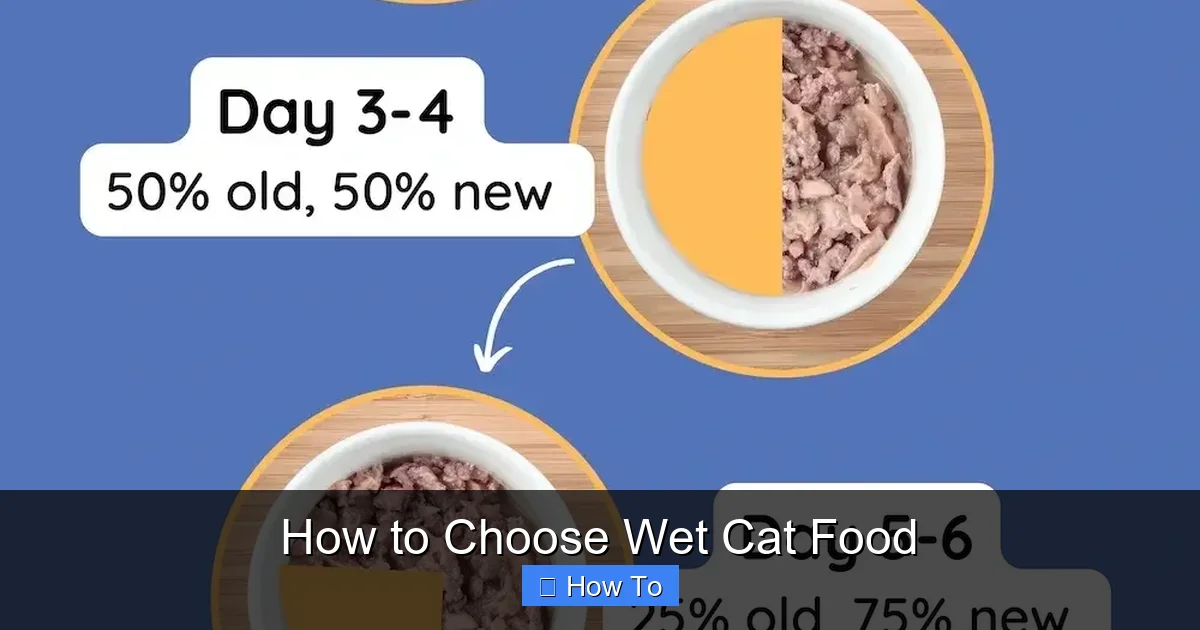
Switching your cat’s food too quickly can cause vomiting, diarrhea, or refusal to eat. Always transition over 7–10 days.
How to Transition Safely
- Days 1–2: Mix 25% new food with 75% old food.
- Days 3–4: Use 50% new and 50% old.
- Days 5–6: Try 75% new and 25% old.
- Day 7+: Serve 100% new food.
Monitor your cat’s stool, energy, and appetite during the transition. If they show signs of digestive upset, slow down the process or consult your vet.
Step 9: Store Wet Food Properly
Once opened, wet food doesn’t last long. Improper storage can lead to spoilage or bacterial growth.
Unopened Cans or Pouches
Store in a cool, dry place. Check expiration dates and rotate stock so older items are used first.
Opened Wet Food
Cover the can with a lid or plastic wrap and refrigerate. Use within 3–5 days. Don’t leave wet food out at room temperature for more than 1–2 hours, especially in warm weather.
Tip: Use a dedicated pet food container or silicone lid to keep food fresh and prevent odors in your fridge.
Step 10: Monitor Your Cat’s Response
After switching to a new wet food, keep an eye on your cat’s health and behavior.
Positive Signs
- Shiny coat
- Healthy weight
- Regular bowel movements
- High energy and playfulness
- Good appetite
Warning Signs
- Vomiting or diarrhea
- Lethargy or weight loss
- Itchy skin or excessive grooming
- Bad breath or dental issues
- Increased thirst or urination
If you notice any of these, stop the new food and consult your veterinarian. It could be an allergy, intolerance, or underlying health issue.
Troubleshooting Common Issues
My Cat Won’t Eat the New Food
Try warming it slightly, mixing in a small amount of tuna juice (in moderation), or offering it alongside a favorite treat. Some cats need time to adjust.
The Food Seems Too Rich
If your cat has loose stools or gas, the food might be too high in fat or protein. Switch to a gentler formula or transition more slowly.
My Cat Gains Weight on Wet Food
Even healthy food can lead to weight gain if portions are too large. Measure servings and avoid free-feeding. Choose a light formula if needed.
The Can Smells Bad
A strong, unpleasant odor could mean the food is spoiled or low-quality. Trust your nose—if it smells off, don’t feed it.
Final Thoughts: Making the Best Choice for Your Cat
Choosing the right wet cat food doesn’t have to be overwhelming. By focusing on high-quality ingredients, proper nutrition, and your cat’s individual needs, you can make a confident decision.
Remember: the best food is one that your cat enjoys, digests well, and supports long-term health. Don’t be afraid to try different brands or consult your vet for personalized advice.
Your cat depends on you for their well-being. With the knowledge from this guide, you’re now equipped to choose wet cat food that truly makes a difference.