
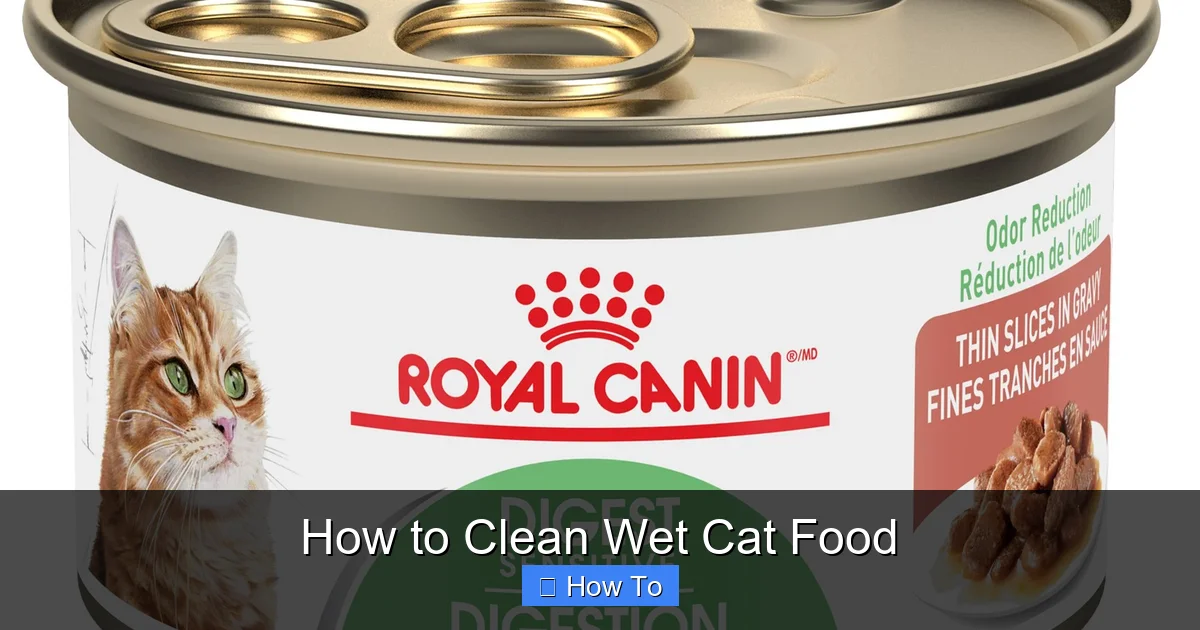
This guide teaches you how to clean wet cat food properly—from removing leftovers to sanitizing bowls and managing odors. Follow simple steps to maintain a healthy feeding environment for your feline friend.
Key Takeaways
- Remove uneaten food promptly: Discard leftover wet cat food within 1–2 hours at room temperature to prevent bacterial growth and spoilage.
- Wash bowls daily with hot, soapy water: Use a dedicated sponge or brush to scrub food bowls thoroughly after each meal.
- Sanitize feeding areas weekly: Wipe down surfaces, mats, and nearby areas with pet-safe disinfectants to eliminate lingering bacteria and odors.
- Store opened cans properly: Transfer unused portions to airtight containers and refrigerate for up to 5 days to maintain freshness.
- Use stainless steel or ceramic bowls: These materials are easier to clean and less likely to harbor bacteria compared to plastic.
- Address odors naturally: Baking soda and vinegar can neutralize smells without harsh chemicals that may harm your cat.
- Monitor your cat’s eating habits: Changes in appetite or food waste may signal health issues—consult your vet if needed.
How to Clean Wet Cat Food: A Complete Step-by-Step Guide
Keeping your cat’s feeding area clean isn’t just about tidiness—it’s essential for your pet’s health and well-being. Wet cat food, while nutritious and delicious for your furry friend, can quickly become a breeding ground for bacteria, mold, and unpleasant odors if not handled properly. Unlike dry kibble, wet food spoils rapidly once exposed to air and room temperature. That’s why knowing how to clean wet cat food effectively is a vital skill for every responsible cat owner.
In this comprehensive guide, you’ll learn everything you need to know about managing wet cat food hygiene. From immediate cleanup after meals to long-term storage and deep cleaning routines, we’ll walk you through each step with practical tips and expert advice. Whether you’re a new cat parent or a seasoned pet lover looking to refine your routine, this guide will help you create a safe, clean, and welcoming dining experience for your cat.
By the end of this article, you’ll be equipped with a clear, actionable plan to keep your cat’s food fresh, their bowls spotless, and their feeding zone free from germs and odors. Let’s dive in!
Why Cleaning Wet Cat Food Matters
Wet cat food is packed with moisture, proteins, and fats—ingredients that make it highly perishable. Once opened, the clock starts ticking. Bacteria like Salmonella and E. coli can grow rapidly in warm environments, especially if food sits out for too long. These pathogens don’t just pose a risk to your cat; they can also affect humans who handle the food or clean the bowls.
Beyond health risks, spoiled wet food develops strong odors that can linger in your home. Mold may also form on the surface, making the food unsafe and unappetizing. Additionally, leftover food residue in bowls can lead to sticky buildup, attracting insects and encouraging bacterial colonies to thrive.
Cleaning wet cat food isn’t just about removing leftovers—it’s about creating a hygienic routine that supports your cat’s digestive health and overall comfort. A clean feeding area also encourages consistent eating habits. Cats are naturally fastidious animals; they’re more likely to eat from a clean bowl in a tidy space than from a dirty one that smells off.
Moreover, regular cleaning helps you monitor your cat’s appetite and food preferences. If you notice changes in how much they eat or how quickly they finish their meal, it could be a sign of dental issues, illness, or stress. By staying on top of cleanup, you’re also staying connected to your cat’s well-being.
In short, cleaning wet cat food is a small daily task with big benefits. It protects your cat from illness, keeps your home smelling fresh, and strengthens the bond between you and your pet through consistent, caring routines.
Step 1: Remove Uneaten Food Promptly
The first and most critical step in cleaning wet cat food is removing any uneaten portions as soon as possible. Time is your enemy when it comes to wet food spoilage. At room temperature (around 70°F or 21°C), bacteria can double every 20 minutes. That means a small amount of leftover food can become a health hazard in just a few hours.
How Long Can Wet Cat Food Sit Out?
As a general rule, discard any wet cat food that has been left out for more than 1 to 2 hours. This timeframe may be shorter in warmer climates or during summer months. If your home is particularly warm or humid, err on the side of caution and remove leftovers after 1 hour.
If your cat only eats part of their meal, don’t leave the rest in the bowl hoping they’ll come back later. Even if the food looks fine, it may already be harboring invisible bacteria. Instead, follow these steps:
- Use a clean spoon or scoop to remove any remaining food from the bowl.
- Place the leftovers in a sealed container or zip-top bag.
- Label the container with the date and time.
- Refrigerate immediately if you plan to reuse it within 3–5 days (more on storage later).
- If the food has been out too long, throw it away—don’t risk it.
What If Your Cat Leaves Food Often?
Some cats are picky eaters or graze throughout the day. If your cat frequently leaves food uneaten, consider these strategies:
- Serve smaller portions: Offer half a can or less per meal. You can always give more if they’re still hungry.
- Use a timed feeder: Some automatic feeders can dispense small amounts at set intervals, reducing waste.
- Monitor eating patterns: Keep a log of when and how much your cat eats. This helps you adjust portion sizes and identify changes in appetite.
By removing uneaten food promptly, you’re not only preventing spoilage but also teaching your cat that fresh food is always available. This encourages healthy eating habits and reduces the risk of foodborne illness.
Step 2: Rinse and Wash Food Bowls Daily
Your cat’s food bowl is one of the most important items to clean—yet it’s often overlooked. Residue from wet food can cling to the sides and bottom of the bowl, creating a sticky film that’s hard to see but easy for bacteria to colonize. That’s why washing bowls after every meal is non-negotiable.
How to Wash Cat Food Bowls Properly
Follow these steps to ensure your cat’s bowls are truly clean:
- Rinse immediately: As soon as your cat finishes eating, rinse the bowl under warm water to remove loose food particles. This prevents drying and sticking.
- Use hot, soapy water: Fill a sink or basin with hot water and add a few drops of mild dish soap. Avoid antibacterial soaps unless labeled safe for pets—some chemicals can be toxic if ingested.
- Scrub thoroughly: Use a dedicated sponge or brush (not the one you use for human dishes) to scrub all surfaces of the bowl. Pay special attention to crevices, edges, and the base where food can accumulate.
- Rinse completely: Rinse the bowl under running water until all soap residue is gone. Soap can upset your cat’s stomach if ingested.
- Dry with a clean towel or air dry: Wipe the bowl with a paper towel or let it air dry upside down on a clean rack. Avoid using cloth towels that may carry bacteria.
Why Bowl Material Matters
Not all bowls are created equal when it comes to cleaning. Here’s a quick comparison:
- Stainless steel: Non-porous, rust-resistant, and easy to clean. Ideal for daily use and dishwasher-safe.
- Ceramic: Heavy and stable, but check for lead-free glazes. Avoid chipped or cracked bowls, as bacteria can hide in cracks.
- Glass: Smooth and non-reactive, but can break easily. Great for sensitive cats.
- Plastic: Lightweight and affordable, but porous and prone to scratches that trap bacteria. Not recommended for long-term use.
If you’re using plastic bowls, inspect them regularly for scratches or cloudiness. Replace them every few months or sooner if they show signs of wear.
Pro Tip: Use a Dishwasher (If Safe)
Many stainless steel and ceramic bowls are dishwasher-safe. If yours are, run them through a hot cycle with a pet-safe detergent. The high heat helps kill bacteria more effectively than hand washing. Just make sure the bowls are placed securely so they don’t tip over during the cycle.
Step 3: Sanitize Feeding Areas Weekly
While daily bowl washing is essential, your cat’s entire feeding area needs deeper cleaning on a weekly basis. This includes the floor, feeding mat, nearby surfaces, and even the cabinet where you store food.
How to Deep Clean the Feeding Zone
Follow this weekly routine to keep the area hygienic:
- Clear the area: Remove bowls, mats, toys, and any other items from the feeding zone.
- Vacuum or sweep: Use a vacuum or broom to remove crumbs, hair, and debris from the floor.
- Wipe surfaces: Use a damp cloth or pet-safe disinfectant wipe to clean the floor, table, or counter where the bowls sit. Pay attention to corners and under furniture.
- Wash the feeding mat: If you use a silicone or fabric mat, rinse it under warm water and scrub with soapy water. Let it air dry completely.
- Disinfect bowls again: Even if you wash bowls daily, give them a sanitizing soak once a week. Use a solution of 1 part white vinegar to 3 parts water, or a pet-safe disinfectant. Let them soak for 10–15 minutes, then rinse thoroughly.
- Check storage containers: Wipe down cans, jars, or containers used to store wet food. Replace any with dents, rust, or damaged seals.
Natural Cleaning Alternatives
If you prefer to avoid chemical cleaners, try these pet-safe options:
- White vinegar: Mix equal parts vinegar and water in a spray bottle. Spray on surfaces, let sit for 5 minutes, then wipe clean. Vinegar kills bacteria and neutralizes odors.
- Baking soda: Sprinkle on carpets or mats, let sit for 15 minutes, then vacuum. Great for absorbing smells.
- Hydrogen peroxide (3%): Use sparingly on hard surfaces. It’s effective against bacteria but can bleach fabrics.
Always test a small area first and ensure the area is well-ventilated. Never mix vinegar and hydrogen peroxide—it creates a harmful chemical reaction.
Step 4: Store Opened Wet Cat Food Correctly
Proper storage is just as important as cleaning when it comes to wet cat food. Once a can is opened, the food begins to oxidize and lose freshness. Exposure to air, light, and warmth accelerates spoilage.
How to Store Leftover Wet Food
Follow these best practices:
- Transfer to an airtight container: Don’t leave food in the original can. The metal can react with the food and affect taste. Use a BPA-free plastic or glass container with a tight-fitting lid.
- Refrigerate immediately: Place the container in the fridge within 2 hours of opening. The ideal temperature is between 35°F and 40°F (2°C–4°C).
- Label and date: Write the date on the container so you know how long it’s been stored.
- Use within 3–5 days: Even in the fridge, wet food doesn’t last forever. Discard any leftovers after 5 days.
- Don’t freeze unless necessary: Freezing can alter texture and flavor. If you must freeze, use freezer-safe containers and thaw in the fridge before serving.
Can You Reheat Wet Cat Food?
Yes, but gently. If your cat prefers warm food, you can warm refrigerated wet food slightly. Never use a microwave—it can create hot spots that burn your cat’s mouth. Instead:
- Place the food in a bowl and set it in a sink of warm (not hot) water for 5–10 minutes.
- Stir well to distribute heat evenly.
- Test the temperature with your wrist—it should feel lukewarm, not hot.
Avoid reheating food more than once, as repeated warming increases bacterial risk.
Step 5: Manage Odors and Prevent Mess
Even with diligent cleaning, wet cat food can leave lingering smells—especially in multi-cat households or small spaces. Odors come from bacteria breaking down proteins and fats, and they can cling to bowls, mats, and carpets.
How to Eliminate Odors Naturally
Try these odor-fighting strategies:
- Use odor-absorbing bowls: Some stainless steel bowls have antimicrobial coatings that reduce smell.
- Place bowls on a raised mat: Silicone mats catch spills and are easy to wipe clean.
- Clean under bowls: Food particles can fall beneath bowls and rot. Lift bowls daily and wipe the area.
- Use an air purifier: A HEPA filter can help remove airborne particles and odors from the feeding area.
- Sprinkle baking soda: Lightly dust the area around the bowls once a week, then vacuum. Baking soda neutralizes acids that cause smells.
What Not to Do
Avoid using strong perfumes, air fresheners, or scented sprays near your cat’s food. Cats have highly sensitive noses, and artificial fragrances can deter them from eating. Plus, many air fresheners contain chemicals that are toxic to pets.
Troubleshooting Common Issues
Even with the best routines, problems can arise. Here’s how to handle common challenges:
Problem: Food Sticks to the Bowl
This often happens with fatty or gravy-based wet foods. To prevent sticking, rinse the bowl immediately after use. For stubborn residue, soak the bowl in warm, soapy water for 10–15 minutes before scrubbing.

Visual guide about How to Clean Wet Cat Food
Image source: s7d2.scene7.com
Problem: Bowls Develop a Slippery Film
This is a sign of soap buildup or bacterial biofilm. Switch to a different detergent or rinse more thoroughly. Consider using a vinegar rinse once a week to break down residues.
Problem: Food Smells Sour or Rancid
If opened food smells off, even when refrigerated, it may be spoiled. Discard it immediately. Check the expiration date on the can and ensure your fridge is cold enough.
Problem: Cat Refuses to Eat from Clean Bowls
Some cats are sensitive to smells left by detergents. Rinse bowls extra well or switch to a fragrance-free soap. You can also try boiling stainless steel bowls for 5 minutes to remove any lingering odors.
Problem: Mold Appears on Stored Food
Mold grows when food is exposed to air or stored too long. Always use airtight containers and discard food after 5 days. Never scrape off mold and eat the rest—mold toxins can penetrate deep into the food.
Conclusion
Cleaning wet cat food may seem like a small task, but it plays a big role in your cat’s health, happiness, and your home’s cleanliness. By following the steps in this guide—removing leftovers promptly, washing bowls daily, sanitizing weekly, storing food properly, and managing odors—you create a safe and inviting dining experience for your feline friend.
Remember, consistency is key. A few minutes of cleanup after each meal can prevent bigger problems down the line, from spoiled food to bacterial infections. Plus, a clean feeding area shows your cat that you care about their well-being.
Make cleaning part of your daily routine, and don’t hesitate to adjust based on your cat’s habits and preferences. With the right tools and techniques, keeping wet cat food clean is simple, effective, and rewarding.
Your cat deserves the best—start today by giving their feeding zone the attention it deserves.