

Choosing the right cat food can feel overwhelming—but it doesn’t have to be. This guide breaks down exactly how to compare cat food by focusing on ingredients, nutritional value, life stage needs, and budget, so you can make confident, informed decisions for your feline friend.
Key Takeaways
- Read the ingredient list first: Look for real meat as the first ingredient and avoid fillers like corn, soy, and by-products.
- Check the guaranteed analysis: Compare protein, fat, fiber, and moisture levels to ensure your cat gets balanced nutrition.
- Match food to life stage: Kittens, adults, and senior cats have different dietary needs—choose accordingly.
- Understand AAFCO statements: These labels confirm whether the food meets nutritional standards for your cat’s life stage.
- Consider your cat’s health needs: Cats with allergies, urinary issues, or weight problems may need specialized formulas.
- Compare cost per ounce or cup: Cheaper isn’t always better—calculate value based on serving size and quality.
- Transition slowly when switching foods: Sudden changes can upset your cat’s stomach—mix old and new food over 7–10 days.
How to Compare Cat Food: A Step-by-Step Guide for Pet Parents
Walking down the pet food aisle can feel like stepping into a maze. Rows of colorful bags, bold claims like “grain-free,” “natural,” and “vet recommended,” and prices that range from a few dollars to over twenty—how do you know which cat food is actually best for your furry friend?
The truth is, not all cat food is created equal. What works for one cat might not suit another. But with a clear, step-by-step approach, you can confidently compare cat food options and choose the one that supports your cat’s health, energy, and longevity.
In this guide, you’ll learn exactly how to compare cat food like a pro. We’ll cover everything from reading ingredient labels and understanding nutritional content to matching food to your cat’s life stage and health needs. By the end, you’ll have the tools to make smart, informed decisions—no vet degree required.
Step 1: Start with the Ingredient List
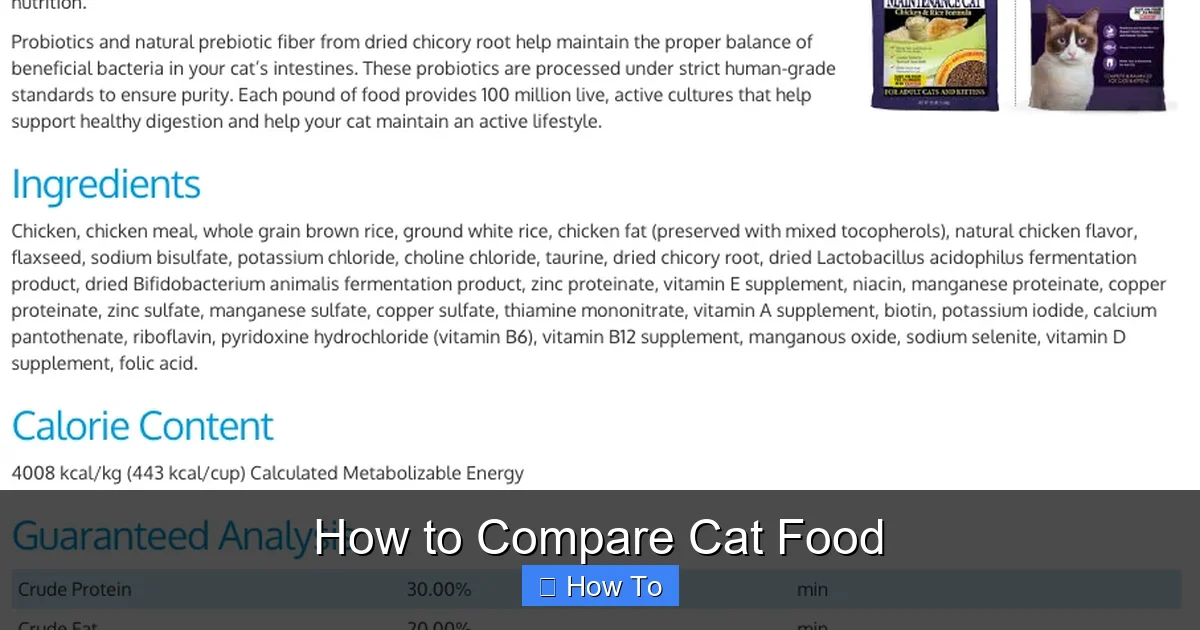
The ingredient list is your first clue to a cat food’s quality. Ingredients are listed by weight, so the first few items make up the bulk of the food. For cats—obligate carnivores—this list should be dominated by high-quality animal protein.
Visual guide about How to Compare Cat Food
Image source: media.consumeraffairs.com
Look for Real Meat as the First Ingredient
Cats need animal-based protein to thrive. That means the first ingredient should be a named meat source like “chicken,” “turkey,” or “salmon”—not “meat meal” or “poultry by-product.”
For example, a high-quality food might list:
- Deboned chicken
- Chicken meal
- Turkey meal
These are all excellent sources of protein. “Chicken meal” is rendered, dried chicken with moisture removed—it’s concentrated protein and perfectly safe.
Avoid Fillers and Artificial Additives
Watch out for ingredients that add little nutritional value. Common fillers include:
- Corn and corn gluten meal
- Soybean meal
- Rice bran
- Wheat gluten
These are often used as cheap protein substitutes or to bulk up the food. While small amounts aren’t harmful, they shouldn’t dominate the ingredient list.
Also, avoid artificial preservatives like BHA, BHT, and ethoxyquin. Natural preservatives like mixed tocopherols (a form of vitamin E) are safer and healthier.
Understand “By-Products” and “Meals”
You’ve probably seen these terms and wondered—are they bad?
Not necessarily. “Chicken by-products” can include nutrient-rich organs like liver and kidneys, which are highly digestible and packed with vitamins. The key is whether they’re named (e.g., “chicken liver”) and not vague (e.g., “meat by-products”).
“Meals” are concentrated protein sources made by cooking and drying meat. They’re more nutrient-dense than whole meat because water is removed. Just make sure the meal is named, like “salmon meal,” not “fish meal,” which could come from any fish species.
Step 2: Analyze the Guaranteed Analysis
The guaranteed analysis is a chart on the back or side of the bag that lists minimum and maximum percentages of key nutrients. It’s required by law, so every cat food must have one.
Here’s what to look for:
Protein (Minimum %)
Cats need high protein—ideally 30% or more for adult cats. Kittens and pregnant/nursing cats need even more (35–45%).
Compare protein levels across brands. For example:
- Brand A: 34% protein
- Brand B: 28% protein
Brand A is likely the better choice for most cats. But remember: the source matters. A food with 34% protein from chicken is better than one with 34% from corn.
Fat (Minimum %)
Fat provides energy and supports healthy skin and coat. Look for at least 9% fat for adult cats and 15–20% for kittens.
Like protein, fat should come from animal sources like chicken fat or salmon oil—not vegetable oils, which cats can’t efficiently use.
Fiber (Maximum %)
Fiber aids digestion, but too much can reduce nutrient absorption. Aim for 3–5% fiber. Higher levels may indicate more fillers.
Moisture (Maximum %)
This only applies to wet food. Canned food typically has 70–80% moisture, while dry food has 10% or less. Wet food helps with hydration, which is especially important for cats prone to urinary issues.
Compare Dry Matter Basis for Accuracy
Comparing wet and dry food directly can be misleading because of moisture differences. To compare fairly, convert values to a dry matter basis.
Here’s how:
- Subtract moisture % from 100 to get dry matter %.
- Divide the nutrient % by the dry matter %.
- Multiply by 100 to get the dry matter value.
Example: A wet food has 10% protein and 78% moisture.
- Dry matter = 100 – 78 = 22%
- Protein on dry matter basis = (10 ÷ 22) × 100 = 45.5%
Now you can compare it to a dry food with 35% protein—much more accurately.
Step 3: Check the AAFCO Statement
The Association of American Feed Control Officials (AAFCO) sets nutritional standards for pet food. Every bag should have an AAFCO statement, usually in small print near the guaranteed analysis.
There are two types:
- “Formulated to meet the nutritional levels established by the AAFCO Cat Food Nutrient Profiles” – The food was tested in a lab and meets standards.
- “Animal feeding tests substantiate that this product provides complete and balanced nutrition” – The food was tested in real feeding trials.
Both are acceptable, but feeding trials are more reliable. Also, check the life stage: “for growth” (kittens), “for maintenance” (adults), or “for all life stages.”
Avoid foods that say “not for long-term feeding” or lack an AAFCO statement—they may be incomplete or unbalanced.
Step 4: Match Food to Your Cat’s Life Stage and Health Needs
Just like humans, cats have different nutritional needs at different stages of life. Feeding the wrong food can lead to health problems.
Kittens (Under 1 Year)
Kittens grow rapidly and need more calories, protein, and fat. Look for food labeled “kitten” or “for growth.”
Key needs:
- High protein (35–45%)
- High fat (15–20%)
- Added DHA for brain and eye development
Feed kitten food until your cat is about 12 months old, or as recommended by your vet.
Adult Cats (1–7 Years)
Adult cats need balanced nutrition to maintain weight and energy. Choose food labeled “adult” or “maintenance.”
Key needs:
- Moderate protein (30–40%)
- Moderate fat (10–15%)
- Controlled calories to prevent obesity
Senior Cats (7+ Years)
Senior cats often have slower metabolisms and may develop health issues. Look for food labeled “senior” or “mature.”
Key needs:
- Easily digestible protein
- Lower phosphorus (to support kidney health)
- Added joint support (glucosamine, chondroitin)
- Higher fiber for digestion
Special Health Conditions
Some cats need specialized diets. Common conditions and dietary needs include:
- Urinary tract issues: Look for low magnesium, controlled pH, and increased moisture (wet food is best).
- Kidney disease: Low phosphorus, moderate protein, added omega-3s.
- Food allergies: Limited ingredient diets with novel proteins (duck, rabbit) and single carbs (sweet potato).
- Weight management: High protein, low fat, high fiber to promote satiety.
- Dental health: Dry kibble with dental benefits or specially designed kibble shapes.
Always consult your vet before switching to a therapeutic diet.
Step 5: Compare Wet vs. Dry Food
Both wet and dry food have pros and cons. The best choice depends on your cat’s needs and preferences.
Wet Food Benefits
- High moisture content (70–80%) helps prevent dehydration and urinary issues.
- More palatable for picky eaters.
- Lower in carbohydrates.
- Often higher in protein.
Wet Food Drawbacks
- More expensive per ounce.
- Shorter shelf life after opening.
- Can contribute to dental plaque if not balanced with dry food or dental care.
Dry Food Benefits
- Convenient and cost-effective.
- Long shelf life.
- Can help with dental health (though not a substitute for brushing).
Dry Food Drawbacks
- Low moisture content—cats may not drink enough water.
- Often higher in carbohydrates.
- May contain more fillers.
Best of Both Worlds: A Mixed Diet
Many vets recommend a combination of wet and dry food. For example:
- Wet food in the morning for hydration and protein.
- Dry food available throughout the day for convenience.
This approach supports hydration, dental health, and variety—keeping your cat happy and healthy.
Step 6: Evaluate Brand Reputation and Transparency
Not all brands are equally trustworthy. A reputable brand will be transparent about sourcing, manufacturing, and testing.
Ask These Questions:
- Where is the food made? (Look for U.S., Canada, or EU—regions with strict regulations.)
- Does the company perform feeding trials?
- Are ingredients sourced from trusted suppliers?
- Is the company open about recalls or quality issues?
Red Flags to Watch For
- Vague ingredient names (“meat meal,” “animal fat”).
- No AAFCO statement.
- Frequent recalls or negative reviews.
- Overuse of marketing buzzwords without substance.
Trusted Brands to Consider
While preferences vary, some brands consistently receive high marks for quality and transparency:
- Wellness
- Blue Buffalo
- Hill’s Science Diet
- Royal Canin
- Purina Pro Plan
- Instinct
- Tiki Cat
Research brands, read reviews, and ask your vet for recommendations.
Step 7: Compare Cost and Value
Price matters—but the cheapest option isn’t always the best value. A high-quality food may cost more upfront but can reduce vet bills and improve your cat’s health long-term.
Calculate Cost Per Ounce or Cup
To compare fairly, calculate the cost per unit.
Example:
- Brand A: $20 for a 10-lb bag (160 oz) = $0.125 per oz
- Brand B: $15 for a 6-lb bag (96 oz) = $0.156 per oz
Brand A is cheaper per ounce—even though the bag costs more.
Consider Feeding Amounts
High-quality food is often more nutrient-dense, so your cat may eat less. Check the feeding guidelines on the bag.
If Brand A recommends ½ cup per day and Brand B recommends ¾ cup, Brand A may still be the better value—even if it costs more per cup.
Factor in Health Benefits
A food that prevents urinary issues or supports kidney health can save hundreds in vet bills. Think long-term.
Step 8: Transition Slowly When Switching Foods
Even the best food won’t help if your cat won’t eat it—or gets sick from a sudden change.
How to Switch Safely
Over 7–10 days, gradually mix the new food with the old:
- Days 1–2: 25% new, 75% old
- Days 3–4: 50% new, 50% old
- Days 5–6: 75% new, 25% old
- Day 7+: 100% new
Watch for signs of digestive upset: vomiting, diarrhea, or loss of appetite. If symptoms occur, slow the transition or consult your vet.
Tips for Picky Eaters
- Warm wet food slightly to enhance aroma.
- Try different textures (pâté, chunks, shreds).
- Offer small portions to keep food fresh.
- Be patient—some cats take weeks to adjust.
Troubleshooting Common Issues
My Cat Won’t Eat the New Food
Try mixing in a topper like freeze-dried chicken or a small amount of tuna juice. Gradually reduce the topper as your cat adjusts.
My Cat Has Diarrhea After Switching
This is common during transitions. Slow the process, offer probiotics (vet-approved), and ensure the new food isn’t too rich.
My Cat Is Gaining Weight
Check feeding guidelines and measure portions. Switch to a weight management formula if needed. Increase playtime to boost activity.
My Cat Is Losing Weight
Consult your vet. Sudden weight loss can signal illness. The food may also be too low in calories or not palatable enough.
Conclusion
Comparing cat food doesn’t have to be confusing. By focusing on ingredients, nutrition, life stage, and value, you can make choices that support your cat’s health and happiness.
Remember: the best food is one that meets your cat’s unique needs, fits your budget, and is backed by quality and transparency. Don’t be swayed by flashy packaging or marketing claims—read the label, do your research, and trust your instincts.
Your cat depends on you for nourishment. With the tools in this guide, you’re now equipped to give them the very best.