

Choosing the right low carb cat food can improve your feline’s energy, weight, and overall health. This guide walks you through how to identify truly low carb options by reading labels, understanding ingredients, and avoiding hidden sugars.
Key Takeaways
- Understand why low carb matters: Cats are obligate carnivores and thrive on high-protein, low-carb diets. Excess carbs can lead to obesity, diabetes, and digestive issues.
- Read the guaranteed analysis: Look for carbohydrate content under 10% on a dry matter basis. Use the calculation method if not listed.
- Decode ingredient lists: Prioritize animal-based proteins first. Avoid fillers like corn, wheat, soy, and potatoes.
- Choose the right format: Wet food is naturally lower in carbs than dry kibble. Consider raw or freeze-dried options for minimal processing.
- Beware of hidden carbs: Ingredients like tapioca, pea fiber, and brown rice may sound healthy but add unnecessary carbohydrates.
- Consult your vet: Always discuss dietary changes with a veterinarian, especially for cats with health conditions like diabetes or kidney disease.
- Monitor your cat’s response: Track weight, energy, coat quality, and litter box habits to assess if the food is working.
How to Determine Low Carb Cat Food: A Complete Guide for 2026
If you’re a cat parent in 2026, you’ve probably heard the buzz around low carb cat food. With rising concerns about feline obesity, diabetes, and chronic inflammation, more pet owners are turning to diets that mimic what cats would eat in the wild—high in animal protein and low in carbohydrates. But here’s the catch: not all “low carb” labels are created equal. Some brands use clever marketing to make their food sound healthier than it really is.
In this guide, you’ll learn exactly how to determine low carb cat food so you can make informed choices for your furry friend. We’ll cover everything from reading labels and calculating carb content to spotting hidden sugars and choosing the best brands. By the end, you’ll have the tools to confidently pick a diet that supports your cat’s natural biology and long-term health.
Why Low Carb Matters for Cats
Before diving into the how-to, it’s important to understand why low carb diets are beneficial for cats. Unlike dogs or humans, cats are obligate carnivores. This means their bodies are designed to get energy primarily from protein and fat—not carbohydrates.
In the wild, a cat’s diet consists mostly of small prey like mice and birds, which are rich in protein and contain almost no carbs. Their digestive systems are short and efficient at breaking down meat, but they lack the enzymes needed to process large amounts of plant-based material.
When cats eat too many carbs—common in many commercial kibbles—their bodies convert the excess into fat. Over time, this can lead to:
- Weight gain and obesity
- Insulin resistance and type 2 diabetes
- Urinary tract issues
- Poor coat and skin health
- Reduced energy and lethargy
Studies from 2024 and 2025 show that cats on low carb, high-protein diets have better blood sugar control, healthier body weights, and fewer vet visits. So, choosing the right food isn’t just about trend—it’s about aligning with your cat’s biological needs.
Step 1: Understand What “Low Carb” Really Means
The term “low carb” isn’t regulated by the FDA or AAFCO (Association of American Feed Control Officials), which means any brand can claim it—even if the food is still high in carbohydrates. That’s why you need to dig deeper.
In 2026, most veterinarians and pet nutritionists agree that a truly low carb cat food should contain:
- Less than 10% carbohydrates on a dry matter basis
- High animal protein (35% or more)
- Moderate fat (15–20%)
But here’s the challenge: pet food labels don’t list carbohydrate content directly. You’ll need to calculate it yourself using the guaranteed analysis.
How to Calculate Carbohydrate Content
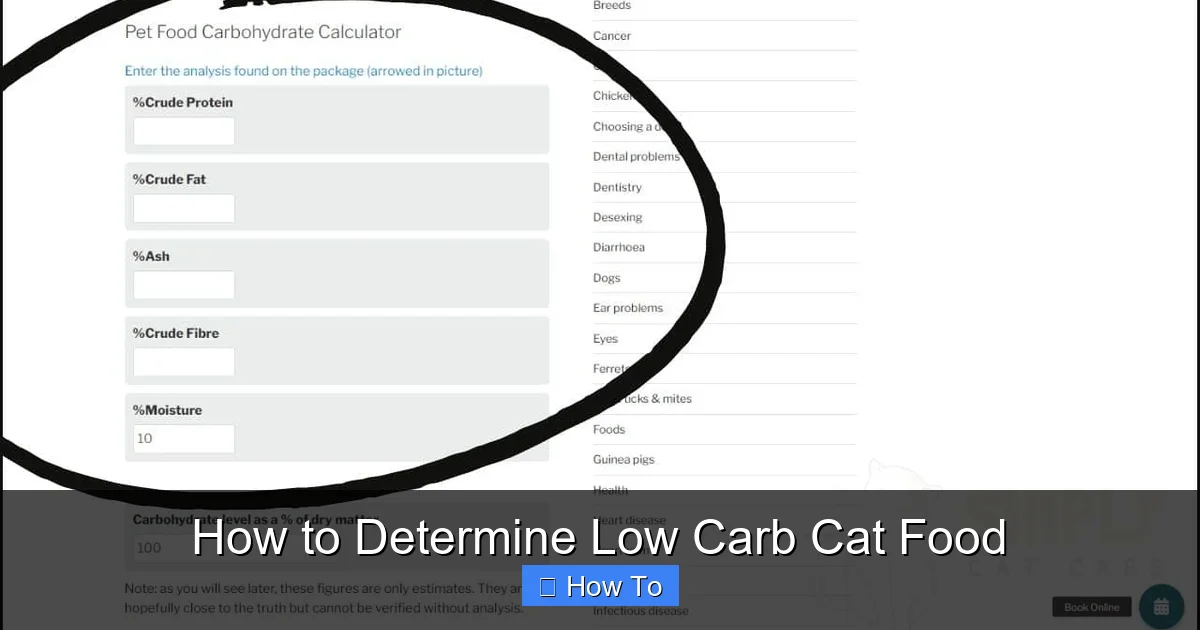
Most cat food labels show the percentages of protein, fat, moisture, and ash. To find the carb content, use this simple formula:
Carbohydrates (%) = 100 – (% Protein + % Fat + % Moisture + % Ash + % Fiber)
Visual guide about How to Determine Low Carb Cat Food
Image source: simplycatcare.com
Let’s say a can of wet food has:
- Protein: 10%
- Fat: 5%
- Moisture: 78%
- Ash: 2%
- Fiber: 1%
Calculation:
100 – (10 + 5 + 78 + 2 + 1) = 4%
That’s excellent—only 4% carbs! But remember, this is on an “as-fed” basis. To get the dry matter percentage (which removes water), use this formula:
Dry Matter Carbs (%) = (As-Fed Carbs %) / (100 – % Moisture) × 100
In our example:
(4 / (100 – 78)) × 100 = (4 / 22) × 100 ≈ 18.2%
Wait—that’s higher! But still under 20%, which is acceptable for many low carb diets. Aim for under 10% dry matter carbs for optimal results.
Step 2: Read the Ingredient List Like a Pro
Ingredients are listed by weight, so the first few items make the biggest impact. For low carb cat food, you want to see:
- Animal protein first: Look for named meats like “chicken,” “turkey,” “salmon,” or “duck.” Avoid vague terms like “meat meal” or “poultry by-product.”
- No grain fillers: Corn, wheat, soy, rice, and oats are high in carbs and offer little nutritional value to cats.
- Minimal plant-based ingredients: While some vegetables (like pumpkin or spinach) can be healthy in small amounts, they shouldn’t dominate the list.
Red Flags to Watch For
Even if a food claims to be “grain-free,” it might still be high in carbs. Watch out for these sneaky ingredients:
- Tapioca or cassava: A starchy root used as a binder. High in carbs.
- Pea fiber or lentils: Often used to boost fiber but add carbs.
- Potatoes or sweet potatoes: Common in “grain-free” kibble. Not ideal for low carb diets.
- Brown rice or barley: Whole grains, but still carb-heavy.
- Beet pulp: A fiber source that can spike carb content.
For example, a food listing “chicken, chicken meal, tapioca, peas, potato protein” might sound healthy—but the second, third, and fourth ingredients are all carb sources. That’s a red flag.
Green Lights: What to Look For
On the other hand, these ingredients support a low carb, high-protein diet:
- Chicken, turkey, or duck (whole or meal): High-quality protein sources.
- Eggs: Easily digestible and packed with nutrients.
- Organ meats (liver, kidney): Nutrient-dense and low in carbs.
- Fish (salmon, sardines, mackerel): Rich in omega-3s and protein.
- Natural fats (chicken fat, salmon oil): Provide energy without carbs.
Tip: If the first three ingredients are all animal-based, you’re on the right track.
Step 3: Choose the Right Food Format
Not all cat food formats are equal when it comes to carb content. Here’s how they compare in 2026:
Wet Food (Canned or Pouches)
Wet food is typically the best choice for low carb diets. Why?
- High moisture content (70–80%): Mimics natural prey and supports kidney health.
- Lower carb density: Because water takes up space, there’s less room for fillers.
- Less processing: Often contains fewer synthetic additives.
Most high-quality wet foods have dry matter carbs under 10%. Look for brands that use real meat and avoid thickeners like guar gum or carrageenan when possible.
Freeze-Dried and Raw Foods
These are the gold standard for low carb feeding. Freeze-dried and raw diets:
- Contain minimal processing
- Preserve natural enzymes and nutrients
- Have very low carb content (often under 5%)
- Can be rehydrated with water for added moisture
Popular brands in 2026 include Stella & Chewy’s, Primal Pet Foods, and Northwest Naturals. While more expensive, they’re ideal for cats with diabetes or food sensitivities.
Dry Kibble (Use with Caution)
Dry food is convenient and cost-effective, but it’s harder to find truly low carb options. Because kibble needs starch to hold its shape, most contain 20–50% carbs on a dry matter basis.
However, some brands are improving. Look for “high-protein, low-carb” kibble with:
- Animal protein as the first ingredient
- No grains or potatoes
- Carb content under 15% (aim for under 10%)
Brands like Ziwi Peak, Feline Natural, and Tiki Cat offer dry options with lower carb counts. Still, wet or raw food is usually a better choice.
Step 4: Use Online Tools and Apps
In 2026, technology makes it easier than ever to evaluate cat food. Several apps and websites can help you determine carb content and compare brands:
- PetFoodCalc (petfoodcalc.com): Enter the guaranteed analysis, and it calculates dry matter carbs instantly.
- CatFoodDB (catfooddb.com): A database of over 1,000 cat foods with detailed nutritional breakdowns.
- Chewy or Amazon filters: Use “high protein” and “grain-free” filters, then check reviews and labels.
- QR codes on packaging: Many brands now include QR codes that link to full nutritional reports.
These tools save time and reduce guesswork. Just scan or type in the info, and you’ll get a clear picture of whether the food is truly low carb.
Step 5: Watch for Marketing Traps
Pet food marketing can be misleading. Here are common tactics to avoid:
“Grain-Free” Doesn’t Mean Low Carb
Grain-free foods replace grains with other starches like peas, lentils, or potatoes—still high in carbs. Always check the ingredient list and calculate carbs.
“Natural” or “Holistic” Labels
These terms sound healthy but aren’t regulated. A food can be “natural” and still full of fillers.
“Vet Recommended” Claims
Some brands pay vets for endorsements. Look for independent reviews and scientific backing instead.
“Low Carb” on the Front, High Carbs Inside
Always flip the package and read the guaranteed analysis. Don’t trust the front label alone.
Step 6: Consult Your Veterinarian
Before switching your cat to a low carb diet—especially if they have health issues—talk to your vet. This is crucial for:
- Diabetic cats: Low carb diets can help regulate blood sugar, but dosage adjustments may be needed.
- Kidney disease: Some low carb foods are higher in phosphorus, which may not be suitable.
- Senior cats: Older cats may need adjusted protein levels.
- Kittens or pregnant cats: They have different nutritional needs.
Your vet can help you choose a food that’s safe and effective for your cat’s specific needs. They may also recommend blood tests to monitor progress.
Step 7: Monitor Your Cat’s Response
Switching to low carb food isn’t just about the label—it’s about how your cat responds. Track these signs over 4–6 weeks:
- Weight: Is your cat losing excess weight or maintaining a healthy body condition?
- Energy levels: More playfulness and alertness?
- Coat and skin: Shinier fur, less dander?
- Litter box habits: Firmer stools, less odor, and consistent urination?
- Appetite: Is your cat eating well and not begging for food?
If you notice improvements, you’re on the right track. If not, consider trying a different brand or format.
Troubleshooting Common Issues
My Cat Won’t Eat the New Food
Cats can be picky. Try:
- Mixing the new food with the old, gradually increasing the ratio over 7–10 days.
- Warming wet food slightly to enhance smell.
- Offering small portions multiple times a day.
- Trying a different protein (e.g., switch from chicken to fish).
The Food Is Too Expensive
Low carb, high-quality food can cost more. To save:
- Buy in bulk or subscribe for discounts.
- Look for sales at pet stores or online.
- Consider rotating between two affordable brands.
- Use dry food as a topper, not the main diet.
My Cat Has Diarrhea or Vomiting
This could be due to:
- A sudden diet change—slow the transition.
- Food intolerance—try a novel protein like rabbit or duck.
- Low fiber—add a small amount of pumpkin (plain, not pie filling).
If symptoms persist, see your vet.
Top Low Carb Cat Food Brands in 2026
Based on ingredient quality, carb content, and customer reviews, here are some of the best options:
- Weruva Cats in the Kitchen: High moisture, real meat, under 5% carbs.
- Tiki Cat Luau: Grain-free, high protein, available in wet and dry.
- Feline Natural: Freeze-dried raw, minimal ingredients, under 3% carbs.
- Ziwi Peak Air-Dried: Air-dried meat, no fillers, around 8% carbs.
- Smalls Fresh: Human-grade, fresh food delivery, customizable plans.
Always check the specific recipe—carb content can vary between flavors.
Conclusion
Determining low carb cat food in 2026 doesn’t have to be overwhelming. By understanding your cat’s nutritional needs, learning to read labels, and using the right tools, you can make confident choices that support their health and longevity.
Remember: low carb isn’t just a trend—it’s a return to what cats are biologically designed to eat. Focus on high-quality animal protein, avoid hidden carbs, and choose formats that maximize nutrition and moisture.
Start by calculating the carb content of your current food. Compare it to the brands listed here. Talk to your vet. And most importantly, observe how your cat responds.
With the right diet, your feline friend can enjoy better energy, a healthier weight, and a happier life—one meal at a time.