
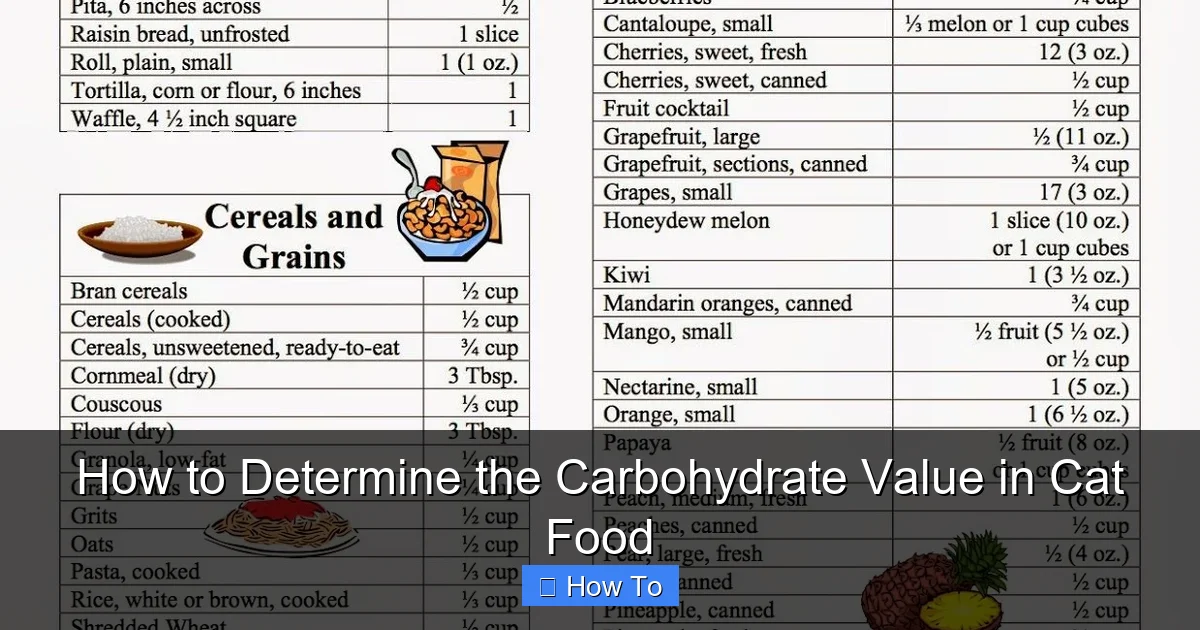
Understanding the carbohydrate content in your cat’s food is essential for supporting their natural carnivorous diet and overall health. This guide walks you through easy, accurate methods to calculate carbs using guaranteed analysis and ingredient lists—no lab testing required.
Key Takeaways
- Carbohydrates aren’t listed directly on pet food labels: You’ll need to calculate them using the guaranteed analysis and ingredient information.
- Use the “calorie subtraction” method: Subtract protein, fat, moisture, and ash from 100% to estimate carbohydrate percentage.
- Look for hidden carb sources: Ingredients like corn, wheat, rice, potatoes, and peas increase carbohydrate levels.
- Wet food typically has fewer carbs than dry food: Higher moisture content dilutes carb concentration in wet formulas.
- Choose low-carb options for diabetic or overweight cats: Cats thrive on high-protein, low-carb diets that mimic their natural prey-based nutrition.
- Online calculators and apps can help: Tools like the Pet Nutrition Alliance’s carb calculator simplify the process.
- Always consult your vet before making dietary changes: Individual health needs vary, especially for cats with medical conditions.
How to Determine the Carbohydrate Value in Cat Food
If you’ve ever looked at a bag of cat food and wondered, “How many carbs are really in this?”—you’re not alone. Unlike human food labels, pet food packaging in 2026 still doesn’t require manufacturers to list carbohydrate content directly. But here’s the good news: with a little know-how, you can calculate it yourself at home, using just the information on the label.
Cats are obligate carnivores, which means their bodies are designed to thrive on a diet high in animal protein and very low in carbohydrates. In the wild, a cat’s natural diet consists of small prey—think mice, birds, and insects—which provide minimal carbs. Yet many commercial cat foods, especially dry kibble, contain significant amounts of grains, starches, and plant-based fillers that boost carbohydrate levels.
Knowing how to determine the carbohydrate value in cat food empowers you to make smarter, healthier choices for your feline friend. Whether your cat is diabetic, overweight, or simply needs a more biologically appropriate diet, understanding carb content is a crucial step.
In this comprehensive guide, we’ll walk you through the step-by-step process of calculating carbohydrate levels in both wet and dry cat food. You’ll learn how to read labels, use simple math, and interpret ingredient lists like a pro. We’ll also share practical tips, tools, and expert advice to help you navigate the confusing world of pet nutrition in 2026.
By the end of this guide, you’ll be equipped with the knowledge and confidence to choose the best low-carb food for your cat—without needing a science degree or a lab coat.
Why Carbohydrate Content Matters for Cats
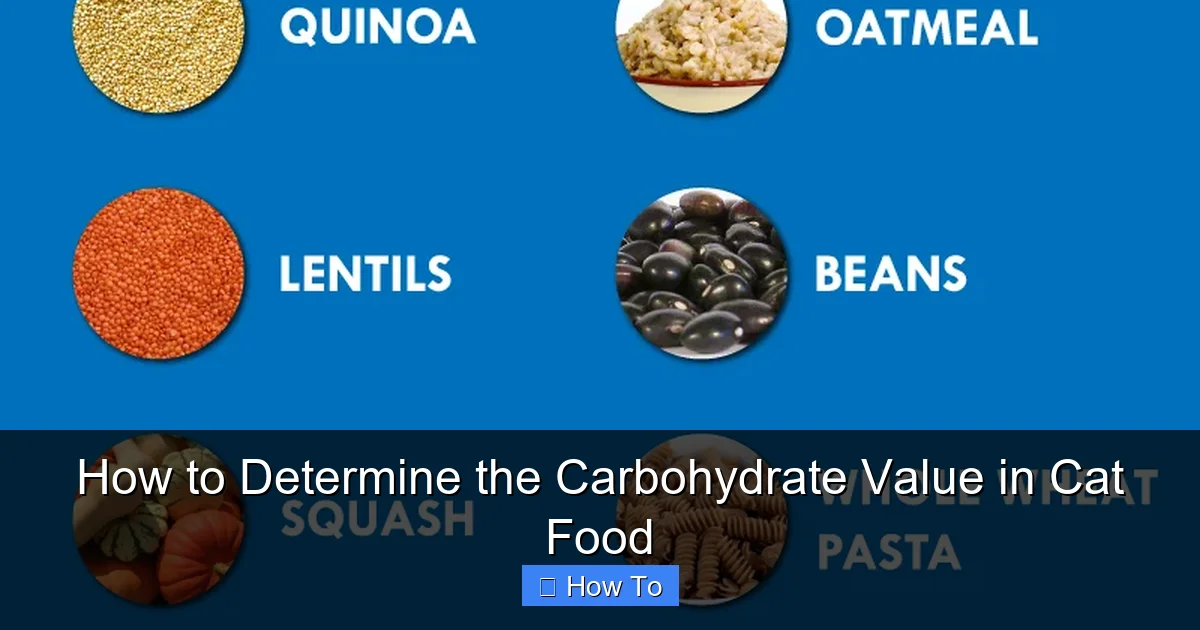
Visual guide about How to Determine the Carbohydrate Value in Cat Food
Image source: i.pinimg.com
Before diving into the how-to, it’s important to understand why carbohydrate levels matter so much for cats.
Unlike dogs and humans, cats have a limited ability to digest and utilize carbohydrates. Their bodies lack certain enzymes needed to efficiently break down starches and sugars. While small amounts of carbs won’t harm a healthy cat, consistently high-carb diets can lead to weight gain, insulin resistance, and even diabetes—especially in sedentary indoor cats.
In 2026, veterinary nutritionists continue to emphasize the importance of species-appropriate diets. Research shows that cats fed high-protein, low-carb diets tend to have better body condition, improved energy levels, and lower rates of chronic disease.
Moreover, many commercial cat foods—particularly dry kibble—use carbohydrates as fillers to bind ingredients, extend shelf life, and reduce production costs. These added carbs often come from ingredients like corn, wheat, rice, tapioca, and potatoes. While these aren’t inherently toxic, they’re not part of a cat’s natural diet and can contribute to long-term health issues if overconsumed.
By learning how to determine the carbohydrate value in cat food, you’re taking a proactive step toward supporting your cat’s digestive health, metabolic function, and overall well-being.
Understanding Pet Food Labels in 2026
To calculate carbohydrate content, you first need to understand what information is available on pet food labels—and what’s missing.
In the United States, pet food labeling is regulated by the Association of American Feed Control Officials (AAFCO), with oversight from the FDA. As of 2026, AAFCO guidelines still do not require manufacturers to list carbohydrate content directly. Instead, you’ll find a “Guaranteed Analysis” section that lists minimum percentages of crude protein and fat, and maximum percentages of crude fiber and moisture.
Here’s what you’ll typically see:
- Crude Protein (min): The total protein content, including both animal and plant sources.
- Crude Fat (min): The total fat content, essential for energy and skin health.
- Crude Fiber (max): The indigestible portion of plant material.
- Moisture (max): The water content, which varies greatly between wet and dry food.
- Ash (max): The mineral content left after burning off organic matter.
Note: Ash is not listed on all labels, but it’s often included in the guaranteed analysis or can be estimated.
The key to calculating carbohydrates lies in using these values to determine what’s left over—because everything in the food must add up to 100%.
Step-by-Step: How to Calculate Carbohydrate Content
Now that you understand the label, let’s get into the math. The most reliable method for estimating carbohydrate content is the “calorie subtraction” or “dry matter basis” method. Here’s how it works.
Step 1: Gather the Guaranteed Analysis
Start by locating the guaranteed analysis on the back or side of the cat food packaging. You’ll need the following values:
- Crude Protein (%)
- Crude Fat (%)
- Crude Fiber (%)
- Moisture (%)
- Ash (%) – if not listed, estimate at 6–8% for dry food and 1–2% for wet food
For example, let’s say you have a dry cat food with the following label:
- Crude Protein: 32% (min)
- Crude Fat: 12% (min)
- Crude Fiber: 4% (max)
- Moisture: 10% (max)
- Ash: 7% (max)
Step 2: Convert to Dry Matter Basis
Because moisture content varies so much between wet and dry food, we need to calculate everything on a “dry matter” basis—meaning we remove the water to compare apples to apples.
To do this, subtract the moisture percentage from 100%:
- Dry Matter = 100% – Moisture %
- In our example: 100% – 10% = 90% dry matter
Now, convert each nutrient to its dry matter percentage:
- Protein (dry matter) = (Crude Protein %) / Dry Matter
- Fat (dry matter) = (Crude Fat %) / Dry Matter
- Fiber (dry matter) = (Crude Fiber %) / Dry Matter
- Ash (dry matter) = (Ash %) / Dry Matter
Using our example:
- Protein: 32% / 90% = 35.6%
- Fat: 12% / 90% = 13.3%
- Fiber: 4% / 90% = 4.4%
- Ash: 7% / 90% = 7.8%
Step 3: Subtract to Find Carbohydrates
Now, subtract the sum of protein, fat, fiber, and ash from 100%. The remainder is primarily carbohydrates (including starches and sugars).
- Carbohydrates (dry matter) = 100% – (Protein + Fat + Fiber + Ash)
- In our example: 100% – (35.6 + 13.3 + 4.4 + 7.8) = 100% – 61.1% = 38.9%
So, this dry cat food contains approximately 38.9% carbohydrates on a dry matter basis.
Step 4: Interpret the Result
In general, a carbohydrate level below 10% is considered low, 10–20% is moderate, and above 20% is high for cats.
Our example food has nearly 39% carbs—quite high for an obligate carnivore. This suggests it contains significant plant-based ingredients, which may not be ideal for all cats, especially those with weight or metabolic issues.
Applying the Method to Wet Cat Food
Wet cat food typically has much higher moisture content—often 70–80%—which means the carbohydrate percentage will appear lower at first glance. But to compare it fairly to dry food, we still need to use the dry matter basis.
Let’s try an example with a wet food:
- Crude Protein: 10% (min)
- Crude Fat: 5% (min)
- Crude Fiber: 1.5% (max)
- Moisture: 78% (max)
- Ash: 2% (max)
Step 1: Calculate Dry Matter
- Dry Matter = 100% – 78% = 22%
Step 2: Convert to Dry Matter Basis
- Protein: 10% / 22% = 45.5%
- Fat: 5% / 22% = 22.7%
- Fiber: 1.5% / 22% = 6.8%
- Ash: 2% / 22% = 9.1%
Step 3: Calculate Carbohydrates
- Carbs = 100% – (45.5 + 22.7 + 6.8 + 9.1) = 100% – 84.1% = 15.9%
So, this wet food has about 15.9% carbohydrates on a dry matter basis—much lower than the dry food example. This makes it a better option for cats needing a low-carb diet.
Tips for Accurate Calculations
While the math is straightforward, a few tips can help ensure accuracy:
- Use maximum and minimum values wisely: The guaranteed analysis lists minimums for protein and fat, and maximums for fiber and moisture. For conservative estimates, use the minimum protein and fat values, and maximum fiber and moisture.
- Estimate ash if missing: If ash isn’t listed, use 6–8% for dry food and 1–2% for wet food. This won’t be exact, but it’s close enough for estimation.
- Check multiple cans or bags: Nutrient levels can vary slightly between batches. If possible, average values from a few packages.
- Use online calculators: Tools like the Pet Nutrition Alliance’s Carb Calculator (updated for 2026) can automate the math and reduce errors.
Reading Ingredient Lists for Hidden Carbs
Even with calculations, ingredient lists can reveal a lot about carbohydrate content. Ingredients are listed by weight, so the first few items make up the bulk of the food.
Look out for these common carbohydrate sources:
- Grains: Corn, wheat, rice, barley, oats, sorghum
- Starches: Potatoes, sweet potatoes, tapioca, peas, lentils
- By-products and fillers: Brewer’s rice, corn gluten meal, soybean meal
If any of these appear in the top three ingredients, the food likely has a high carbohydrate content—even if the calculated percentage seems moderate.
For example, a food listing “chicken, chicken meal, brown rice, peas, potato protein” suggests that rice and peas are major components, contributing significantly to carb load.
Conversely, a food listing “chicken, chicken liver, turkey, chicken meal, herring meal” with no grains or starches in the top five is likely very low in carbs.
Wet vs. Dry: Which Has Fewer Carbs?
In general, wet cat food contains fewer carbohydrates than dry food—especially when compared on a dry matter basis.
Why? Because dry kibble requires starches and binders to hold its shape during extrusion. These ingredients—like corn, wheat, or tapioca—are pure carbohydrates. Wet food, on the other hand, uses moisture and natural gelling agents (like agar or carrageenan) to achieve texture, reducing the need for added starches.
That said, not all wet foods are low-carb. Some brands add thickeners like potato starch or rice flour to improve consistency. Always check the ingredient list and do the math.
As a rule of thumb:
- High-quality wet food: 5–15% carbs (dry matter)
- High-quality dry food: 20–50% carbs (dry matter)
If your cat tolerates wet food well, switching to a high-protein, low-carb wet formula can be a great way to reduce carbohydrate intake.
Special Considerations for Health Conditions
Certain health conditions make carbohydrate control especially important:
Diabetes
Diabetic cats benefit greatly from low-carb diets. Reducing carbohydrate intake helps stabilize blood glucose levels and can even lead to remission in some cases. Aim for foods with less than 10% carbs on a dry matter basis.
Obesity
Overweight cats often consume excess calories from carbohydrates. Switching to a high-protein, low-carb food can help promote fat loss while preserving muscle mass.
Inflammatory Bowel Disease (IBD)
Some cats with IBD react poorly to certain carbohydrates or fillers. A low-carb, novel-protein diet may reduce gastrointestinal inflammation.
Kidney Disease
While kidney disease doesn’t directly require low-carb diets, reducing unnecessary fillers can ease the metabolic load on the kidneys. High-protein, low-carb foods with quality ingredients are often recommended.
Always work with your veterinarian to tailor your cat’s diet to their specific health needs.
Tools and Resources for 2026
Thankfully, you don’t have to do all the math manually. Several tools and resources can help:
- Pet Nutrition Alliance Carb Calculator: A free online tool that automates dry matter and carb calculations. Just input the guaranteed analysis, and it does the rest.
- Cat Food Database (2026 Edition): Websites like AllAboutCatFood.co.uk and CatInfo.org maintain updated databases with analyzed carb values for hundreds of brands.
- Mobile Apps: Apps like “Cat Food Analyzer” (iOS/Android) let you scan barcodes and instantly see carb percentages, ingredient ratings, and nutritional insights.
- Veterinary Nutritionists: Many vet clinics now offer nutritional counseling. A board-certified veterinary nutritionist can help you interpret labels and choose the best food.
These tools make it easier than ever to make informed decisions—even for busy pet parents.
Troubleshooting Common Challenges
Even with the best methods, you might run into a few hurdles. Here’s how to handle them:
“Ash isn’t listed on the label.”
Estimate it:
- Dry food: 6–8%
- Wet food: 1–2%
This won’t be exact, but it’s close enough for estimation.
“The calculated carb value seems too high or too low.”
Double-check your math. Common mistakes include:
- Forgetting to convert to dry matter basis
- Using moisture as a subtraction from 100% without adjusting other values
- Confusing “as-fed” with “dry matter” percentages
If the number still seems off, compare it to similar brands or use an online calculator to verify.
“My cat won’t eat low-carb food.”
Transition slowly. Mix the new food with the old, gradually increasing the ratio over 7–10 days. Some cats resist change, but persistence usually pays off. You can also try warming the food slightly to enhance aroma.
“I can’t find wet food with low carbs.”
Look for pâté-style wet foods with single-source proteins and no grains or starches. Brands like Tiki Cat, Weruva, and Feline Natural often have low-carb options. Avoid gravy-based foods, which may contain thickeners.
Conclusion
Determining the carbohydrate value in cat food doesn’t require a lab or a degree—just a little time, attention to detail, and the right method. By using the guaranteed analysis and converting to a dry matter basis, you can estimate carb content with surprising accuracy.
In 2026, as pet parents become more informed and proactive about nutrition, understanding how to read labels and calculate carbs is more important than ever. Cats thrive on high-protein, low-carb diets that mirror their natural biology. Whether you’re managing diabetes, supporting weight loss, or simply aiming for optimal health, choosing the right food starts with knowing what’s inside.
Remember: not all cat foods are created equal. Use this guide to compare brands, avoid hidden carbs, and make choices that support your cat’s long-term well-being. And when in doubt, consult your veterinarian—they’re your best partner in your cat’s health journey.
With the tools and knowledge in this guide, you’re now equipped to be a smarter, more confident cat parent. Your feline friend deserves nothing less.