

Switching your cat to one wet food meal per day can support hydration and digestion—when done right. This guide walks you through safe transition steps, portion sizes, storage tips, and how to monitor your cat’s health in 2026.
Key Takeaways
- Transition slowly: Gradually mix wet food into your cat’s current diet over 7–10 days to avoid digestive upset.
- Portion control matters: Most adult cats need 3–5 ounces of wet food daily, depending on weight and activity level.
- Serve at room temperature: Cats prefer food slightly warmed—never hot—to enhance aroma and palatability.
- Store leftovers safely: Refrigerate opened cans for up to 5 days in airtight containers; never leave uneaten food out for more than 2 hours.
- Monitor hydration and weight: Wet food boosts water intake, but track your cat’s body condition and litter box habits.
- Choose high-quality brands: Look for AAFCO-compliant recipes with real meat as the first ingredient and no artificial fillers.
- Consult your vet: Especially for kittens, seniors, or cats with health conditions—individual needs vary.
How to Feed Wet Food Once a Day for Cats
If you’re considering switching your cat to a once-daily wet food routine in 2026, you’re not alone. More pet owners are discovering the benefits of feeding high-moisture meals—better hydration, improved urinary health, and even weight management. But feeding wet food just once a day requires careful planning to ensure your cat gets balanced nutrition without digestive stress.
This complete how-to guide will walk you through every step: from choosing the right food and calculating portions, to safely storing leftovers and troubleshooting common issues. Whether you’re a first-time cat parent or a seasoned pro looking to refine your feeding routine, you’ll find practical, vet-backed advice tailored for modern pet care in 2026.
By the end, you’ll know exactly how to feed wet food once a day for cats—safely, effectively, and with confidence.
Why Feed Wet Food Once a Day?
Wet food offers several advantages over dry kibble, especially when fed strategically. In 2026, veterinary nutritionists continue to emphasize the importance of moisture in a cat’s diet. Cats are naturally low-thirst drive animals, and many don’t drink enough water on their own. Wet food—typically 70–80% water—helps fill that gap.
Feeding wet food once a day can:
– Support kidney and urinary tract health
– Reduce the risk of obesity by promoting satiety
– Improve digestion with higher protein and lower carbohydrate content
– Encourage picky eaters with stronger aromas and textures
However, feeding only one wet meal per day doesn’t mean skipping other meals entirely. Most cats still benefit from supplemental dry food or another small wet feeding, especially if they’re active or have high energy needs. The “once a day” approach works best when it’s part of a balanced daily plan—not the sole source of nutrition.
Step 1: Choose the Right Wet Food
Not all wet foods are created equal. In 2026, the market is flooded with options, so knowing what to look for is key.
Check the Ingredient List
Start with the first three ingredients. Look for real meat—like chicken, turkey, or salmon—listed first. Avoid foods where “meat by-products,” “animal digest,” or vague terms like “poultry meal” dominate.
Example of a good ingredient list:
Chicken, chicken broth, chicken liver, dried egg product, natural flavor, guar gum, potassium chloride, taurine…
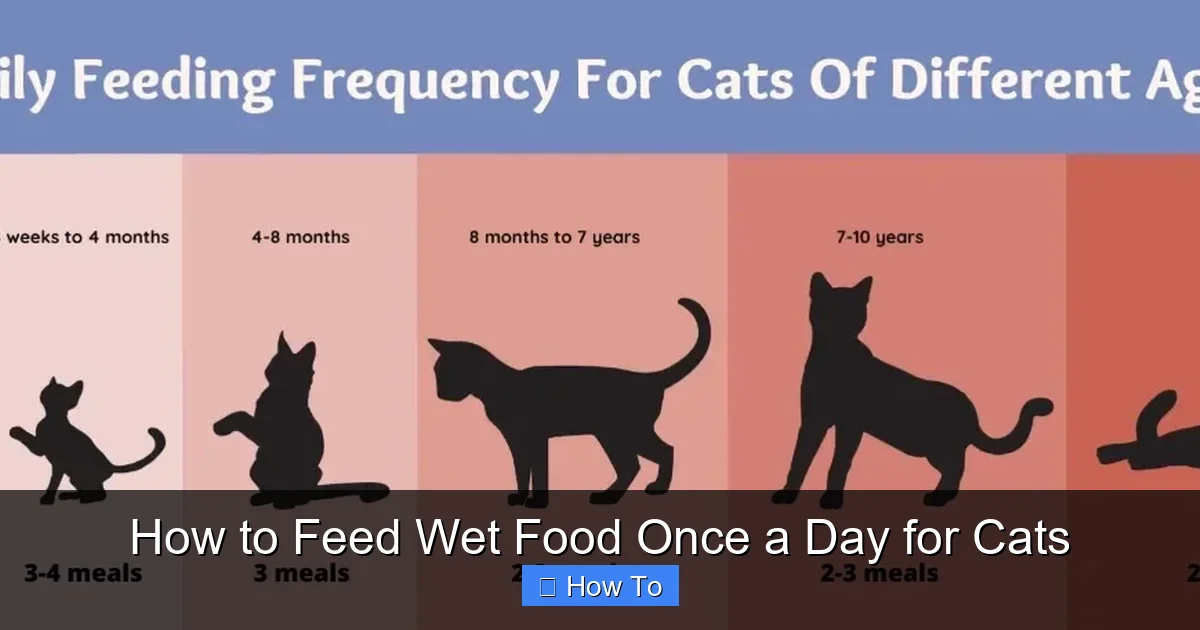
Visual guide about How to Feed Wet Food Once a Day for Cats
Image source: petworshiper.b-cdn.net
Avoid artificial colors, flavors, and preservatives like BHA, BHT, or ethoxyquin.
Ensure AAFCO Compliance
The Association of American Feed Control Officials (AAFCO) sets nutritional standards for pet food. Look for a statement on the label such as:
“[Product name] is formulated to meet the nutritional levels established by the AAFCO Cat Food Nutrient Profiles for [life stage].”
This ensures the food meets minimum requirements for vitamins, minerals, and amino acids like taurine—essential for heart and eye health.
Consider Your Cat’s Life Stage and Health
– Kittens: Need higher calories and protein. Choose formulas labeled for growth.
– Adults: Look for maintenance formulas with balanced fat and fiber.
– Seniors: May benefit from lower phosphorus and added joint support.
– Health conditions: Cats with kidney disease, diabetes, or urinary issues may need prescription or therapeutic diets.
Always consult your veterinarian before making dietary changes, especially for cats with medical needs.
Texture and Preference
Cats can be picky! Some love pâté, others prefer shreds or gravy. Try small sample packs or variety packs to see what your cat enjoys. In 2026, many brands offer subscription services with rotating flavors—great for testing preferences without waste.
Step 2: Calculate the Right Portion Size
Overfeeding or underfeeding can lead to weight gain, malnutrition, or digestive issues. Portion control is essential—even with healthy wet food.
Use Weight and Activity Level as a Guide
Most adult cats (8–10 lbs) need about 200–250 calories per day. A typical 5.5-ounce can of wet food contains 150–200 calories, depending on the brand.
Here’s a general guideline:
– 4–6 lbs: 2.5–3.5 oz (about half a 5.5-oz can)
– 7–10 lbs: 3.5–5 oz (most of a 5.5-oz can)
– 11–15 lbs: 5–6 oz (one full can or slightly more)
Active cats may need 10–20% more; sedentary or senior cats may need less.
Factor in Other Meals
If you’re feeding wet food once a day, your cat may still eat dry food or another small wet meal. Adjust portions accordingly.
Example:
– Morning: 1/4 cup dry kibble (≈80 calories)
– Evening: 4 oz wet food (≈180 calories)
– Total: ≈260 calories (ideal for a 10-lb active cat)
Use a pet food calculator (many available online in 2026) or ask your vet for a personalized plan.
Weigh Your Cat Regularly
Use a pet scale or visit your vet every 2–3 months. Ideal body condition means you can feel—but not see—the ribs, and your cat has a visible waist when viewed from above.
Step 3: Transition Gradually
Sudden diet changes can cause vomiting, diarrhea, or refusal to eat. A slow transition over 7–10 days helps your cat adapt.
Day 1–2: 75% Old Food, 25% Wet Food
Mix a small amount of wet food into your cat’s usual meal. If they eat dry food, you can crumble it and mix with wet food, or serve wet food as a topper.
Day 3–4: 50% Old Food, 50% Wet Food
Increase the wet food portion. Observe your cat’s stool and appetite. Loose stools may mean the transition is too fast.
Day 5–6: 25% Old Food, 75% Wet Food
Most cats adjust well by this point. If your cat is eating eagerly and has normal bowel movements, you’re on track.
Day 7+: 100% Wet Food (Once Daily)
Now you can serve wet food as the main meal—once per day. Continue monitoring for any signs of digestive upset.
Tip: If your cat refuses the new food, try warming it slightly (not hot) to enhance the smell. Some cats prefer room-temperature food, so test both.
Step 4: Serve at the Right Time and Temperature
Timing and temperature affect how much your cat eats—and how safely.
Choose a Consistent Feeding Time
Cats thrive on routine. Pick a time that fits your schedule—morning or evening—and stick to it. Consistency helps regulate digestion and reduces anxiety.
Example:
– 7:00 PM: Serve wet food
– Leftovers removed after 2 hours (if not eaten)
Serve at Room Temperature
Cold food straight from the fridge can be unappetizing. Warm it slightly by placing the opened can in a bowl of warm water for 5–10 minutes. Never microwave pet food—it can create hot spots that burn your cat’s mouth.
Alternatively, transfer a portion to a bowl and let it sit at room temperature for 15–20 minutes before serving.
Use Clean Bowls
Wash food and water bowls daily with hot, soapy water. Bacteria can grow quickly, especially in moist environments. In 2026, many pet owners use stainless steel or ceramic bowls—easy to clean and non-porous.
Step 5: Store Leftovers Safely
Wet food spoils quickly once opened. Proper storage prevents waste and keeps your cat safe.
Refrigerate Immediately
If your cat doesn’t finish their meal, cover the can with a lid or plastic wrap and refrigerate within 2 hours. Use an airtight container for better freshness.
Use Within 5 Days
Even refrigerated, wet food loses quality over time. Label containers with the date and use within 5 days. Discard if you notice off smells, mold, or slimy texture.
Don’t Reheat Repeatedly
Only warm the portion you’re serving. Repeated heating and cooling can degrade nutrients and encourage bacterial growth.
Freeze for Long-Term Storage
If you buy in bulk, portion unused food into ice cube trays and freeze. Thaw in the fridge overnight before serving. Frozen wet food retains quality for up to 3 months.
Step 6: Monitor Your Cat’s Health
Feeding wet food once a day can improve health—but only if your cat is thriving.
Watch for These Positive Signs
– Bright eyes and shiny coat
– Consistent energy levels
– Normal stool (firm, well-formed)
– Healthy weight and body condition
– Increased water intake (even if just from food)
Red Flags to Watch For
– Vomiting or diarrhea lasting more than 24 hours
– Refusal to eat for more than 12–24 hours
– Lethargy, hiding, or changes in behavior
– Excessive thirst or urination (could signal diabetes or kidney issues)
– Weight loss or gain
If you notice any of these, contact your vet immediately.
Schedule Regular Checkups
In 2026, preventive care is more advanced than ever. Annual vet visits (or biannual for seniors) help catch issues early. Bring a stool sample and note any dietary changes during appointments.
Troubleshooting Common Issues
Even with the best plan, challenges can arise. Here’s how to handle them.
My Cat Won’t Eat the Wet Food
Try these fixes:
– Warm it slightly to enhance aroma
– Mix in a small amount of tuna juice (low-sodium, no onions)
– Offer different textures (pâté, shreds, chunks in gravy)
– Feed in a quiet, low-traffic area
– Rule out dental pain—difficulty chewing can reduce appetite
If refusal persists beyond 24–48 hours, consult your vet. Loss of appetite can signal illness.
My Cat Gets Diarrhea
This is common during transitions. Slow down the switch. Add a probiotic supplement (vet-approved) or a spoonful of plain pumpkin (not pie filling) to firm up stools.
Avoid sudden changes in brand or formula. If diarrhea lasts more than 2 days, seek veterinary care.
My Cat Is Gaining Weight
Even healthy food can lead to obesity if portions are too large. Reassess calorie needs. Increase playtime with interactive toys. Consider switching to a lower-calorie formula or reducing dry food intake.
Food Spoils Before My Cat Eats It
Serve smaller portions. If your cat eats slowly, remove uneaten food after 2 hours to prevent bacterial growth. You can offer the rest later—just reheat gently.
Alternatively, split the meal: serve half in the evening, save half for the next morning (refrigerated).
My Cat Prefers Dry Food
Some cats are stubborn! Try mixing wet food with a few kibbles, or use wet food as a topper. Gradually increase the wet portion over time. Patience is key.
Sample Feeding Schedule for 2026
Here’s a realistic daily plan for a 10-pound adult cat:
- 7:00 AM: 1/4 cup high-quality dry kibble (≈80 calories)
- 12:00 PM: Fresh water refill
- 6:30 PM: 4 oz wet food, served at room temperature (≈180 calories)
- 8:30 PM: Remove uneaten wet food; clean bowl
- Throughout the day: Play sessions, puzzle feeders, and fresh water
Total calories: ≈260—ideal for a moderately active cat.
Adjust based on your cat’s needs. Kittens, seniors, and indoor/outdoor cats may require different schedules.
Final Tips for Success in 2026
– Stay consistent: Cats dislike change. Stick to your routine.
– Rotate flavors: Prevent boredom by offering 2–3 different recipes weekly.
– Use technology: Smart feeders (popular in 2026) can dispense dry food on schedule, freeing you to focus on wet food timing.
– Keep a food journal: Note what you feed, when, and your cat’s reaction. Helpful for vet visits.
– Involve the whole household: Make sure everyone knows the feeding plan to avoid overfeeding.
Conclusion
Feeding wet food once a day for cats can be a healthy, rewarding choice—when done correctly. In 2026, with better pet nutrition science and more informed owners, this approach supports hydration, digestion, and overall well-being.
Remember: transition slowly, portion wisely, store safely, and monitor your cat’s health. Choose high-quality food, maintain a consistent schedule, and don’t hesitate to consult your veterinarian.
With these steps, you’ll give your feline friend the best chance at a long, happy, and healthy life—one delicious wet meal at a time.