

Figuring out carbs in wet cat food is essential for managing your cat’s diet, especially if they have diabetes or weight concerns. This guide walks you through label reading, calculation methods, and helpful tools to make informed feeding choices in 2026.
Key Takeaways
- Carbohydrates aren’t listed directly on pet food labels: You’ll need to calculate them using the guaranteed analysis and ingredient list.
- Use the “calorie subtraction method” for accuracy: Subtract protein, fat, moisture, and ash from 100% to estimate carb content.
- Look for high-moisture, low-carb ingredients: Foods with meat as the first ingredient and no grains or starches are usually lower in carbs.
- Digital tools and apps can help: In 2026, several pet nutrition apps allow you to scan barcodes and get instant carb estimates.
- Consult your vet for personalized advice: Especially if your cat has medical conditions like diabetes or obesity.
- Not all wet foods are low-carb: Some brands use fillers like potatoes or peas, which increase carbohydrate levels.
- Consistency matters more than perfection: Aim for a balanced, low-carb diet over time rather than obsessing over exact numbers.
How to Figure Out Carbs in Wet Cat Food: A Complete Guide for 2026
If you’re a cat parent in 2026, you already know that what your feline friend eats plays a huge role in their long-term health. One of the biggest concerns for many pet owners is carbohydrate content—especially since cats are obligate carnivores, meaning their bodies are built to thrive on a meat-based diet, not carbs. Unfortunately, unlike human food labels, pet food packaging doesn’t list carbohydrate content directly. So how do you figure out carbs in wet cat food?
This guide will walk you through everything you need to know—from reading labels like a pro, using simple math, leveraging modern tech tools, and making smarter choices for your cat’s diet. Whether your cat is diabetic, overweight, or just needs a healthier meal plan, understanding carbs in wet food is a game-changer.
Why Carbohydrates Matter in Cat Food
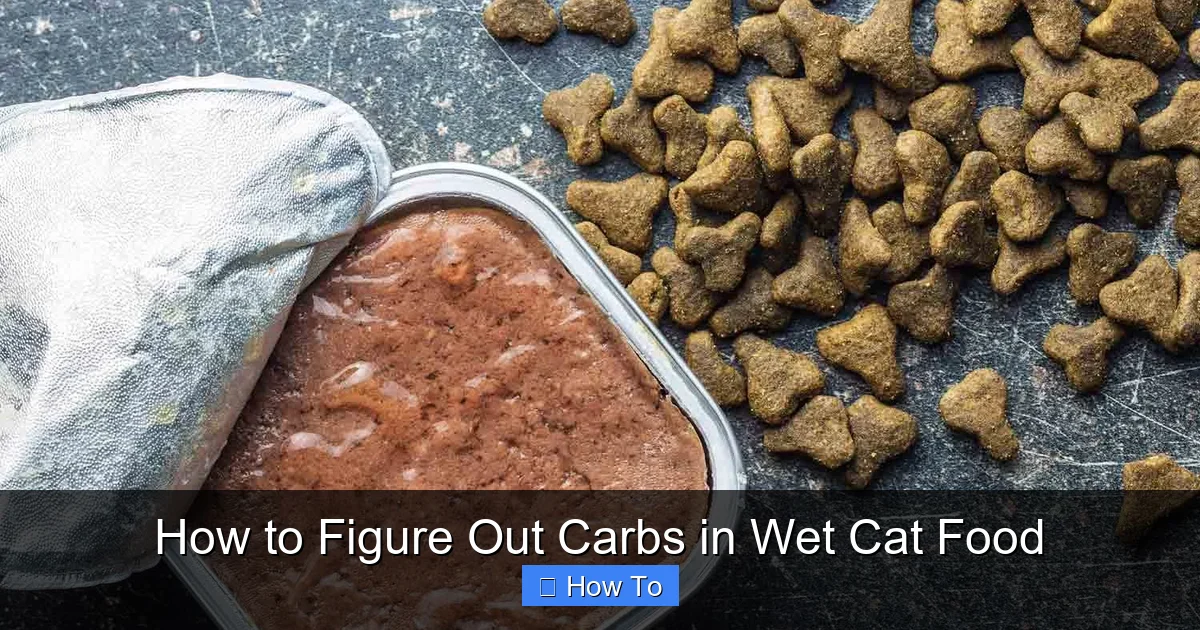
Visual guide about How to Figure Out Carbs in Wet Cat Food
Image source: welovecatsandkittens.com
Before diving into the “how,” let’s talk about the “why.” Cats don’t need carbohydrates to survive. Their bodies are designed to get energy from protein and fat, not sugars or starches. In the wild, a cat’s diet consists almost entirely of prey—think mice, birds, and insects—which are high in protein and fat and contain almost no carbs.
When cats eat too many carbs, especially from processed foods, it can lead to:
– Weight gain and obesity
– Insulin resistance
– Diabetes mellitus
– Digestive upset
– Reduced nutrient absorption
Wet cat food is generally better than dry kibble because it’s higher in moisture and often lower in carbs. But not all wet foods are created equal. Some brands sneak in carb-heavy ingredients like corn, wheat, rice, potatoes, or peas to bulk up the food or improve texture.
That’s why learning how to figure out carbs in wet cat food is so important. It empowers you to choose foods that align with your cat’s natural dietary needs.
Step 1: Read the Ingredient List
The first step in figuring out carbs is to look at the ingredient list. Ingredients are listed in order by weight, so the first few items make up the bulk of the food.
Look for High-Quality Protein Sources
Start by checking if a named meat is the first ingredient. For example:
– “Chicken” or “Turkey”
– “Salmon” or “Tuna”
– “Beef” or “Lamb”
These are ideal. Avoid vague terms like “meat by-products” or “animal digest” unless you’re okay with lower-quality protein.
Avoid Common Carb Fillers
Watch out for these high-carb ingredients:
– Corn, corn gluten meal, corn starch
– Wheat, wheat gluten, wheat flour
– Rice, brown rice, rice flour
– Potatoes, sweet potatoes, potato starch
– Peas, lentils, chickpeas
– Tapioca, cassava
These are often used as thickeners or binders, but they add unnecessary carbs. If you see any of these in the top five ingredients, the food is likely higher in carbohydrates.
Check for Added Sugars
While rare, some wet foods include sugar, molasses, or syrups to enhance flavor. These are red flags. Cats don’t need sugar, and it can spike their blood glucose levels.
Step 2: Use the Guaranteed Analysis
The guaranteed analysis is the section on the label that lists minimum or maximum percentages of key nutrients. It usually looks something like this:
– Crude Protein (min): 10%
– Crude Fat (min): 7%
– Crude Fiber (max): 1.5%
– Moisture (max): 78%
You’ll notice there’s no line for carbohydrates. That’s because the Association of American Feed Control Officials (AAFCO), which sets pet food labeling standards, doesn’t require it. But you can estimate carbs using the information provided.
The Calorie Subtraction Method
Here’s how to calculate carbs using the guaranteed analysis:
1. Start with 100% (this represents the total dry matter).
2. Subtract the percentages of protein, fat, fiber, moisture, and ash.
3. The remaining percentage is mostly carbohydrates.
But there’s a catch: the guaranteed analysis lists moisture content, which isn’t part of the dry matter. So we need to convert everything to a “dry matter basis” first.
Step-by-Step Calculation
Let’s use an example:
A can of wet cat food has:
– Crude Protein: 10% (min)
– Crude Fat: 7% (min)
– Crude Fiber: 1.5% (max)
– Moisture: 78% (max)
– Ash: Not listed (we’ll estimate 8%, which is average)
Step 1: Calculate dry matter.
Dry matter = 100% – moisture = 100% – 78% = 22%
Step 2: Convert protein, fat, and fiber to dry matter basis.
– Protein (dry matter): (10% ÷ 22%) × 100 = 45.5%
– Fat (dry matter): (7% ÷ 22%) × 100 = 31.8%
– Fiber (dry matter): (1.5% ÷ 22%) × 100 = 6.8%
– Ash (estimated): 8% (already on dry matter basis)
Step 3: Add up known components.
45.5% (protein) + 31.8% (fat) + 6.8% (fiber) + 8% (ash) = 92.1%
Step 4: Subtract from 100% to estimate carbs.
100% – 92.1% = 7.9% carbohydrates (dry matter basis)
So this food is approximately 7.9% carbs on a dry matter basis.
Why Dry Matter Basis Matters
Comparing foods using as-fed percentages (the numbers on the label) is misleading because moisture content varies. A food with 80% moisture will look lower in protein than one with 70% moisture, even if the actual protein content is similar.
By converting to dry matter, you’re comparing apples to apples—removing water so you can focus on the actual nutrients.
Step 3: Use Online Calculators and Apps (2026 Edition)
In 2026, technology has made this process much easier. Several pet nutrition apps and websites now allow you to input the guaranteed analysis and instantly calculate carbohydrate content.
Popular Tools in 2026
– PetNutriScan: Scan the barcode of any wet cat food, and the app pulls up the ingredient list, guaranteed analysis, and estimated carb percentage. It also flags high-carb ingredients.
– CatDietCalc: A free web tool where you enter protein, fat, fiber, moisture, and ash percentages. It automatically calculates dry matter carbs.
– VetCheck Nutrition: Developed by veterinarians, this app not only calculates carbs but also suggests low-carb alternatives based on your cat’s age, weight, and health status.
These tools save time and reduce human error. They’re especially helpful when comparing multiple brands at the pet store.
How to Use These Tools
1. Open the app or website.
2. Enter the product name or scan the barcode.
3. Input the guaranteed analysis values (protein, fat, fiber, moisture).
4. If ash isn’t listed, use 8% as a default (most wet foods fall between 7–9%).
5. The tool will display the estimated carbohydrate percentage on a dry matter basis.
For example, if you scan a can of “Tuna & Salmon Dinner,” the app might show:
– Protein: 48% (dry matter)
– Fat: 30%
– Carbs: 6.5%
That’s a great low-carb option!
Step 4: Understand Ash and Why It Matters
You might be wondering: what is ash, and why do we subtract it?
Ash is the inorganic mineral content left after food is burned in a lab. It includes calcium, phosphorus, magnesium, and other minerals. While ash isn’t a nutrient cats need in large amounts, it’s a natural part of meat and bone.
Most wet cat foods have an ash content of 7–9%. If the label doesn’t list it, use 8% in your calculations. Skipping ash can lead to overestimating carbs by 1–2%, which might not seem like much, but for diabetic cats, precision matters.
Step 5: Compare Brands and Make Smart Choices
Now that you know how to calculate carbs, it’s time to compare brands. Here’s what to look for:
Ideal Carb Range for Cats
– Low-carb: Less than 10% (dry matter)
– Moderate-carb: 10–20%
– High-carb: Over 20%
For most cats, especially those with health issues, aim for under 10% carbs.
Top Low-Carb Wet Foods in 2026
Based on recent reviews and calculations:
– Ziwi Peak Canned Cat Food (Chicken): ~3% carbs
– Feline Natural Lamb & King Salmon: ~4% carbs
– Tiki Cat Puka Puka Luau: ~5% carbs
– Weruva Cats in the Kitchen (Chicken & Pumpkin): ~7% carbs (pumpkin adds a bit of carb)
– Purina Pro Plan Veterinary Diets DM: ~6% carbs (formulated for diabetic cats)
Avoid brands like:
– Friskies Pate: Often contains corn or wheat—carbs can exceed 15%
– 9Lives Tuna & Egg: Uses rice and corn—carbs around 12–14%
Watch for “Grain-Free” Traps
Just because a food is labeled “grain-free” doesn’t mean it’s low-carb. Many grain-free foods use potatoes, peas, or lentils as substitutes—these are still high in carbs.
For example, a “grain-free” food with peas as the second ingredient might have 12% carbs, while a food with chicken and liver (even if it contains rice) might only have 8%.
Always check the ingredient list and do the math.
Step 6: Consider Your Cat’s Health Needs
Not all cats need ultra-low-carb diets. But certain conditions make carb control critical.
Diabetic Cats
Cats with diabetes benefit greatly from low-carb diets. Reducing carbs helps stabilize blood sugar and can reduce or eliminate the need for insulin injections. Work with your vet to find a food under 10% carbs.
Overweight or Obese Cats
High-carb diets can contribute to weight gain. Switching to a low-carb, high-protein wet food can help your cat lose weight safely. Pair it with portion control and playtime.
Healthy Cats
Even if your cat is healthy, a low-carb diet supports long-term wellness. It reduces the risk of obesity, diabetes, and urinary issues.
Troubleshooting Common Challenges
“The label doesn’t list ash. What do I do?”
Use 8% as a standard estimate. Most wet foods fall in the 7–9% range. If you’re unsure, check the manufacturer’s website or contact customer service.
“My calculations don’t match the app. Why?”
Apps may use slightly different formulas or updated data. Also, some brands reformulate products without changing the label. When in doubt, trust the app or consult your vet.
“My cat won’t eat low-carb food.”
Transition slowly. Mix the new food with the old, increasing the ratio over 7–10 days. Add a splash of warm water or a sprinkle of freeze-dried chicken to entice them.
“Are homemade diets better?”
Homemade diets can be very low in carbs, but they require careful balancing to avoid nutrient deficiencies. Always work with a veterinary nutritionist if you’re considering homemade meals.
Final Tips for Success in 2026
– Stay consistent: Sudden diet changes can upset your cat’s stomach. Introduce new foods gradually.
– Rotate proteins: This prevents food sensitivities and keeps mealtime interesting.
– Monitor your cat’s weight and energy: A good diet should result in a healthy weight, shiny coat, and active behavior.
– Keep records: Use a pet health app to track what you feed, how much, and any changes in your cat’s health.
– Talk to your vet: Especially if your cat has medical conditions. They can help you choose the best food and monitor progress.
Conclusion
Figuring out carbs in wet cat food doesn’t have to be complicated. With a little knowledge, the right tools, and attention to detail, you can make informed decisions that support your cat’s health and longevity. In 2026, we’re lucky to have apps and resources that simplify the process, but the core principles remain the same: read labels, calculate dry matter carbs, and prioritize high-protein, low-carb ingredients.
Remember, you don’t need to be perfect. The goal is progress, not precision. Even reducing carbs by a few percentage points can make a big difference over time. Your cat will thank you with more energy, a healthier weight, and a longer, happier life.
So the next time you’re at the pet store, grab that can, check the label, do the math—or scan it with your phone—and feed your feline friend with confidence.