
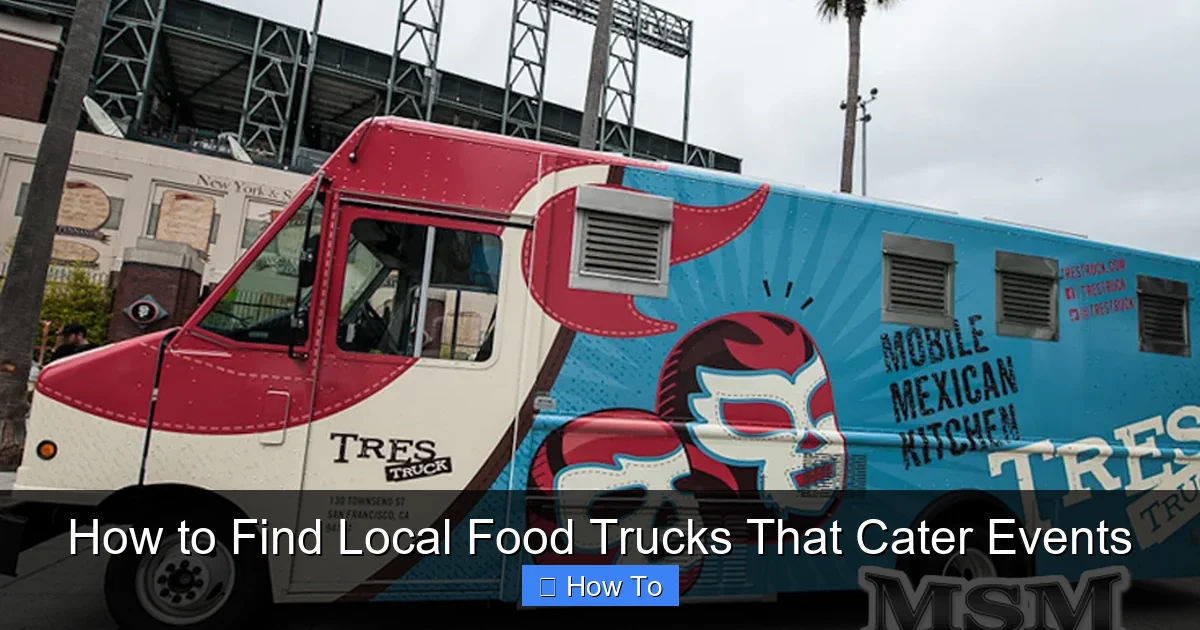
Planning an event and craving gourmet street food? This guide shows you exactly how to find local food trucks that cater events in 2026. From using digital platforms to vetting vendors, you’ll learn everything needed to book delicious, reliable mobile caterers with confidence.
Key Takeaways
- Use specialized food truck directories: Platforms like Roaming Hunger, Food Truck Empire, and local apps make it easy to search by location, cuisine, and availability.
- Check social media and online reviews: Instagram, Facebook, and Google Reviews offer real-time updates, photos, and customer feedback to help you choose the best trucks.
- Attend local food truck festivals: These events let you sample food, meet owners, and negotiate catering deals face-to-face.
- Verify licenses and insurance: Always confirm that food trucks have proper health permits, business licenses, and liability coverage before booking.
- Book early and confirm logistics: Popular trucks get booked months in advance—secure your date and discuss setup, power, and space needs early.
- Negotiate packages and menus: Many trucks offer customizable catering packages; don’t hesitate to ask for dietary options or bulk pricing.
- Leverage local networks and word-of-mouth: Ask event planners, venues, or friends for trusted recommendations—personal referrals often lead to the best experiences.
Introduction: Why Food Trucks Are the Hottest Catering Trend in 2026
In 2026, food trucks have evolved from sidewalk snacks to full-service catering powerhouses. Whether you’re hosting a wedding, corporate picnic, birthday bash, or community festival, mobile food vendors offer flexibility, flavor, and flair that traditional caterers often can’t match. With gourmet menus, eco-friendly practices, and Instagram-worthy presentations, food trucks bring excitement and authenticity to any event.
But here’s the catch: not all food trucks cater events, and finding the right one can feel like searching for a needle in a haystack. That’s where this guide comes in. We’ll walk you through a step-by-step process to find, evaluate, and book local food trucks that specialize in event catering—so you can serve up delicious food without the stress.
By the end of this guide, you’ll know exactly where to look, what to ask, and how to ensure your event is a culinary success. Let’s dive in!
Step 1: Define Your Event Needs and Budget
Before you start searching, take time to clarify your event details. The more specific you are, the easier it will be to find a food truck that fits your vision.

Visual guide about How to Find Local Food Trucks That Cater Events
Image source: msmcateringtrucks.com
Determine Your Guest Count
Food trucks typically serve 50–150 guests per hour, depending on menu complexity. For a 200-person wedding, you might need two trucks or a longer service window. Estimate your headcount early—this helps trucks quote accurate pricing and plan staffing.
Set a Realistic Budget
Catering food trucks usually charge between $12–$25 per person, depending on cuisine, location, and menu customization. Some offer flat fees for full-day service, while others bill hourly. Decide how much you’re willing to spend and communicate this upfront to avoid surprises.
Identify Dietary and Cuisine Preferences
Are you serving vegan guests? Need gluten-free options? Craving Korean-Mexican fusion? Make a list of must-have cuisines and dietary needs. Many trucks in 2026 specialize in niche diets, so knowing your preferences helps narrow your search.
Consider Event Type and Timing
A weekend brunch party has different needs than a weekday corporate lunch. Note your event date, start and end times, and whether you need setup/teardown services. Some trucks require 30–60 minutes for setup, so factor that into your schedule.
Step 2: Use Online Directories and Food Truck Platforms
The internet is your best friend when hunting for local food trucks. In 2026, several platforms specialize in connecting event planners with mobile caterers.
Search Roaming Hunger
Roaming Hunger is one of the most trusted food truck directories. Enter your city or ZIP code, filter by “Catering Available,” and browse trucks with photos, menus, and contact info. Many listings include customer reviews and average response times—super helpful for quick decisions.
Explore Food Truck Empire
Food Truck Empire offers a national database with detailed profiles. You can filter by cuisine type (e.g., tacos, burgers, desserts), read owner bios, and even see which trucks are available on your event date. Their “Catering Request” feature lets you send inquiries directly through the site.
Check Local Food Truck Apps
Many cities now have their own food truck apps. For example, Truckr in Austin, Street Eats in Portland, and Food Truck Finder in Chicago let you search by location, see real-time truck locations, and filter by catering services. These apps often include user ratings and photos of recent events.
Use Google Maps and Search
Search “food trucks that cater near me” or “event catering food trucks [your city]” on Google. Look for trucks with high ratings (4.5+ stars), recent reviews, and a professional website. Click on their listing to see photos, menus, and contact details. Pro tip: check the “Posts” tab on Google Business profiles—many trucks post event highlights and client testimonials.
Step 3: Leverage Social Media and Online Reviews
In 2026, social media is a goldmine for discovering and vetting food trucks. Owners use platforms like Instagram and Facebook to showcase their food, share event photos, and interact with customers.
Search Instagram and Facebook
Use hashtags like #FoodTruckCatering, #[YourCity]FoodTrucks, or #MobileCatering to find local vendors. Look for accounts with high engagement—lots of comments, shares, and tagged event photos. Many trucks post reels of their setup at weddings or corporate events, giving you a behind-the-scenes look at their professionalism.
Read Google and Yelp Reviews
Pay attention to reviews that mention catering specifically. Look for phrases like “great for events,” “on-time setup,” or “handled 100 guests smoothly.” Avoid trucks with complaints about food safety, no-shows, or poor communication. A few negative reviews are normal, but patterns are red flags.
Join Local Facebook Groups
Search for groups like “[Your City] Event Planners” or “Food Lovers [Your City].” Members often share recommendations and warn about unreliable vendors. Post a question like, “Looking for a taco truck that caters corporate events—any suggestions?” You’ll likely get personal referrals within hours.
Step 4: Attend Food Truck Festivals and Markets
There’s no better way to sample food and meet owners than in person. Food truck festivals are popping up in cities across the U.S., and they’re perfect for scouting caterers.
Find Local Festivals
Search “food truck festival [your city] 2026” or check event calendars on sites like Eventbrite, Facebook Events, or local tourism boards. Major events like the National Food Truck Festival or regional gatherings often feature 20+ trucks in one place.
Talk to Owners and Staff
When you find a truck you like, strike up a conversation. Ask:
- “Do you cater private events?”
- “What’s your typical guest capacity?”
- “Can you accommodate dietary restrictions?”
- “Do you provide tables, tents, or staffing?”
Pay attention to their attitude—friendly, knowledgeable owners are more likely to deliver great service.
Sample the Food
Taste is everything. Order a few items and evaluate flavor, freshness, and presentation. Can the food hold up for a large crowd? Does it travel well? Take notes and photos for later reference.
Collect Business Cards and Brochures
Many trucks carry catering brochures with menus, pricing, and contact info. Grab a few and compare them later. Some even offer festival-exclusive discounts for event bookings.
Step 5: Verify Credentials and Insurance
Never book a food truck without confirming they’re legally allowed to operate. In 2026, regulations are stricter than ever to ensure food safety and public liability.
Ask for Health Permits and Licenses
Every food truck must have a valid health department permit and business license. Ask to see copies or check your city’s health department website. In most states, you can search by business name or license number.
Confirm Liability Insurance
Events often require vendors to carry general liability insurance (usually $1 million minimum). Ask for a Certificate of Insurance (COI) listing your event as an additional insured. This protects you if someone gets sick or injured.
Check for Event Permits
Some cities require special permits for food trucks at private events, especially in public parks or residential areas. Ask the truck if they handle permitting or if you need to apply. Venues may also have their own rules—always double-check.
Step 6: Contact Trucks and Request Quotes
Once you’ve shortlisted 3–5 trucks, it’s time to reach out. Be professional, clear, and timely.
Send a Detailed Inquiry
Include:
- Event date, time, and location
- Estimated guest count
- Type of event (wedding, corporate, etc.)
- Dietary needs or menu preferences
- Your budget range
Example: “Hi! We’re hosting a 120-person wedding on June 15, 2026, in Denver. We’re looking for a gourmet burger truck that can serve from 5–8 PM. We need vegan and gluten-free options. Our budget is $20/person. Are you available?”
Ask Key Questions
- “What’s included in your catering package?”
- “Do you provide serving staff, utensils, and napkins?”
- “What’s your cancellation policy?”
- “Can you customize the menu?”
- “What’s your backup plan for bad weather?”
Compare Quotes Carefully
Look beyond price. A cheaper truck might not include staffing or cleanup. A higher quote could offer premium ingredients or faster service. Choose based on value, not just cost.
Step 7: Book Early and Confirm Logistics
Top food trucks book up fast—especially during peak seasons (spring and summer). Don’t wait!
Secure Your Date with a Deposit
Most trucks require a 25–50% deposit to hold your date. Get a written contract outlining services, pricing, cancellation terms, and contact info. Use platforms like DocuSign for easy digital signing.
Discuss Setup and Space Requirements
Food trucks need 20–30 feet of space, access to power (or a generator), and a level surface. Confirm:
- Where the truck will park
- How guests will line up
- Whether you need a tent or seating
- If trash removal is included
Plan for Power and Water
Some trucks run on generators, but others need electrical hookups. Ask in advance. If your venue doesn’t have power, rent a quiet generator or choose a self-sufficient truck.
Confirm Menu and Dietary Options
Finalize the menu 2–4 weeks before the event. Provide a guest count and dietary breakdown (e.g., “10 vegan, 5 gluten-free”). Many trucks in 2026 use QR code menus for easy ordering—ask if they offer this.
Step 8: Prepare for Event Day
Your job isn’t done once you book. A few final steps ensure a smooth experience.
Send a Reminder 1 Week Before
Confirm arrival time, parking instructions, and contact person. Share your event timeline so the truck knows when to start serving.
Designate a Point Person
Assign someone (you, a planner, or a friend) to greet the truck, guide them to the spot, and handle any issues. This prevents delays and miscommunication.
Have a Backup Plan
Weather, traffic, or mechanical issues can delay trucks. Keep a list of 2–3 backup vendors. Some trucks offer rain dates or partner with others for emergencies.
Troubleshooting Common Issues
Even with careful planning, things can go wrong. Here’s how to handle common problems.
The Truck Is Late
Call the owner immediately. Most are professionals and will update you. If they’re more than 30 minutes late, activate your backup plan.
Food Runs Out Too Fast
This usually means underestimating guest count or menu complexity. For future events, add 10–15% to your headcount or choose simpler dishes (e.g., tacos over multi-course meals).
Guests Complain About Quality
If food is cold, undercooked, or bland, document it with photos and notes. Contact the owner after the event to discuss. Most will offer a partial refund or credit.
Permit or Insurance Issues Arise
If a truck shows up without proper credentials, don’t let them serve. Politely ask them to leave and contact your backup. Report the issue to local health authorities if needed.
Conclusion: Serve Up Success with the Right Food Truck
Finding local food trucks that cater events in 2026 doesn’t have to be overwhelming. With the right tools and strategy, you can discover talented, reliable vendors who’ll make your event unforgettable. Start by defining your needs, use online directories and social media to research, attend festivals to taste and connect, and always verify credentials before booking.
Remember: the best food truck experiences come from clear communication, early planning, and a little bit of adventure. Whether you’re serving gourmet sliders at a backyard BBQ or artisanal ice cream at a company picnic, the right truck will bring flavor, fun, and flexibility to your celebration.
So go ahead—fire up that search, reach out to a few trucks, and get ready to impress your guests with mobile cuisine that’s anything but ordinary.