
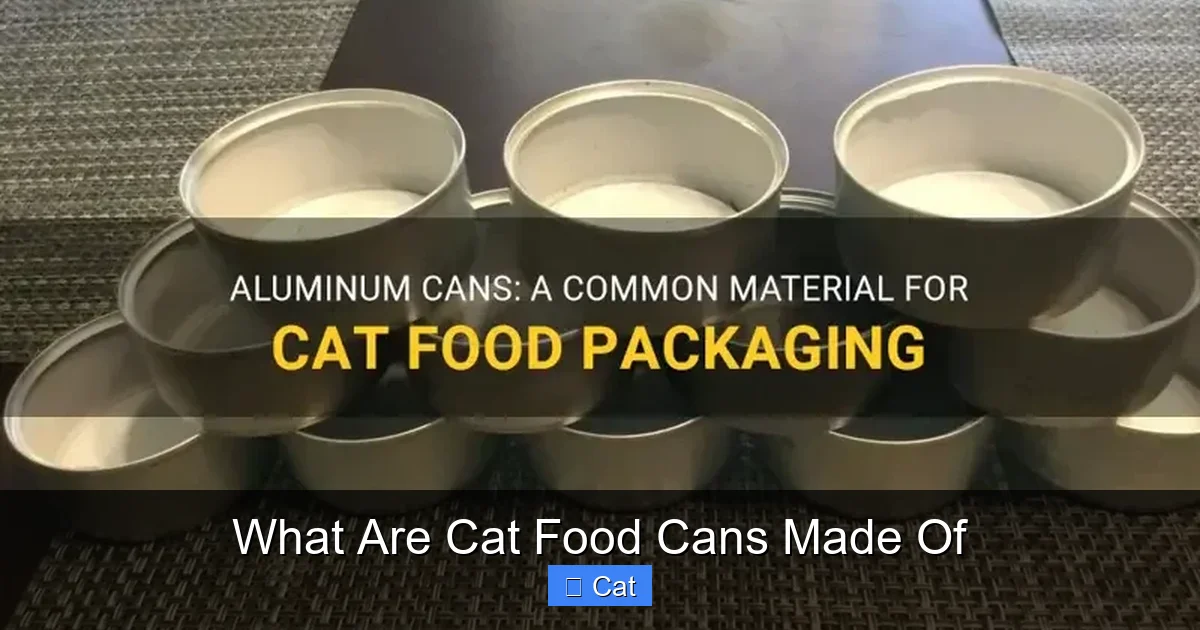
Cat food cans are typically made from aluminum or steel, chosen for durability, recyclability, and food safety. Modern packaging in 2026 emphasizes eco-friendly materials, BPA-free linings, and innovative designs to preserve nutrition and reduce environmental impact.
Key Takeaways
- Primary Materials: Most cat food cans are made from aluminum or tin-plated steel, both lightweight and highly recyclable.
- Interior Linings: Food-safe epoxy or acrylic coatings prevent metal leaching and protect flavor, now often BPA-free or BPA-NI (BPA Non-Intent).
- Sustainability Focus: In 2026, brands increasingly use recycled metals and aim for fully recyclable packaging to reduce carbon footprints.
- Safety Standards: Regulatory bodies like the FDA and EFSA enforce strict guidelines on can materials to ensure pet food safety.
- Innovative Designs: Easy-open lids, resealable options, and smart packaging with freshness indicators are becoming more common.
- Environmental Impact: Proper recycling of cat food cans helps conserve resources and reduces landfill waste.
- Consumer Tips: Look for recycling symbols, choose brands with transparent sourcing, and rinse cans before recycling.
📑 Table of Contents
What Are Cat Food Cans Made Of? A 2026 Deep Dive
If you’re a cat parent, you’ve probably opened dozens—maybe hundreds—of cat food cans. But have you ever stopped to wonder what those cans are actually made of? It’s not just about the delicious pâté or savory shreds inside. The container itself plays a crucial role in keeping your feline’s meal safe, fresh, and nutritious. In 2026, the materials used in cat food cans have evolved significantly, driven by advances in food safety, environmental awareness, and consumer demand for transparency.
Understanding what cat food cans are made of isn’t just a matter of curiosity—it’s about making informed choices for your pet’s health and the planet. From the metal used in the can’s body to the invisible lining inside, every component is carefully selected to meet strict safety and performance standards. Whether you’re feeding your cat premium wet food or a budget-friendly option, the packaging matters more than you might think.
The Core Materials: Aluminum and Steel
Visual guide about What Are Cat Food Cans Made Of
Image source: i.pinimg.com
At the heart of every cat food can are two primary materials: aluminum and steel. These metals dominate the pet food packaging industry for good reason—they’re durable, lightweight, and excellent at preserving food quality.
Aluminum: The Lightweight Champion
Aluminum is one of the most popular choices for cat food cans, especially for premium and mid-range brands. It’s lightweight, which reduces shipping costs and makes it easier for pet owners to handle. But don’t let its lightness fool you—aluminum is surprisingly strong and resistant to corrosion.
One of aluminum’s biggest advantages is its recyclability. In fact, aluminum can be recycled indefinitely without losing quality. According to the Aluminum Association, over 75% of all aluminum ever produced is still in use today. That’s a huge win for sustainability. In 2026, many cat food manufacturers are using recycled aluminum in their cans, sometimes up to 70% post-consumer content.
Aluminum also provides an excellent barrier against light, oxygen, and moisture—three elements that can degrade food quality. This helps maintain the flavor, texture, and nutritional value of wet cat food from the factory to your cat’s bowl.
Steel: The Sturdy Workhorse
Steel, particularly tin-plated steel (also known as tinplate), is another common material used in cat food cans. It’s stronger than aluminum and often used for larger cans or those requiring extra durability during transport and storage.
Tin plating serves two purposes: it prevents the steel from rusting and protects the food from reacting with the metal. While steel is heavier than aluminum, it’s also highly recyclable. The Steel Recycling Institute reports that steel is the most recycled material in the world, with a recycling rate exceeding 85% in many countries.
In 2026, some brands are experimenting with thinner steel gauges to reduce weight and material use without sacrificing strength. This innovation helps lower the carbon footprint of each can while maintaining performance.
Why Not Plastic or Glass?
You might wonder why cat food isn’t packaged in plastic tubs or glass jars like some human foods. While plastic is lightweight and shatterproof, it’s less effective at blocking oxygen and light, which can lead to faster spoilage. Glass, on the other hand, is heavy, breakable, and more energy-intensive to produce and transport.
Metal cans strike the perfect balance: they’re strong, lightweight, and provide superior protection. Plus, they’re more widely recycled than plastic in many regions. For these reasons, metal remains the go-to choice for wet cat food packaging in 2026.
The Invisible Layer: Interior Can Linings
While the outside of the can is easy to see, the inside holds a critical—and often misunderstood—component: the interior lining. This thin, protective coating is essential for food safety and quality.
What Is the Lining Made Of?
The interior of most cat food cans is coated with a food-grade polymer, typically an epoxy or acrylic resin. This lining prevents the food from coming into direct contact with the metal, which could otherwise lead to off-flavors, discoloration, or even metal leaching.
For decades, many of these linings contained bisphenol A (BPA), a chemical used to harden plastics. However, concerns about BPA’s potential health effects—especially its endocrine-disrupting properties—led to a major shift in the industry.
The BPA-Free Movement in 2026
By 2026, the vast majority of cat food cans are labeled as “BPA-free” or “BPA-NI” (BPA Non-Intent), meaning manufacturers do not intentionally add BPA to the lining. Instead, they use alternative resins such as:
– Acrylic coatings: Water-based and free of harmful chemicals, these are increasingly popular for their safety and performance.
– Polyester linings: Durable and effective at preventing corrosion, often used in high-acid foods.
– Plant-based epoxies: Emerging in 2026, these bio-based resins are derived from renewable sources and offer a more sustainable option.
Regulatory agencies like the U.S. Food and Drug Administration (FDA) and the European Food Safety Authority (EFSA) closely monitor these materials. In 2026, all can linings must undergo rigorous testing to ensure they don’t migrate into food at harmful levels.
Do Linings Affect Taste or Nutrition?
A well-designed lining should be completely inert—meaning it doesn’t interact with the food. However, poor-quality or damaged linings can sometimes impart a metallic taste or allow oxidation, which may affect flavor and nutrient stability.
That’s why reputable brands invest in high-performance linings and conduct regular quality checks. If your cat suddenly turns up their nose at a familiar food, a compromised can lining could be the culprit—especially if the can is dented or rusted.
Sustainability and Environmental Impact
As pet owners become more eco-conscious, the environmental footprint of cat food packaging has come under scrutiny. In 2026, sustainability is no longer a buzzword—it’s a core consideration in packaging design.
Recyclability of Metal Cans
One of the biggest advantages of metal cat food cans is their recyclability. Both aluminum and steel can be melted down and reused indefinitely without losing quality. This makes them far superior to plastic, which degrades with each recycling cycle.
In the U.S., aluminum cans have a recycling rate of around 50%, while steel cans are recycled at a rate of over 70%. These numbers are improving as more municipalities expand curbside recycling programs and consumers become more aware of proper disposal methods.
Recycled Content in 2026
Many leading pet food brands now proudly advertise the use of recycled materials in their cans. For example:
– Brand A: Uses 60% recycled aluminum in all wet food cans.
– Brand B: Sources 100% recycled steel for its economy line.
– Brand C: Offers a “closed-loop” program where customers can return used cans for recycling incentives.
These efforts not only reduce the demand for virgin materials but also lower greenhouse gas emissions. Producing aluminum from recycled content uses 95% less energy than making it from raw bauxite ore.
Challenges in Recycling
Despite the benefits, recycling cat food cans isn’t always straightforward. Food residue can contaminate recycling streams, so it’s important to rinse cans before tossing them in the bin. Some recycling facilities also struggle to separate mixed materials, especially if the can has a plastic label or pull-tab.
In 2026, innovations like water-soluble labels and fully metal pull-tabs are helping to streamline the recycling process. Additionally, some brands are partnering with recycling startups to develop take-back programs and improve recovery rates.
Compostable and Alternative Packaging?
While metal remains dominant, a few niche brands are experimenting with compostable pouches or plant-based containers. However, these alternatives often fall short in terms of shelf life, barrier protection, and scalability.
For now, metal cans offer the best combination of performance, safety, and sustainability. But as technology advances, we may see more hybrid solutions—such as metal cans with compostable linings—emerge in the coming years.
Safety Standards and Regulatory Oversight
When it comes to pet food, safety is non-negotiable. The materials used in cat food cans must meet strict standards to ensure they don’t pose a risk to animals or humans.
FDA and EFSA Guidelines
In the United States, the FDA regulates food contact materials under the Federal Food, Drug, and Cosmetic Act. Any substance that comes into contact with food—including can linings—must be approved as a food additive or classified as “Generally Recognized as Safe” (GRAS).
Similarly, the European Food Safety Authority (EFSA) evaluates the safety of packaging materials in the EU. In 2026, both agencies have tightened regulations on chemical migration, requiring manufacturers to conduct extensive testing before introducing new materials.
Testing for Chemical Migration
Before a new can lining or metal alloy can be used, it must undergo migration testing. This involves simulating real-world conditions—such as high heat, acidity, and long storage times—to measure how much of the packaging material leaches into the food.
For example, a can of fish-based cat food (which is highly acidic) would be tested more rigorously than a poultry-based formula. If any harmful substances are detected above safe thresholds, the material is rejected.
Third-Party Certifications
Many pet food brands go beyond regulatory requirements by obtaining third-party certifications. Look for labels such as:
– ISO 22000: International standard for food safety management.
– FSSC 22000: A globally recognized certification for food safety.
– Pet Sustainability Coalition (PSC) Certified: Recognizes brands committed to eco-friendly practices.
These certifications provide an extra layer of assurance that the packaging—and the food inside—meets high safety and sustainability standards.
Innovations in Can Design for 2026
The humble cat food can has come a long way from its simple beginnings. In 2026, manufacturers are leveraging technology to improve functionality, convenience, and user experience.
Easy-Open Lids
One of the most frustrating aspects of traditional cans is the need for a can opener. In 2026, most cat food cans feature pull-tab lids that open with a simple tug. These lids are made from the same metal as the can body, ensuring full recyclability.
Some premium brands are even introducing “peel-back” lids, similar to those used in tuna cans, which allow for easy serving and reduced mess.
Resealable Options
While metal cans aren’t resealable, some brands are pairing them with reusable plastic lids or offering side-tab designs that allow partial opening. Others are experimenting with hybrid packaging—such as a metal base with a snap-on plastic lid—though these can complicate recycling.
Smart Packaging and Freshness Indicators
Cutting-edge innovations include smart labels that change color when the food is exposed to heat or air, indicating potential spoilage. While not yet mainstream in 2026, these technologies are being tested by major pet food companies and could become standard in the near future.
Lightweighting and Material Efficiency
To reduce environmental impact, manufacturers are using “lightweighting” techniques—making cans thinner without compromising strength. This reduces material use, lowers shipping emissions, and saves energy during production.
For example, a standard 5.5-ounce can might now use 10% less metal than its 2020 counterpart, thanks to advanced forming techniques and stronger alloys.
How to Choose the Right Cat Food Can
With so many options on the market, how do you pick the best cat food—and the best can? Here are some practical tips for 2026.
Check the Label for Material Info
While not all brands disclose exact materials, many now include sustainability statements on their packaging. Look for phrases like “made with recycled aluminum” or “BPA-free lining.”
Prioritize Recyclability
Choose brands that use mono-materials (e.g., 100% aluminum or steel) without mixed components that hinder recycling. Avoid cans with glued-on plastic labels or non-recyclable coatings.
Support Transparent Brands
Brands that openly share their sourcing and manufacturing practices are more likely to prioritize safety and sustainability. Check their websites for environmental reports or third-party certifications.
Rinse and Recycle
After use, rinse the can to remove food residue and place it in your recycling bin. This simple step helps ensure it gets properly processed and doesn’t end up in a landfill.
Consider the Full Lifecycle
Think beyond the can itself. A brand that uses renewable energy in production, minimizes water use, and supports ethical sourcing is making a bigger positive impact than one that focuses only on packaging.
Conclusion
So, what are cat food cans made of in 2026? The answer is a carefully engineered combination of aluminum or steel, protected by safe, often BPA-free interior linings, and designed with sustainability and convenience in mind. These cans do more than just hold your cat’s dinner—they preserve nutrition, ensure safety, and help protect the planet.
As pet owners, we have the power to drive change by choosing brands that prioritize responsible materials and transparent practices. By understanding what goes into cat food cans, we can make better decisions for our furry friends and the environment.
The next time you open a can of wet food, take a moment to appreciate the science and sustainability behind it. That little metal container is a testament to how far pet food packaging has come—and a promise of where it’s headed.
Frequently Asked Questions
Are cat food cans safe for my pet?
Yes, cat food cans are rigorously tested to ensure they meet food safety standards. In 2026, most use BPA-free linings and are made from non-toxic, food-grade metals.
Can I recycle cat food cans?
Absolutely! Both aluminum and steel cat food cans are widely recyclable. Just rinse them to remove food residue before placing them in your recycling bin.
What’s the difference between BPA-free and BPA-NI?
BPA-free means no BPA is used, while BPA-NI (Non-Intent) means BPA wasn’t intentionally added, though trace amounts may exist. Both are considered safe for pet food in 2026.
Are aluminum cans better than steel for cat food?
Aluminum is lighter and more corrosion-resistant, while steel is stronger and often cheaper. Both are safe and recyclable—choose based on brand preference and sustainability goals.
Do can linings affect the taste of cat food?
High-quality linings are designed to be inert and shouldn’t affect taste. However, damaged or low-quality linings may allow metal flavors to leach into the food.
What should I do if a cat food can is dented or rusted?
Discard any can that is severely dented, rusted, or bulging, as this could indicate contamination or compromised integrity. When in doubt, throw it out.