
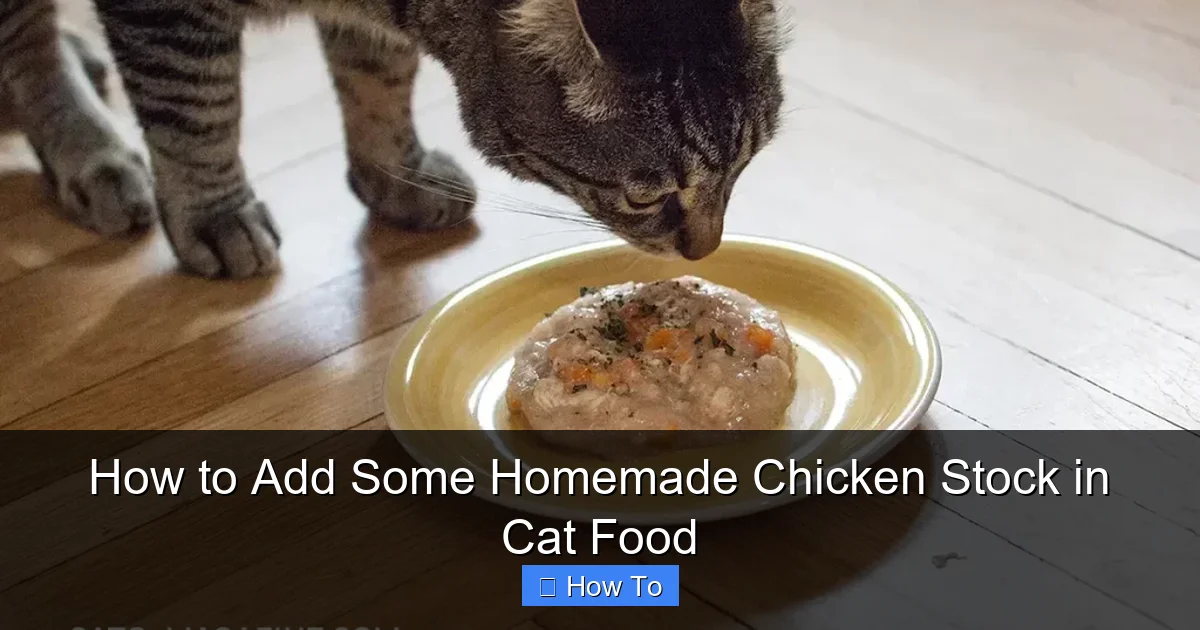
Adding homemade chicken stock to your cat’s food is a simple way to boost hydration, enhance taste, and support digestion—but it must be done safely. This guide walks you through preparing cat-safe chicken stock and incorporating it into meals without harmful ingredients.
Key Takeaways
- Use only plain, unseasoned chicken: Avoid onions, garlic, salt, and spices, which are toxic to cats.
- Simmer bones and meat gently: Cook on low heat for 12–24 hours to extract nutrients and gelatin.
- Strain thoroughly: Remove all bones, fat, and solids to prevent choking or digestive upset.
- Cool and store properly: Refrigerate for up to 5 days or freeze in ice cube trays for easy use.
- Start small: Introduce stock gradually—1–2 teaspoons per meal—to avoid stomach issues.
- Prioritize hydration: Stock encourages water intake, especially in cats prone to urinary issues.
- Consult your vet first: Especially if your cat has kidney disease or dietary restrictions.
Why Add Homemade Chicken Stock to Cat Food?
Cats are naturally drawn to the rich, savory aroma of chicken—and for good reason. Their ancestors hunted birds, so the scent of poultry triggers their appetite. But beyond taste, homemade chicken stock offers real health benefits. Many cats don’t drink enough water, putting them at risk for urinary tract infections, kidney disease, and dehydration. Adding flavorful stock to dry or wet food encourages them to eat more and stay hydrated.
Stock also contains natural gelatin and collagen, which support joint health and digestion. Unlike store-bought broths loaded with salt, preservatives, or onion powder (which are dangerous for cats), homemade versions let you control every ingredient. Plus, it’s cost-effective—use leftover chicken bones or a whole organic bird you’ve roasted for dinner.
But caution is key. Cats have sensitive digestive systems, and even small amounts of the wrong ingredients can cause illness. This guide will show you exactly how to make safe, nutritious chicken stock and incorporate it into your cat’s diet without risk.
What You’ll Need to Make Cat-Safe Chicken Stock

Visual guide about How to Add Some Homemade Chicken Stock in Cat Food
Image source: soupchick.s3.amazonaws.com
Before you start, gather these essentials. Quality matters—choose organic, free-range chicken when possible to avoid antibiotics and hormones.
Ingredients
- 1–2 pounds of chicken parts: Use bones (wings, necks, backs), skin, and some meat. Avoid cooked bones that are brittle—they can splinter.
- Filtered water: Tap water may contain chlorine or heavy metals. Use bottled or filtered water for purity.
- Optional: Apple cider vinegar (1–2 tablespoons): Helps extract minerals like calcium and magnesium from bones. Use raw, unpasteurized vinegar.
Equipment
- Large stockpot or slow cooker: A 6–8 quart pot works well. Slow cookers are ideal for long, hands-off simmering.
- Fine-mesh strainer or cheesecloth: Removes tiny bone fragments and fat.
- Storage containers: Glass jars, BPA-free plastic containers, or silicone ice cube trays for freezing.
- Skimmer or spoon: To remove foam and fat during cooking.
Step-by-Step Guide to Making Homemade Chicken Stock
Follow these steps carefully to create a nourishing, toxin-free stock your cat will love.
Step 1: Choose the Right Chicken
Start with fresh, high-quality chicken. If you’ve roasted a chicken for dinner, save the carcass—just ensure it hasn’t been seasoned with onions, garlic, or salt. Raw chicken parts work too, but avoid pre-cooked rotisserie chickens unless you’re certain they’re plain.
Step 2: Break Down the Chicken
Cut larger pieces into smaller chunks if needed. This helps release more nutrients during simmering. Include skin and cartilage—they’re rich in collagen. Discard any visible fat or excess skin to reduce grease in the final stock.
Step 3: Add to Pot with Water and Vinegar
Place the chicken in your pot and cover completely with filtered water—about 1 inch above the bones. Add 1–2 tablespoons of apple cider vinegar if using. The acid helps break down bones, releasing minerals like calcium and phosphorus.
Step 4: Simmer Gently
Bring the mixture to a gentle boil, then reduce heat to a low simmer. Cover partially with a lid. For maximum nutrition, simmer for:
- 12–24 hours in a slow cooker (on low): Ideal for busy pet parents.
- 4–6 hours on the stove: Check occasionally and add water if levels drop.
Avoid rapid boiling—it makes the stock cloudy and can break down beneficial compounds.
Step 5: Skim Foam and Fat
In the first hour, foam will rise to the surface. Use a spoon to skim it off—it contains impurities. After cooking, let the stock cool slightly, then skim off any fat layer that forms on top. Fat can cause pancreatitis in cats if consumed in large amounts.
Step 6: Strain Thoroughly
Pour the stock through a fine-mesh strainer lined with cheesecloth. Press gently to extract all liquid. Discard solids—bones become soft and can splinter, posing a choking hazard.
Step 7: Cool and Store
Let the stock cool to room temperature before storing. Transfer to airtight containers:
- Refrigerate: Up to 5 days.
- Freeze: Pour into ice cube trays for portion control. Once frozen, transfer cubes to a labeled freezer bag. Lasts up to 3 months.
Label containers with the date to track freshness.
How to Add Chicken Stock to Your Cat’s Food
Now that your stock is ready, it’s time to serve! But don’t pour a whole cup into your cat’s bowl right away. Start slow to avoid digestive upset.
Step 1: Thaw Frozen Stock Safely
If using frozen cubes, thaw them in the fridge overnight or place in a sealed bag under cool water. Never microwave stock in plastic—use glass containers if reheating.
Step 2: Warm Slightly (Optional)
Cats prefer food at body temperature. Warm the stock slightly by placing the container in warm water for a few minutes. Test on your wrist—it should feel lukewarm, not hot.
Step 3: Mix into Food
Add a small amount to your cat’s regular meal:
- Dry food: Pour 1–2 teaspoons over kibble and let it soak for 5–10 minutes. This softens the food and boosts moisture intake.
- Wet food: Stir in 1–2 teaspoons to enhance flavor. Some cats eat wet food faster when it’s “souped up.”
- Topper only: Offer a few spoonfuls as a treat between meals.
Step 4: Monitor Your Cat’s Reaction
Watch for signs of digestive upset: vomiting, diarrhea, or lethargy. If your cat tolerates it well, gradually increase to 1–2 tablespoons per meal over a week. Most cats enjoy the taste and eat more enthusiastically.
Tips for Success and Safety
Even with the best intentions, mistakes can happen. Follow these tips to keep your cat safe and happy.
Never Use These Ingredients
- Onions and garlic: Destroy red blood cells and cause anemia.
- Salt: Can lead to sodium ion poisoning.
- Herbs and spices: Thyme, oregano, and pepper may irritate the stomach.
- Butter or oil: Adds unnecessary fat and calories.
Adjust for Your Cat’s Needs
- Senior cats: May benefit from extra hydration and joint-supporting gelatin.
- Kittens: Use milder stock and smaller amounts—consult your vet first.
- Cats with kidney disease: Low-sodium stock is essential. Avoid added minerals unless approved by your vet.
Pair with a Balanced Diet
Stock is a supplement, not a meal replacement. Ensure your cat’s primary food meets AAFCO nutritional standards. Rotate proteins (chicken, turkey, fish) to provide variety.
Troubleshooting Common Issues
Even experienced pet parents run into problems. Here’s how to fix them.
My Cat Won’t Eat the Stock
Some cats are picky. Try warming it more or mixing it with a favorite wet food. Offer it in a clean bowl—cats dislike dirty dishes. If refusal continues, your cat may not enjoy the taste. That’s okay! Not all cats need stock.
The Stock Smells Strong
A rich aroma is normal, but if it smells sour or rotten, discard it immediately. Always check expiration dates and store properly.
My Cat Got Diarrhea After Eating Stock
This usually means too much, too fast. Reduce the amount and reintroduce slowly. If symptoms persist, stop using stock and consult your vet.
Can I Use Store-Bought Broth?
Only if it’s labeled “no salt added” and contains no onions, garlic, or spices. Even then, homemade is safer and more nutritious.
Conclusion
Adding homemade chicken stock to your cat’s food is a simple, effective way to boost hydration, flavor, and nutrition. By using plain, unseasoned chicken and simmering it gently, you create a nourishing liquid that supports digestion, joints, and urinary health. Always prioritize safety—avoid toxic ingredients, introduce stock gradually, and store it properly. With these steps, your cat can enjoy a tastier, healthier meal without risk. Remember, every cat is different. Observe your pet’s preferences and health, and adjust accordingly. When in doubt, consult your veterinarian. A little stock can go a long way in keeping your feline friend happy, hydrated, and thriving.