
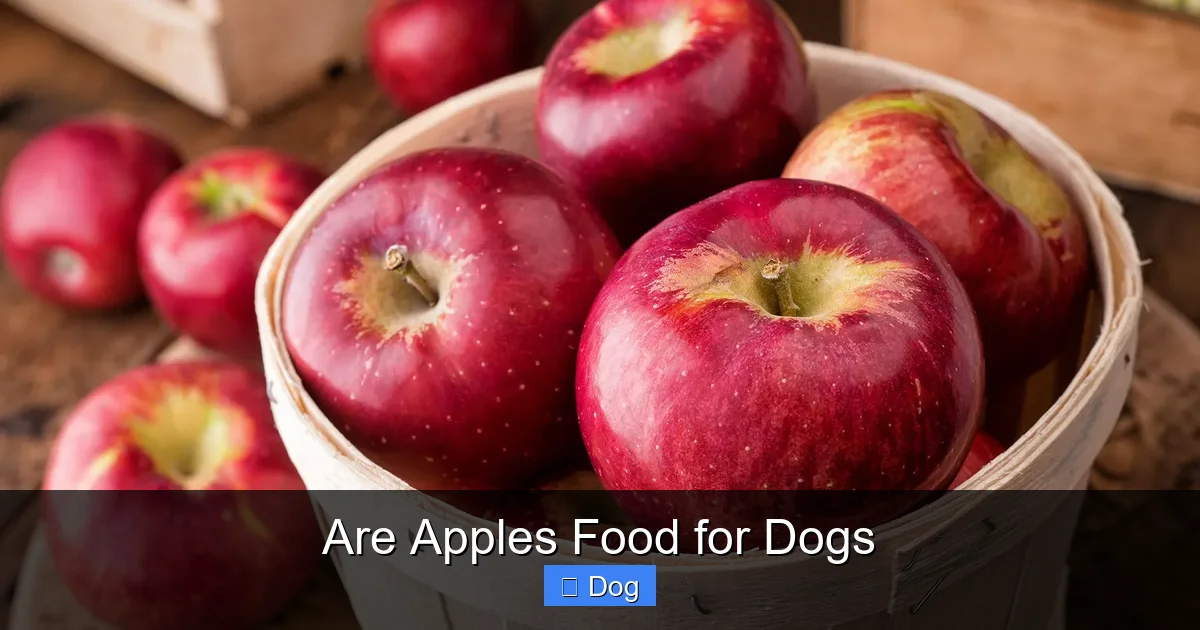
Yes, apples are food for dogs—and they can be a healthy, low-calorie treat when prepared correctly. Rich in fiber, vitamin C, and antioxidants, apples support digestion and immune health, but always remove the core and seeds to avoid choking or cyanide exposure.
Key Takeaways
- Apples are safe for dogs: When properly prepared, apples make a nutritious, low-fat snack that many dogs enjoy.
- Remove core and seeds: Apple seeds contain trace amounts of cyanide, which can be toxic in large quantities, so always discard them.
- High in fiber and vitamins: Apples provide dietary fiber, vitamin C, and antioxidants that support digestion and overall health.
- Serve in moderation: Too many apples can cause stomach upset or contribute to weight gain due to natural sugars.
- Introduce slowly: Start with small pieces to ensure your dog tolerates apples well and doesn’t have an allergic reaction.
- Avoid processed apple products: Apple sauce, pie, or juice often contain added sugars, spices, or xylitol, which are harmful to dogs.
- Great training treat: Small, bite-sized apple pieces can be used as a healthy reward during obedience training.
📑 Table of Contents
- Are Apples Food for Dogs? The Complete Guide to Feeding Apples Safely
- Nutritional Benefits of Apples for Dogs
- Are All Parts of the Apple Safe for Dogs?
- How to Safely Prepare Apples for Your Dog
- Potential Risks and When to Avoid Apples
- Apples as Training Treats and Mental Stimulation
- Conclusion: Apples Can Be a Healthy Part of Your Dog’s Diet
Are Apples Food for Dogs? The Complete Guide to Feeding Apples Safely
If you’ve ever watched your dog eye your apple slice with curiosity, you’re not alone. Many pet owners wonder: are apples food for dogs? The short answer is yes—apples can be a healthy and delicious treat for your furry friend. But like any human food, they come with important guidelines to ensure safety and maximum benefit.
Dogs are naturally curious eaters, and their interest in our snacks is hard to resist. Apples, with their crisp texture and sweet taste, often become a favorite. But before you start sharing your fruit bowl, it’s essential to understand how to serve apples properly. Not all parts of the apple are safe, and portion control matters just as much as preparation.
In this guide, we’ll explore everything you need to know about feeding apples to dogs—from nutritional benefits and safety tips to creative ways to serve them. Whether you’re a new dog parent or a seasoned pet lover, this comprehensive breakdown will help you make informed decisions about including apples in your dog’s diet.
Nutritional Benefits of Apples for Dogs

Visual guide about Are Apples Food for Dogs
Image source: dogster.com
Apples aren’t just tasty—they’re packed with nutrients that can support your dog’s health in several ways. While dogs don’t require fruit in their diet like humans do, apples can serve as a valuable supplement when given in moderation.
One of the biggest advantages of apples is their high fiber content. A medium-sized apple contains about 4 grams of dietary fiber, which helps regulate digestion. For dogs with occasional constipation or irregular bowel movements, a small amount of apple can act as a natural stool softener. Fiber also promotes a feeling of fullness, which can be helpful for overweight dogs on a controlled diet.
Apples are also rich in vitamin C, an antioxidant that supports the immune system. While dogs produce their own vitamin C in the liver, extra antioxidants from food can help reduce inflammation and fight off free radicals. This is especially beneficial for senior dogs or those with chronic conditions like arthritis.
Another key nutrient in apples is vitamin A, which supports eye health, skin integrity, and immune function. Combined with potassium and small amounts of other vitamins and minerals, apples offer a well-rounded nutritional boost.
Additionally, apples are low in protein and fat, making them an ideal treat for dogs who need to watch their calorie intake. Compared to commercial dog treats, which can be high in fillers and artificial ingredients, a fresh apple slice is a clean, natural alternative.
Antioxidants and Immune Support
Antioxidants play a crucial role in maintaining your dog’s long-term health. Apples contain polyphenols and flavonoids—compounds that help neutralize harmful molecules in the body. These antioxidants may reduce the risk of chronic diseases, including certain cancers and heart conditions.
Regular consumption of antioxidant-rich foods like apples can also slow the aging process and improve cellular repair. For active or working dogs, this means better recovery after exercise and reduced muscle inflammation.
Hydration and Low-Calorie Snacking
Apples are about 85% water, which contributes to your dog’s daily hydration needs—especially helpful during hot weather or after physical activity. While water should always be the primary source of hydration, water-rich foods like apples can provide a helpful boost.
Moreover, apples are low in calories. A single medium apple has around 95 calories, but when you remove the core and serve only a few slices, the caloric impact is minimal. This makes apples a great option for pet parents who want to reward their dogs without overfeeding.
Are All Parts of the Apple Safe for Dogs?
While the flesh of the apple is safe and nutritious, not every part of the fruit is suitable for canine consumption. It’s important to know what to avoid to keep your dog safe.
The most critical rule when feeding apples to dogs is to always remove the core and seeds. Apple seeds contain amygdalin, a compound that releases cyanide when chewed or digested. While a few seeds won’t likely cause harm, large quantities can lead to cyanide poisoning—especially in small dogs.
Symptoms of cyanide toxicity include difficulty breathing, dilated pupils, bright red gums, and seizures. In severe cases, it can be fatal. To be safe, always cut the apple into small, seed-free pieces and discard the core entirely.
The stem and leaves of the apple tree also contain trace amounts of cyanide and should never be given to dogs. If your dog has access to an apple tree in the yard, supervise them closely to prevent accidental ingestion.
Can Dogs Eat Apple Skin?
Yes, dogs can eat apple skin—in fact, it’s where many of the nutrients and fiber are concentrated. The skin is safe as long as the apple is washed thoroughly to remove pesticides, wax, or dirt.
Some pet owners worry that the skin might be hard for dogs to digest, but most dogs chew it easily. If your dog has a sensitive stomach or tends to gulp food, you can peel the apple to reduce the risk of digestive upset.
What About Dried Apples or Apple Chips?
Dried apples or apple chips can be a convenient snack, but they come with caveats. Many store-bought versions contain added sugars, preservatives, or sulfur dioxide, which are unhealthy for dogs.
If you choose to give dried apples, look for unsweetened, preservative-free options—and still serve them in very small amounts. Dried fruit is more calorie-dense than fresh, so it’s easy to overfeed.
Homemade apple chips are a safer alternative. Simply slice apples thinly, remove the core and seeds, and bake them at a low temperature (around 200°F) until crisp. Let them cool before offering a piece or two as a special treat.
How to Safely Prepare Apples for Your Dog
Preparing apples for your dog is simple, but doing it correctly ensures maximum safety and enjoyment. Follow these steps to turn a regular apple into a dog-friendly snack.
First, choose a fresh, ripe apple. Avoid overly soft or bruised fruit, as it may contain mold or bacteria. Organic apples are ideal to minimize pesticide exposure, but if you can’t find them, wash conventional apples thoroughly under running water.
Next, wash the apple well. Even if you plan to peel it, washing removes surface contaminants that could transfer to the flesh during cutting.
Then, cut the apple into small, bite-sized pieces. Remove the core, seeds, and stem completely. For small dogs, cut the slices even smaller to prevent choking. For larger dogs, you can offer slightly bigger pieces, but always supervise the first few times to ensure they chew properly.
Avoid adding any extras like cinnamon, sugar, or peanut butter unless you’re certain the ingredients are dog-safe. While a tiny amount of natural peanut butter (xylitol-free) might be okay, it’s best to keep apple treats simple and pure.
Serving Suggestions and Creative Ideas
Apples don’t have to be boring! There are many fun ways to serve them to your dog.
Try freezing apple slices for a refreshing summer treat. Simply cut and core the apple, then freeze the pieces on a baking sheet before transferring them to a container. Frozen apple slices are especially popular with teething puppies or dogs who love to chew.
You can also mix small apple pieces into your dog’s regular food for added flavor and moisture. This works well for picky eaters or senior dogs with reduced appetite.
Another idea is to make homemade apple-and-oat dog biscuits. Combine mashed apple, oats, and a bit of pumpkin puree, then bake into small treats. These are great for training or as occasional rewards.
How Often Can Dogs Eat Apples?
Apples should be treated as a snack, not a meal replacement. The general rule is that treats should make up no more than 10% of your dog’s daily caloric intake.
For a small dog (under 20 pounds), one or two thin slices a few times a week is plenty. Medium to large dogs can handle a few more slices, but still within moderation.
Overfeeding apples can lead to digestive issues like diarrhea or gas, especially if your dog isn’t used to high-fiber foods. Introduce apples slowly—start with a tiny piece and monitor your dog for any adverse reactions.
Potential Risks and When to Avoid Apples
While apples are generally safe, there are situations where they may not be the best choice for your dog.
Dogs with diabetes or insulin resistance should avoid apples due to their natural sugar content. Even though the sugars in apples are natural, they can still affect blood glucose levels. Consult your vet before introducing any fruit into a diabetic dog’s diet.
Similarly, dogs on a low-carbohydrate or ketogenic diet (often used for seizure management) should not eat apples, as they contain carbohydrates that could disrupt the diet’s balance.
Puppies under 12 weeks old have delicate digestive systems and should not be given solid treats like apples. Wait until they’re older and have adjusted to solid food.
Dogs with a history of pancreatitis should also avoid apples, as the fat content—while low—combined with sugar could trigger inflammation.
Signs of an Adverse Reaction
Although rare, some dogs may have an intolerance or mild allergy to apples. Watch for signs such as:
– Vomiting
– Diarrhea
– Excessive gas
– Lethargy
– Itching or skin irritation
If you notice any of these symptoms after feeding apples, stop giving them immediately and consult your veterinarian. In most cases, the issue is mild and resolves once the apple is removed from the diet.
Apples vs. Other Fruits: A Comparison
Not all fruits are created equal when it comes to dogs. While apples are safe, others like grapes, raisins, and cherries are highly toxic and should never be given.
Bananas, blueberries, and watermelon (seedless) are also safe and nutritious options. Bananas are higher in sugar, so serve them sparingly. Blueberries are tiny powerhouses of antioxidants and make excellent training treats. Watermelon is hydrating and low in calories, but remove all rind and seeds.
Compared to these, apples strike a good balance between taste, nutrition, and safety—making them a top choice for dog owners.
Apples as Training Treats and Mental Stimulation
Apples can be more than just a snack—they can be a tool for training and enrichment.
Because they’re low in calories and naturally appealing, small apple pieces make excellent training rewards. Use them during obedience sessions to reinforce commands like “sit,” “stay,” or “come.”
You can also use apples to make puzzle toys more enticing. Place a few apple slices inside a treat-dispensing toy or stuff them into a Kong with a bit of plain yogurt. This encourages mental stimulation and slows down fast eaters.
For dogs who love to chew, frozen apple slices can satisfy their need to gnaw while providing a cooling sensation—perfect for hot days or teething puppies.
DIY Apple Treat Recipes
Want to get creative? Here are two simple, dog-safe recipes:
Frozen Apple Bites:
– Core and slice 1 apple
– Place slices in an ice cube tray
– Fill with water or low-sodium chicken broth
– Freeze for 4–6 hours
– Serve as a refreshing treat
Apple and Pumpkin Dog Cookies:
– 1 cup oat flour
– ½ cup unsweetened applesauce
– ¼ cup pumpkin puree (not pie filling)
– 1 egg
– Mix ingredients, roll out, and cut into shapes
– Bake at 350°F for 20–25 minutes
– Cool completely before serving
These homemade treats are free from artificial additives and can be stored in the fridge for up to a week.
Conclusion: Apples Can Be a Healthy Part of Your Dog’s Diet
So, are apples food for dogs? Absolutely—when prepared and served correctly. Apples offer a range of health benefits, from supporting digestion to boosting immunity, all while being low in fat and calories.
The key is moderation and safety. Always remove the core and seeds, wash the fruit thoroughly, and introduce apples gradually. Avoid processed apple products and monitor your dog for any signs of digestive upset.
When used wisely, apples can be a delicious, nutritious addition to your dog’s treat rotation. Whether served fresh, frozen, or baked into homemade snacks, they’re a natural way to show your pup some love.
Remember, every dog is different. What works for one may not suit another. When in doubt, consult your veterinarian—especially if your dog has underlying health conditions.
With the right approach, apples can be more than just a snack. They can be a fun, healthy way to enrich your dog’s life, one crisp slice at a time.
Frequently Asked Questions
Can dogs eat apple seeds?
No, dogs should never eat apple seeds. They contain amygdalin, which breaks down into cyanide when digested. Even a few seeds can be harmful in large quantities, so always remove them before feeding apples to your dog.
How many apples can I give my dog per day?
Apples should be given in moderation—no more than a few slices a few times a week. Treats should not exceed 10% of your dog’s daily caloric intake. Overfeeding can lead to stomach upset or weight gain.
Are green apples safe for dogs?
Yes, green apples are safe for dogs and offer the same nutritional benefits as red apples. Some dogs may prefer the tart taste, but serve them in the same small, seed-free portions.
Can puppies eat apples?
Puppies under 12 weeks old should not eat apples. Their digestive systems are still developing, and solid treats can cause upset. Wait until they’re older and consult your vet first.
Is apple juice safe for dogs?
Plain, unsweetened apple juice in very small amounts may be okay occasionally, but it’s not recommended. It’s high in sugar and lacks the fiber of whole apples. Water is always the best choice for hydration.
What should I do if my dog eats apple seeds?
If your dog accidentally eats a few apple seeds, monitor them closely for signs of distress like vomiting, difficulty breathing, or lethargy. Contact your veterinarian immediately if symptoms appear, as cyanide toxicity can be serious.